admin
admin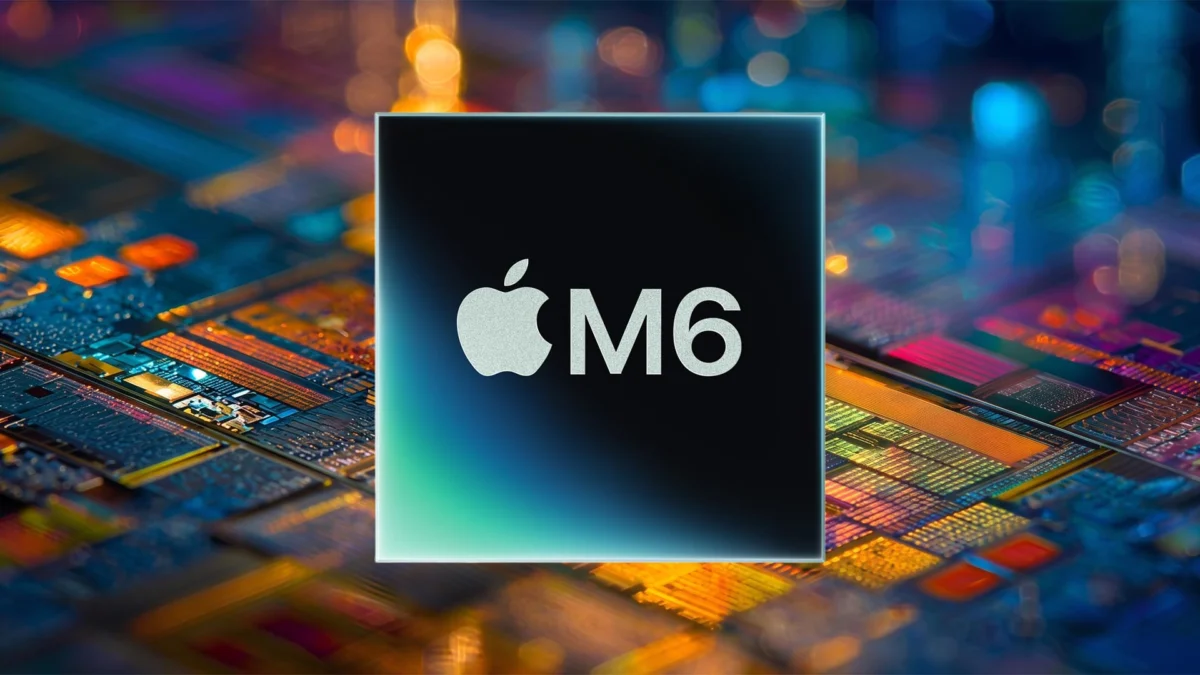
The recent release of the Apple M6 Mac mini has signaled a transformative shift in the performance profile of compact desktop computing, particularly within the burgeoning field of local artificial intelligence. While the M5 generation notably bypassed the Mac mini form factor, the introduction of the M6 silicon—built on a cutting-edge 2nm manufacturing process—has delivered a generational leap that far exceeds typical iterative updates. Rigorous testing of the new hardware against its immediate predecessor, the M4 Mac mini, reveals that the M6 architecture is specifically optimized for heavy AI workloads, including large language model (LLM) token generation, complex prompt processing, and high-resolution image synthesis. These advancements are not merely incremental; in several key performance metrics, the M6 Mac mini demonstrates a three-fold increase in speed while simultaneously reducing power consumption and thermal output.
The architectural foundation of these gains lies in Apple’s transition to the 2nm node, likely manufactured by TSMC. This transition has allowed Apple to integrate a dedicated Neural Accelerator into each of the 12 GPU cores, creating a hybridized processing environment where graphical rendering and machine learning tasks can be handled with unprecedented efficiency. Furthermore, the M6 Mac mini addresses a significant bottleneck in local AI execution by supporting up to 32GB of unified memory in its mid-tier configurations. This expansion of memory capacity is critical for professionals and researchers, as it enables the device to run more dense models, such as the Qwen3.8-27B, which were previously inaccessible to the M4-based hardware due to the strict memory requirements of larger parameter sets.

Comparative AI Workload Analysis: M6 versus M4
To quantify the real-world impact of the M6’s architectural improvements, independent technical analysts, including YouTuber Alex Ziskind, subjected the new Mac mini to a battery of industry-standard AI benchmarks. The testing focused on local model execution, a primary use case for developers and privacy-conscious users who prefer to run artificial intelligence without relying on cloud-based servers.
The first baseline test involved the Qwen3.5-9B model using 4-bit quantization. While not the most resource-intensive model available, it serves as a reliable barometer for general LLM performance. In prompt processing—the speed at which the system interprets and prepares a user’s input—the M6 Mac mini achieved a staggering 742 tokens per second (tok/s). In contrast, the M4 Mac mini managed 210 tok/s. This represents a 253.3 percent increase in processing speed, effectively reducing the latency of AI interactions to near-instantaneous levels.
The performance gap remained significant during the token generation phase, which measures the speed at which the AI produces its response. The M6 reached a rate of 26.9 tok/s, outperforming the M4’s 18 tok/s. This 49.4 percent improvement ensures a smoother, more human-like reading experience during long-form content generation. When running the "llama-benchy" utility to measure the time to the first token—a metric that defines how "snappy" an AI feels to the end-user—the M6 recorded a response time of just 0.72 seconds. The M4, while capable, lagged behind with a 2.5-second delay, a difference that becomes palpable during repetitive development tasks.

Breakthroughs in Image Synthesis and Diffusion Models
Beyond text-based AI, the M6 Mac mini shows substantial prowess in generative art and image synthesis. The testing utilized FLUX.1, a demanding diffusion model known for its high-fidelity output. Image generation is traditionally a GPU-heavy task, but modern models increasingly rely on the Neural Engine and unified memory bandwidth to manage the massive data arrays required for rendering.
In a direct comparison, the M6 Mac mini rendered a single complex sample in 36 seconds. The M4 Mac mini required 94 seconds to complete the same task. By finishing the render in 61.7 percent less time, the M6 positions itself as a viable workstation for creative professionals who previously would have required a Mac Studio or a high-end PC with a dedicated NVIDIA RTX graphics card. The combination of the 2nm process and the increased memory bandwidth allows the M6 to maintain high throughput without the thermal throttling that often plagues small-form-factor computers during sustained GPU loads.
Power Efficiency and Thermal Management
One of the most notable aspects of the M6 silicon is its ability to deliver superior performance while actually reducing its environmental and thermal footprint. The 2nm process offers higher transistor density, which translates to better performance-per-watt. During peak AI workloads, the M6 Mac mini was observed to draw approximately 38 watts of power. In the same scenarios, the M4 Mac mini drew 44 watts.

This 13.6 percent reduction in power consumption has a direct impact on the device’s thermal profile. Users have reported that the M6 runs noticeably cooler during intensive tasks, which not only extends the lifespan of the internal components but also results in a quieter computing environment as the internal cooling fans are required to spin at lower RPMs. For a device as compact as the Mac mini, managing heat is a constant challenge; by solving this at the silicon level, Apple has managed to pack "Pro" level performance into a chassis that remains essentially silent.
The Evolution of Unified Memory and Model Compatibility
The hardware limitation that most frequently hampers AI development on consumer hardware is VRAM (Video RAM). Because Apple’s Silicon uses a unified memory architecture, the system RAM is shared between the CPU and GPU, allowing for massive "video memory" allocations that would be prohibitively expensive on traditional PC hardware.
The M6 Mac mini’s support for 32GB of unified memory is a strategic pivot. It allows the system to load and execute the Qwen3.8-27B model, a 27-billion parameter model that offers significantly more nuance, logic, and factual accuracy than the 7B or 9B variants. On the M4 Mac mini, which was frequently limited to 16GB or 24GB in its standard configurations, such models would either fail to load or be forced into "swapping" memory with the slower SSD, leading to unusable performance. The ability of the M6 to handle 27B+ parameter models locally marks a shift for the Mac mini from a general-purpose consumer device to a legitimate entry-level AI development node.

Market Positioning and Economic Considerations
Despite the clear technical superiority of the M6 Mac mini, the transition to the 2nm node has come at a significant financial cost to the consumer. The base model M6 Mac mini, equipped with 16GB of unified RAM and a 256GB SSD, is currently listed on major retailers like Amazon for $879.99. This represents a substantial price hike over the M4 Mac mini, which had a starting MSRP of $599.
Industry analysts suggest that the nearly $300 price increase is a reflection of the high yields and manufacturing costs associated with the 2nm process, as well as the increased cost of the high-bandwidth memory modules integrated into the SoC (System on Chip). While the M6 offers a significantly better value proposition in terms of performance-per-dollar for AI professionals, the higher entry price may alienate casual users who do not require the specialized Neural Accelerators or the high-speed token generation capabilities of the new chip.
Chronology of Apple Silicon in the Mac Mini
The journey to the M6 has been a rapid one, characterized by Apple’s aggressive pursuit of silicon dominance.

- November 2020: Apple introduces the M1 Mac mini, marking the departure from Intel and providing a 3x boost in CPU performance.
- January 2023: The M2 and M2 Pro Mac mini are released, focusing on GPU improvements and ProRes acceleration.
- October 2024: The M4 Mac mini debuts (skipping the M3), introducing a smaller chassis and the first major focus on "Apple Intelligence" features.
- September 2026: The M6 Mac mini is launched, skipping the M5 to align with the readiness of the 2nm production node, specifically targeting local AI model execution as its primary selling point.
Broader Implications for the Industry
The performance of the M6 Mac mini is likely to put pressure on competitors in the Windows ecosystem, such as Intel and Qualcomm. While the Snapdragon X Elite and Intel Core Ultra chips have made strides in NPU (Neural Processing Unit) performance, the M6’s integration of Neural Accelerators directly into the GPU cores, combined with its high-bandwidth unified memory, provides a distinct advantage in running large-scale LLMs.
For developers, the M6 Mac mini represents a democratization of AI tools. Tasks that previously required a $2,000+ investment in a desktop with a high-end GPU can now be performed on a sub-$1,000 compact computer. This is expected to accelerate the development of "on-device" AI applications, reducing the tech industry’s reliance on centralized cloud providers like AWS and Google Cloud for AI inference.
As Apple continues to iterate on its silicon, the M6 Mac mini stands as a testament to the company’s focus on the future of local machine learning. While the price of entry has risen, the capabilities provided by the 2nm architecture suggest that the Mac mini is no longer just a budget desktop, but a foundational tool for the next generation of AI-driven software development.