Sonny Valindra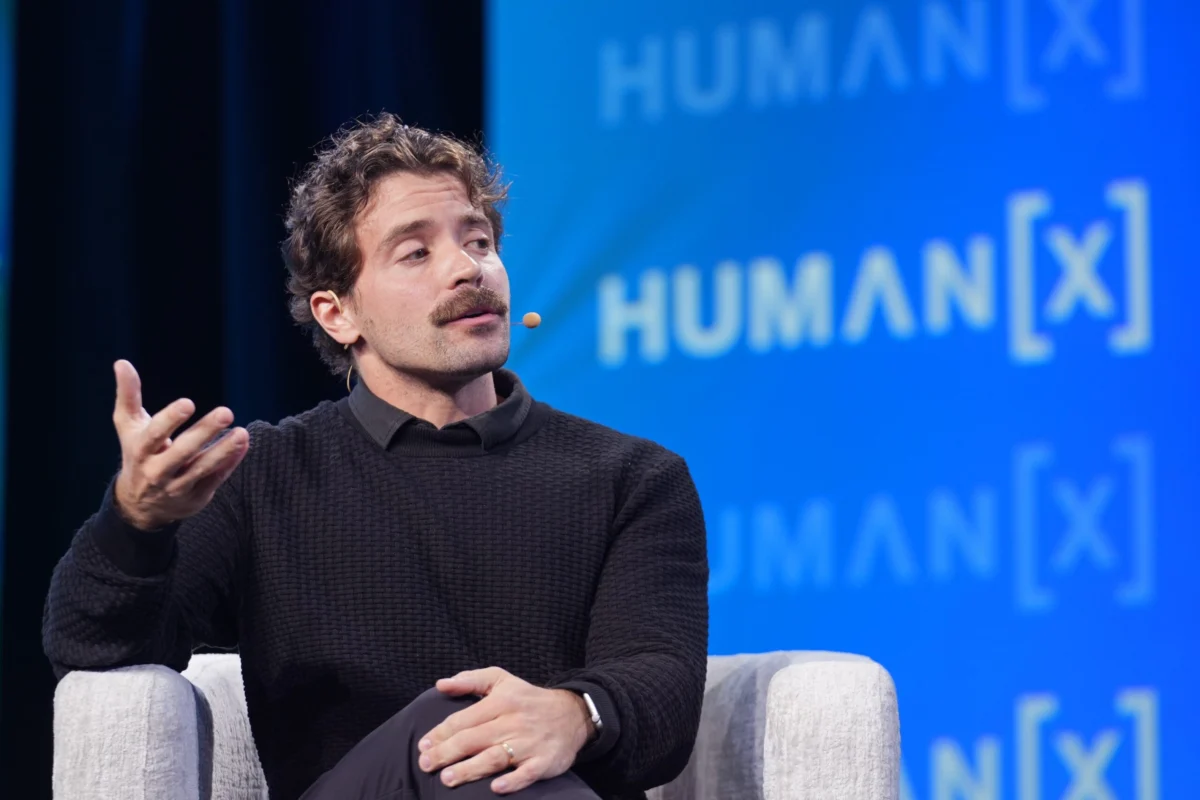
San Francisco, CA – October 13-15, 2026 – In a landscape where many established technology startups are grappling to redefine their relevance in the burgeoning era of artificial intelligence, Vercel, a decade-old developer tool and website hosting platform, is experiencing a significant surge in growth directly attributed to the proliferation of AI-generated applications and agents. The company, founded in 2016, has found itself strategically positioned to capitalize on a seismic shift in software development, where the creation of applications is rapidly democratizing.
Guillermo Rauch, Vercel’s CEO, articulated this transformation during his address at the HumanX conference in San Francisco last week. "When I started this company, only tens of millions of people could deploy," Rauch stated to the assembled audience. "Now we’re seeing that everybody in the world can create an app." This observation underscores a fundamental change in the technological paradigm, moving from a model where app deployment was largely confined to seasoned developers to one where individuals with varying technical proficiencies can now conceive and launch their own digital creations.
The exponential increase in app creation, particularly by individuals without traditional software engineering backgrounds, has proven to be a powerful catalyst for Vercel’s business trajectory. This influx of new creators and their projects translates directly into increased demand for Vercel’s robust and scalable infrastructure.
Vercel’s financial performance reflects this heightened demand. The company’s Annual Recurring Revenue (ARR) has seen a dramatic escalation. According to a report by The Information, Vercel’s ARR stood at $100 million at the commencement of 2024. By the close of February 2026, this figure had surged to a run rate of $340 million, as subsequently reported by Forbes. This nearly threefold increase in ARR within a two-year span highlights Vercel’s exceptional growth and its ability to scale effectively in response to market demand.
IPO Aspirations Amidst Market Volatility
The company’s impressive financial trajectory has naturally brought its long-term strategic goals, including a potential Initial Public Offering (IPO), into sharp focus. When questioned about his company’s IPO plans on stage at the HumanX conference, Rauch suggested that Vercel is already operating with a level of maturity and transparency characteristic of publicly traded entities. "Vercel is very much a work-in-public company," Rauch remarked, implying a commitment to open communication and operational discipline.
However, Rauch remained circumspect regarding a definitive timeline for a public debut. "There’s no perfect timeline or quarter I can give," he stated. "The company’s ready and getting more ready for it every day." This measured approach reflects the current cautious sentiment within the broader technology sector regarding new listings.
The year 2026 was initially anticipated to be a strong period for new public offerings. However, a significant downturn in the software market, exacerbated by concerns over the disruptive potential of artificial intelligence, has effectively curtailed the IPO pipeline. Beyond a select few high-profile companies like SpaceX, Anthropic, and OpenAI, which are widely expected to be blockbuster market entries, discussions around other tech IPOs have largely subsided. The successful public debuts of these major AI players are seen by many as a potential catalyst for reopening the window for other technology companies seeking to go public.
While many tech CEOs have adopted a more reserved stance on their IPO ambitions, Rauch’s public pronouncements indicate that Vercel is actively preparing for a public market listing in the foreseeable future. His confidence in Vercel’s readiness suggests a strategic approach to timing, waiting for optimal market conditions while ensuring the company’s internal operations are fully aligned with public company standards.
The Expanding Total Addressable Market of Infrastructure
When probed about what investors on Wall Street should understand about Vercel’s value proposition, Rauch articulated a vision of an ever-expanding market. "The total addressable market of infrastructure has now grown, and it simply has no ceiling," he declared. This statement points to Vercel’s strategic positioning within the foundational layers of the internet and software development.
Vercel’s core hypothesis is that as AI agents become increasingly prolific in generating applications, the company is poised to become the de facto hosting platform for this rapidly growing output. The ease with which AI can conceptualize, design, and deploy software is fundamentally altering the economics and accessibility of application development. Vercel aims to provide the essential infrastructure to support this new wave of AI-driven creation.
AI Agents as a Growth Engine
Rauch elaborated on the impact of AI agents, noting their significant contribution to Vercel’s platform. "Agents are very prolific at deploying," he explained. He further revealed that a substantial 30% of the applications currently hosted on Vercel’s platform originated from AI agents. This statistic underscores the tangible impact of AI on Vercel’s user base and its revenue streams.
According to Rauch, AI agents are poised to revolutionize software production by simplifying the process of generating custom solutions, making it more efficient and cost-effective than sourcing existing off-the-shelf software. This shift implies a future where bespoke applications tailored to specific needs are the norm, rather than the exception.
"All of that software… it needs to go somewhere, and we think it’s going to be Vercel," Rauch stated, reinforcing the company’s conviction that it will be the primary destination for the vast amount of code and applications generated by AI. This strategic focus on hosting AI-generated content positions Vercel as a critical enabler of the AI revolution in software development.
Vercel’s Competitive Landscape and Product Offerings
Vercel operates in a highly competitive cloud infrastructure market, vying for market share with established giants such as Cloudflare and Amazon Web Services (AWS). However, Vercel differentiates itself through its developer-centric approach and its focus on frontend deployment, offering a streamlined experience for modern web development workflows.
The company’s valuation reflects its strong market position and growth potential. Vercel was last valued at $9.3 billion following a $300 million Series F funding round led by Accel in September. This significant valuation underscores investor confidence in Vercel’s business model and its ability to navigate the evolving technological landscape.
In addition to its core hosting services, Vercel has also been innovating with tools designed to further empower developers and creators. One such offering is v0, a visual development tool that utilizes a "vibe-coding" approach to accelerate the creation of websites and applications. This tool exemplifies Vercel’s commitment to providing integrated solutions that cater to the entire development lifecycle, from ideation to deployment.
The Broader Implications for the Tech Ecosystem
The rise of platforms like Vercel, which are effectively harnessing the power of AI-driven development, signals a potential paradigm shift in how software is created and consumed. The democratization of app creation, fueled by AI, could lead to an explosion of niche applications and services, catering to a wider array of specific needs than previously possible.
For established enterprises, this trend presents both opportunities and challenges. Companies will need to adapt their strategies to incorporate AI-generated solutions and to leverage platforms that can efficiently host and manage this new wave of software. The ability to quickly iterate and deploy custom solutions will become a key differentiator in an increasingly competitive market.
The HumanX conference, where Rauch made his remarks, is a notable event that brings together innovators and thought leaders in the technology sector to discuss emerging trends and the future of human-technology interaction. Held annually in San Francisco, the conference provides a platform for companies and individuals to share insights and forge collaborations. The October 13-15, 2026 dates for this year’s event place Rauch’s commentary within the context of ongoing discussions about the societal and economic impact of artificial intelligence.
The implications of Vercel’s success extend beyond its own financial performance. Its ability to scale and adapt to the AI revolution suggests a robust future for infrastructure providers that can effectively support the next generation of software development. As AI agents become more sophisticated and integrated into the creative process, the demand for reliable, scalable, and developer-friendly hosting solutions will only continue to grow, positioning Vercel as a key player in this transformative technological epoch.