Lina Irawan
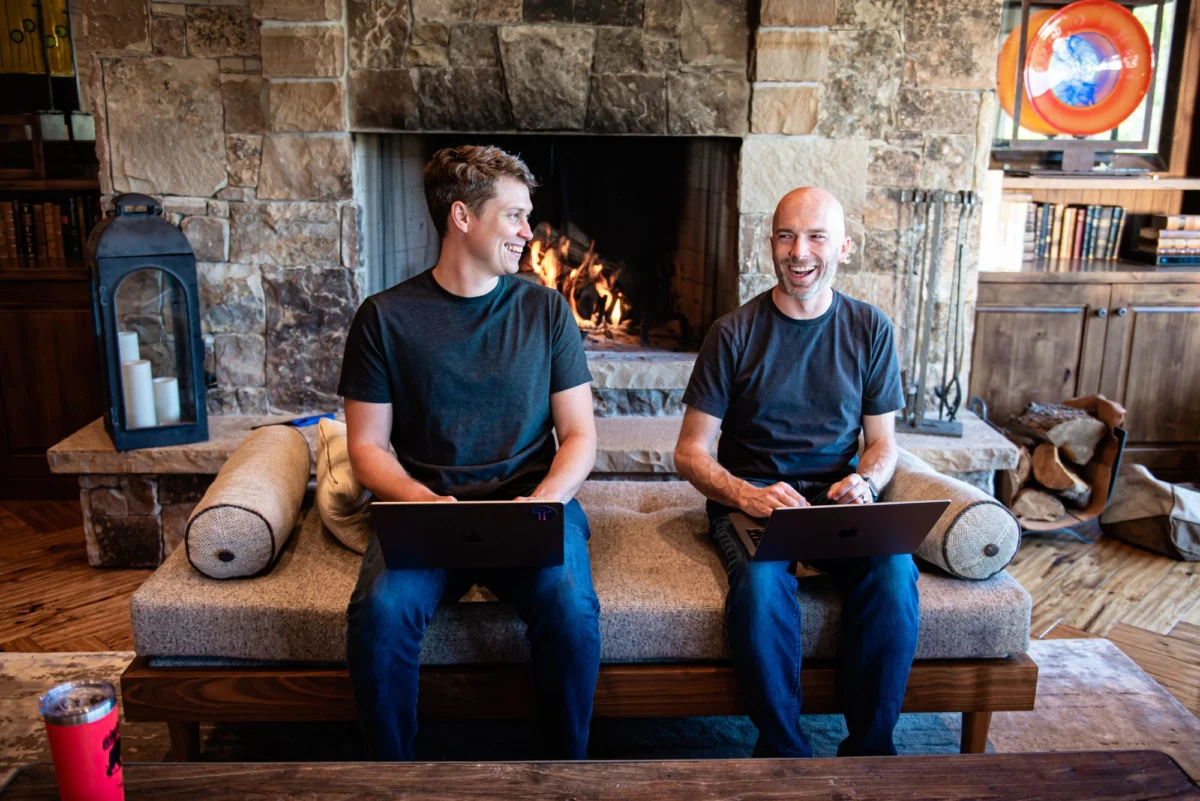
The 2026 AI Agent Conference in San Francisco has become a pivotal site for defining the infrastructure of the autonomous enterprise, and among the most significant developments discussed was the role of structured semantic architectures in governing how artificial intelligence interacts with corporate data. During a featured session, Ryan, host of the industry-leading technology podcast, sat down with Matt DeBergalis, CEO of Apollo GraphQL, to dissect the critical intersection of the Model Context Protocol (MCP) and GraphQL. The discussion highlighted a shift in the industry: as enterprises move past simple chatbots toward autonomous agents that can execute workflows, the underlying data architecture must evolve from a series of disconnected endpoints into a unified, composable graph.
DeBergalis, who previously served as Apollo’s Chief Technology Officer before ascending to the CEO role, argued that the primary bottleneck for agentic AI is no longer the reasoning capability of the Large Language Model (LLM) itself, but rather the "data friction" inherent in legacy microservices. The conversation focused on how Apollo’s newly released MCP Server serves as a bridge, allowing agents to navigate complex internal systems without the overhead of manual API mapping. By providing a declarative, self-service model for data, Apollo aims to solve the three-fold challenge facing modern CIOs: data quality for AI training, internal security against lateral data movement, and the escalating costs of LLM token consumption.
The Evolution of the Data Layer for the Agentic Era
The transition from human-centric software to agent-centric systems has exposed fundamental flaws in traditional REST-based architectures. DeBergalis noted that when developers build applications for humans, they design interfaces that prioritize visual layout. However, when an autonomous agent is the "user," it requires a semantic understanding of the data’s relationships and constraints. Apollo GraphQL’s entry into the MCP ecosystem marks a significant milestone in providing this understanding. MCP, an open-standard protocol designed to allow AI models to securely access local and remote data sources, acts as the "handshake" between the agent and the enterprise’s data graph.
Historically, Apollo has been a leader in the GraphQL space, facilitating the orchestration of APIs for thousands of global enterprises. The company’s move to integrate with MCP signifies a broader industry trend toward standardization. By 2025, the proliferation of specialized AI agents led to a "fragmentation crisis," where agents were unable to communicate across different departmental silos. The 2026 conference consensus suggests that a centralized semantic layer—a "graph" of the company’s entire operational footprint—is the only viable way to provide agents with the context they need to perform complex tasks, such as automated procurement or cross-departmental financial auditing.
Addressing the "East-West" Security Risk
One of the most technical and pressing portions of the discussion involved the concept of "east-west" data exfiltration. In networking terms, "north-south" traffic refers to data moving in and out of a data center, while "east-west" refers to traffic moving between internal microservices. DeBergalis warned that autonomous agents, if granted broad permissions to navigate internal APIs, could inadvertently become vectors for internal data breaches.
"When you give an agent the keys to your microservices, you aren’t just giving it access to a database; you’re giving it the ability to traverse your entire infrastructure," DeBergalis explained during the session. If an agent designed for customer support is compromised or suffers from a logic error, it could potentially query sensitive payroll or R&D data if those services are not properly isolated.
Apollo’s solution involves using GraphQL as a structured "guardrail." Because GraphQL requires an explicit schema, the enterprise can define exactly what fields and entities an agent is allowed to see. This "least-privilege" access model is enforced at the graph level, ensuring that even if an agent attempts to deviate from its intended path, the underlying semantic architecture prevents the unauthorized retrieval of sensitive "east-west" data. This approach is increasingly viewed as a prerequisite for "Zero Trust" AI implementations.
Economic Implications: Token Management and Query Efficiency
Beyond security, the financial burden of running autonomous agents has become a top-tier concern for enterprise leadership. As LLMs process more data, the "context window"—the amount of information the model can hold in its "working memory"—becomes a major cost driver. Standard API calls often return excessive "bloat"—data that the agent does not need but is nonetheless forced to process as tokens.
Industry data presented at the conference suggests that up to 40% of enterprise AI budgets in early 2026 were consumed by "useless context"—metadata and redundant fields returned by inefficient REST endpoints. DeBergalis highlighted how GraphQL mitigates this by allowing the agent (or the developer of the agent) to request only the specific data points required for a task.
For example, if an agent needs to check the shipping status of an order, a traditional API might return the entire customer history, including billing addresses, previous purchases, and support tickets. Through Apollo’s GraphQL-powered MCP server, the agent can be programmed to query only the shipping_status and estimated_delivery fields. This precision reduces the number of input tokens sent to the LLM, directly lowering the operational cost of the agent. This efficiency is not merely a cost-saving measure but a performance one; smaller, more relevant context leads to faster reasoning and fewer "hallucinations" by the AI.
The Role of MCP in Standardizing AI Integration
The Model Context Protocol has emerged as the leading standard for connecting AI models to external tools. During the interview, it was noted that the adoption of MCP by major players such as Anthropic and integrated development environments (IDEs) has created a "lingua franca" for AI connectivity. Apollo’s decision to launch an MCP server allows any MCP-compatible agent to instantly "understand" an enterprise’s GraphQL schema without custom integration code.
This interoperability is expected to accelerate the deployment of autonomous agents. According to market analysis by Gartner and Forrester cited during the conference’s opening keynote, companies that adopt standardized data protocols for AI are expected to see a 30% faster time-to-market for new agentic workflows compared to those relying on ad-hoc API integrations. The Apollo MCP server essentially acts as a translator, converting the rich, structured data of the Apollo Graph into a format that LLMs can use to take action in the real world.
Chronology of Innovation at Apollo GraphQL
To understand the significance of this announcement, it is necessary to look at the timeline of Apollo’s development over the past several years:
- 2022-2023: Apollo focuses on "Federation," allowing large organizations like Netflix and Expedia to merge multiple GraphQL APIs into a single "supergraph."
- 2024: The rise of Generative AI leads to the first experiments in using GraphQL to feed LLMs. Apollo begins developing "GraphOS" features specifically for AI observability.
- 2025: The "Agentic Shift" occurs. Enterprises begin moving away from RAG (Retrieval-Augmented Generation) for simple Q&A and start building agents that can "write" back to systems. Matt DeBergalis moves from CTO to CEO to lead the company’s enterprise AI strategy.
- June 2026: Apollo launches its official MCP Server at the AI Agent Conference, solidifying the graph as the primary data layer for autonomous agents.
Industry Reactions and Future Outlook
The reaction from the developer community at the conference has been largely positive, though some analysts remain cautious. "The challenge isn’t just the protocol; it’s the data quality," said one lead architect from a Fortune 500 financial firm attending the session. "Apollo is giving us the pipes, but we still have to ensure the data inside those pipes is clean. However, having a structured semantic layer makes that cleanup much more manageable."
Looking forward, the implications of this structured approach to AI data are profound. As agents become more autonomous, the need for human oversight will shift from manual task management to "schema management." The role of the developer will increasingly involve defining the boundaries of the graph and the permissions of the agents navigating it.
DeBergalis concluded the session by emphasizing that the goal of Apollo is to make the enterprise "programmable" by AI in a way that is safe, efficient, and scalable. As the 2026 AI Agent Conference continues, the dialogue started by Apollo and other infrastructure providers suggests that the "wild west" era of AI integration is coming to an end, replaced by a more disciplined, architected approach to the autonomous future. The integration of GraphQL and MCP represents more than just a technical update; it is a fundamental reconfiguration of how businesses operate in an age where the primary consumers of data are no longer humans, but machines.