Sonny Valindra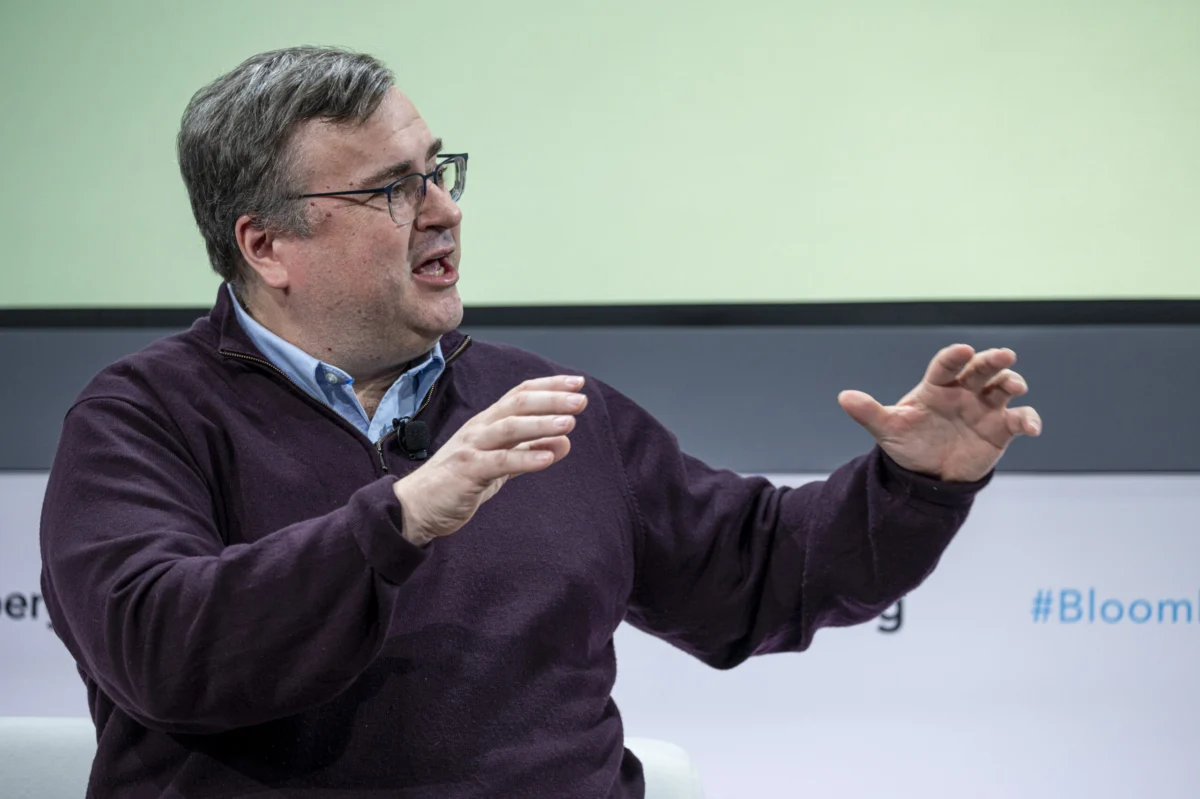
Prentis, a burgeoning AI research lab co-founded by serial entrepreneur Ritankar Das and technology luminaries Reid Hoffman and Mark Pincus, is reportedly in discussions to secure $100 million in funding at a valuation of $1 billion. This significant capital infusion, if finalized, would underscore the immense investor confidence in Prentis’s ambitious mission to revolutionize computer use through advanced AI agents. The startup, which officially launched in April, is dedicated to developing AI models capable of understanding and executing routine office workflows, with the ultimate goal of automating complex tasks across various business functions.
Prentis’s Vision: Automating the Digital Workspace
At its core, Prentis is focused on building sophisticated AI agents that can seamlessly navigate and interact with typical office software and documents. The company’s proprietary models are being trained to learn how individuals perform everyday tasks, from managing documents and emails to interacting with enterprise systems. This deep understanding of human-computer interaction within the professional sphere is intended to empower Prentis’s AI agents to take control of a computer and autonomously complete these repetitive, time-consuming operations.
The potential applications of such technology are vast and varied. Prentis aims to develop highly tailored agents for specific industry needs. For instance, in the insurance sector, these agents could automate the intricate process of handling claims, sifting through policy documents, and verifying information without requiring human intervention to manually gather and process paperwork. Similarly, in international trade, Prentis envisions agents that can autonomously manage customs duty refund exceptions, a process often bogged down by complex documentation and compliance requirements. This level of automation promises to unlock significant efficiency gains and cost reductions for businesses.
Early Traction and Financial Projections
The company has already demonstrated promising early traction, securing contracts valued at up to $50 million with a diverse range of clients. These early adopters include a healthcare management service organization, a prominent manufacturer, and companies within the goods and clothing industries. This robust pipeline of commercial agreements suggests a strong market demand for Prentis’s innovative solutions.
Investor materials obtained by TechCrunch further highlight Prentis’s optimistic financial outlook. The company projects an annualized run rate of $75 million by the third quarter of the current year. It is important to note, however, that these figures represent estimated annualized value based on a contracted fee structure that is tied to a percentage of realized savings—specifically, 20% of savings achieved. As stated in Prentis’s pitch deck, these projections are "performance-dependent and subject to final execution," indicating a model that directly aligns the company’s revenue with its ability to deliver tangible cost savings to its clients. This performance-based revenue model is a testament to the company’s confidence in its technology’s ability to generate significant economic benefits.
Technological Prowess: The Hive-32B Model
Prentis asserts that its proprietary Hive-32B model exhibits superior performance compared to leading AI models in the market. According to the company’s internal assessments, Hive-32B outperforms competitors such as OpenAI’s GPT-5.4 and Anthropic’s Claude Opus 4.6 on two key computer-use benchmarks: WindowsAgentArena and ScreenSpot-v2.
WindowsAgentArena is designed to measure the end-to-end task completion capabilities of AI models when interacting with real Windows applications. This benchmark simulates the practical challenges of navigating and operating software as a human user would. ScreenSpot-v2, on the other hand, specifically tests a model’s ability to accurately locate and interact with the correct on-screen controls within a graphical user interface, a critical skill for any AI agent tasked with controlling a computer.
The company’s pitch deck further elaborates on its competitive advantage, emphasizing the efficiency of its smaller, more cost-effective model. Prentis claims that its Hive-32B model incurs approximately one-tenth the cost per task compared to frontier APIs. This economic advantage makes it a more viable and scalable solution for widespread deployment across the everyday workflows of businesses. While TechCrunch has not independently verified these benchmark results, the claims suggest a strategic focus on optimizing both performance and cost-efficiency, a crucial factor for mass adoption in the enterprise space.
The Competitive Landscape: A Crowded Arena
The burgeoning field of AI agents for computer use is attracting significant attention and investment, positioning Prentis within a highly competitive market. The company’s ambition to automate everyday office tasks is a bold bet, with the potential to eclipse even coding as AI’s dominant use case. However, Prentis is not alone in this pursuit. Industry giants such as Anthropic and OpenAI are also actively developing AI agents designed for computer interaction. Furthermore, sources indicate that Mira Murati’s Thinking Machines Lab is also exploring this domain.
Anthropic, in particular, has been strategically acquiring talent and technology in this area. Earlier this year, the company acquired Vercept, a Seattle-based startup specializing in computer-use AI. This acquisition saw Vercept’s founders and team integrated into Anthropic, with Vercept’s product being discontinued. Such moves signal a concerted effort by established AI players to stake their claim in the AI agent market, intensifying the race for technological supremacy and market leadership.
Prentis did not respond to TechCrunch’s request for comment regarding these developments.
Ritankar Das: A Visionary Leader and Serial Entrepreneur
The driving force behind Prentis is its co-founder and CEO, Ritankar Das. Das is a distinguished figure in the AI landscape, known for founding Titan, a holding company dedicated to building and operating AI-focused businesses. His academic prowess is equally impressive; at the age of 18, he became UC Berkeley’s youngest University Medalist in over a century, graduating with a double major in bioengineering and chemical biology. He further honed his expertise with a master’s degree in biomedical engineering from Oxford University.
Das’s entrepreneurial journey began in earnest when he founded Titan in 2014, shortly after leaving an AI PhD program at Cambridge, where he was a Gates Cambridge Scholar. Titan operates on a model reminiscent of traditional holding companies like Berkshire Hathaway, aiming to fund its ventures through the profitable exits of its portfolio companies rather than relying solely on external limited partners.
Under the Titan umbrella, Das has launched and scaled several successful AI ventures. Tala Health, an AI-powered virtual care provider, secured a substantial $100 million seed round last year. Forta Health, a startup focused on autism care, raised $55 million in a Series A round led by Insight Partners in 2024. Titan also previously founded Dascena, a disease prediction company that was acquired by CirrusDx in 2022, demonstrating a consistent track record of building and divesting valuable AI enterprises.
Co-Founders: Powerhouses of the Tech Industry
Prentis benefits from the strategic involvement of two other highly influential figures in the technology sector: Reid Hoffman and Mark Pincus. While Prentis represents a significant new venture, both co-founders are actively engaged in other high-profile initiatives.
Reid Hoffman, the co-founder of LinkedIn and a partner at Greylock, recently announced his departure from Microsoft’s board after nearly a decade. He stated his intention to shift into "founder mode" with Manas AI, an AI drug-discovery startup he is also backing. Hoffman’s deep involvement in the AI space is well-documented, including his early investment in OpenAI and his co-founding of Inflection AI, a venture that saw a significant portion of its team absorbed by Microsoft in 2024.
Mark Pincus, the visionary behind Zynga, currently leads the investment firm Reinvent Capital, with Hoffman serving as a senior advisor. Pincus also recently released his memoir, "Life at the Speed of Play," further cementing his presence in the entrepreneurial and tech discourse.
The collective expertise and networks of Das, Hoffman, and Pincus provide Prentis with a formidable foundation for growth and innovation.
Building a World-Class Team
Prentis has already made significant strides in assembling a talented team, boasting over 25 employees. The company’s website highlights that its workforce includes researchers who have previously contributed to pioneering work at leading AI organizations such as OpenAI, Google DeepMind, Meta, Tencent, and Alibaba. This infusion of talent from top-tier research institutions and tech giants suggests a commitment to building a team capable of tackling the complex challenges inherent in developing advanced AI agents. The caliber of Prentis’s early hires indicates a strategic focus on attracting individuals with deep expertise in artificial intelligence, machine learning, and human-computer interaction.
Implications for the Future of Work
The success of Prentis and similar AI agent startups could herald a transformative shift in the modern workplace. By automating routine administrative and operational tasks, these AI agents have the potential to free up human workers to focus on more strategic, creative, and complex problem-solving activities. This could lead to increased productivity, enhanced job satisfaction, and a fundamental reshaping of job roles across industries.
However, the widespread adoption of AI agents also raises important questions regarding job displacement and the need for workforce reskilling and upskilling. Businesses and policymakers will need to proactively address these challenges to ensure a smooth transition and harness the full potential of AI for economic and societal benefit. The race to develop the most effective and efficient AI agents is on, and Prentis, with its strong founding team, early traction, and ambitious technological goals, appears well-positioned to be a significant player in shaping the future of how we interact with our computers and manage our work.