George Chandra Eka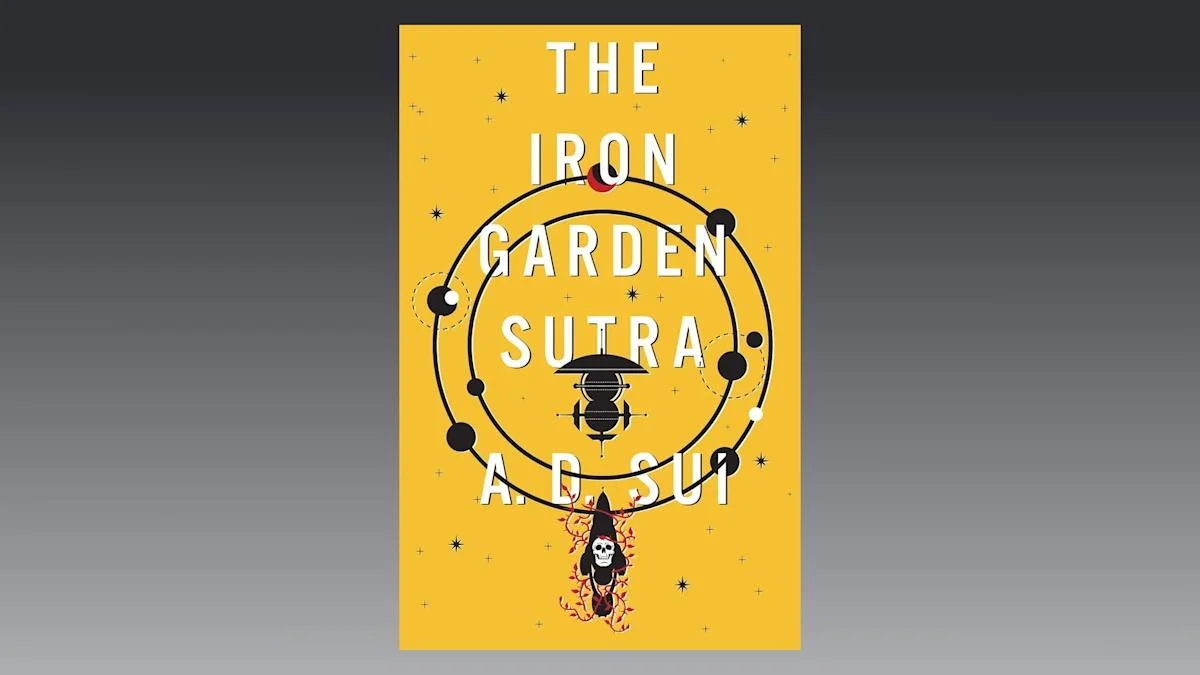
A.D. Sui’s The Iron Garden Sutra, the inaugural volume in The Cosmic Wheel series, has rapidly emerged as a notable contribution to speculative fiction, expertly weaving together elements of meditative horror, science fiction, fantasy, and a classic murder mystery into a cohesive and thought-provoking narrative. The novel, lauded for its unique premise and profound philosophical undercurrents, challenges conventional genre boundaries and offers readers an immersive experience unlike many contemporary releases.
Unpacking a Genre-Defying Premise
At its core, The Iron Garden Sutra presents a meticulously crafted "locked-room mystery" set against a vast, cosmic backdrop. The central conceit, a team of researchers and a "death monk" trapped aboard a derelict spaceship, the Counsel of Nicaea, facing an incomprehensible threat, immediately establishes a high-stakes scenario. However, what elevates Sui’s work beyond a mere thriller is the profound philosophical depth injected through its protagonist, Vessel Iris, and the inherently existential setting. This combination transforms a gripping whodunit into a contemplative exploration of faith, purpose, and the human (or post-human) condition in the face of the unknown.
The narrative introduces Vessel Iris, a monk from the far future belonging to the Starlit Order, an organization dedicated to guiding the souls of the deceased to their ultimate spiritual destination through elaborate funeral rites. In this futuristic society, "Vessels" like Iris are augmented with an AI companion, an internal partner that provides a constant, often bantering, dialogue that enriches Iris’s internal monologue and offers an interesting dynamic for the reader. This symbiotic relationship between biological consciousness and artificial intelligence serves as a crucial narrative device, allowing for intricate world-building and character development through internal discourse.
Iris’s mission leads him to the ancient, presumably lifeless, starship Counsel of Nicaea. He anticipates performing his solemn duties for long-departed inhabitants, but instead discovers a group of living researchers who have inadvertently disturbed the ship’s hundreds of skeletal remains. This disruption not only complicates Iris’s ritualistic duties – requiring him to meticulously sort and bless the jumbled bones – but also signals the beginning of a far more sinister unfolding of events. The Nicaea, far from being a mere tomb, reveals itself to be a living ecosystem, replete with vibrant vegetation and gardens that once sustained its human crew, hinting at a past far richer and more complex than initially perceived.
Thematic Depth and Narrative Innovation
The novel’s strength lies in its ambitious thematic scope, which leverages its genre-bending nature to explore complex ideas. The "meditative horror" aspect is not reliant on cheap scares but rather on a creeping sense of dread and existential unease. As the AI companion begins to detect strange, inexplicable pings from an unknown presence aboard the Nicaea, and the research team begins to mysteriously disappear, Iris is forced to confront not only a tangible threat but also a crisis of faith. His rigid adherence to the Starlit Order’s tenets is tested, pushing him to question his purpose and the very fabric of his beliefs.

This internal conflict is central to the novel’s philosophical core. Sui delves into themes of death, transcendence, the nature of consciousness, and the search for meaning in a potentially meaningless universe. The juxtaposition of ancient spiritual practices with advanced technology and cosmic horror creates a rich tapestry for introspection. The character of Vessel Iris, a spiritual guide confronted with an ultimate existential challenge, serves as an anchor for these weighty considerations, making the narrative resonate deeply with readers who appreciate intellectual engagement alongside suspense.
The "locked-room mystery" element is ingeniously integrated. The spaceship Counsel of Nicaea becomes both the stage and a character in itself. Its isolated nature, coupled with the internal conflicts and external threats, amplifies the tension. The gradual unraveling of the mystery surrounding the researchers’ demise and the true nature of the entity inhabiting the ship is expertly paced, keeping readers engaged while simultaneously building the meditative atmosphere.
The Cosmic Wheel Series: A Broader Narrative Horizon
The Iron Garden Sutra is explicitly positioned as the first installment in The Cosmic Wheel series, indicating Sui’s intent to explore these themes and characters across multiple volumes. This strategic serialization suggests a larger narrative arc and deeper lore to be unveiled, potentially expanding on the Starlit Order, the nature of Vessels and their AI companions, and the broader cosmic landscape that governs this futuristic reality. The initial critical and reader reception suggests a strong foundation for a compelling series that could significantly contribute to the canon of thoughtful speculative fiction.
Background Context: The Evolution of Speculative Fiction
A.D. Sui’s work arrives at a time when speculative fiction, particularly the science fiction and fantasy genres, is experiencing a renaissance of thematic complexity and genre fusion. Contemporary authors are increasingly moving beyond traditional tropes to explore nuanced philosophical, sociological, and psychological questions within fantastical or futuristic settings. This trend has seen a rise in "weird fiction," "new weird," and "philosophical sci-fi," where atmosphere, introspection, and unconventional narratives take precedence over pure action or strict adherence to genre formulas.
The Iron Garden Sutra fits squarely within this evolving landscape. Its blend of horror elements with sci-fi’s expansive possibilities and fantasy’s mythological depth reflects a growing appetite among readers for stories that challenge their perceptions and offer intellectual stimulation. The choice of a "death monk" as a protagonist, grappling with spiritual duties in a highly technological and chaotic environment, is particularly resonant in a modern context where science and spirituality often clash or seek integration.
Historically, the "locked-room mystery" has been a staple of detective fiction, famous for its logical puzzles. Transplanting this into a cosmic horror setting, as Sui does, injects new life into the subgenre, forcing both characters and readers to confront not just who did it, but what it is, and what that implies for existence itself. This subversion of expectations is a hallmark of innovative genre writing.

Critical Reception and Market Implications
While specific sales figures and extensive critical reviews for The Iron Garden Sutra are still accumulating as an emerging title, early reader feedback and literary buzz indicate a highly positive reception. Enthusiasts of thoughtful speculative fiction have particularly lauded its originality and the skillful execution of its ambitious premise. Reviewers have highlighted the compelling character of Vessel Iris, the intricate world-building, and the novel’s capacity to evoke genuine existential contemplation.
Publishers, observing the growing demand for intelligent, genre-bending narratives, are likely to view The Iron Garden Sutra as a significant property. Its unique selling proposition—the synthesis of meditative horror with a sci-fi murder mystery—positions it to attract a broad readership that might typically gravitate towards distinct genres. The novel’s ability to transcend niche appeal suggests a promising trajectory for A.D. Sui as an author capable of captivating diverse audiences.
Broader Impact and Anticipation
The publication of The Iron Garden Sutra marks an exciting development for the speculative fiction community. It demonstrates the continued vitality and adaptability of genres often pigeonholed into specific categories. Sui’s work suggests that there is fertile ground for narratives that prioritize introspection, philosophical inquiry, and atmospheric dread alongside traditional plot structures.
The novel’s exploration of faith and purpose in an increasingly complex and technologically advanced future is particularly timely. As humanity grapples with questions of artificial intelligence, extended lifespans, and potential cosmic discoveries, stories like The Iron Garden Sutra offer a fictional lens through which to examine these profound societal and individual challenges. The internal struggle of Vessel Iris, a spiritual guide whose understanding of the universe is being dismantled by direct experience, serves as a powerful metaphor for humanity’s ongoing search for meaning in an ever-expanding, often terrifying, cosmos.
Anticipation for the subsequent books in The Cosmic Wheel series is high. Readers are eager to see how A.D. Sui will further develop the rich mythology of the Starlit Order, the complex relationship between Vessels and their AI companions, and the ultimate destiny of Iris and the mysterious entity aboard the Counsel of Nicaea. The Iron Garden Sutra stands as a testament to the power of imaginative storytelling, offering both a thrilling mystery and a deep dive into the most fundamental questions of existence. It is poised to become a significant series for fans of horror, science fiction, and anyone seeking a truly unique and intellectually stimulating reading experience.