Sisilia Frederika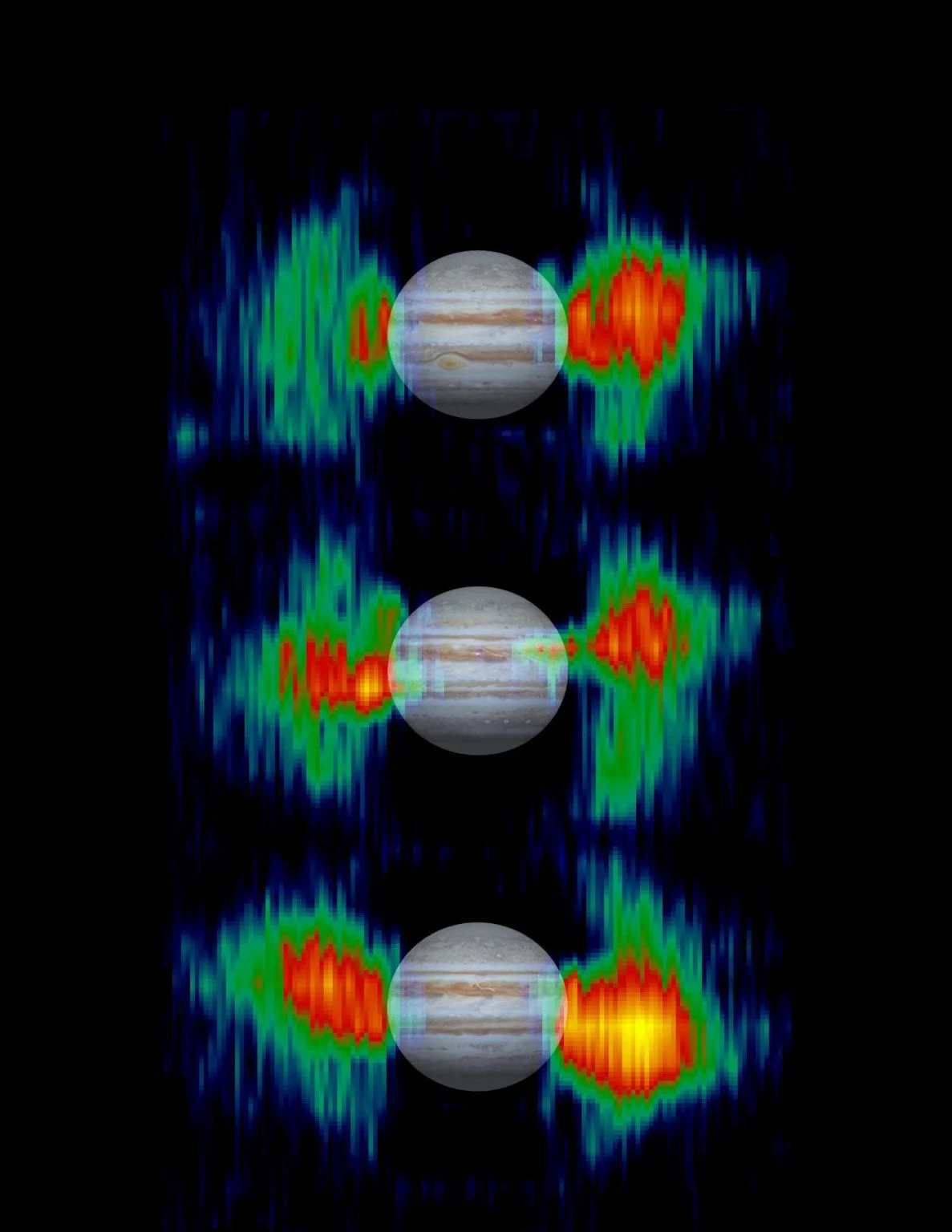
The discovery of planetary radiation belts remains one of the most significant milestones of the Space Age, revealing that planets are not merely isolated spheres in a vacuum but are instead dynamic actors within a complex electromagnetic environment. These vast, invisible, doughnut-shaped regions, filled with electrons and protons hurtling at relativistic speeds, serve as both a shield and a hazard. For decades, the astrophysical community has sought to quantify the precise limits of the energy these belts can contain. Recently, a breakthrough study led by Adnane Osmane, Associate Professor of Space Physics at the University of Helsinki, has introduced a model that defines the maximum energy capacity of these belts with unprecedented simplicity. By identifying a natural "ceiling" to particle acceleration, this research provides a vital tool for understanding not only our own solar system but also the habitability of distant exoplanets.
The Fundamental Mechanics of Planetary Radiation Belts
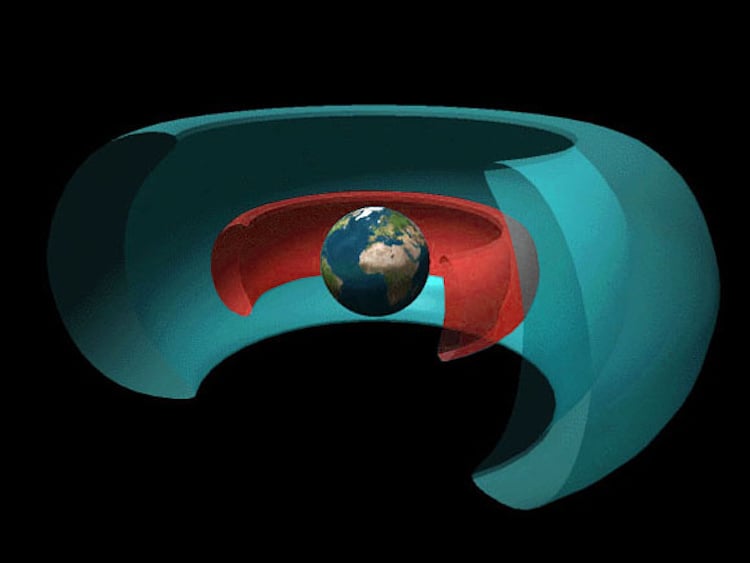
To understand the significance of the Helsinki model, one must first grasp the nature of a radiation belt. These structures are formed when a planet’s magnetosphere—the region of space dominated by its magnetic field—traps charged particles from the solar wind. The solar wind is a constant stream of plasma, primarily composed of electrons, protons, and alpha particles, ejected from the Sun’s corona. When these particles encounter a planetary magnetic field, they are diverted and captured, spiraling along magnetic field lines in a process governed by the Lorentz force.
Contrary to early misconceptions, radiation belts do not generate their own particles. Instead, they act as massive, natural particle accelerators. Through complex interactions involving plasma waves and magnetic fluctuations, the belts "harvest" low-energy particles from the solar wind and pump them with extraordinary amounts of kinetic energy. On Earth, these regions are known as the Van Allen radiation belts, named after James Van Allen, who confirmed their existence using data from the Explorer 1 satellite in 1958.
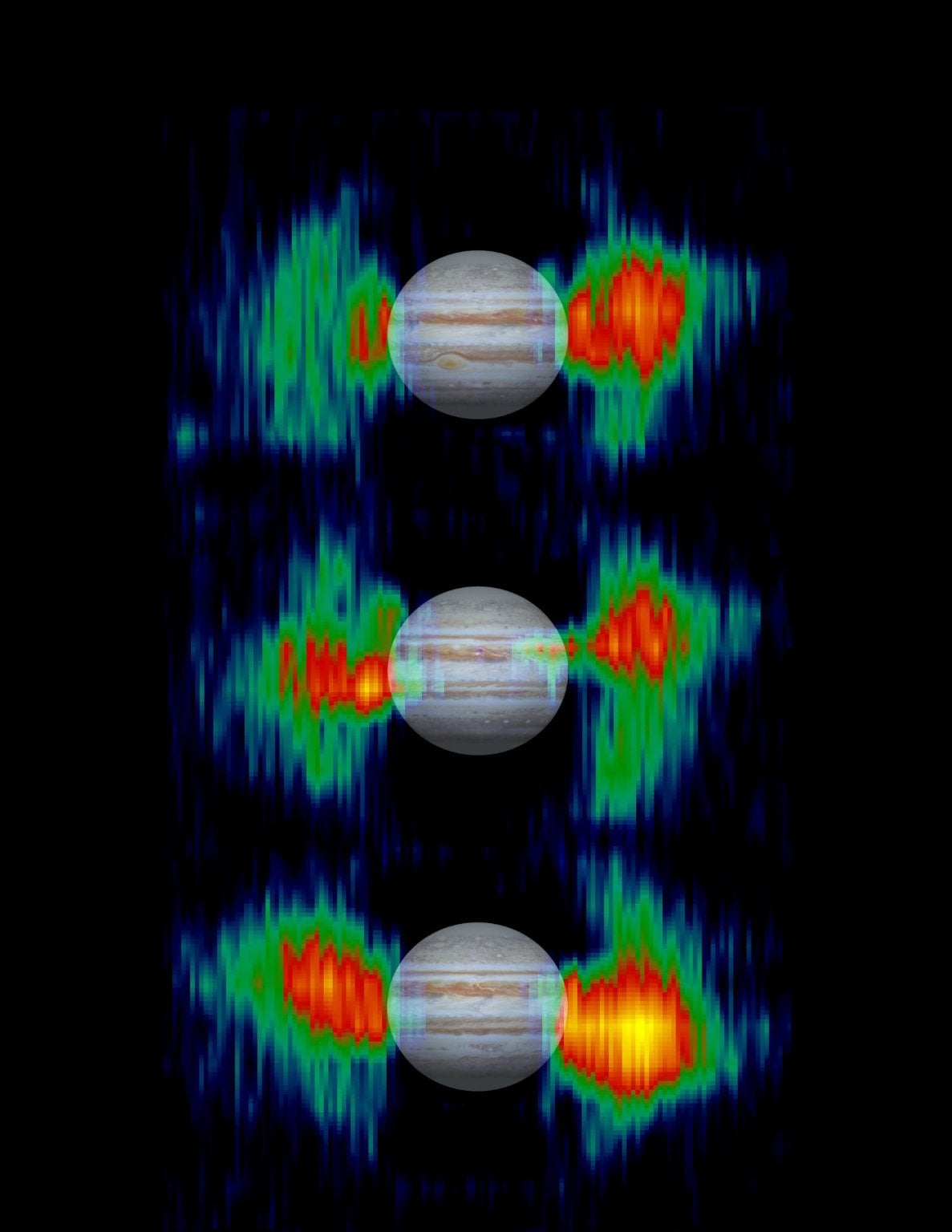
While Earth possesses two primary belts—an inner belt dominated by high-energy protons and an outer belt consisting mostly of high-energy electrons—other planets in the solar system exhibit far more extreme environments. Jupiter, the gas giant with the most powerful magnetic field in our local neighborhood, hosts radiation belts so intense they can fry the electronics of unshielded spacecraft. Saturn, Uranus, and Neptune also possess these structures, though each varies in intensity and composition based on the planet’s internal magnetic dynamo and its distance from the Sun.
The Helsinki Breakthrough: A Single-Variable Solution
For years, predicting the maximum energy level of a radiation belt required complex simulations involving dozens of variables, including solar wind density, magnetic field orientation, and the presence of local ion sources, such as Jupiter’s volcanic moon Io. Professor Adnane Osmane’s new research simplifies this complexity into a single, elegant variable: the strength of the planet’s surface magnetic field.
The model posits that if the surface magnetic field strength is known, the maximum energy that the radiation belt can impart to a particle can be calculated with high precision. This "universal" energy limit suggests that the laws of physics impose a strict cap on how much a magnetosphere can accelerate its inhabitants.
The core of this discovery lies in what Osmane describes as a natural "brake." In any acceleration process, there is a point of diminishing returns. As the magnetic field accelerates particles to higher and higher speeds, those particles begin to lose energy through a process known as synchrotron radiation. This occurs when charged particles are forced to move in a curved path at relativistic speeds, causing them to emit electromagnetic radiation.
Osmane’s model demonstrates that once the acceleration reaches a certain threshold, the energy lost through synchrotron radiation perfectly cancels out any further energy gains from the magnetic field. This creates a physical ceiling. Even if a planet possessed a magnetic field significantly stronger than Jupiter’s, the particles within its belts would not continue to gain energy indefinitely; they would simply hit this energy "roof" and stay there.
Comparative Energy Scales: Nature’s Large Hadron Collider
The numerical results of the model are staggering. The upper energy limit for planetary radiation belts is calculated to be approximately 7 teraelectronvolts (TeV). To put this into perspective, one teraelectronvolt is roughly one trillion times the energy carried by a single photon of visible light.
This 7 TeV limit is not just a theoretical curiosity; it places planetary radiation belts in the same league as the most advanced technology ever created by humanity. The Large Hadron Collider (LHC) at CERN, the world’s most powerful particle accelerator, operates at energy levels in the range of 6.5 to 7 TeV per beam. The fact that a naturally occurring magnetic field around a planet can achieve the same energy levels as a multi-billion-dollar, 27-kilometer-long underground facility is a testament to the sheer power of celestial mechanics.
"Nature has been running these high-energy physics experiments for billions of years," notes the research team. While the LHC requires superconducting magnets cooled to near absolute zero to steer particles, planets achieve these results through their internal dynamos and the vastness of space.
A Chronology of Radiation Belt Discovery and Research
The path to this new model has been paved by over six decades of space exploration and theoretical development:
- 1958: James Van Allen uses data from the first American satellite, Explorer 1, to discover the radiation belts surrounding Earth. This marks the beginning of magnetospheric physics.
- 1973-1974: The Pioneer 10 and 11 missions provide the first close-up measurements of Jupiter’s radiation belts, revealing them to be thousands of times more intense than Earth’s.
- 1979-1989: The Voyager missions extend our understanding to the outer planets, confirming that Saturn, Uranus, and Neptune all possess distinct radiation environments.
- 2012: NASA launches the Van Allen Probes, two identical spacecraft designed specifically to fly through the harshest parts of Earth’s radiation belts. The mission reveals the existence of a temporary third radiation belt and provides deep insights into how the belts respond to solar activity.
- 2023-2024: With the development of the Helsinki model, scientists move from observational data to a predictive framework that can be applied to any magnetized body in the universe.
Implications for Exoplanet Exploration and Habitability
The most profound application of Osmane’s model lies beyond our solar system. As astronomers discover thousands of exoplanets orbiting distant stars, a primary question remains: which of these worlds could support life?
A planetary magnetic field is widely considered a prerequisite for habitability. Without a magnetic field, a planet’s atmosphere is vulnerable to "sputtering"—a process where the solar wind gradually strips away the atmosphere and carries it into space. This is believed to be what happened to Mars, which lost its global magnetic field billions of years ago and subsequently saw its thick atmosphere and liquid water vanish.
By using the Helsinki model, scientists can now predict the radio wavelengths that would be emitted by a radiation belt hitting its 7 TeV energy limit. When an exoplanet’s radiation belt accelerates particles, it produces a specific radio signature. If astronomers can detect these signatures using radio telescopes like the Square Kilometre Array (SKA), they can confirm the presence of a magnetic field.
Furthermore, the model allows researchers to estimate the strength of that magnetic field from a distance. If a planet has a magnetic field strong enough to host a high-energy radiation belt, it is much more likely to have a stable atmosphere capable of shielding its surface from harmful cosmic rays. This makes the search for "invisible doughnuts" around distant stars a primary goal in the search for Earth 2.0.
Brown Dwarfs and the Limits of Magnetism
The research also extends to brown dwarfs—celestial objects that occupy the middle ground between the largest gas giant planets and the smallest stars. Brown dwarfs are too massive to be considered planets, yet they lack the mass required to sustain the nuclear fusion of hydrogen in their cores.
Recent observations have shown that some brown dwarfs possess incredibly strong magnetic fields and display aurorae similar to those seen on Earth and Jupiter. The Helsinki model suggests that these objects also host radiation belts that obey the same 7 TeV limit. Because brown dwarfs often have magnetic fields much stronger than those of planets, they likely operate at the very edge of the model’s predicted energy ceiling, making them ideal subjects for future testing of the theory.
Scientific Analysis: A Tool for Space Weather and Engineering
Beyond the search for life, the Helsinki model has practical implications for modern technology. Our society is increasingly dependent on satellite infrastructure for communication, navigation, and weather forecasting. These satellites must operate within or near Earth’s radiation belts.
During periods of high solar activity, the belts can "inflate" and become more energetic, posing a risk of electrostatic discharge or "bit flips" in satellite memory. By understanding the ultimate physical limits of particle acceleration, space weather forecasters can better predict the "worst-case scenarios" for solar storms. If we know the absolute ceiling of energy a belt can provide, engineers can design spacecraft shielding that is optimized for those specific limits, potentially saving billions of dollars in lost equipment.
Conclusion: The Elegance of Universal Laws
The work of Adnane Osmane and the University of Helsinki represents a shift in how we view the cosmos. It moves the study of planetary magnetospheres away from localized, case-by-case observations and toward a unified physical law. The realization that a single variable—surface magnetic field strength—can dictate the maximum energy of a planetary system simplifies our understanding of the universe’s most powerful natural accelerators.
As we look toward future missions, such as the European Space Agency’s JUICE (JUpiter ICy moons Explorer) and NASA’s Europa Clipper, this model will serve as a foundational guide. These missions will dive deep into the radiation-heavy environment of the Jovian system, and the data they return will likely provide the ultimate validation for the 7 TeV ceiling. In the vast, invisible architecture of the cosmos, the Helsinki model has finally provided a blueprint for the energy limits of the planetary shields that make life possible.