 Vera Intan Clara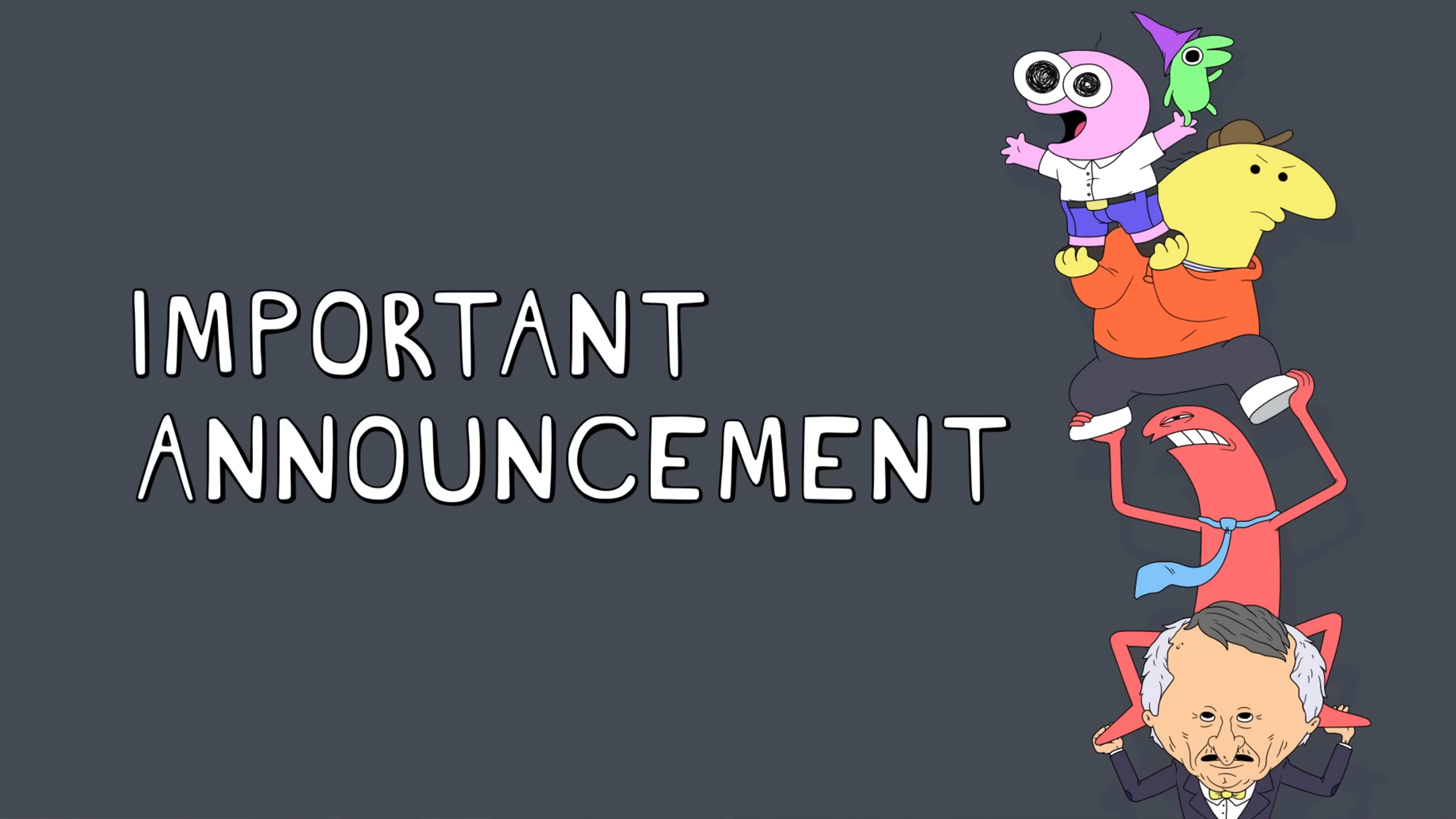
The critically praised Adult Swim animated comedy Smiling Friends, a distinctive creation from Zach Hadel and Michael Cusack, is set to conclude its run following the upcoming third season. The announcement, delivered by the creators themselves, has sent ripples through its dedicated fanbase, prompting a wide array of reactions ranging from profound disappointment to understanding and respect for the creators’ decision to prioritize artistic integrity over longevity. This unexpected conclusion marks a significant moment for the network known for its unconventional and creator-driven programming.
The Genesis and Rapid Ascent of Smiling Friends
Smiling Friends first captured public attention with its pilot episode, which debuted in 2020. Created by internet animation veterans Zach Hadel (known online as PsychicPebbles) and Michael Cusack, the show quickly distinguished itself with its unique blend of surreal humor, diverse animation styles, and an underlying theme of spreading happiness. The series centers on the titular charity, Smiling Friends, and its four eccentric employees – Pim, Charlie, Glep, and Alan – who are tasked with bringing joy to the bizarre and often troubled inhabitants of their world.
Hadel and Cusack, both established figures in the online animation community, brought a fresh perspective to Adult Swim’s lineup. Hadel’s work on Hellbenders and his popular YouTube content, combined with Cusack’s distinctive Australian animation style seen in projects like YOLO: Crystal Fantasy and Bushworld Adventures, converged to create a show that felt both familiar to fans of internet humor and refreshingly innovative for television. The pilot’s immediate viral success underscored a clear demand for its particular brand of absurdist comedy, quickly building a fervent following that eagerly anticipated a full series order.
Nearly two years after the pilot’s enthusiastic reception, the first season of Smiling Friends officially premiered in January 2022. Its debut was met with critical acclaim and strong viewership, cementing its status as a breakout hit for Adult Swim. The show’s ability to seamlessly blend flash animation, stop-motion, 3D CGI, and live-action elements within a single episode, often for comedic effect, was particularly lauded. This stylistic versatility, coupled with its sharp writing and memorable characters, positioned Smiling Friends as a standout in the increasingly crowded adult animation landscape.
A Concise Chronology of Production and Release
The journey of Smiling Friends from concept to its impending conclusion has been a relatively swift but impactful one:
- 2020: The pilot episode of Smiling Friends is released on Adult Swim, quickly gaining viral traction and critical praise, leading to a full series order.
- January 2022: Season 1 officially premieres, consisting of eight episodes. Its success leads to immediate demand for further seasons.
- August 2022: Adult Swim officially renews Smiling Friends for a second season, signaling the network’s confidence in the series.
- May 2024: Season 2 premieres, continuing the show’s unique narrative and stylistic experimentation, further solidifying its fanbase.
- October 2025: Season 3 is slated to debut, with production having commenced following the success of the prior seasons.
- Early April 2026: In a surprising announcement, creators Zach Hadel and Michael Cusack reveal that the forthcoming Season 3 finale, scheduled for April 12th, 2026, will also serve as the series finale for Smiling Friends. This revelation comes despite earlier indications or reports of potential renewals for additional seasons (specifically Seasons 4 and 5, as cited by some fans).
This timeline highlights the show’s rapid ascent and the relatively short, but intensely creative, period of its existence. The decision to conclude after three seasons, especially given its popularity and critical success, stands in contrast to the trend of many long-running animated series.
The Creators’ Rationale: Prioritizing Quality Over Quantity
The news of Smiling Friends‘ conclusion was delivered directly by Hadel and Cusack in a video message shared by Adult Swim, emphasizing the personal nature of their decision. "I’m gonna cut right to the chase," Hadel stated, clarifying, "This is not a bit, this is not a joke. Michael and I are here to announce that Smiling Friends will be ending after Season 3 is done."
Cusack elaborated on the underlying reasons, articulating a sentiment common among creative professionals facing intense production cycles. "To be perfectly honest, after we finished Season 3, Zach and I just both had the same feeling where we felt pretty burnt out after putting years and years into this, but also pretty accomplished," he explained. This feeling of both exhaustion and fulfillment led them to a collective realization: "We just came to this feeling where we were like, ‘I think that could just be it,’ after Season 3."
The core of their decision, as further articulated by Cusack, was a commitment to maintaining the show’s high quality and avoiding creative stagnation. "We wouldn’t want to be doing more seasons half-hearted or burnt out or not feeling it," he asserted. "That’s not fair to us, and it’s not fair to the audience to give you guys fucking slop. That sucks." This statement resonates deeply within creative communities, where the pressure to extend popular properties often clashes with the desire to preserve artistic integrity. The creators’ explicit aversion to producing "slop" underscores a dedication to their craft and their audience, choosing to end the series on their own terms rather than letting it diminish in quality due to fatigue or lack of passion.
Significantly, Cusack also revealed that Adult Swim has expressed openness to the creators returning to Smiling Friends in the future should they feel inspired to produce more episodes. This detail suggests a supportive relationship between the network and its talent, allowing for creative autonomy and potentially leaving the door ajar for future projects, even if not immediately.
Adult Swim’s Stance and the Broader Context of Creator-Driven Animation
Adult Swim, a programming block on Cartoon Network known for its adult-oriented animated and live-action shows, has historically cultivated a reputation as a haven for creator-driven, often experimental content. Series like Aqua Teen Hunger Force, The Venture Bros., Rick and Morty, and Metalocalypse have thrived under a model that often grants significant creative freedom to showrunners. This environment has allowed for unique voices and unconventional narratives to flourish, attracting a specific demographic of viewers.
The network’s response, as inferred from Cusack’s statement, appears consistent with this philosophy. By reportedly offering the option to return to Smiling Friends at a later date, Adult Swim demonstrates a respect for its creators’ well-being and artistic vision. This approach stands in contrast to network practices that might push for more seasons regardless of creator fatigue, potentially leading to a decline in quality, as seen in some long-running series.
The decision by Hadel and Cusack also reflects a growing trend in the animation industry, particularly within the adult animation sector, where creators are increasingly empowered to dictate the lifespan of their projects. While long-running shows like The Simpsons and Family Guy continue to dominate, there is a discernible movement towards shorter, more focused series that prioritize narrative cohesion and creative energy over sheer episode count. This model allows creators to tell their story, make their artistic statement, and move on to new endeavors without the burden of maintaining a property past its natural creative peak.
Fan Reactions: A Spectrum of Emotion and Debate
The announcement triggered a robust and varied response across social media platforms like X (formerly Twitter) and Reddit, highlighting the deep connection fans had forged with the series.
Many fans expressed profound sadness and disappointment, some labeling the decision as a "cancellation" despite the creators’ clarification. User @rendy_jones tweeted, "Bro, SMILING FRIENDS is officially done. This is not a joke. Check Adult Swim’s Instagram. Michael Cusack & Zach Hadel just announced they’re ending it on their terms. Two episodes left dropping in April, but yeah, it’s over. Wow. Now I know how the TELL ME LIES fans feel." This sentiment underscores the emotional investment viewers place in their favorite shows, and the difficulty of accepting an abrupt end, regardless of the reasons.
However, a significant portion of the fanbase voiced understanding and even approval of the creators’ choice. Many echoed the sentiment that ending a show on a high note is preferable to letting it decline in quality. "@thatbluedemon" shared, "Honestly, I don’t blame them for their decision. It’s better that the show ends on a high note than be oversaturated like Rick and Morty." Similarly, "@Petaar6" added, "It’s better for [a] series to end on a good note and be viewed as an art classic rather than to air long enough to become the next Simpsons or Family Guy." These reactions reflect a critical awareness within the audience about the pitfalls of prolonged series, often citing examples of shows that outlived their creative peak.
A third category of reactions demonstrated skepticism and even disbelief, particularly on platforms like Reddit. Some fans questioned the abruptness of the announcement, especially in light of prior rumors or reports of greenlit future seasons. User @angrycarrick posted, "Maybe this is my cope mechanisn, but there’s something fishy about this. I really don’t think Zach & Michael would end the show so abruptly like this and fk over their crew, esp so soon after the announcement of seasons 4 & 5. Feel like this has to be some sort of bit."
This skepticism was amplified by concerns for the show’s production crew. Users like u/husky_hugs on Reddit articulated the potential professional impact, stating, "I think it was like six months ago that they announced seasons 4 & 5 were greenlit and happening. The crew made life plans around that. You don’t update your resume and field job prospects when your current project is set to run for 4 more years; you do that when it’s winding down. This absolutely blows for the crew, and you are 1000% bullshitting if you act like you wouldn’t be pissed if that happened to you." This highlights a significant and often overlooked aspect of series conclusions: the livelihood and career planning of the dozens, if not hundreds, of individuals involved in production. While the creators’ reasons are valid, the suddenness of such an announcement can have tangible consequences for the extended team.
Other fans simply expressed profound sadness over the show’s relatively short run. "Fewer episodes than season 1 of SpongeBob. Like be so for real, this show hadn’t even hit its peak. I’m so disappointed," wrote u/Regular_Fox_859, indicating a feeling that the series was cut short before it could fully explore its potential.
Broader Implications for Adult Animation and Creator Autonomy
The conclusion of Smiling Friends after three seasons, while disappointing for many, carries several broader implications for the landscape of adult animation and the evolving relationship between creators and networks.
Firstly, it reinforces the value of creative autonomy. Adult Swim’s reported willingness to allow Hadel and Cusack to end the series on their terms, and even leave the door open for future returns, sets a precedent for creator empowerment. In an industry often driven by commercial interests and the desire to milk successful franchises, this approach prioritizes artistic integrity and the well-being of the talent. It suggests that a successful show’s legacy can be preserved by respecting its natural conclusion, rather than forcing it into a decline.
Secondly, it contributes to the discourse around the ideal length of animated series. While long-running shows have their appeal, the Smiling Friends scenario, alongside other critically acclaimed but shorter-lived animated projects, advocates for a model where quality trumps quantity. This can lead to more tightly written narratives, innovative animation, and a greater creative turnover, potentially fostering a more vibrant and diverse animation ecosystem.
Finally, for Adult Swim itself, the end of Smiling Friends creates a void in its programming schedule, but also an opportunity. The network has consistently shown an ability to identify and nurture unique creative voices. While the loss of a popular show is felt, it opens up space for new, potentially groundbreaking series that can capture the next generation of adult animation fans. The show’s legacy will undoubtedly inspire future creators to push boundaries in style, humor, and storytelling, confident that their artistic vision will be respected.
In summary, the departure of Smiling Friends from Adult Swim’s lineup is a complex event, reflecting a confluence of creative exhaustion, artistic integrity, and network support. While a "dark day" for many devoted fans, it also stands as a testament to the show’s impact and the evolving dynamics of television production in the digital age, where the pursuit of quality and creator well-being increasingly takes precedence. The final episodes of Season 3 will not only conclude a beloved series but also mark the deliberate closing of a chapter by its visionary creators.