Chandra Wibowo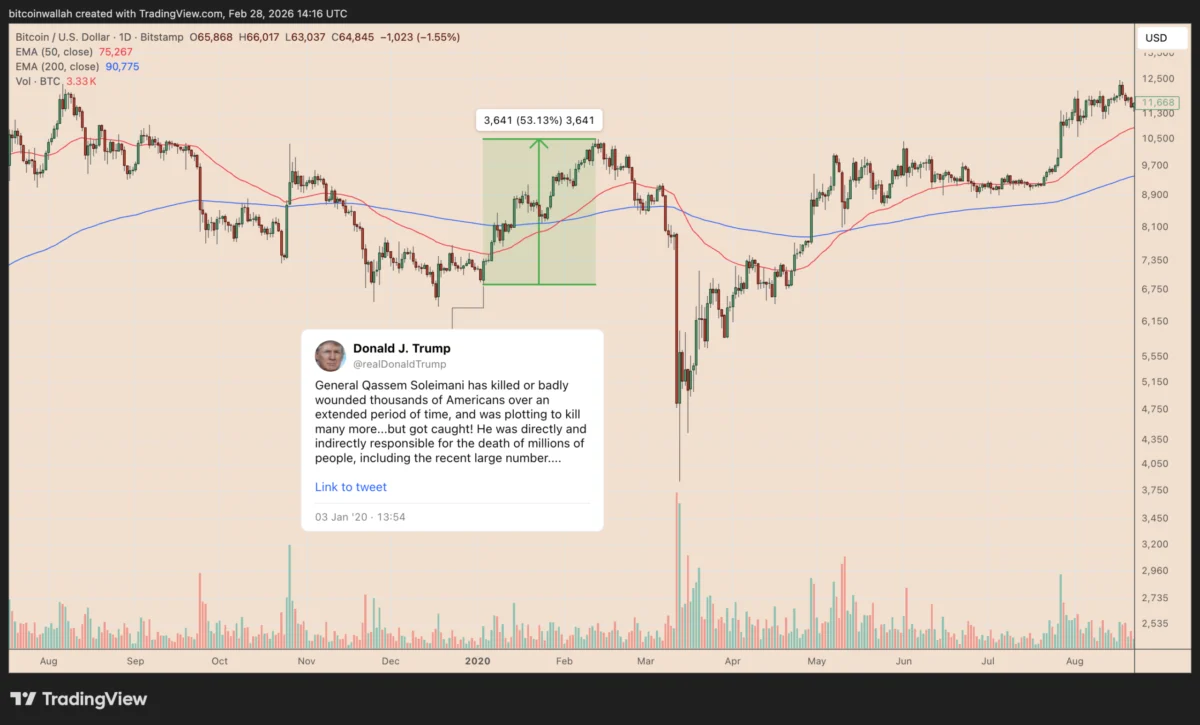
Bitcoin (BTC) is on track for its strongest weekly gain since September 2025, defying a broader risk-off backdrop driven by the escalating US and Israel-Iran war. This resilience in the face of significant geopolitical uncertainty highlights Bitcoin’s evolving role as a potential hedge and a speculative asset that can decouple from traditional market sentiment. As of Saturday, the benchmark cryptocurrency had surged over 7% in the past week, reaching approximately $70,625. This performance starkly contrasts with the broader equity market, where the S&P 500 (SPX) experienced a decline of 1.60% over the same period, underscoring Bitcoin’s divergence from conventional risk assets.
STRC Fueling Significant Bitcoin Accumulation
A key driver behind Bitcoin’s recent upward momentum appears to be substantial buying power indicated by data from STRC.LIVE. The platform’s estimates suggest that Strategy, a prominent investment firm, may have generated enough capital through at-the-market sales of its STRC instrument this week to acquire over 11,000 Bitcoin. At current market prices, this represents an estimated $776 million in potential Bitcoin acquisitions.
STRC, which stands for Strategy’s exchange-traded income-paying instrument, plays a crucial role in the firm’s capital-raising strategy for Bitcoin purchases. When the STRC instrument trades at or above its par value of $100, Strategy is empowered to issue additional shares. This mechanism effectively converts investor demand into tangible capital that can be deployed for acquiring Bitcoin. This strategic approach has been instrumental in bolstering Strategy’s Bitcoin holdings, with the firm having purchased approximately 17,994 BTC in the previous week alone, valued at roughly $1.28 billion at that time. Notably, around 30% of that significant allocation was financed through proceeds from STRC sales.

This influx of institutional capital, facilitated by instruments like STRC, is a significant factor contributing to Bitcoin’s resilience. It demonstrates a growing conviction among sophisticated investors in Bitcoin’s long-term potential, even amidst global instability. The ability of Strategy to continuously raise capital for Bitcoin purchases suggests a robust demand and a belief in the asset’s ability to appreciate in value.
Spot Bitcoin ETFs Continue to Attract Inflows
In addition to institutional capital raised through specific financial instruments, the continued strong performance of U.S. spot Bitcoin Exchange-Traded Funds (ETFs) has also played a pivotal role in bolstering Bitcoin’s price. These ETFs have collectively attracted substantial net inflows, marking a streak of five consecutive trading days with positive inflows, accumulating a total of $767 million. This sustained demand from ETFs reflects a broader market sentiment shift, with a growing number of investors seeking exposure to Bitcoin through regulated financial products. The robust inflows into these ETFs, even as geopolitical tensions escalate, suggest that concerns about potential price volatility are being outweighed by the perceived long-term value proposition of Bitcoin.
The launch of spot Bitcoin ETFs in January 2025 marked a watershed moment for the cryptocurrency market, offering a more accessible and familiar entry point for traditional investors. The consistent inflows observed since their inception indicate a healthy appetite for Bitcoin, signaling its increasing integration into mainstream investment portfolios. This growing institutional adoption is a critical factor underpinning Bitcoin’s price appreciation and its ability to absorb shocks from external events.
Bitcoin’s Historical Resilience During Geopolitical Crises
Bitcoin’s current performance echoes a historical pattern of resilience demonstrated during periods of significant geopolitical turmoil. While initial reactions to major international conflicts have sometimes involved sharp sell-offs, Bitcoin has historically recovered and often experienced substantial gains in the subsequent months.

A notable precedent occurred in February 2022, following Russia’s invasion of Ukraine. The initial market reaction saw a sharp decline in Bitcoin’s price. However, this was followed by a remarkable rally of approximately 40%, showcasing Bitcoin’s capacity to rebound and outperform in the aftermath of geopolitical shocks. This historical event suggests that, rather than being a mere speculative asset, Bitcoin can act as a digital safe haven for some investors seeking alternatives to traditional financial systems that may be perceived as vulnerable during times of conflict.
A similar pattern unfolded after Israel’s strikes on Iran in June 2025. The immediate aftermath saw a dip in Bitcoin’s price, but this was quickly followed by a significant upward trend, with the cryptocurrency appreciating by roughly 25% over the subsequent two months. This sequence of events further reinforces the narrative of Bitcoin’s "risk-on, risk-off" decoupling, where it can exhibit inverse correlation to traditional markets during periods of extreme global stress.
Furthermore, during the US-Iran tensions in January 2020, triggered by the killing of General Qasem Soleimani, Bitcoin experienced an overall surge of more than 50%. While there was an initial brief price drop, the asset quickly recovered and demonstrated significant upward momentum. These historical instances provide a compelling backdrop for Bitcoin’s current performance, suggesting that the market may be anticipating a similar pattern of initial volatility followed by a sustained recovery and growth.
This historical data suggests that investors may be increasingly viewing Bitcoin not just as a speculative digital asset but also as a potential hedge against geopolitical risks and economic instability, similar to traditional safe-haven assets like gold. The decentralized nature of Bitcoin and its limited supply can contribute to its appeal during times when trust in traditional financial institutions and government-backed currencies may be questioned.

Potential for Further Upside and Macroeconomic Indicators
The persistent buying pressure, coupled with historical precedents, suggests that Bitcoin’s price may continue to climb. Macroeconomic models are hinting at the possibility of Bitcoin’s ascent towards the $100,000 mark in the coming months. This optimistic outlook is supported by several factors, including the ongoing institutional adoption, the increasing accessibility through ETFs, and the potential for Bitcoin to serve as a hedge against inflation and geopolitical uncertainty.
The narrative of Bitcoin as a store of value, akin to digital gold, is gaining traction, especially in an environment characterized by rising global debt levels and potential currency devaluations. As central banks continue to manage inflationary pressures, investors are increasingly seeking alternative assets that can preserve their purchasing power. Bitcoin’s finite supply of 21 million coins positions it as a potentially attractive option in this regard.
Technical Analysis: The Shadow of the Bear Flag
Despite the bullish sentiment and historical tailwinds, technical analysis indicates that Bitcoin’s upside potential may be tempered by the presence of a "bear flag" formation on its chart. This technical pattern suggests that the recent price surge could potentially be a bull trap, a scenario where an asset experiences a temporary price increase before resuming its downward trend.
A bear flag typically forms after a significant downtrend, characterized by a period of consolidation within an ascending, parallel channel. This consolidation phase often leads traders to believe that an uptrend is resuming. However, the pattern usually resolves with a breakdown below the lower boundary of the channel, leading to a continuation of the prior downtrend. The measured downside target, based on the height of the preceding downtrend, could place Bitcoin’s price as low as $51,000 if this pattern plays out.

As of Saturday, Bitcoin was showing signs of upside exhaustion near the upper boundary of this potential bear flag. This resistance level also aligns with the 50-day exponential moving average (50-day EMA), which is a closely watched technical indicator, currently situated around $72,750. The confluence of these technical signals suggests that while short-term momentum may favor buyers, the risk of a significant correction remains.
Traders and analysts will be closely monitoring Bitcoin’s price action in the coming days and weeks to determine whether it can decisively break through these resistance levels and invalidate the bear flag formation, or if it will succumb to selling pressure and retrace its recent gains. The interplay between fundamental drivers like institutional demand and geopolitical events, and technical indicators, will be crucial in shaping Bitcoin’s trajectory.
Broader Implications and Market Sentiment
The ability of Bitcoin to maintain its upward trajectory amidst escalating geopolitical tensions speaks volumes about its evolving position in the global financial landscape. It suggests a growing decoupling from traditional market dynamics, where risk aversion typically leads to sell-offs across asset classes. Instead, Bitcoin appears to be carving out its own narrative, influenced by factors such as institutional adoption, technological advancements, and its potential role as a digital store of value and a hedge against uncertainty.
The continued strong performance of spot Bitcoin ETFs, alongside the capital-raising activities of firms like Strategy, reinforces the notion that institutional investors are becoming increasingly comfortable with Bitcoin as an asset class. This institutional embrace is likely to continue to drive demand and support higher price levels in the long term.

However, the presence of the bear flag formation serves as a crucial reminder of the inherent volatility and speculative nature of the cryptocurrency market. While historical patterns suggest resilience, the short-term technical outlook presents a cautionary note, highlighting the potential for sharp reversals. Investors are therefore advised to approach the market with a balanced perspective, acknowledging both the bullish drivers and the potential downside risks. The coming weeks will be critical in determining whether Bitcoin can sustain its current momentum or if it will face a significant price correction, as suggested by the technical indicators. The broader impact of this sustained demand for Bitcoin could also influence regulatory discussions and further drive innovation within the digital asset space.