admin
admin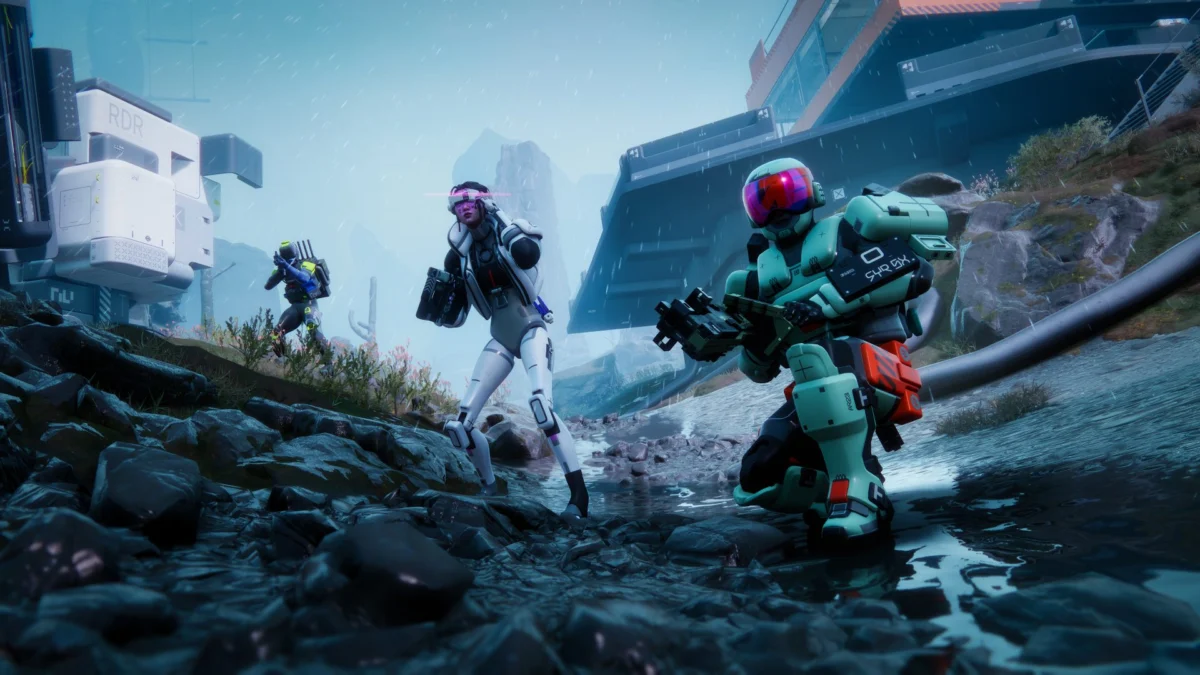
The release of Marathon marks a significant pivot for Bungie, the studio behind the Halo and Destiny franchises, as it enters the competitive extraction shooter market. Set on the harsh, atmospheric world of Tau Ceti IV, the game challenges players—referred to as Runners—to navigate a high-stakes environment where survival is contingent upon a deep understanding of interconnected systems, factional politics, and resource management. Following its initial announcement in May 2023 and a rigorous development cycle that saw leadership transitions and extensive community playtesting, Marathon has arrived with a complex PvE/PvP infrastructure designed to reward tactical patience as much as mechanical skill.
Evolution of the Marathon IP and Project Development
The modern iteration of Marathon is a reimagining of Bungie’s classic 1994 first-person shooter. While the original was a narrative-driven single-player experience, the 2026 release focuses on the "extraction" loop, a genre popularized by titles such as Escape from Tarkov and Hunt: Showdown. The development of the project was marked by a strategic shift under Game Director Joe Ziegler, who took the helm in 2024 to refine the game’s competitive identity.

The road to launch included several critical milestones, most notably the "Server Slam" events and closed alpha phases where Bungie tested its unique "Shell" system—customizable robotic bodies that players inhabit. Data from these tests revealed a high lethality rate for new players, leading to the implementation of "Sponsored Kits" to ensure that the barrier to entry remains manageable even after significant gear losses. As of March 2026, the game has established a stable player base, though it faces stiff competition from other seasonal releases in the genre.
Operational Hazards: The UESC and AI Lethality
A primary misconception among novice Runners is that the greatest threat on Tau Ceti IV is other human players. While the unpredictability of PvP encounters remains a constant danger, the Unified Earth Space Council (UESC) forces represent a highly lethal PvE element that demands respect. The UESC presence includes various tiers of robotic combatants, field commanders, and automated turret systems.
Unlike the fodder-tier enemies found in many contemporary shooters, UESC units are programmed with aggressive flanking maneuvers and high accuracy. They are designed to punish players who "kick the hornet’s nest" without a clear exit strategy. Engagement with these units creates significant noise, which serves as a beacon for nearby enemy Runners. Early-game guidance provided by the AI agent Oni emphasizes that "picking your fights" is the foundational rule of survival. Data from the first month of live operations suggests that nearly 40% of unsuccessful extractions are the direct result of being overwhelmed by UESC reinforcements during protracted firefights.

Resource Management and the Unstable Material Economy
The progression in Marathon is tied to the acquisition of specific resources categorized as "Unstable." These materials, which include Unstable Gel, Unstable Led, and Unstable Biodes, are the primary currency for advancing through faction-specific upgrade trees.
Unlike standard loot, Unstable materials are essential for permanent account progression. Players are advised to prioritize these items in their limited backpack space, as they are required alongside credits to unlock critical survivability enhancements. Furthermore, the game’s economy places a heavy premium on ammunition. While ammo can be purchased at the Armory, veteran players recommend scavenging and extracting with surplus munitions to avoid "credit bankruptcy," a state where a player possesses high-tier weapons in their Vault but lacks the funds to purchase the bullets required to use them.
Factional Hierarchy and Upgrade Prioritization
Marathon features six distinct factions, each offering a specialized upgrade path. While all factions provide utility, the early-game meta has identified CyAc and NuCaloric as the essential pillars for long-term success.

- CyAc and NuCaloric: These factions govern fundamental survival statistics. Upgrades in these trees focus on Vault capacity, looting speed, fall damage reduction, and heat capacity (the game’s stamina equivalent). Perhaps most importantly, these factions manage the efficiency of shield charges and health patch kits.
- Traxus, Arachne, and MIDA: These factions lean toward offensive capabilities and weapon-specific buffs. While vital for late-game "high-roller" runs, they are considered secondary to the survival-based upgrades offered by CyAc.
- Sekiguchi (SekGen): This faction focuses on utility and recovery, specifically reducing ability cooldowns and extending the "bleed-out" timer when a player is downed in squad play.
The strategic consensus among high-level players is to stabilize the character’s physical attributes through NuCaloric before investing heavily in the offensive armaments of MIDA or Traxus. This approach ensures that even when using basic Sponsored Kits, the Runner’s baseline performance remains competitive.
The Acoustic Meta and Stealth Mechanics
Bungie has placed an unprecedented emphasis on audio design in Marathon. Every action—running, jumping, reloading, and opening containers—emits a specific acoustic signature that can be detected by other players. The "Assassin Shell," which grants temporary invisibility, is often misused by players who assume visual concealment equates to total stealth.
Current combat data indicates that keen-eyed players can still detect the visual shimmer of an invisible Runner, and more importantly, the sound of footsteps remains audible. Bungie’s developers have actively tuned the audio-spatial balance following the Server Slam feedback to ensure that "sound-whoring" (relying entirely on audio cues to find enemies) is a viable but counterable tactic. Players are encouraged to walk rather than sprint in high-traffic zones to minimize their acoustic footprint, as the noise of a firefight can attract "third-party" attackers from several hundred meters away.

The Rook System: Risk-Free Intelligence Gathering
To mitigate the frustration of the extraction genre’s "lose everything" mechanic, Marathon utilizes the Rook system. A Rook run allows players to enter Tau Ceti IV with a pre-set, low-tier loadout that does not draw from their personal Vault. While the primary goal of these runs is to scavenge basic resources, their true value lies in "game knowledge" acquisition.
Rook runs provide a consequence-free environment to map out extraction points, study UESC patrol patterns, and trigger environmental alarms to understand their duration and impact. Furthermore, as players progress through faction trees, they can unlock "Capstone" upgrades that improve the base quality of their Rook loadouts, eventually turning these "disposable" runs into viable methods for high-tier scavenging.
Social Dynamics and the Absence of Trust
Unlike "co-opetitive" extraction shooters like ARC Raiders, where players might occasionally find common ground, Marathon’s community has leaned into a more ruthless social contract. The inclusion of proximity voice chat has led to a psychological layer of gameplay where players may feign friendliness to gain a tactical advantage.

The current seasonal model, which features a total loot reset at the end of each period, reinforces this "zero-sum" mentality. Because gear is temporary and seasonal rewards are tied to successful extractions and contract completions, the incentive to betray other Runners is high. Journalists and veteran playtesters have noted that while "bunny lobbies" (non-aggressive farming sessions) exist in other games, they are virtually non-existent in Marathon’s current ecosystem.
Broader Industry Implications and Analysis
Bungie’s foray into the extraction market comes at a time when the genre is reaching a saturation point. However, Marathon distinguishes itself through its "Bungie-feel" gunplay and a unique seasonal reset structure that levels the playing field every few months. This "full reset" approach is a calculated risk; while it prevents the "gear-gap" issue where veteran players become untouchable by newcomers, it requires a constant stream of new content to keep the player base engaged.
The success of Marathon will likely depend on how Bungie balances the needs of hardcore "extraction" enthusiasts with the more casual audience they cultivated through Destiny. The emphasis on permanent faction upgrades (which persist through some resets) provides a sense of "horizontal" progression that may offer the longevity required to survive in a crowded live-service landscape. As the game enters its first official season, the focus remains on whether Tau Ceti IV can sustain a narrative that is as compelling as its mechanical systems.