Galang Taruna
For decades, the notion that Wi-Fi was too power-hungry for compact, battery-operated devices like wireless earbuds has been a widely accepted truth in the tech industry. This perception, deeply rooted in the energy demands of traditional Wi-Fi protocols, dictated that Bluetooth would remain the sole viable wireless standard for personal audio and small wearables. However, a significant technological breakthrough, aptly named Micro-power Wi-Fi, is poised to shatter these long-held assumptions. This innovative technology promises to deliver uncompromised high-fidelity audio and expansive, wall-penetrating range throughout an entire home or office, fundamentally redefining the user experience for wireless personal devices.
The Genesis of a Wireless Revolution: Addressing Bluetooth’s Limitations
The limitations of Bluetooth have long been an accepted, if often frustrating, reality for consumers. Despite continuous advancements and the introduction of more sophisticated codecs like LDAC and aptX Lossless, Bluetooth inherently involves audio compression, which can degrade high-fidelity sound files. Furthermore, its operational range typically collapses after just a few meters or when confronted with even moderately thick walls, leading to frequent dropouts and a tethered experience. This reliance on proximity has been a persistent Achilles’ heel, especially for users seeking true freedom of movement within their living or working spaces while maintaining an uninterrupted, high-quality audio stream.
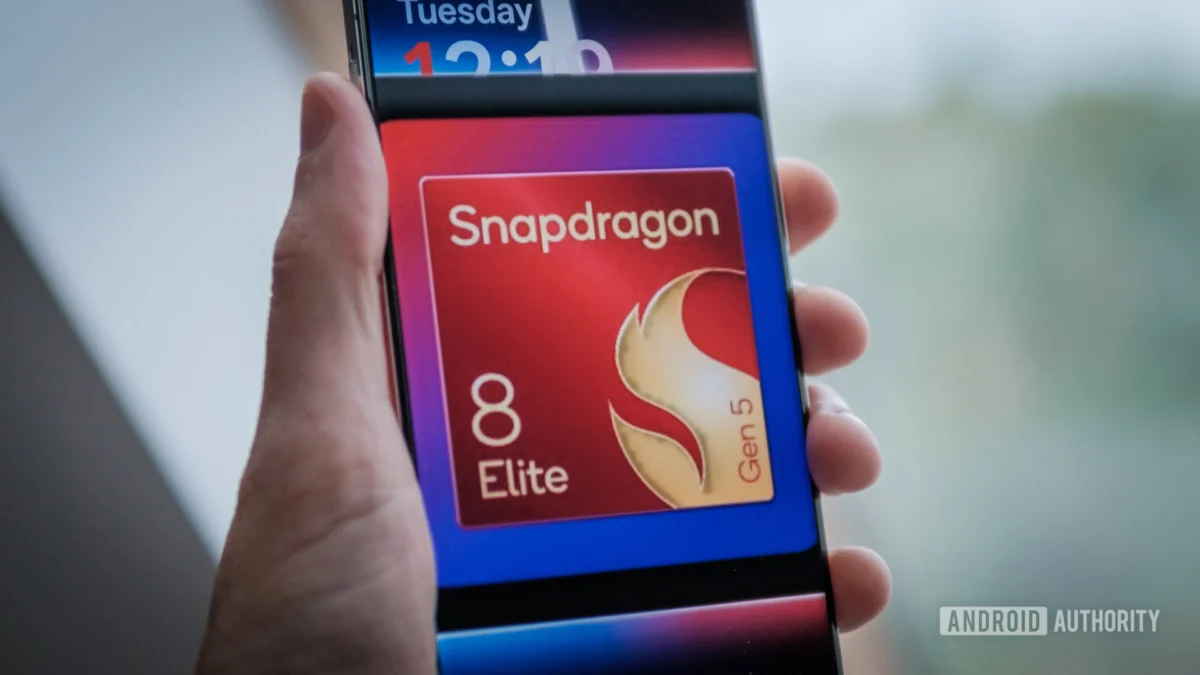
During recent discussions at major industry events, notably the Mobile World Congress (MWC), semiconductor giant Qualcomm unveiled a compelling vision for a future where these limitations are largely obsolete. While the announcement of their QCC730 chip and the broader concept of Micro-power Wi-Fi isn’t entirely new, the sustained emphasis and the maturation of the technology suggest it is rapidly approaching commercial viability. Qualcomm’s narrative paints a picture of miniaturized Wi-Fi, transforming personal devices from mere extensions of a smartphone into autonomous, intelligent nodes within a broader network.
Qualcomm’s Vision: The Autonomy of Connected Devices
"We believe that the concept of having an IP address on your ears or on your finger is extremely powerful," a Qualcomm representative articulated, underscoring the profound shift this technology represents. This statement implies a radical departure from the current Bluetooth paradigm, where earbuds or smart rings function primarily as "slaves" to a master device like a smartphone. Instead, these devices would gain direct network connectivity, capable of communicating independently with a home router or the cloud. This autonomy unlocks a new realm of possibilities, enabling wearables to operate without constant reliance on a nearby smartphone, a significant leap forward for the Internet of Things (IoT).
The core of this transformation lies in Micro-power Wi-Fi. The engineering challenge wasn’t to simply cram a full-fledged router chip into a tiny earbud—an endeavor that would drain its minuscule battery in mere seconds. Rather, it involved developing a highly optimized, "lightweight" version of Wi-Fi. Qualcomm’s QCC730 chip exemplifies this approach, integrating internet connectivity into a footprint of just a few square millimeters while consuming negligible power. This breakthrough is critical for devices with severe size and power constraints.
Technical Underpinnings: The Art of "Light" Wi-Fi with the QCC730
Achieving this technological feat required a pragmatic and ingenious approach to Wi-Fi standards. Rather than attempting to integrate the latest, most complex specifications like Wi-Fi 7 or 8, which are designed for high-throughput, multi-user environments and demand substantial processing power, Qualcomm’s engineers opted for the more established Wi-Fi 5 (802.11ac). This choice was strategic: Wi-Fi 5 is a stable, well-proven standard, universally compatible with virtually every router currently in circulation. This ensures broad adoption without requiring consumers to upgrade their entire home networking infrastructure.
The true innovation, however, lies in the chip’s sophisticated energy management. Unlike a smartphone that maintains a near-constant connection to a Wi-Fi network, these new Micro-power Wi-Fi chips are engineered for extreme power efficiency through rapid sleep-and-wake cycles. They can transition from a deep sleep state to active communication and back in a fraction of a second, only drawing power when data transmission is absolutely necessary. "It’s so energy efficient that you can put it on earbuds," explained a Qualcomm executive, highlighting the critical enabler for delivering lossless audio without rapidly depleting the tiny batteries of earbuds. This dynamic power cycling allows for intermittent, high-bandwidth data bursts, ideal for audio streaming or sensor data upload, without the continuous power drain associated with traditional Wi-Fi.
XPAN: Bridging the Wireless Divide for Seamless Connectivity
A pivotal concept introduced with Micro-power Wi-Fi is XPAN (Extended Personal Area Network). This intelligent system allows devices to dynamically switch between Bluetooth and Wi-Fi based on contextual needs, providing an unparalleled seamless experience. For instance, when a user’s phone is in their pocket, earbuds might primarily utilize Bluetooth for its inherent power efficiency over very short distances. However, the moment the user moves away from their phone, perhaps stepping into another room or venturing out into the garden, the system instantly and transparently switches to the home’s Wi-Fi network.

This intelligent handover ensures that calls, music playlists, or podcasts continue uninterrupted and in high quality, regardless of the user’s movement within the Wi-Fi coverage area. Imagine leaving your smartphone charging in the entryway and still enjoying your high-resolution audio stream while gardening at the far end of your property. XPAN eliminates the "range anxiety" associated with Bluetooth, extending the "personal area network" to encompass the entirety of a home or even a larger property, leveraging the robust range and wall-penetrating capabilities of Wi-Fi. This adaptive connectivity not only enhances user convenience but also optimizes power consumption, using the most efficient protocol for the current proximity and data demands.
The Audiophile’s Dream: Unlocking True Lossless Audio
For audiophiles, Micro-power Wi-Fi represents nothing short of a revolution. Bluetooth, even with its most advanced codecs like LDAC or aptX Lossless, invariably introduces some degree of compression into the audio signal. While these codecs are highly efficient, they still involve compromises to fit high-resolution audio streams within Bluetooth’s limited bandwidth, meaning the sound reaching the ears is not a perfect, bit-for-bit replica of the original studio recording.
Wi-Fi, with its significantly wider bandwidth and higher data rates, fundamentally changes this equation. It can transport a studio-quality audio stream, bit for bit, without any loss or alteration. This means truly lossless audio transmission—the holy grail for high-fidelity enthusiasts—becomes a reality for wireless headphones and earbuds. Users will be able to experience the full richness, detail, and dynamic range of their high-resolution audio files, previously only attainable through wired connections or dedicated high-end Wi-Fi streaming systems, now delivered wirelessly with unprecedented freedom.
Beyond Audio: Expanding the IoT Ecosystem
The implications of Micro-power Wi-Fi extend far beyond personal audio. The ability for miniature devices to possess an independent IP address fundamentally alters their role within the broader IoT landscape. Consider a smart ring equipped with this technology: it could autonomously collect and transmit health data—such as sleep patterns, heart rate, or activity levels—directly to the cloud overnight, without requiring the user’s smartphone to be on, charged, or even in the same room. This eliminates a significant dependency, making such wearables truly self-sufficient data-gathering nodes.
Similarly, earbuds could evolve beyond simple audio playback devices. With direct Wi-Fi connectivity, they could independently access streaming services, interact with cloud-based AI assistants, or even serve as biometric sensors that upload data in real-time. This paves the way for a new generation of intelligent wearables that are deeply integrated into the smart home ecosystem, offering enhanced functionality and a more seamless user experience without the constant intermediation of a smartphone. This potential for greater device autonomy could accelerate the development of more sophisticated, interconnected, and context-aware IoT devices.
Market Landscape and the Road to Commercialization
While the promise of Micro-power Wi-Fi is compelling, it is important to note that mass-market consumer products equipped with this technology are not yet widely available. This represents a nascent stage in its commercial journey. The technology is currently being distributed to manufacturers in the form of development kits, allowing companies to integrate and experiment with these advanced capabilities. Key players to watch in this space include Qualcomm with its QCC730M, Infineon with its AIROC ACW741x, and Morse Micro with its MM8108. These companies are at the forefront of enabling this next generation of wireless connectivity for small devices.
There have been early glimpses, such as the 1More SonoFlow Max headphones, which were announced with both Wi-Fi and Bluetooth 5.3 connectivity. However, over a year after its initial mention, the product has yet to be commercially released, and the specific Wi-Fi chip utilized remains undisclosed. This highlights the complexities of bringing such advanced technologies from concept to consumer-ready products, involving significant integration, testing, and ecosystem development. The journey from development kit to widespread adoption will involve overcoming challenges related to cost, interoperability across different manufacturers, and establishing clear benefits for consumers.
Future Outlook and Industry Impact
Despite the current absence of widely available consumer products, the advent of Micro-power Wi-Fi signals a significant shift in the wireless technology landscape. Bluetooth is unlikely to disappear entirely; it will undoubtedly retain its role as the preferred standard for truly short-range, point-to-point connections where extreme power efficiency and minimal data rates are paramount, particularly for truly mobile and highly personal interactions. However, for home or office environments, Micro-power Wi-Fi offers a level of freedom and quality that Bluetooth simply cannot match. The conversation will shift from discussing mere "range" to ensuring "total domestic coverage" for personal audio and connected wearables.
This technological evolution is poised to reshape consumer expectations for wireless performance. It promises to unlock new product categories and enhance existing ones, fostering greater device autonomy and delivering a truly untethered, high-fidelity experience. As these advanced chips become more commonplace and integrated into devices, we can anticipate a future where our wearables are not just extensions of our smartphones, but intelligent, connected entities that seamlessly enhance our daily lives, delivering superior audio and richer data streams with unparalleled freedom. The transition will likely be gradual, but the trajectory towards a Wi-Fi-enabled personal area network is clear, marking a new era for wireless personal technology.