 Metty Iskandar
The highly anticipated Google Pixel 10a has officially launched, and while it aims to deliver Google’s signature AI features and a compelling camera experience at an accessible price point, a significant compromise has been made under the hood. Instead of the cutting-edge Tensor G5 processor found in Google’s flagship devices, the Pixel 10a opts for last year’s Tensor G4. This decision, while understandable from a cost-saving perspective, raises questions about its long-term performance capabilities and its standing within the increasingly competitive mid-range smartphone market. For consumers hoping for a budget-friendly device that pushes the boundaries of mobile processing power, the Pixel 10a may present a notable disappointment.
Performance Benchmarks: A Familiar Feeling
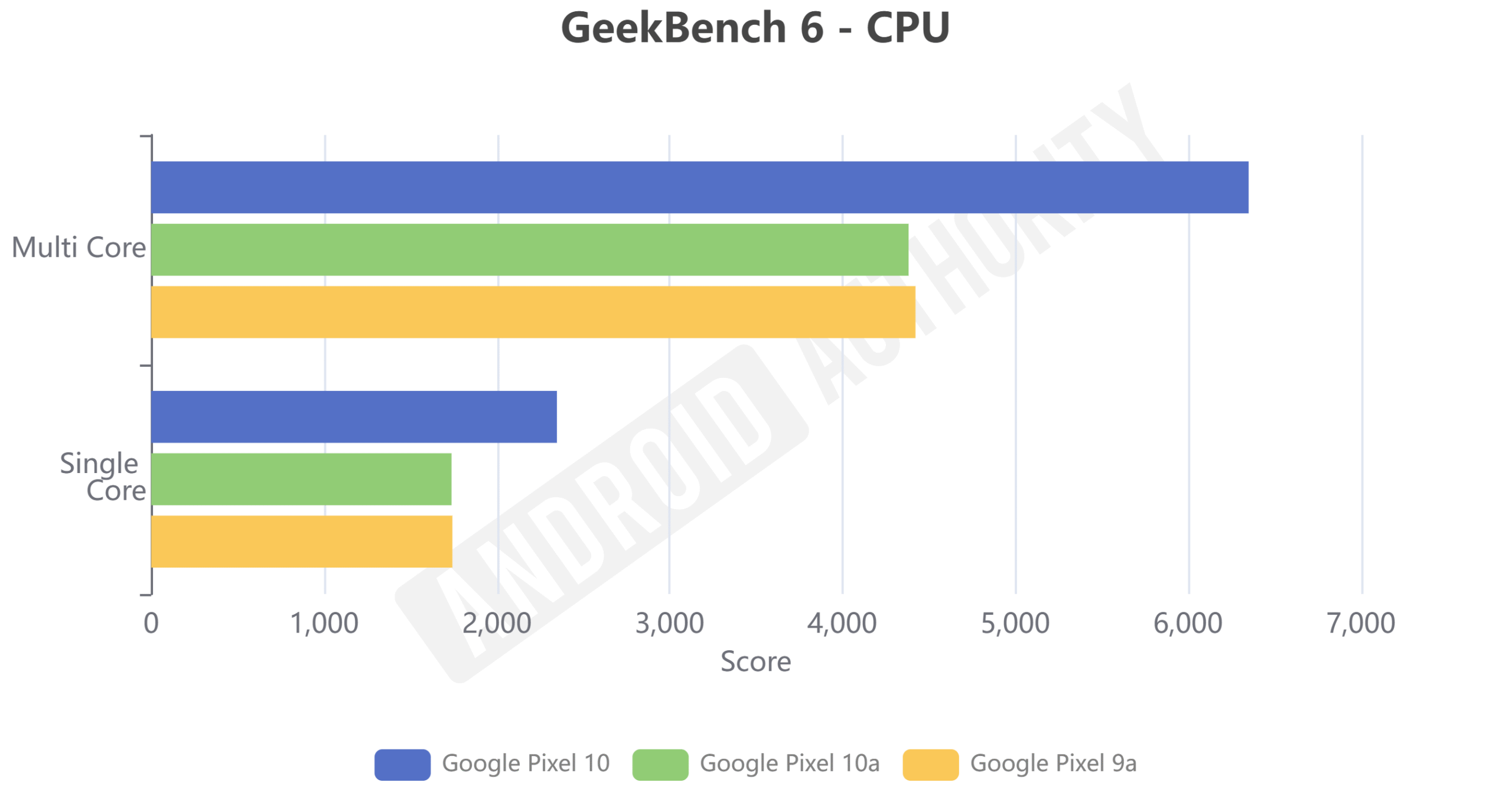
Initial benchmarking of the Pixel 10a reveals a performance profile that is remarkably similar to its predecessor, the Pixel 9a. The adoption of the Tensor G4, while still a capable chipset for everyday tasks and a flagship-tier processor in its own right just last year, means that on paper, the Pixel 10a offers no tangible speed upgrade over the previous generation. This parity was starkly evident when the device was put through the rigorous Geekbench 6 CPU test.
In the Geekbench 6 benchmark, the Pixel 10a’s scores remained within the margin of error when compared to the Pixel 9a. This is an expected outcome, given that both devices are equipped with identical processors likely running at similar clock speeds. From a broader industry perspective, these CPU results place the Pixel 10a in the same performance tier as devices like Samsung’s Galaxy S23 FE, a smartphone released in 2023. While achieving this level of performance in a device retailing for approximately $500 is commendable, it underscores the reality that Google’s budget offerings are not currently at the forefront of cutting-edge mobile processing power when compared to the broader market.
The Stress Test Revelation: Thermal Management Gains
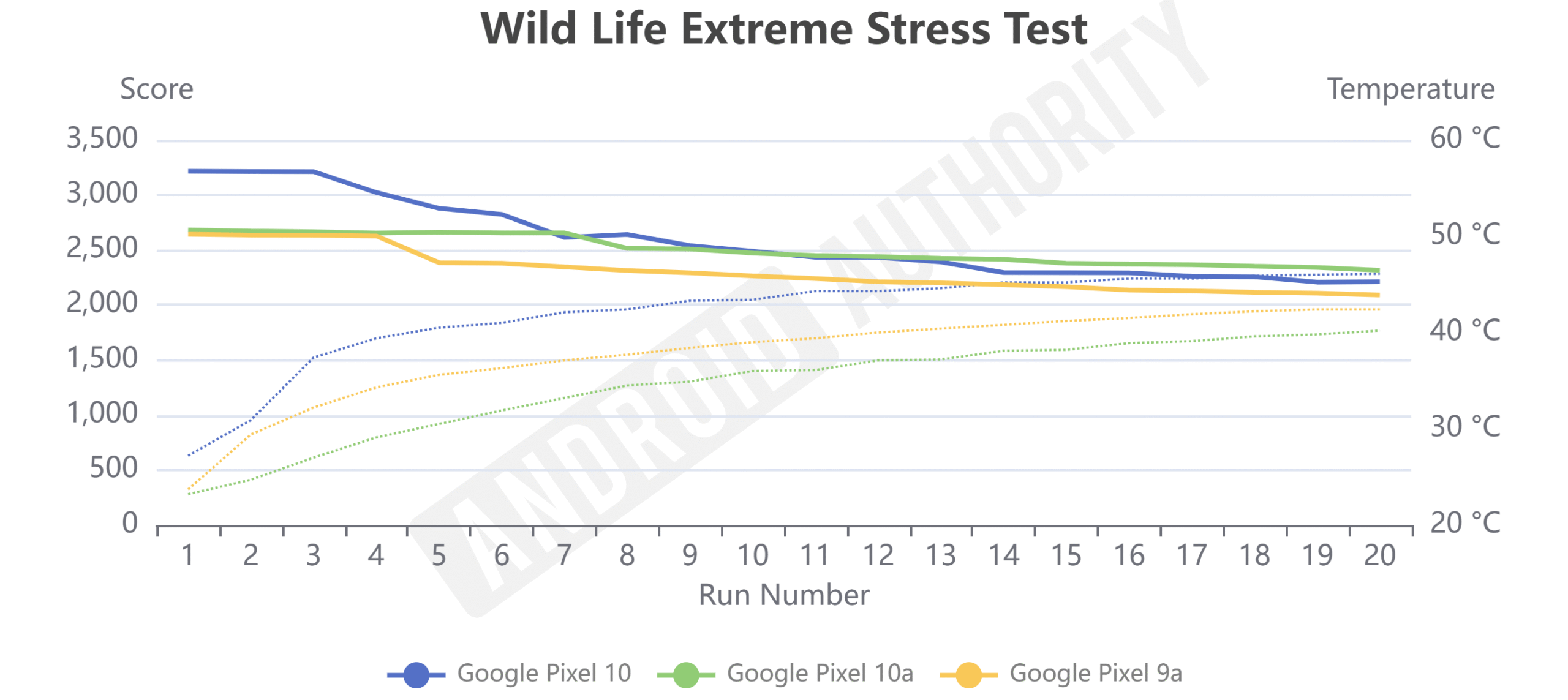
While the raw CPU performance appears to be largely unchanged, the Pixel 10a exhibits a subtle but significant improvement in thermal management under sustained load. This became apparent during 3DMark’s demanding Wild Life Extreme stress test.
The initial performance of the Pixel 10a in the stress test mirrored that of the Pixel 9a, and both lagged behind the flagship Pixel 10. However, as the test progressed, the Pixel 10a demonstrated a superior ability to maintain its performance levels by keeping temperatures lower than its predecessor. The device was able to endure a full seven minutes of high-intensity operation before any noticeable dip in performance occurred. In contrast, the Pixel 9a began to throttle back its performance earlier in the test. This thermal advantage allowed the Pixel 10a to effectively compete with, and in some instances surpass, the performance of the more expensive Pixel 10 during these extended demanding sessions.
This finding has direct implications for mobile gaming. For casual gamers and those who engage in shorter play sessions with less graphically intensive titles, the Pixel 10 undoubtedly holds a performance advantage. However, for users who enjoy prolonged gaming marathons with graphically demanding games, the Pixel 10a’s improved thermal efficiency could significantly narrow the performance gap. The sustained frame rates offered by the Pixel 10a, thanks to its better heat dissipation, may provide a more consistent and enjoyable experience over longer periods, potentially even rivaling higher-end devices after a sustained period of gameplay. This is particularly relevant for activities like emulating classic games, which can often push hardware to its limits over extended durations.
It is important to acknowledge that real-world gaming performance can be influenced by a multitude of factors beyond synthetic benchmarks. Ambient temperature, the use of a protective case, and the attachment of external controllers can all impact how a device performs. While the observed thermal improvement in the Pixel 10a is a positive development and makes the device more comfortable to hold during intensive use, it may not be a definitive reason to declare it universally superior to its predecessor or even competitors in all scenarios. Nevertheless, it represents a small but meaningful victory for Google’s budget-friendly offering, particularly in its ability to offer a more consistent gaming experience over time.
The Value Proposition: Is the Tensor G4 Enough?
Despite the performance ceiling imposed by the Tensor G4, the Pixel 10a’s overall value proposition remains compelling, especially considering its $500 price tag. The device integrates Google’s distinctive AI capabilities, a camera system that continues to punch above its weight class in the mid-range segment, and the promise of an extended software support lifecycle.
When compared to direct competitors in the same price bracket, such as the Samsung Galaxy A56 5G, the Nothing Phone 4a Pro, or the Motorola Moto G Stylus (2025), the Pixel 10a’s Tensor G4 processor demonstrates a clear advantage, particularly in gaming performance. While the market is dynamic and new devices with potentially faster processors may emerge, it is unlikely that these immediate rivals will significantly outperform the Pixel 10a in raw processing power at the $500 price point or below.
However, a critical factor in Google’s marketing of the Pixel line, and specifically the Pixel 10a, is the commitment to seven years of Android updates. This ambitious update policy raises a pertinent question: can the Tensor G4, which is already considered mid-tier in terms of peak performance at launch, adequately support the evolution of the Android operating system and its associated applications over a seven-year period? Anecdotal evidence from users of Google’s flagship Pixel phones suggests that some devices can exhibit signs of sluggishness even within the first year or two of ownership. This raises concerns for Pixel 10a buyers who intend to leverage the full seven-year update window. It may be unrealistic for many to expect a consistently smooth experience for the entire duration of the promised software support.
For consumers who prioritize sustained, top-tier performance that is built to last for an extended period, alternative options might be more suitable, albeit at a higher cost. Devices like the OnePlus 13R or the OnePlus 15R, and the Samsung Galaxy S25 FE, offer superior processing power that not only surpasses the Tensor G4 but also outperforms Google’s newer Tensor G5. While these devices command a higher price, they represent a more robust investment for users who demand long-term performance and longevity.
The most significant concern surrounding the Pixel 10a may not be its reliance on last year’s processor, but rather the relatively small price increment required to acquire a device that offers a more substantial performance leap and a more complete flagship-like experience. This suggests that the value proposition of the Pixel 10a, while strong for its immediate capabilities, could be overshadowed by slightly more expensive options that offer a more future-proofed performance profile.
Background and Context: Google’s Mid-Range Strategy
Google’s Pixel ‘a’ series has historically served as a crucial entry point into the Pixel ecosystem, offering a taste of Google’s software prowess and camera excellence at a more affordable price. The strategy has been to leverage custom silicon, the Tensor chips, to power these devices, enabling features like advanced AI processing and computational photography. However, the allocation of these processors has often seen a tiered approach, with the latest flagship chip reserved for the premium Pixel models, and previous-generation chips trickling down to the ‘a’ series.
The Pixel 10a’s adoption of the Tensor G4 follows this established pattern. The Tensor G4 made its debut with the Pixel 9 series in late 2023, powering devices like the Pixel 9 and Pixel 9 Pro. Its strengths lie in its AI and machine learning capabilities, which are integral to Google’s software features, such as advanced photo editing, real-time translation, and on-device voice recognition. While it may not benchmark as highly as the latest Snapdragon or Apple A-series processors in raw CPU and GPU power, its integration with Google’s software ecosystem often results in a fluid and intelligent user experience.
The decision to equip the Pixel 10a with the Tensor G4, rather than the Tensor G5, is a strategic one aimed at managing production costs and maintaining a competitive price point. The Tensor G5, designed for the latest flagship Pixels, likely incorporates newer manufacturing processes and more advanced core architectures, contributing to higher development and production expenses. By utilizing the Tensor G4, Google can offer the Pixel 10a at a price point that appeals to a broader segment of the market, making the Pixel experience accessible to more consumers.
Timeline and Evolution of Pixel Processors
- Tensor G1 (2021): Introduced with the Pixel 6 series, this marked Google’s foray into custom silicon, focusing on AI and ML capabilities.
- Tensor G2 (2022): Featured in the Pixel 7 series, it offered incremental improvements in performance and efficiency, further enhancing AI features.
- Tensor G3 (2023): Powered the Pixel 8 series, bringing enhanced computational photography, improved speech recognition, and advanced AI capabilities.
- Tensor G4 (2023/2024): Launched with the Pixel 9 series, it continued the trend of prioritizing AI and machine learning, offering modest performance gains over the G3.
- Tensor G5 (2024/2025): Expected in the next generation of flagship Pixels, likely to bring more significant performance and efficiency improvements.
The Pixel 10a’s placement within this timeline positions it as a device benefiting from a mature, albeit not cutting-edge, processor. This allows Google to concentrate its latest silicon innovations on its premium offerings, while still providing a competent and feature-rich experience in its mid-range segment.
Broader Impact and Implications
The Pixel 10a’s performance profile has several implications for the smartphone market and consumer expectations. Firstly, it highlights the growing maturity of the mid-range segment, where devices are increasingly offering features once exclusive to flagships, such as high refresh rate displays, advanced camera sensors, and substantial software support. However, it also underscores the persistent performance gap between mid-range and flagship devices, particularly concerning raw processing power.
For consumers, this decision presents a trade-off. They gain access to Google’s AI features and a promising software update policy at a lower cost, but they sacrifice the absolute peak performance that newer processors offer. This might be a perfectly acceptable compromise for many users whose daily usage primarily involves social media, web browsing, and casual gaming. However, for power users, avid mobile gamers, or those who anticipate demanding tasks in the future, the Pixel 10a might fall short of expectations over its extended lifespan.
The success of the Pixel 10a will likely depend on its ability to deliver a consistently smooth user experience despite the older processor, its camera performance, and the tangible benefits of its long-term software support. If Google can effectively leverage its software optimization to make the Tensor G4 feel more performant than its benchmarks suggest, and if the seven years of updates prove to be robust and feature-rich, the Pixel 10a could still carve out a significant niche in the market. Conversely, if the performance limitations become apparent early on, or if competitors offer more compelling performance-per-dollar, the Pixel 10a might struggle to justify its position in Google’s lineup.
The Pixel 10a’s strategy also puts pressure on competitors in the mid-range space. By offering a competitive camera and AI experience with a longer update promise, Google is setting a new benchmark for what consumers can expect from affordable smartphones. This could encourage other manufacturers to enhance their software support offerings and focus more on AI integration in their budget devices.
In conclusion, the Google Pixel 10a represents a calculated decision by Google to prioritize value and accessibility over bleeding-edge performance. While the use of the Tensor G4 processor means it won’t win any speed contests, its strengths lie in its AI capabilities, camera prowess, and a remarkable commitment to software longevity. Whether this balance of features and compromises resonates with consumers in the long term remains to be seen, but it undeniably sets the stage for an interesting discussion about the future of mid-range smartphone development.