Vera Intan Clara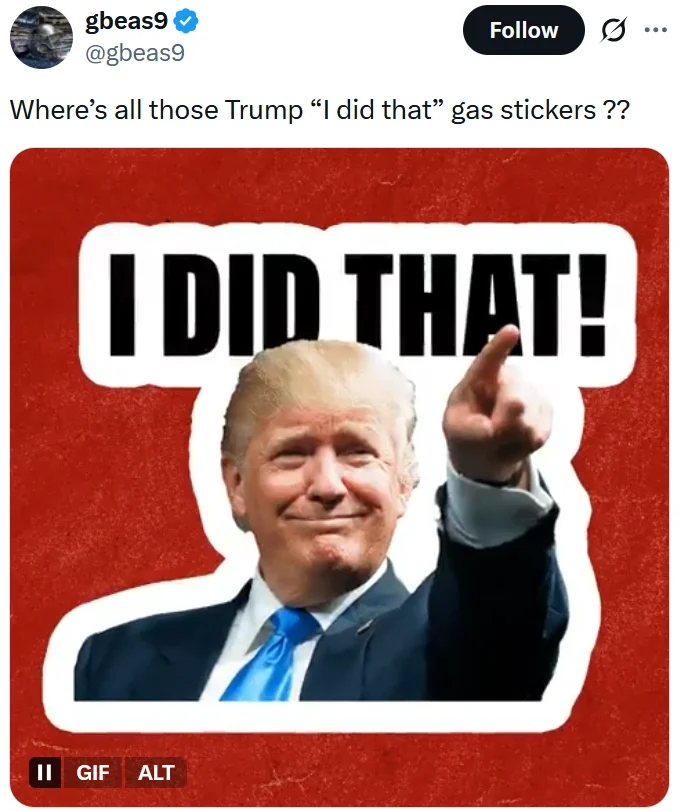
The distinctive "I did that" stickers, featuring an image of Donald Trump, are experiencing a notable resurgence across American gas pumps, directly correlating with a sharp increase in fuel prices following recent military engagements in the Middle East. These adhesive protest symbols, initially popularized during Trump’s first term to highlight rising costs linked to his tariff policies and then repurposed by critics of President Biden, now point to the former president amidst a new wave of economic anxiety. The current spike in gas prices, averaging $3.63 per gallon nationwide, is largely attributed to escalating tensions with Iran, specifically the disruption of oil transit through the strategically vital Strait of Hormuz.
The Catalyst: Geopolitical Tensions and Oil Markets
The recent military action initiated by the United States and Israel against Iran has ignited a predictable, yet severe, reaction in global energy markets. As anticipated by numerous geopolitical and economic analysts, the commencement of hostilities swiftly translated into a surge in the price of crude oil. A barrel of oil, which had been trading at more stable levels, quickly surpassed the $102 mark, marking a significant increase from approximately $70-$80 per barrel earlier in the year and $2.98 per gallon average in late February. This abrupt escalation pushed the national average for a gallon of gasoline to $3.63 as of Friday, March 15, 2026, representing a substantial jump from $2.98 just two weeks prior.
The primary conduit for this market volatility is the Strait of Hormuz, a narrow waterway connecting the Persian Gulf to the open ocean. This choke point is globally critical, with an estimated 20 percent of the world’s total petroleum liquids consumption, or about 21 million barrels per day, passing through it. Iran, strategically positioned along the strait, possesses the geographical leverage to significantly impede maritime traffic. Lacking the conventional military firepower to directly confront the combined forces of the U.S. and Israel in a sustained conventional war, Iran predictably responded to the initial unprovoked assault by disrupting the passage of commercial ships through the strait. This tactic, while not necessarily involving direct military confrontation with U.S. naval assets, introduces immense uncertainty and risk into the global oil supply chain, thereby driving up prices.
Historical Context of U.S.-Iran Relations and Economic Impact
The current crisis is not an isolated event but rather the latest chapter in a long and complex history of antagonism between the United States and Iran. Relations have been fraught since the 1979 Iranian Revolution, punctuated by periods of intense diplomatic friction, proxy conflicts, and economic sanctions. Donald Trump’s presidency, marked by his withdrawal from the Joint Comprehensive Plan of Action (JCPOA) – the international nuclear agreement with Iran – and the subsequent imposition of a "maximum pressure" campaign of sanctions, significantly heightened tensions. This policy aimed to cripple Iran’s economy and force it back to the negotiating table for a more stringent deal, but critics argued it removed diplomatic off-ramps and increased the likelihood of military confrontation. The current "unprovoked assault" (as described in the source material) can be seen as a direct consequence of this prolonged period of escalating pressure and mutual distrust, with both sides perceiving the other as an aggressor.
For average Americans, violence in the Middle East has historically served as a harbinger of economic discomfort, particularly at the gas pump. Throughout decades, from the oil crises of the 1970s to the Gulf Wars and subsequent conflicts, geopolitical instability in the region has consistently translated into higher energy costs domestically. Any U.S. president who initiates or becomes deeply embroiled in military action in the Middle East – a list that includes numerous administrations over the past half-century – inevitably faces potential public ire as far-away conflicts directly impact household budgets and the ability to meet daily expenses. This direct link between foreign policy decisions and domestic economic realities creates significant political vulnerability for sitting presidents, especially when cost-of-living stresses are already high.
A Symbol of Discontent: The "I Did That" Sticker Phenomenon
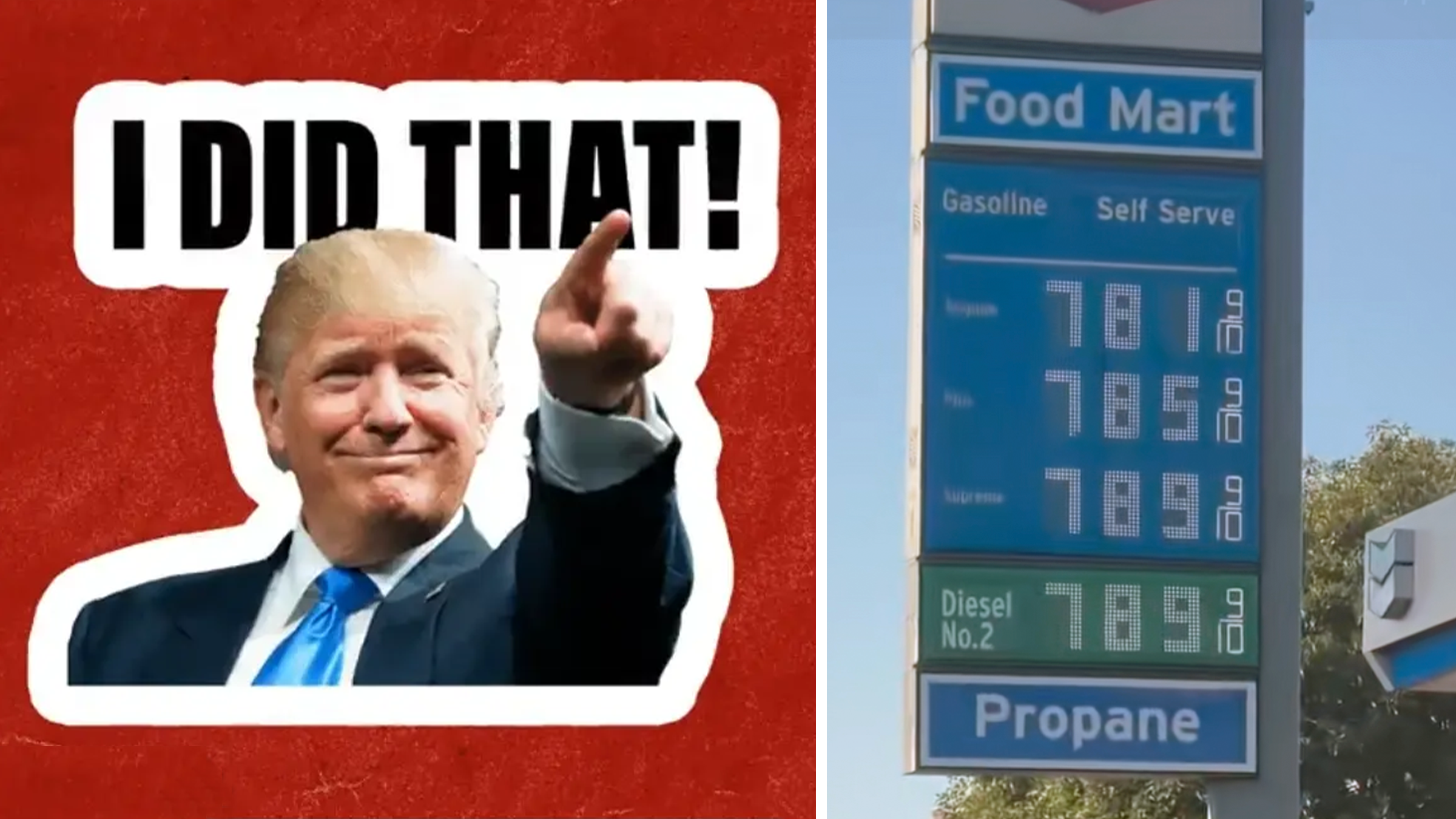
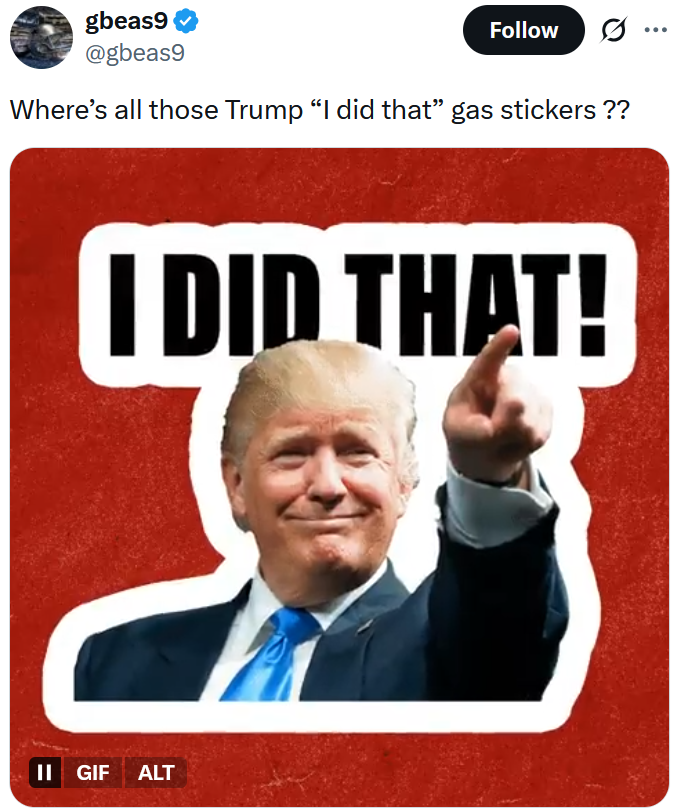
The "I did that" stickers have evolved into a potent, albeit informal, form of political protest and commentary. Their origins trace back to Trump’s first term, emerging as a grassroots response to rising grocery prices and other consumer goods costs, which many attributed to his administration’s tariff policies against China and other trade partners. These stickers, featuring Trump’s image and a pointing finger, were a sardonic way for consumers to express their frustration with economic policies they believed were directly impacting their wallets.
The phenomenon gained broader traction during the Biden administration, when gas prices surged due to a confluence of factors including post-pandemic demand, supply chain disruptions, and global inflation. At that time, critics of President Biden widely adopted and disseminated similar stickers, superimposing Biden’s image onto gas pumps as a visual indictment of his administration’s economic stewardship. This demonstrated the adaptability of the protest symbol across the political spectrum, reflecting a universal desire to assign blame for economic hardship.
Now, with Donald Trump once again a central figure in geopolitical events leading to significant domestic economic pain, his critics are actively calling for and deploying the return of the Trump-specific "I did that" stickers. Social media platforms, particularly X (formerly Twitter) and TikTok, have become conduits for this renewed campaign. Users are sharing images and videos of gas pumps, often displaying prices nearing or exceeding $8 a gallon in some areas, overlaid with the familiar pointing Trump image.
For example, X user @gbeas9 questioned, "Where’s all those Trump ‘I did that’ gas stickers??" echoing a widespread sentiment. Another user, @VP72801, explicitly stated, "Time to put the ‘I did that’ Trump stickers on the gas pumps, it’s getting ridiculous." The urgency was further emphasized by @klrussillo, who declared, "I need the Donald Trump ‘I did that’ stickers on every single gas station pump stat." Beyond simply advocating for their return, some individuals are taking immediate action, utilizing cutouts and digital overlays in TikTok videos to create instant visual protests at local gas stations, highlighting the immediate and visceral impact of rising prices on everyday citizens. This demonstrates a swift, decentralized, and visually striking method of political expression that resonates with a public increasingly accustomed to direct, image-based communication.
Official Responses and Expert Analysis
In response to the escalating energy costs, the White House has publicly acknowledged the price hike, with administration officials asserting that the increase in energy prices resulting from the conflict with Iran is "temporary." This official stance aims to reassure the public and mitigate growing economic concerns, suggesting that market adjustments and diplomatic efforts will eventually stabilize prices. However, the efficacy and timeline of such promises are often met with skepticism, particularly given the inherent unpredictability of geopolitical conflicts and global energy markets. Historically, assurances of "temporary" economic disruptions related to international events have sometimes proven optimistic, with lasting impacts frequently exceeding initial projections.
Energy market analysts, while acknowledging the potential for short-term volatility, generally caution against definitive predictions regarding the duration of elevated prices. Experts from institutions like the International Energy Agency (IEA) and OPEC often highlight the intricate interplay of supply, demand, geopolitical risk premiums, and speculative trading that dictates oil prices. The Strait of Hormuz, in particular, represents a critical pressure point. Any sustained disruption or heightened risk perception in this waterway can trigger significant price surges, as global refiners and traders factor in increased insurance costs, longer shipping routes, and the potential for outright supply shortages. Furthermore, the capacity of other major oil producers, such as Saudi Arabia or the United States (through its strategic petroleum reserve), to offset potential supply shortfalls from the Persian Gulf is a crucial variable that could influence the "temporary" nature of the price hike.
Economists, meanwhile, are closely monitoring the inflationary pressures generated by higher energy costs. Rising gas prices invariably translate into increased operational costs for businesses, particularly in transportation, logistics, and agriculture. These costs are often passed on to consumers in the form of higher prices for goods and services, exacerbating existing cost-of-living stresses. With inflation already a significant concern in various sectors during Trump’s second term, from groceries to housing and transportation, an additional surge in a fundamental necessity like fuel could significantly dampen consumer spending, potentially leading to broader economic slowdowns or even recessionary pressures. Such developments could further erode public confidence and negatively impact the administration’s approval ratings.
Broader Implications: Domestic Economy and Global Stability
The implications of this crisis extend far beyond the immediate pain at the pump. Domestically, sustained high energy prices pose a significant threat to the economic recovery and stability. Consumers, already grappling with elevated costs across nearly all sectors, face further erosion of their purchasing power. This can lead to a reduction in discretionary spending, impacting retail sales, tourism, and other service industries. For businesses, especially small and medium-sized enterprises, increased fuel costs can squeeze profit margins, potentially leading to job losses or reduced investment. The agricultural sector, heavily reliant on diesel for machinery and transportation, would also face significant challenges, likely translating into higher food prices.
Politically, the timing of these events is critical. With cost-of-living stresses already a prominent concern, one more necessity becoming more expensive could significantly impact public perception and polling numbers for the current administration. Historical data consistently shows a strong correlation between gas prices and presidential approval ratings, with spikes often correlating with declines in public support. For Donald Trump, who has often campaigned on promises of economic prosperity and stability, a foreign policy decision leading to widespread domestic economic hardship could net him steeper record-low polls, particularly as a potential future presidential candidate or influential figure. The "I did that" stickers, while a seemingly minor form of protest, serve as a tangible and widespread reminder of this economic link, reinforcing public dissatisfaction at a highly visible point of everyday consumption.
Globally, the conflict in the Middle East and its ripple effects on energy markets pose a substantial threat to international stability. A protracted conflict or further escalation in the Strait of Hormuz could trigger a global economic downturn, impacting trade, investment, and diplomatic relations worldwide. The reliance of major economies like China, India, and Europe on Middle Eastern oil makes them highly vulnerable to disruptions in the region. This interconnectedness means that military actions in one part of the world can have profound and immediate consequences for global economic health and political alliances, forcing international actors to reconsider their geopolitical strategies and energy security policies.
Looking Ahead: Uncertainty in Energy Markets
As the conflict with Iran enters its second week, and gas prices continue their upward trajectory, the outlook for energy markets remains highly uncertain. The White House’s promise of a "temporary" price hike hinges on a swift resolution to the geopolitical tensions and a stabilization of oil transit through the Strait of Hormuz. However, the historical complexity of U.S.-Iran relations, coupled with the inherent unpredictability of military engagements, suggests that a rapid return to pre-conflict stability is far from guaranteed.
The ongoing deployment of "I did that" stickers serves as a visible barometer of public frustration, a constant reminder of the direct connection between foreign policy decisions and everyday economic realities. This grassroots expression of discontent underscores the profound impact that geopolitical events have on the lives of ordinary citizens, forcing both current and future leaders to carefully weigh the domestic consequences of their international actions. The coming weeks and months will reveal whether the White House’s optimistic projections hold true, or if Americans will continue to face pain at the pump, symbolized by the ubiquitous pointing finger of protest.