George Chandra Eka
Sony, a perennial leader in personal audio, has once again refined its flagship true wireless earbud line with the release of the WF-1000XM6, offering a compelling upgrade while its predecessor, the WF-1000XM5, continues to hold its own as a formidable option in the premium segment. This strategic dual-offering provides consumers with distinct choices based on their priorities, balancing cutting-edge innovation against proven performance and value. The introduction of the WF-1000XM6 in February 2026, nearly three years after the WF-1000XM5’s debut, underscores Sony’s deliberate approach to product cycles in a highly competitive market, aiming to deliver significant advancements with each generation.
The Evolution of Sony’s Flagship Earbuds: A Chronology
Sony’s WF-1000X series has consistently set benchmarks for active noise cancellation (ANC) and sound quality in the true wireless earbud category. The lineage began with the WF-1000X, followed by the WF-1000XM3, which revolutionized the segment with its robust ANC and superior audio performance. The WF-1000XM4 marked a significant leap, introducing a more compact design, improved battery life, and the integrated V1 processor for enhanced noise cancellation. This iterative development culminates in the current comparison between the WF-1000XM5 and the latest WF-1000XM6.
The WF-1000XM5, launched in mid-2023, built upon the success of the XM4, further miniaturizing the form factor, enhancing call quality with bone conduction sensors, and refining the noise cancellation algorithms. It quickly ascended to critical acclaim, frequently appearing at the top of "best wireless earbuds" lists due to its balanced performance across audio fidelity, ANC, and smart features.
The WF-1000XM6, arriving in early 2026, follows this pattern of refinement. Its release was strategically timed, opting for a standalone debut in February rather than a larger tech event like CES, possibly to maximize individual product attention before competitors such as Samsung unveiled their own next-generation devices, like the Galaxy Buds 4 Pro, later that month. This timing suggests a calculated move by Sony to carve out its own space and narrative for its flagship offering. Beyond the WF-1000XM6, Sony has shown a varied approach to its audio portfolio, with the LinkBuds Clip in January addressing niche open-fit needs, but a notable absence of new midrange or budget models in recent times, signaling a focus on the premium segment and specialized applications.
Dissecting the Value Proposition: WF-1000XM6 vs. WF-1000XM5
At their core, both the WF-1000XM6 and WF-1000XM5 aim to deliver a premium audio experience. However, the WF-1000XM6 introduces several key differentiators that warrant a closer look, especially considering the current pricing structure. While both models share a nominal full retail price of $330, the WF-1000XM5 has naturally seen price adjustments, often available for around $248, creating a $50 price gap with the WF-1000XM6, which typically retails around $298. This price difference prompts a critical evaluation of what the latest model brings to the table.
Design and Ergonomics: A Tale of Two Fits
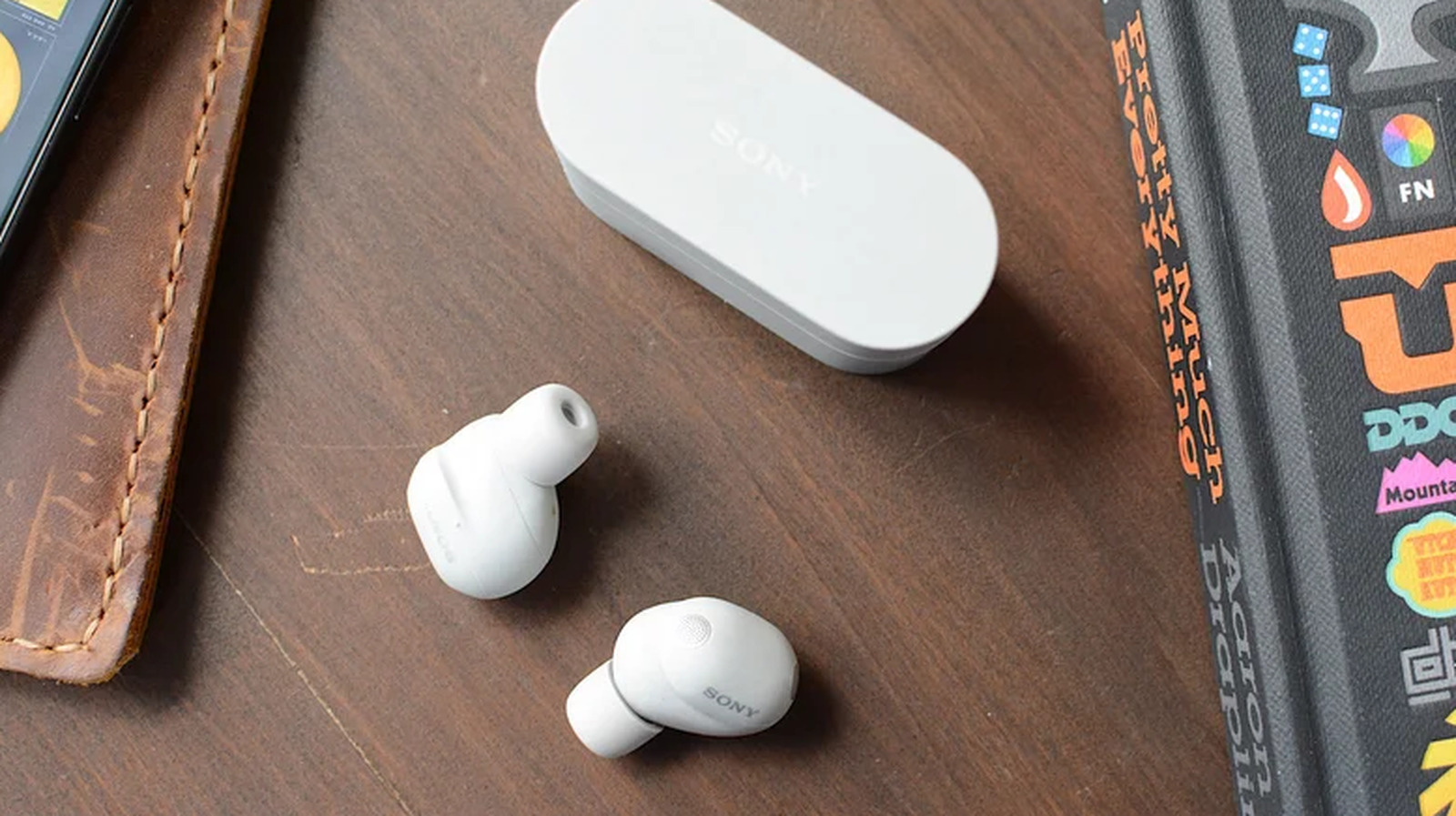
One of the most immediate and significant distinctions between the two models lies in their physical design and, crucially, their fit. The WF-1000XM5 represented a notable step towards a more compact and ergonomic design compared to its XM4 predecessor, adopting a glossy, pebble-like aesthetic that sat more flush in the ear.
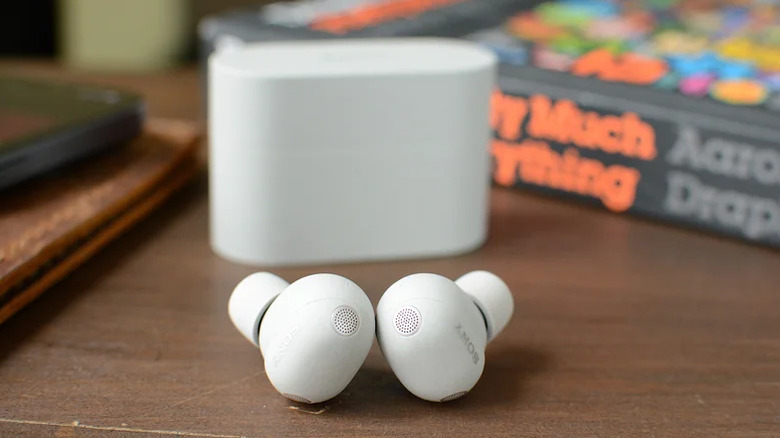
The WF-1000XM6, however, takes a distinct stylistic turn, featuring an even smaller, pill-shaped housing. While the pursuit of miniaturization is generally lauded in the earbud market for improved comfort and discretion, Sony’s choice of ear tips for the M6 has proven contentious. Building on a history of mixed reception for its foam ear tips introduced with the WF-1000XM4, and then refined with the XM5, the M6’s ear tips have, for some users, regressed in terms of providing a consistent and verifiable seal. A proper seal is paramount for effective active noise cancellation and optimal sound delivery. The inability to achieve a verified seal through Sony’s in-app fit test, particularly in one ear, directly compromises the intended performance of the ANC. This ergonomic challenge means that for users prioritizing absolute noise cancellation, the WF-1000XM5, with its generally more reliable fit, might offer a superior experience despite being the older model. This highlights the subjective nature of earbud fit and its critical impact on objective performance metrics.
Audio Fidelity: The QN3e Chip Advantage
In the realm of sound quality, the WF-1000XM6 asserts a clear advantage, largely attributed to the integration of Sony’s newest audio chip, the QN3e. This dedicated processor is engineered to deliver "cleaner, richer audio" through advanced signal processing and a wider dynamic range. Reviewers and early adopters have largely confirmed this, noting a subtle yet discernible improvement in clarity, bass response, and overall audio reproduction. The QN3e likely enables more sophisticated processing algorithms, leading to a more nuanced and immersive listening experience.
Both models benefit from Sony’s DSEE Extreme (Digital Sound Enhancement Engine Extreme) upscaling technology, which utilizes AI to real-time restore high-range sound lost during digital compression. This feature, present in both generations, helps elevate the quality of compressed audio files, bringing them closer to high-resolution audio. However, the M6’s newer chip likely optimizes the application of DSEE Extreme, further enhancing its impact. For audiophiles or those who prioritize pristine sound reproduction, the WF-1000XM6 presents a compelling upgrade.
Call Quality: A Surprising Turnaround
Despite the WF-1000XM6 being the newer model, the WF-1000XM5 surprisingly retains an edge in call quality. Both earbuds employ a sophisticated array of beamforming microphones and bone conduction technology, designed to isolate the user’s voice from ambient noise. While these technologies are present in both, the WF-1000XM5 appears to execute them with greater finesse, particularly in noisy environments. The M5 demonstrates superior suppression of background noise without making the speaker’s voice sound overly processed or artificial, a common pitfall in advanced noise reduction algorithms. This makes the WF-1000XM5 a potentially better choice for professionals or individuals who frequently take calls in varied settings.
Battery Life: A Consistent Performer
Battery life remains a strong suit for both models, with Sony maintaining an impressive standard. Both the WF-1000XM6 and WF-1000XM5 offer up to eight hours of continuous listening with Active Noise Cancellation (ANC) enabled. When paired with their respective charging cases, both models extend total usage to approximately 24 hours, also with ANC active. This consistency ensures that users of either model can expect robust, all-day performance without frequent recharging, a critical factor for commuters and frequent travelers.
Advanced Features and Connectivity: The M6’s Edge
While the WF-1000XM5 is feature-rich, the WF-1000XM6 introduces a handful of enhancements that broaden its capabilities and future-proof its connectivity. The M6 supports Bluetooth 5.4, an upgrade from the M5’s Bluetooth 5.3, offering marginal improvements in stability and power efficiency. More significantly, the WF-1000XM6 incorporates LE Audio support. LE Audio, or Low Energy Audio, is a new standard that promises lower latency, improved audio quality (especially for voice calls), and the potential for Auracast broadcast audio, which could revolutionize how users share audio with multiple devices or interact with public audio streams. While Auracast is still in its nascent stages, its inclusion future-proofs the M6.
The WF-1000XM6 also brings new power management features, including an Auto Power Save mode and a Battery Care tool, designed to optimize battery longevity over the product’s lifespan. The inclusion of a 10-band equalizer offers more granular control over sound customization, catering to users who prefer to fine-tune their audio profiles. Additionally, a new automatic ambient sound tool and a background music mode hint at more sophisticated environmental awareness and personalized listening experiences.
Common features across both models underscore Sony’s commitment to a comprehensive user experience. These include:
- Voice Commands: Hands-free operation via integrated voice assistants.
- Head Gestures: Intuitive controls for managing calls.
- Adaptive Sound Control: Location- and activity-based audio adjustments that automatically switch between ANC and ambient sound modes.
- Speak-to-Chat: Automatic pausing of audio when the user begins speaking.
- Quick Access to Streaming Services: Seamless integration with popular music platforms.
- Multipoint Bluetooth: Simultaneous connection to two devices.
- Wireless Charging: Convenient power replenishment.
- IPX4 Water Resistance: Protection against splashes and sweat, suitable for workouts.
Market Dynamics and Competitive Landscape
The premium true wireless earbud market is intensely competitive, with formidable players like Bose (QuietComfort Ultra Earbuds), Apple (AirPods Pro 2), Samsung (Galaxy Buds series), and Technics (EAH-AZ80, EAH-AZ60M2) vying for market share. Sony’s WF-1000X series has consistently held a strong position, often praised for its class-leading ANC and detailed sound.
Industry analysts often point to the maturity of this segment, where innovation is becoming more iterative than revolutionary. The WF-1000XM6’s advancements in audio processing (QN3e chip), connectivity (LE Audio), and power management reflect a focus on refining core competencies and preparing for future standards. However, the continued prominence of the WF-1000XM5, even three years post-launch, highlights the high baseline of performance established by Sony. This longevity is a testament to its initial engineering and feature set, which still meets or exceeds many current market offerings.
The ongoing "ear tip controversy" with the M6, while specific to user experience, underscores a broader challenge for manufacturers: achieving a universal fit that optimizes both comfort and performance. This seemingly minor detail can significantly impact a product’s overall reception and its ability to deliver on its advertised features, particularly ANC.
Implications for Consumers and the Future
For consumers contemplating a purchase, the decision between the WF-1000XM6 and WF-1000XM5 ultimately hinges on individual priorities and budget.
- For the Audiophile and Early Adopter: If superior audio quality, the very latest technological advancements (QN3e, LE Audio), and future-proofing are paramount, and the potential fit issues can be managed (perhaps with third-party ear tips), the WF-1000XM6 is the clear choice. The refined sound profile and expanded customization options cater to a discerning listener.
- For the Pragmatist and Call-Focused User: If excellent active noise cancellation, reliable call quality, and a more established ergonomic fit are higher priorities, and saving approximately $50 is appealing, the WF-1000XM5 remains an outstanding option. Its proven performance in these areas, combined with a comprehensive suite of smart features, makes it a highly capable device that offers significant value.
The existence of both models concurrently in the market allows Sony to cater to different segments within the premium earbud demographic. It also creates a strategic pricing ladder, where the older model provides a slightly more accessible entry point into Sony’s high-end ecosystem without sacrificing too much performance.
The subjective nature of earbud fit remains a critical, albeit personal, factor. The recommendation for consumers is to leverage generous return policies offered by retailers. Purchasing the WF-1000XM6 to test its fit and features, with the option to return it for the WF-1000XM5 if the fit proves problematic, provides a practical pathway to an informed decision. Amazon, for example, typically allows returns within 30 days of purchase, offering a valuable trial period.
In conclusion, Sony continues to push the boundaries of true wireless audio with the WF-1000XM6, offering a refined listening experience and forward-looking features. Yet, the WF-1000XM5 steadfastly retains its position as a highly competent and valuable alternative, proving that excellence can endure beyond a single product cycle. This dual strategy ensures that Sony remains a dominant force in a dynamic and highly competitive market, providing premium options for a diverse range of audiophiles and casual listeners alike.