Vera Intan Clara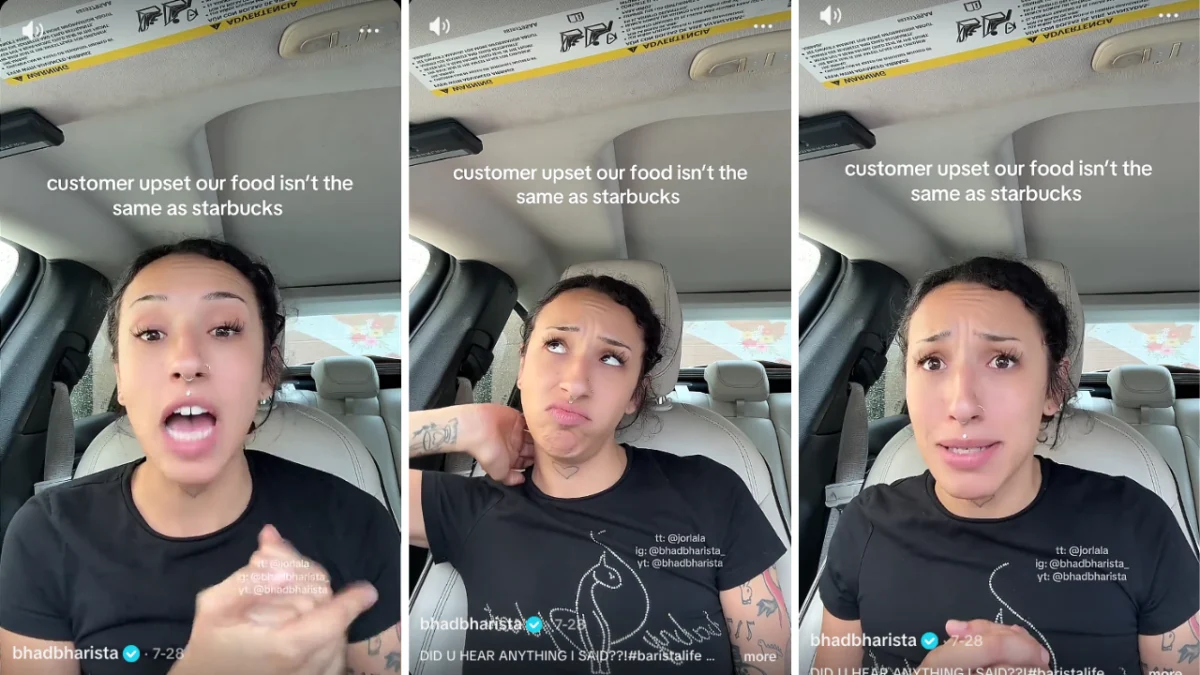
A recent TikTok video, posted by creator @jorlala, whose real name is Jordan, has garnered over 9 million views and nearly 9,300 comments, sparking a widespread discussion about customer expectations in independent coffee shops versus large chain establishments. The video recounts a challenging interaction with customers who repeatedly requested menu items not offered by her café, assuming its offerings would mirror those of a global brand like Starbucks. This incident serves as a microcosm of a larger industry challenge, illuminating the intricate dynamics between consumer familiarity, brand dominance, and the unique identity of local businesses.
The Incident Unfolds: A Detailed Chronology of Miscommunication
The heart of the viral content lies in a meticulously detailed account of a single customer interaction, which Jordan described as emblematic of a recurring issue. The sequence of events began when a male customer approached the counter and ordered "roasted red pepper egg bites." This specific item is a popular offering at Starbucks, but not at Jordan’s independent café. Jordan promptly informed the customer that her establishment did not carry the requested item, explaining that they offered frittatas as an alternative.
Despite the clear explanation, the customer persisted, stating that his wife specifically desired the roasted red pepper egg bites. Jordan reiterated her café’s offerings, again suggesting an egg-white frittata, clarifying that it might not contain peppers. Undeterred, the man then signaled for his wife to approach, seemingly hoping that a direct interaction might yield a different outcome. The woman, upon arriving at the counter, immediately echoed her husband’s request for the "roasted red pepper egg bites."
"Yeah, we don’t have red pepper roasted egg bites. That’s a Starbucks thing," Jordan explained for the third time, attempting to be both polite and firm in her clarification. Yet, the woman continued to insist on the unavailable item. Jordan, demonstrating patience, once more explained the café’s actual offerings – an egg-white frittata or a bacon frittata – but the customer remained indecisive and visibly dissatisfied. Jordan expressed her bewilderment at this point, noting the customer’s apparent inability or unwillingness to accept the stated menu limitations.
Eventually, the male customer intervened, opting to order one of each frittata. However, the exchange concluded with the woman remarking that there was a Starbucks "only a few minutes away" if they truly wanted their initially requested item, a comment that underscored the core of the ongoing misunderstanding.
The confusion, however, did not end with the food order. When the man ordered his coffee, he requested a "small caramel macchiato with eight additional shots." Jordan, seeking to clarify what she perceived as an unusually high and potentially separate request for espresso, asked, "Oh, you want the eight shots, like, on the side, right?" The customer’s response was emphatic: "No. I want it separate!" This exchange led to yet another round of clarification regarding the desired preparation and presentation of the coffee order, highlighting a disparity in how custom orders might be interpreted between different coffee establishments.
The final act of the encounter occurred when the customers came to collect their food. Upon seeing the frittatas, which presumably differed in appearance from the familiar egg bites at Starbucks, the man immediately declared that the order was incorrect. Despite Jordan’s assurances that the food was indeed what they had ordered, he continued to insist on the mistake, further illustrating the deep-seated expectation that the items would look, and therefore be, identical to their chain counterparts. This persistent confusion, Jordan noted, significantly complicated an already challenging interaction.
The Broader Context: Independent Cafes in a Chain-Dominated Market
The viral video taps into a pervasive issue within the hospitality industry, particularly for independent coffee shops operating in the shadow of multinational giants like Starbucks. The global coffee market is substantial, with the U.S. coffee shop industry alone valued at tens of billions of dollars annually. While independent cafes represent a significant number of establishments, their market share, especially in terms of revenue, often pales in comparison to that commanded by dominant chains. Starbucks, for instance, operates thousands of locations worldwide and has cultivated a highly recognizable brand, a standardized menu, and an extensive range of customizable options.
This omnipresence and consistency create a powerful consumer expectation. Many customers, accustomed to the uniformity of chain establishments, tend to generalize their experiences and assume a universal menu across all coffee shops. They may not differentiate between the operational models, sourcing strategies, or culinary philosophies that define an independent café versus a corporate behemoth. Independent cafes, by contrast, often pride themselves on unique, locally sourced, or specialized offerings, a curated atmosphere, and a departure from mass-produced uniformity. Their menus are typically smaller, more focused, and reflect the specific vision of their owners and chefs, rather than a globally standardized catalog.
This dynamic often leads to what industry observers term "menu shock" or "chain expectation syndrome," where customers arrive with preconceived notions based on their experiences at larger brands. They may not understand that a "caramel macchiato" at a local café might have a different flavor profile, preparation method, or even ingredient list than its Starbucks equivalent. Similarly, unique items like "egg bites" are often proprietary to specific chains, developed as part of their brand identity, and are not generic staples universally available.
Customer Expectations in the Modern Coffee Landscape
Consumer behavior in the coffee sector is increasingly shaped by convenience, familiarity, and personalization. Starbucks has expertly capitalized on these trends, offering a vast array of beverages and food items that can be endlessly customized. This level of customization and menu breadth has, in turn, elevated customer expectations across the board. When customers enter an independent café, they may subconsciously anticipate the same level of variety and customization, leading to frustration when faced with a more limited or distinct menu.
The psychological aspect of brand loyalty also plays a significant role. Regular patrons of a specific chain develop a strong affinity for its products and services. This loyalty can sometimes translate into a resistance to alternatives, even when presented with high-quality options from independent businesses. The comfort of the familiar often outweighs the appeal of the novel, especially when time is a factor or when customers are simply seeking to fulfill a specific craving.
Moreover, the rise of digital menus and online ordering has further entrenched the expectation of instant gratification and precise order fulfillment. Customers are accustomed to browsing extensive menus on their phones and expecting those exact items to be available everywhere. When this digital expectation clashes with the reality of a smaller, independent operation, it can create friction and dissatisfaction, as evidenced by Jordan’s encounter.
The Viral Phenomenon: TikTok as a Platform for Service Workers
Jordan’s video exemplifies a growing trend on social media platforms like TikTok, where frontline service workers share their daily experiences, frustrations, and humorous anecdotes. These "workplace stories" resonate deeply with a broad audience, including fellow service industry professionals who identify with the challenges, and consumers who gain a behind-the-scenes perspective. The format allows for authentic, unvarnished accounts that often go viral due to their relatability and the universality of the shared experiences.
For baristas and other service staff, TikTok has become a vital outlet for fostering community and validating their struggles. The comments section of Jordan’s video quickly filled with similar stories, transforming a personal anecdote into a collective narrative. This digital solidarity helps workers feel less isolated in their daily challenges, offering a platform to vent, share advice, and even educate the public about the realities of their jobs.
The amplification of such content also serves as an informal customer service training ground, albeit one driven by peer experience rather than corporate directives. It highlights common pain points, allowing both workers and customers to reflect on how interactions can be improved.
Industry Reactions and Shared Experiences
The nearly 9,300 comments on Jordan’s video reflect a powerful outpouring of empathy and shared frustration from individuals across the service industry spectrum. Many commenters articulated sentiments identical to Jordan’s, confirming that the issue of customers insisting on unavailable items is indeed universal.
One commenter poignantly wrote, "I HATE when people act like if they keep asking for something they’ll get it. Doesn’t matter if you say it 50 billion ways, the answer is still NO." This sentiment captures the exasperation of service workers who find themselves in an endless loop of explanation, often feeling unheard or disrespected. The underlying implication is a perceived lack of trust in the employee’s knowledge of their own establishment’s offerings.
Another commenter, identifying as a Starbucks barista, shared a reverse experience, stating, "As a Barista at Starbucks we have lots of people stare at our menu and still order Dutch Bro drinks or food that is not on our menu. I guess this issue is universal." This comment is particularly insightful as it demonstrates that the phenomenon of misaligned expectations is not limited to independent cafes facing chain assumptions, but also occurs within the chain environment itself, where customers might conflate competing brands. It underscores a broader consumer tendency to project known menus onto unfamiliar or even competing establishments.
These comments collectively illustrate a pervasive challenge for the hospitality sector: managing diverse customer expectations in an increasingly fragmented and competitive market. They highlight the emotional labor involved in customer service, where employees are often required to maintain composure and politeness in the face of persistent misunderstanding or even perceived stubbornness.
Implications for Business and Customer Service
The incident recounted by Jordan and the subsequent viral discussion carry significant implications for both independent coffee shop owners and the broader customer service industry.
For Independent Cafes:
The video underscores the critical importance of clear and prominent menu communication. While many independent cafes embrace unique branding, this incident suggests a need to proactively manage customer expectations, perhaps through clear signage, easily accessible digital menus, or staff training focused on explaining menu differentiation. It also highlights the value of staff empowerment to confidently communicate menu limitations and offer attractive alternatives. Leveraging their unique identity and educating customers about what makes them distinct from chains can become a competitive advantage.
For Customer Service Training:
The scenario provides a valuable case study for customer service training programs. It emphasizes the need for staff to develop techniques for de-escalation, patient repetition, and effective alternative offering, even when faced with seemingly illogical insistence. The "broken record" technique, where an employee calmly repeats the same information or alternative, can be effective, but requires significant emotional resilience. Training should also cover understanding customer psychology and managing one’s own frustration in challenging interactions.
For Consumers:
The viral video serves as an implicit call for greater consumer awareness and appreciation for the diversity within the coffee industry. It encourages patrons to approach independent establishments with an open mind, recognizing that not every café is designed to replicate the experience of a global chain. Embracing the unique offerings of local businesses contributes to their sustainability and fosters a richer, more varied culinary landscape.
Broader Societal Impact:
Beyond the immediate implications for coffee shops, the video reflects a broader societal trend of instant gratification and an expectation of universal availability. In an age of e-commerce and global brands, consumers are increasingly accustomed to getting exactly what they want, when they want it. This mindset can clash with the realities of smaller, specialized businesses that thrive on uniqueness rather than uniformity. The video thus contributes to a larger conversation about supporting local businesses, appreciating artisanal craftsmanship, and fostering more mindful consumer behavior.
The Daily Dot was unable to independently verify the interaction described in the video or obtain comment from the customers involved. The details of the encounter, including their orders and exchanges with the creator, come solely from the video posted by Jordan (@jorlala) on TikTok. However, the widespread resonance of the content among service industry workers suggests its thematic accuracy in reflecting common customer service challenges.