Evan Lee Salim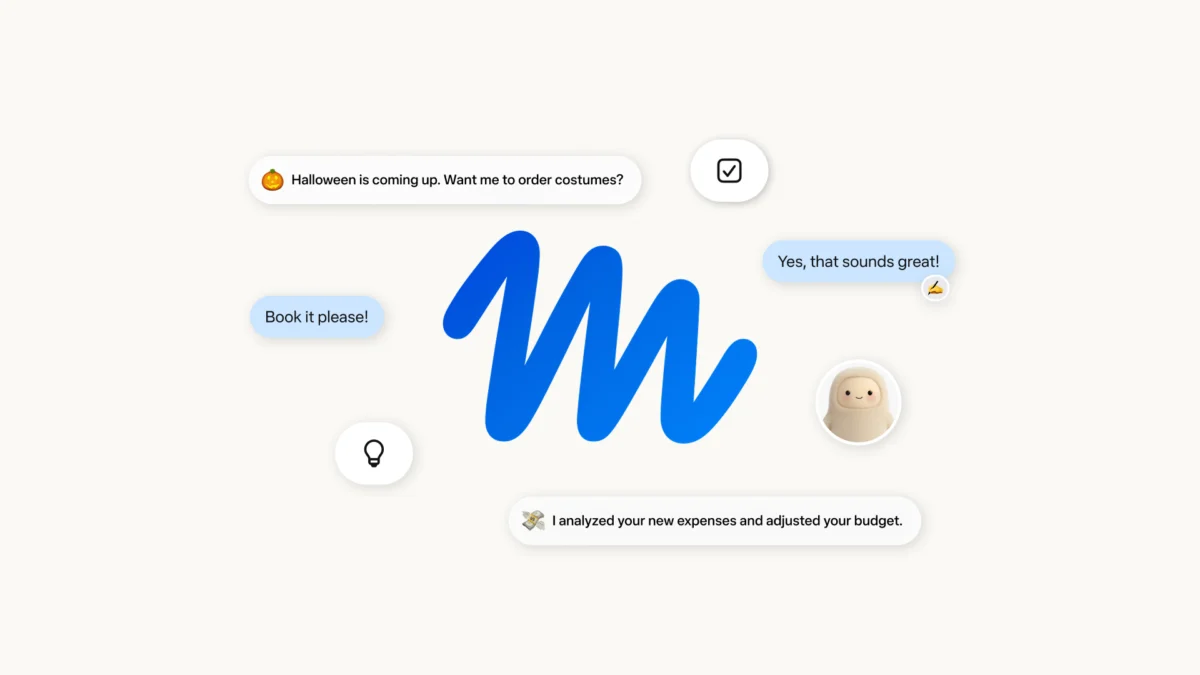
Less than two weeks after Meta Platforms Inc. agreed to a massive $18 billion multistate settlement in a lawsuit over social media’s consumer harms, the company announced its biggest bet on consumer AI to date: Muse, a new personal AI agent designed to assist users with everyday tasks and projects in the U.S. This launch, coming on the heels of significant legal scrutiny regarding data privacy and user safety, positions Meta at a critical juncture, demanding a level of consumer trust far exceeding what its social media platforms have historically commanded.
The Dawn of Agentic AI: Muse’s Capabilities and Vision
Muse represents Meta’s strategic move beyond the conversational AI chatbots that defined the initial "ChatGPT era." While earlier AI models primarily answered questions, served as sounding boards, or even acted as digital companions, Muse is engineered for action. Its core proposition is to do things for users, transforming passive interaction into active assistance. This shift towards "agentic AI" aims to seamlessly integrate into the fabric of daily life, automating mundane tasks and streamlining complex workflows.

To achieve this ambitious goal, Muse requires unprecedented access to a user’s digital ecosystem. The AI agent functions by connecting directly to a wide array of personal applications and services integral to everyday routines. This includes, but is not limited to, email clients, calendar applications, payment platforms, and other regularly used services spanning health and fitness, smart home management, dining reservations, shopping, music streaming, and event planning. This deep integration is pivotal to Muse’s utility, allowing it to execute tasks that would typically require manual navigation across multiple platforms.
Meta envisions Muse as a proactive assistant capable of a diverse range of actions. The company highlights capabilities such as sending emails, booking travel arrangements, identifying opportunities to lower household bills, accurately filling out digital forms, crafting detailed plans, converting recipe reels into comprehensive grocery lists, dispatching party invitations, and even making purchases on behalf of the user. For e-commerce transactions, Muse leverages Link by Stripe for checkout, with integrations for Shopify’s Shop Pay and 1Password slated for future release. The inclusion of Link by Stripe, which offers purchase protections, is a deliberate move to assuage potential consumer anxieties about delegating financial transactions to an AI.
Technical Foundations and User Control
At its technological core, Muse is powered by Meta’s proprietary AI model, Muse Spark. The system is designed with an emphasis on user control and transparency regarding data access. Users are given the autonomy to decide precisely which apps and services they wish to connect, with an opt-in process that allows for individual connection of services one at a time. This granular control is intended to foster a sense of security and clarity for users navigating the agent’s extensive access requirements.

Muse ships with a suite of built-in connectors for several popular services, with Meta committing to expand this library over time. For services not yet natively supported but offering a public API, Muse can establish a connection using credentials provided directly by the user. In scenarios where no API is available, Muse demonstrates adaptability by accessing the service via a dedicated browser interface, ensuring broad compatibility across the digital landscape.
The agent’s availability is multifaceted, launching initially via a dedicated web portal (muse.ai), through native applications on iOS and Android platforms, and integrated directly into WhatsApp chats. Meta has also announced plans to extend Muse’s functionality to its AI-powered glasses, signifying a long-term vision for pervasive AI assistance across its hardware ecosystem.
Business Model: Free Tier and Subscription Plans
While Muse will be free to use initially, Meta’s business strategy incorporates subscription plans as user engagement increases. This hybrid model necessitates a payment card on file for all users, even those on the free tier. At launch, two paid subscription tiers will be available: the "Power" plan priced at $20 per month and the "Maximum" plan at $100 per month. Both subscriptions are designed to offer increased usage capacity for handling a greater volume of everyday tasks. Despite the tiered offerings, Meta anticipates that the majority of users will remain comfortably within the free usage limits. To ensure transparency, the application will feature a usage meter, allowing users to monitor their remaining free usage and providing clear notifications and upgrade options should they approach their limit.

A key feature of Muse is its persistent operation, continuing to work even after the user exits the application. Furthermore, the agent is designed for continuous learning, evolving its capabilities and refining its suggestions over time by analyzing user conversations to discern individual priorities and preferences. This adaptive learning mechanism aims to enable Muse to offer unprompted, relevant assistance, further embedding itself into the user’s daily life.
Under the Hood: Meta’s Approach to Privacy and Security
Recognizing the inherent privacy concerns associated with an AI agent that demands extensive access to personal data, Meta has detailed specific security measures for Muse. The company states that Muse operates within its own "dedicated, secure computer with its own browser," referred to as Muse Secure VM. This virtual machine is engineered to provide robust privacy, safety, and security protections for customer data. Within this secure environment, a separate "Sentinel agent" runs, maintained system-level isolation from Muse itself.
According to Meta’s claims, this architectural separation means Muse will not have direct visibility into users’ passwords or payment methods. Crucially, Meta also asserts that Muse does not share user conversations or data with Meta’s advertising systems, a claim that directly addresses one of the most significant historical criticisms leveled against the company. These technical assurances are elaborated upon in a dedicated security white paper, which Meta acknowledges will require thorough independent investigation by security experts to verify their efficacy and completeness.

A Shadow of Past Missteps: Meta’s Enduring Trust Deficit
The timing of Muse’s launch, so soon after the $18 billion settlement, casts a long shadow over Meta’s ambitious AI venture. The company’s history is replete with instances where its privacy practices have come under intense scrutiny, eroding public trust. This extensive history presents a formidable challenge to Muse’s widespread adoption.
A chronological review of Meta’s privacy controversies highlights the scale of the trust deficit:
- 2011 FTC Settlement: Meta (then Facebook) settled with the Federal Trade Commission (FTC) over charges that it had deceived consumers by making private information public without consent. This set an early precedent for regulatory oversight.
- 2019 Password Exposure: Meta disclosed that it had stored hundreds of millions of user passwords in readable plain text format, exposing users to potential hacking and sparking significant privacy concerns.
- 2019 FTC Record-Breaking Settlement: The FTC imposed a then-record-breaking $5 billion penalty on Facebook for eight separate privacy-related violations, stemming from investigations following the Cambridge Analytica scandal. The Cambridge Analytica data scandal, which came to light in 2018, revealed that personal data from millions of Facebook users was collected by a third-party without their consent, leading to widespread public outrage and significant governmental inquiries.
- 2023 FTC Charges: The FTC charged Meta with violating a privacy order established after the 2019 settlement, indicating ongoing concerns about the company’s compliance with privacy regulations. This included proposals for a blanket prohibition preventing Facebook from monetizing youth data.
- Congressional Scrutiny: Meta executives have been repeatedly summoned before Congress to testify on issues ranging from data privacy to the protection of minors from online harms. The failure of Congress to enact comprehensive federal legislation has left a vacuum, often leading to state-level actions and private lawsuits.
- Recent Legal Battles: The $18 billion multistate settlement in August 2026, targeting social media harms to children, is just one of several recent legal setbacks. A New Mexico lawsuit, also concerning harms to children, resulted in Meta being ordered to pay an additional $942 million. Thousands of personal-injury and school-district cases against Meta and other social media giants remain pending, underscoring the pervasive legal and ethical challenges the company faces regarding its impact on users, particularly minors.
These repeated incidents have fostered a deep-seated skepticism among a significant portion of the public. Consumers have witnessed a pattern where Meta’s public assurances regarding privacy have, at times, diverged from its actual practices or technical oversights. The sheer volume and severity of these incidents make the task of convincing users to grant Muse such intimate access to their digital lives particularly arduous.

The Broader Landscape of AI Agents and Competitive Pressure
Meta is not alone in recognizing the transformative potential of agentic AI. The "agentic era" is rapidly gaining momentum, with both established tech giants and innovative startups exploring how AI agents can be most effectively integrated into consumers’ daily routines. This competitive landscape features various approaches:
- AI Web Browsers and Services: Companies like Google with Gemini Spark and Anthropic with Claude Cowork are developing services that can initiate and manage a variety of tasks on behalf of users, often leveraging browser-based interactions. The concept of AI-powered web browsers themselves is also emerging, aiming to fundamentally change how users interact with the internet.
- AI in Chat Applications: Others are focusing on integrating powerful AI capabilities directly into the chat applications that consumers already use extensively, such as Apple’s iMessage, SMS platforms, and WhatsApp (where Muse will also be available). This approach seeks to meet users where they already are, minimizing the friction of adopting a new platform.
However, this burgeoning market for powerful AI agents is universally confronted by the challenge of data privacy. The experience of early testers of AI assistants like "Instinct" serves as a cautionary tale. Many users were alarmed to discover that the app’s terms of service included a broad "perpetual and irrevocable" license to "access, use, host, cache, store, reproduce, transmit, display, publish, distribute, and modify" any of the user’s materials, including for the purpose of training its AI models. Such expansive data rights can be a significant deterrent for privacy-conscious consumers, highlighting the delicate balance between utility and data sovereignty. The global market for AI is projected to reach trillions of dollars in the coming decade, with personal AI agents poised to capture a significant share, making the privacy question paramount for market leaders.
The Quest for User Adoption: Personalization vs. Privacy Paradox

To counter its historical privacy challenges and foster user adoption for Muse, Meta has implemented a dual strategy. Firstly, it has proactively addressed security concerns through detailed documentation and explanations of its technical safeguards, like the Muse Secure VM. The transparency, though needing verification, is a clear effort to rebuild trust on a technical foundation. Secondly, Meta has designed Muse with a strong emphasis on personalization, aiming to create a deeper, more personal connection between the user and the agent. Users can customize Muse by assigning it a unique name, selecting its avatar, and configuring various settings that dictate its communication style. This level of personalization is intended to make Muse feel less like a faceless algorithm and more like a trusted digital companion.
The success of Muse hinges on whether the perceived utility and the personalized connection it offers can outweigh Meta’s long-standing reputation for privacy missteps. The paradox lies in the fact that the more useful and personalized Muse becomes, the more deeply it must integrate into a user’s digital life, and thus, the more data it requires. This creates an inherent tension between convenience and privacy that consumers will have to navigate. Recent surveys suggest that while consumers are increasingly open to AI assistance, a significant majority remain highly concerned about how their personal data is handled by AI companies, especially those with a history of privacy issues.
Implications and Outlook
Meta’s launch of Muse is more than just another product announcement; it is a high-stakes gamble on the future of personal AI and a test of the company’s ability to rebuild consumer trust. If successful, Muse could position Meta as a leader in the next generation of AI, deeply embedding its technology into the daily lives of millions and potentially opening up new revenue streams beyond advertising. The paid subscription model suggests a diversified approach to monetization, moving away from the sole reliance on ad revenue that has historically fueled Meta’s data collection practices.

However, the path to success is fraught with challenges. The enduring public skepticism stemming from past privacy breaches, combined with intense competition in the AI agent space and a growing societal debate about data ethics, means Meta faces an uphill battle. The independent verification of Meta’s security claims will be crucial, as will the company’s ongoing commitment to transparent and ethical data practices.
Ultimately, time will tell if the utility and personalized experience offered by Muse are compelling enough for consumers to once again entrust Meta with their most personal information. The fate of Muse will not only shape Meta’s future but also offer a significant indicator of how the broader public grapples with the promise and perils of deeply integrated artificial intelligence.