Vera Intan Clara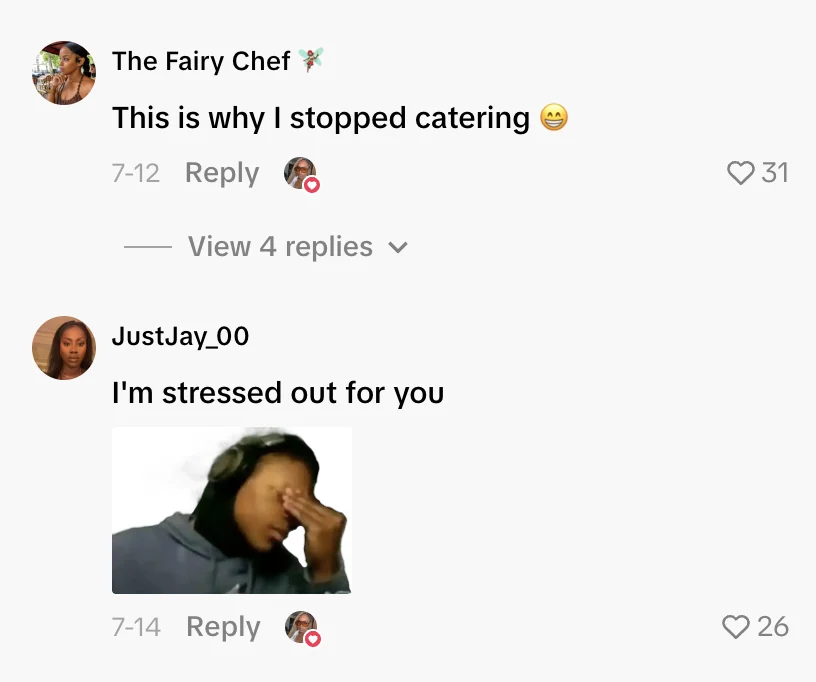
A TikTok video detailing a caterer’s arduous experience with a demanding client has garnered significant attention, highlighting the often-unseen challenges faced by small businesses in the service industry. The user, identified as Lauren, who operates a catering business under the handle @laurensapronsoff, shared a compelling narrative of escalating "red flags" and last-minute demands that culminated in an underserviced event and a protracted payment dispute. The video, which has amassed over 293,800 views and hundreds of comments, serves as a poignant case study in client management and the vulnerabilities of service providers. While The Daily Dot and other outlets have noted the inability to independently verify the specific events described, Lauren’s account resonates deeply within the catering community and among small business owners, sparking a broader conversation about professional boundaries, contractual agreements, and the impact of difficult clients.
Background of the Catering Industry and Small Business Vulnerabilities
The catering industry is a dynamic and competitive sector, integral to events ranging from intimate gatherings to large corporate functions. It demands meticulous planning, precise execution, and robust client communication. Caterers, often small business owners or independent contractors, invest considerable time, capital, and personal effort into crafting bespoke culinary experiences. Success hinges not only on culinary prowess but also on logistical acumen, staff management, and adept client relations. However, this personalized service model also exposes caterers to unique vulnerabilities, particularly concerning client expectations, scope creep, and payment adherence.
In recent years, social media platforms like TikTok have emerged as powerful forums for professionals to share their experiences, both positive and negative. These platforms offer a space for community building, peer support, and, at times, a public airing of grievances that can shed light on industry-wide issues. Lauren’s viral video exemplifies this trend, transforming a personal anecdote into a public discourse on professional ethics and client accountability within the service sector. Her story, while specific to her business, echoes common challenges reported by many independent service providers operating within the gig economy, where formal structures and protections can sometimes be less robust than in traditional employment models.
A Chronology of Escalating Challenges: Lauren’s Client Experience
Lauren’s account details a series of events that began seemingly innocuously but progressively deteriorated, illustrating how a lack of clear boundaries and shifting client demands can strain a business relationship to its breaking point.
The engagement began with a request for a birthday celebration, with the client articulating a desire for an event that was "not like a wedding, but not to be super informal. Somewhere in between." This initial brief, while somewhat ambiguous, is not uncommon in catering, requiring the caterer to interpret and translate the client’s vision into a tangible menu and service style. Lauren, confident in her ability to meet this nuanced request, proceeded by submitting a sample menu, which the client initially approved. This stage represents the foundation of most catering agreements, where mutual understanding and agreement on the scope of services are established.
However, the trajectory of the client relationship shifted approximately two months before the scheduled celebration. This period marked the onset of what Lauren vividly described as "red flags" that "continue to increase and get brighter and just be in my face." The primary issue at this juncture revolved around communication style. Lauren noted that the client developed a habit of concluding her emails with a demand to "let me know when you’re available for a call and call me straight away," only to immediately follow up with a phone call before Lauren had even had a chance to read the email. This behavior, characterized by an expectation of immediate, unwavering availability and a disregard for professional communication protocols, represented the first significant deviation from a standard client-vendor interaction. Such communication patterns can disrupt a caterer’s workflow, making it difficult to manage other clients and operational tasks efficiently.
The situation escalated dramatically in the immediate lead-up to the event. On the Friday before the Saturday party, Lauren received a call mid-day. To her surprise, the client handed the phone over to her husband, an individual Lauren had no prior contact with and whose existence she was not even aware of in the context of the event planning. This unexpected introduction of a new decision-maker, just hours before the event, introduced an element of chaos and uncertainty. The husband then proceeded to request a radical menu change, proposing a "fine dining on four courses for 40 people." This demand, made less than 24 hours before the party, was logistically impossible to accommodate. Lauren explained the profound challenges: "Your wife’s party is tomorrow. We’ve agreed on the menu, and I’m halfway through the prep, and you wanna change it to fine dining on four courses for 40 people?" Such a shift would require a complete overhaul of ingredient sourcing, menu preparation, staffing requirements, and even serving equipment—tasks that are simply unfeasible within such a short timeframe, especially when prep for the agreed-upon menu was already underway.
Adding to the complexity, the husband also requested that Lauren’s team pick up chips and pizza to serve to children. While Lauren declined to provide these items, citing them outside her service scope, the husband offered to procure them himself, contingent on Lauren’s staff cooking the pizza in a "specific way" preferred by the children. This request further blurred the lines of the catering agreement, expecting professional kitchen staff to handle client-supplied, informal food items according to idiosyncratic specifications, potentially compromising food safety standards and operational efficiency.
The day of the party brought further complications. Without prior notification to Lauren or her team, the client invited an additional 16 guests. This significant increase in guest count, representing a 40% jump from the original 40 planned guests, went unnoticed by Lauren until dessert service. The realization dawned when her team found themselves 10 cheesecakes short. Upon discreetly pulling the husband aside, Lauren confirmed the presence of the unannounced additional guests. This scenario is a common nightmare for caterers, as it directly impacts food quantity, portion control, and the overall guest experience, potentially leading to shortages and perceived shortcomings in service.
The post-event phase proved to be equally challenging. Lauren faced a prolonged struggle to secure payment for the additional services rendered due to the unannounced guests. She reported having to "chase them for over a month to get them to pay this invoice, to the point where I had to basically kind of like, threaten legal proceedings." It was only after this explicit threat that the outstanding amount was settled, with the money appearing in her account at "3:00am in the morning." Following this, Lauren stated, "I never heard from them again." Lauren later clarified in a separate video that the dispute was specifically over these additional charges and not the initial upfront payment for the agreed-upon services.
Supporting Data: The Financial and Logistical Impact on Catering Businesses
Lauren’s experience underscores several critical challenges faced by the catering industry, particularly for small businesses operating on tight margins.
- Profit Margins and Unexpected Costs: The catering industry typically operates with profit margins ranging from 5% to 15%, depending on the scale and type of service. Unexpected costs, such as those incurred by last-minute menu changes or unannounced guests, can quickly erode these margins, turning a profitable event into a financial loss. The cost of additional ingredients, unexpected labor hours, and potential food waste for discarded prep work can be substantial.
- Logistical Complexity of Menu Changes: A professional catering operation is a carefully choreographed system. Menu changes, especially significant ones like shifting to "fine dining" from a pre-approved menu, are not merely about swapping ingredients. They involve:
- Ingredient Sourcing: Specialty ingredients for fine dining often require advance ordering and may not be readily available on short notice.
- Staffing and Skill Sets: Different menus require different culinary skills and staffing levels. A fine dining experience typically demands more skilled chefs and a higher server-to-guest ratio.
- Equipment and Presentation: Fine dining often necessitates specific plating, serving dishes, and glassware that may not be part of the standard inventory for a less formal event.
- Preparation Time: Complex dishes require extensive prep and cooking time, which cannot be magically conjured hours before an event.
- Impact of Unannounced Guests: The financial impact of 16 additional guests, especially on a 40-person event, is significant. This represents a 40% increase in food consumption, labor for serving, and potentially, additional equipment. For a caterer, this means providing services for free unless the additional costs are recovered. It also risks running out of food, which reflects poorly on the caterer despite being caused by the client’s actions. Industry best practices heavily emphasize final guest counts, often 72 hours or even a week in advance, to manage these variables.
- Payment Disputes and Cash Flow: Small businesses, particularly in the service sector, often rely on consistent cash flow. Delayed or disputed payments can severely impact a business’s ability to pay suppliers, staff, and operating expenses. The time and emotional energy spent chasing invoices can also detract from core business activities. Legal proceedings, even threats of them, represent additional costs and stress for a small business owner.
Inferred Expert Perspectives and Industry Best Practices
While no direct "official responses" from the clients are available, industry experts and business consultants routinely offer advice that sheds light on how such situations can be mitigated and managed.
- The Primacy of Contracts: Business consultants frequently emphasize the critical importance of a detailed, legally binding contract. A comprehensive catering contract should clearly outline:
- Scope of Services: Exact menu, service style, duration of service.
- Guest Count Policy: Clear cut-off dates for final guest counts and associated charges for additions or deductions.
- Change Order Procedures: A clause detailing how and when menu changes can be made, the associated fees, and the timeframe within which changes are permissible. Many caterers, as noted in the TikTok comments, enforce a strict "no changes within 72 hours" policy.
- Payment Schedule: Clear deposit requirements, interim payments, and final payment deadlines, along with penalties for late payments.
- Communication Protocols: Preferred methods and response times for client communication.
- Force Majeure and Dispute Resolution: Clauses to handle unforeseen circumstances and mechanisms for resolving disagreements.
- Managing Client Expectations and "Red Flags": Business coaches often train service providers to recognize early warning signs of potentially difficult clients. These "red flags" can include:
- Disregard for Professional Boundaries: Demanding immediate attention or contact outside of agreed-upon channels.
- Frequent and Unreasonable Changes: Continual adjustments to agreed-upon plans without understanding the logistical impact.
- Introduction of New Decision-Makers: Bringing in new parties late in the process who are not aligned with previous agreements.
- Price Haggling or Undervaluing Services: Attempting to reduce costs or demanding services beyond the agreed scope without additional compensation.
- Deposits and Payment Structures: To protect against non-payment and cover initial costs, industry standards often include:
- Non-refundable Deposits: To secure the booking and cover initial planning and administrative costs.
- Progress Payments: For larger events, payments can be staggered, with a significant portion due before the event.
- Final Payment Before Event: Many caterers require full payment a week or a few days before the event, especially for the final guest count, to avoid post-event collection issues.
Broader Impact and Implications
Lauren’s viral story carries significant implications for both service providers and clients, fostering a crucial dialogue within the industry.
- Empowerment of Small Business Owners: Social media platforms provide a voice for small business owners who might otherwise feel isolated in their struggles. Sharing such experiences can create a sense of community, offer validation, and provide practical advice from peers. It also empowers them to stand firm on their terms and conditions.
- Client Education and Awareness: These narratives serve as an educational tool for clients, shedding light on the intricate logistics and financial realities of the catering business. Many clients may be unaware of the profound impact their last-minute changes or unannounced guests have on a caterer’s operations and profitability. Such stories can encourage greater respect for contractual agreements and professional boundaries.
- Reinforcing Best Practices: The public discussion generated by Lauren’s video reinforces the critical need for robust contracts, clear communication, and defined change-order policies within the service industry. It acts as a collective reminder for caterers to review and strengthen their own terms of service.
- The Double-Edged Sword of Public Discourse: While beneficial for raising awareness, sharing client experiences publicly can also pose ethical dilemmas regarding client privacy and the potential for reputational damage (though Lauren’s video did not identify the client). The inability to independently verify the events underscores the importance of caution and objectivity in such online narratives.
- The Future of Service Industry Relationships: As the gig economy continues to expand, the dynamics between independent service providers and their clients will evolve. Stories like Lauren’s highlight the ongoing need for clear frameworks that protect both parties, promoting professionalism, mutual respect, and fair compensation for services rendered.
In conclusion, Lauren’s viral TikTok video transcends a mere personal grievance; it serves as a powerful illustration of the daily challenges confronting small business owners in the service industry. The detailed account of escalating client demands, logistical nightmares, and protracted payment disputes resonates widely, prompting a vital discussion about professional boundaries, the necessity of robust contractual agreements, and the broader implications for client-vendor relationships in an increasingly digital and interconnected world. While the specific events remain unverified by third parties, the narrative’s authenticity in capturing common industry struggles underscores the value of such platforms in fostering community, educating consumers, and advocating for improved standards within the service sector.