admin
admin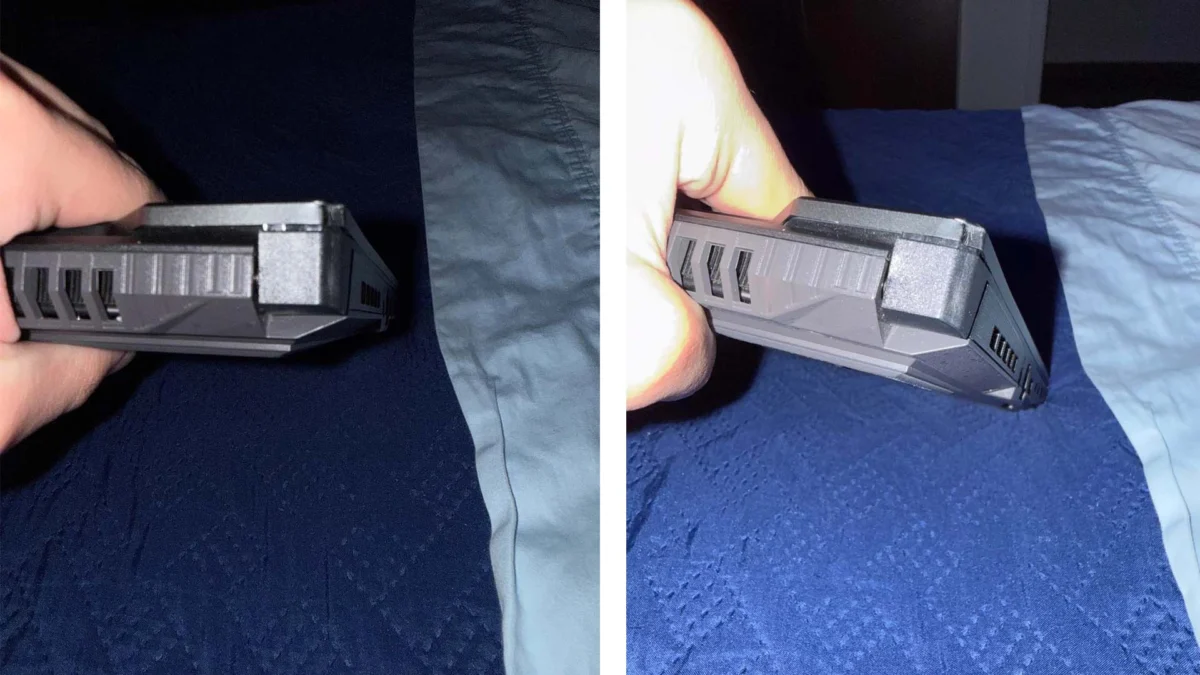
The pursuit of social media engagement and the desire to replicate "aesthetic" desk setups has led to the structural failure of an ASUS TUF gaming laptop, highlighting the physical limitations of consumer electronics when subjected to unintended use. The incident, which gained traction on the social news platform Reddit, involved a user attempting to mimic a popular Instagram and TikTok trend where laptops are positioned upside down or in a "tent" configuration to serve as secondary displays or to fit specific minimalist design themes. However, unlike specialized 2-in-1 convertible devices designed with 360-degree hinges, the ASUS TUF series utilizes a traditional clamshell architecture that is not engineered to support its own chassis weight while inverted. The resulting mechanical stress caused the hinges to snap, rendering the device partially inoperable and serving as a cautionary tale regarding the intersection of digital trends and hardware maintenance.
The Mechanics of the Failure: From Trend to Torsion
The incident originated when a Reddit user, identified by the handle AArqjmct01, shared images of a severely damaged ASUS TUF gaming laptop. The user admitted that the damage occurred while attempting to use the machine in an upside-down position, a configuration frequently seen in viral "setup inspiration" videos. In these videos, creators often display hardware in unconventional ways to emphasize clean lines or to hide the keyboard and trackpad when using external peripherals. While high-end convertible laptops like the ASUS ROG Flow series or the Zenbook Flip are equipped with reinforced, dual-axis hinges designed for such maneuvers, the TUF series is a budget-oriented line where cost-saving measures often dictate the choice of materials and structural design.

Technical analysis of the ASUS TUF chassis reveals that the hinges are typically anchored into plastic mounts within the LCD lid and the main palm rest assembly. When a standard laptop is placed upside down, the weight of the base—which contains the motherboard, battery, and cooling system—exerts a significant amount of leverage on the hinge pins. Because the hinges are designed to resist gravity in a standard upright opening motion, inverting the device applies torque in a direction the internal plastic "bosses" (the screw-receiving pillars) are not reinforced to handle. In this specific case, the pressure exceeded the tensile strength of the polycarbonate housing, causing the hinges to tear away from their mounting points.
A Chronology of Warnings Ignored
The failure of the device was not a sudden, unforeseen accident but rather the culmination of a series of decisions made despite community warnings. Prior to the hardware failure, the user had reportedly interacted with the tech community on Reddit, where several members advised against the upside-down configuration. Experienced users pointed out that the TUF line, while marketed for its durability under "military-grade" testing (MIL-STD-810H), is specifically tested for environmental hazards like vibration, humidity, and shock, rather than structural misuse or extreme hinge torsion.
Despite these warnings, the user proceeded with the setup. The chronology of the event suggests that the structural integrity did not fail instantly but weakened over a short period of operation. As the hinges were forced to hold the chassis at an unnatural angle, the plastic began to fatigue. The eventual "snap" occurred when the user likely tried to adjust the screen or move the unit. According to the user’s follow-up report, both hinges eventually failed. While one hinge was reportedly "popped" back into a semblance of its original position, the second hinge remained completely detached, suggesting that the internal plastic screw-mounts had been pulverized, a common issue in modern plastic-chassis laptops that makes simple repairs nearly impossible without replacing the entire top case or display assembly.

The Role of Material Science in Budget Gaming Hardware
To understand why the ASUS TUF was particularly susceptible to this failure, one must look at the market positioning of the brand. ASUS categorizes the TUF (The Ultimate Force) line as an entry-level to mid-range gaming solution, sitting below the premium ROG (Republic of Gamers) brand. To maintain a competitive price point, ASUS utilizes high-strength plastics for the majority of the TUF’s construction. While these plastics are durable for everyday transport, they lack the rigidity of the magnesium-aluminum alloys found in more expensive machines.
Hinge design in these models involves a metal hinge assembly screwed into plastic moldings. Over time, even with normal use, the heat generated by gaming components can make these plastic moldings more brittle. When a user introduces extreme stress—such as the weight of the entire base pulling against the screen while inverted—the metal hinge acts as a lever, easily snapping the plastic anchors. This is a known "weak point" in the repair community for several laptop brands, not just ASUS, but the TUF’s specific design makes it particularly vulnerable to the "tent mode" trend because its center of gravity is heavily biased toward the rear of the base, where the cooling fans and heatsinks are located.
Financial and Warranty Implications of User-Induced Damage
One of the more controversial aspects of this specific case is the revelation that the laptop did not belong to the user who broke it. This detail has drawn significant criticism from the online community, highlighting a lack of stewardship for borrowed high-value electronics. From a financial perspective, the cost of repairing a snapped hinge on a modern gaming laptop can be substantial. If the plastic mounts are broken, a technician must often replace the "A-cover" (the back of the screen) and potentially the "C-cover" (the keyboard surround), depending on where the failure occurred. Parts and labor for such a repair can range from $200 to $400, representing a significant percentage of the laptop’s original purchase price.

Furthermore, this type of damage is almost universally classified as "Customer Induced Damage" (CID) by manufacturers. Standard limited warranties cover defects in materials and workmanship under normal operating conditions. Intentionally placing a device in a physical configuration it was not designed for—and which leads to mechanical failure—is considered misuse. Consequently, even if the device was still within its one-year warranty period, ASUS and its authorized service providers would likely deny a free repair claim. The user would be forced to pay for out-of-warranty service, or the owner would be left with a machine that can no longer be closed or transported safely.
The Broader Impact: Social Media Trends vs. Hardware Longevity
This incident serves as a microcosm of a larger problem within the tech-enthusiast community: the prioritization of form over function. Social media platforms thrive on visual novelty, and "minimalist" or "extreme" desk setups often garner high engagement. However, these trends frequently ignore the engineering realities of the hardware being showcased. Other dangerous trends have included placing gaming consoles in unventilated cabinets for a "clean look" or using liquid metal thermal paste without proper insulation, both of which can lead to permanent hardware death.
The "laptop as a monitor" trend is particularly deceptive because it looks functional. In reality, unless a laptop is a specialized convertible, the hinges are the most stressed mechanical part of the device. Professional IT analysts suggest that for users who desire a vertical or inverted screen setup, the only safe method is to use a dedicated external monitor or a laptop specifically marketed with a 360-degree hinge. Using a standard clamshell laptop in this manner is essentially a gamble with the device’s structural integrity.

Conclusion and Lessons for the Consumer
The failure of the ASUS TUF gaming laptop in this instance was an avoidable consequence of following a digital trend without considering mechanical limits. As hardware manufacturers continue to push the boundaries of performance-to-price ratios, consumers must remain aware that "budget-friendly" often means "structural compromises." The "Tough" branding of the TUF series provides protection against certain types of wear, but it is not a license for physical abuse or unconventional positioning.
As this story circulates through the tech community, it serves as a stark reminder: hardware is governed by the laws of physics, not the aesthetics of an Instagram filter. For the owner of the damaged ASUS TUF, the result is a costly lesson in the importance of understanding the mechanical limits of one’s tools. For the wider public, it is a warning to vet social media trends through the lens of common sense and engineering reality before risking expensive investments. The evolution of social media content will continue to produce "cool" but impractical ideas; however, the physical durability of a plastic hinge remains constant, regardless of how many "likes" a dangerous setup might receive.