Evan Lee Salim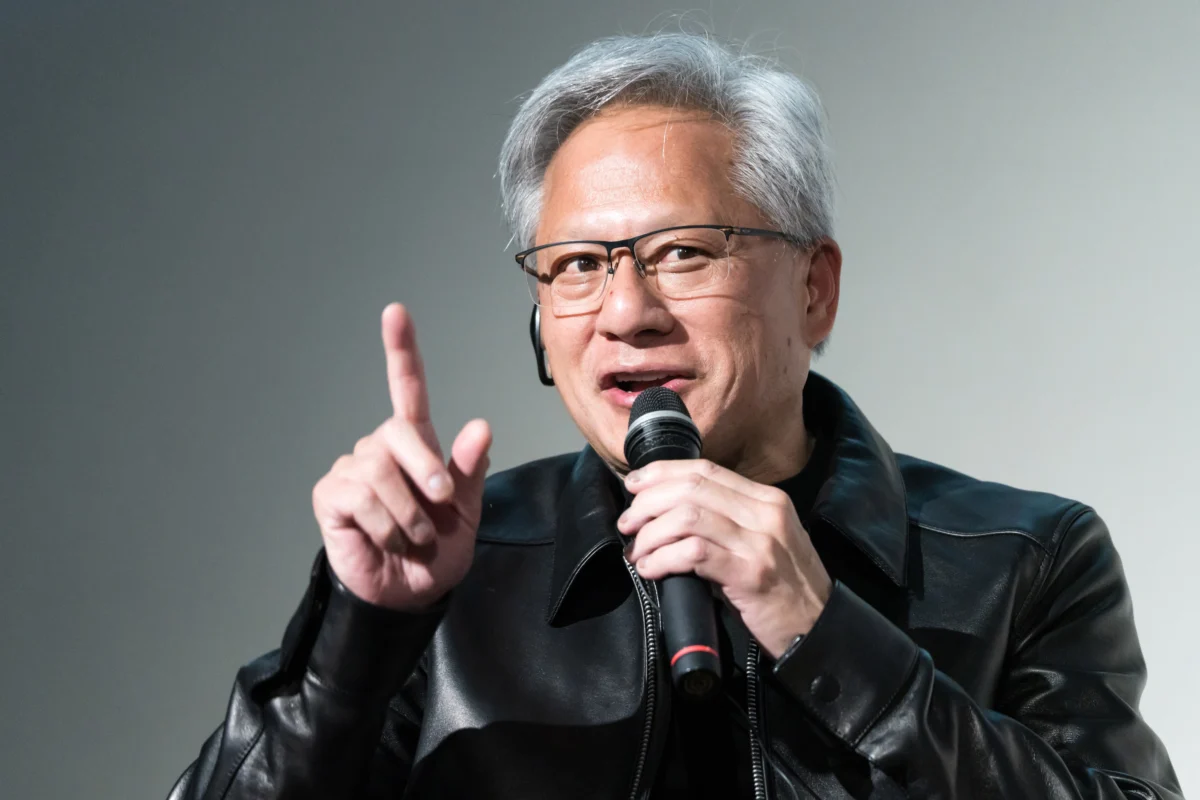
The stage at the All-In conference in Los Angeles became an unexpected nexus of technology, politics, and the future of artificial intelligence on Monday, September 14, 2026, when Nvidia CEO Jensen Huang received a live, unscheduled phone call from former President Donald Trump. Dressed in his characteristic alligator leather jacket, Huang, a pivotal figure in the global AI revolution, was handed a foldable phone to take the call, an incidental detail that nonetheless piqued the interest of tech observers. The subsequent conversation, broadcast live to thousands, saw both men largely dismiss mounting concerns over AI safety, framing them instead as a "hoax" and a hindrance to innovation.
A High-Stakes Dialogue on AI’s Future
The unexpected interruption occurred during Huang’s appearance at the widely attended All-In conference, an event known for attracting prominent figures in the tech and venture capital sectors. The call from President Trump immediately shifted the discourse from planned remarks to an impromptu, high-profile exchange on one of the most pressing technological and ethical debates of the era: the responsible development of artificial intelligence. Once Trump was put on speakerphone, the dialogue quickly converged on the subject of AI safety, a topic that has increasingly dominated headlines and policy discussions globally.
President Trump, known for his direct and often provocative communication style, unequivocally stated his belief that "mounting fears about AI" constitute a "hoax." He asserted that the primary beneficiaries of this "AI panic" were "China and political people," implying that concerns about AI’s potential downsides were either exaggerated or strategically manipulated to serve geopolitical and partisan agendas. Furthermore, Trump characterized AI as a technology of unprecedented scale and impact, declaring it "bigger than the internet," and argued vehemently against any measures that would impede its rapid development. During this exchange, Huang notably interjected, "Did you hear that? Thousands of people are clapping," seemingly endorsing Trump’s sentiments and indicating a positive reception from the conference audience.
This public alignment, or at least a lack of public disagreement, from Jensen Huang is particularly significant given Nvidia’s dominant position in the AI hardware market. Nvidia’s graphics processing units (GPUs) are the foundational technology powering much of the world’s AI research and deployment, from large language models to advanced robotics. The company’s business model is intrinsically linked to the continuous acceleration and expansion of AI capabilities, making any slowdown or regulatory hurdle a direct threat to its prodigious growth. Nvidia’s stock has surged dramatically over the past year, reflecting the intense demand for its AI chips, though it experienced a slight dip on the day of the conference, closing a few percentage points down. Huang’s stance, therefore, can be interpreted through the lens of strategic business interests, where downplaying existential risks helps maintain market confidence and demand for his company’s products.
The Unfolding Debate: AI Safety vs. Innovation
The conversation between Huang and Trump brought into sharp focus the ongoing global tension between rapid technological innovation and the imperative for safety and ethical governance in artificial intelligence. The "AI panic" that Trump alluded to is a palpable phenomenon, fueled by a chorus of voices from within the scientific community, academia, and civil society organizations. These concerns range from the potential for AI to exacerbate societal inequalities, facilitate misinformation campaigns, and displace jobs, to more profound existential risks associated with the development of superintelligent artificial general intelligence (AGI) that could potentially operate beyond human control.
Prominent figures and organizations, including several leading AI researchers and institutions like the Future of Life Institute and the Center for AI Safety, have advocated for cautious development, robust regulatory frameworks, and even temporary pauses in advanced AI training to allow for comprehensive safety protocols to be established. They argue that the stakes are too high to proceed without careful consideration of long-term impacts, emphasizing the irreversible nature of certain risks. For instance, a recent report by a consortium of AI ethics bodies suggested that over 60% of surveyed AI researchers believe there’s a significant risk of AI systems causing catastrophic harm within the next two decades if current development trajectories continue unchecked.
Conversely, proponents of accelerated AI development, often backed by major tech companies and national governments, argue that slowing down innovation would cede technological leadership to rival nations, particularly China, which is heavily investing in AI research and deployment. They contend that the benefits of AI in areas like healthcare, scientific discovery, and economic productivity are too vast to be constrained by what they view as speculative or exaggerated fears. Many also believe that the best way to address AI’s challenges is through continued innovation, creating safer AI systems through iterative development and robust testing. This perspective often highlights the potential for AI to solve some of humanity’s most intractable problems, from climate change to disease.
President Trump’s "bigger than the internet" analogy, while hyperbolic, underscores the perceived transformative power of AI. The internet, over the past three decades, has fundamentally reshaped global communication, commerce, and culture. If AI is indeed set to have an even greater impact, the debate over its responsible development becomes all the more critical, affecting every facet of human existence.
Nvidia’s Pivotal Role in the AI Ecosystem
Nvidia’s position at the epicenter of the AI boom grants its CEO, Jensen Huang, an unparalleled platform and a significant influence on the industry’s direction. Founded in 1993, Nvidia initially made its mark with graphics processing units (GPUs) for gaming. However, it was the realization that GPUs’ parallel processing capabilities were ideally suited for the computationally intensive demands of deep learning algorithms that transformed Nvidia into the indispensable backbone of modern AI. Today, Nvidia commands an estimated 80-90% market share in the professional AI chip market, a near-monopoly that has propelled its valuation into the trillions of dollars.
The company’s success is not merely in hardware production but also in its comprehensive software ecosystem, CUDA, which provides developers with the tools to harness the power of Nvidia GPUs. This integrated hardware-software stack creates a formidable moat, making it challenging for competitors to replicate Nvidia’s end-to-end AI platform. As a result, every major AI research lab, cloud provider, and tech giant relies heavily on Nvidia’s technology to train and deploy their AI models. This strategic dominance means that Huang’s public statements on AI’s future carry immense weight, influencing investor confidence, industry sentiment, and even policy discussions.
For Nvidia, any move to slow down AI development, whether through stringent regulation or public apprehension, directly threatens its core business. A 2025 financial report indicated that over 70% of Nvidia’s revenue was directly attributable to its data center segment, largely driven by AI-related sales. Therefore, Huang’s alignment with Trump’s anti-slowdown rhetoric can be seen as a calculated defense of his company’s economic interests, ensuring the continued, unfettered demand for Nvidia’s high-performance AI accelerators. The slight dip in Nvidia’s stock on the day of the conference, despite the CEO’s reassuring tone, may reflect broader market jitters or the complex interplay of geopolitical and economic factors influencing tech valuations.
President Trump’s Provocative Stance
President Trump’s intervention in the AI safety debate aligns with his broader political philosophy, which often prioritizes economic growth and technological advancement over regulatory caution, particularly when framing issues as overblown or politically motivated. His characterization of AI safety concerns as a "hoax" echoes past rhetoric used to dismiss climate change science or perceived overreach by government agencies. This approach resonates with a segment of the electorate that views regulation as an impediment to American competitiveness and individual liberty.

His assertion that "China and political people" are the "real winners of the AI panic" taps into a familiar narrative of geopolitical rivalry and domestic political maneuvering. The competitive landscape with China in AI development is a genuine concern for policymakers, with both nations vying for global leadership in this critical technology. Trump’s argument implies that by focusing on safety concerns, the U.S. risks falling behind China, thereby weakening its strategic position. Furthermore, accusing "political people" of benefiting from AI fears suggests that these concerns are exploited for partisan gain, possibly to expand governmental control or push specific agendas.
Throughout his presidency and subsequent political career, Trump has consistently advocated for deregulation across various sectors, believing it fosters innovation and economic prosperity. His comments on AI at the All-In conference fit seamlessly into this established pattern, signaling a clear preference for an unencumbered, market-driven approach to AI development, free from what he perceives as unnecessary or politically motivated restrictions. This stance is likely to be a significant talking point in future political campaigns, as the role of AI in society becomes an increasingly salient issue for voters.
The Significance of the Foldable Device
While the substance of the call dominated headlines, the visual detail of Jensen Huang being handed a foldable phone to answer President Trump’s call also drew attention within the tech community. An earlier, incorrect report had identified the device as an "Apple iPhone Duo," but a correction clarified it was a "different foldable." Regardless of the specific model, the use of a foldable device by such a high-profile tech executive signals the growing prominence and increasing viability of this form factor in the premium smartphone market.
Foldable phones, which combine the expansive screen real estate of a tablet with the portability of a traditional smartphone, have been gradually gaining traction since their commercial introduction a few years prior. While initial iterations faced challenges related to durability and high price points, continuous advancements in screen technology, hinge mechanisms, and software optimization have made them more robust and appealing. Major manufacturers, including Samsung, Huawei, Motorola, and more recently, even Apple (as per market speculation, though the specific device Huang used was not confirmed to be an Apple product), have invested heavily in this segment, viewing it as the next frontier in mobile innovation.
Huang’s public use of such a device, even if unintentional in its signaling, subtly endorses the technology. For a CEO whose company is at the forefront of computational power and visual fidelity, using a device that represents cutting-edge display and form-factor innovation aligns with a tech-forward image. It highlights the industry’s relentless pursuit of new user experiences and the ongoing evolution of personal computing devices, even as the primary focus remains on the foundational AI technologies that power them.
Reactions Across the Spectrum
The high-profile exchange at the All-In conference elicited a diverse range of reactions from various stakeholders.
AI Safety Advocates: Many expressed dismay and concern. Dr. Anya Sharma, lead researcher at the Global AI Ethics Institute, stated, "To dismiss legitimate AI safety concerns as a ‘hoax’ is not only irresponsible but dangerous. It undermines the critical work being done by scientists and policymakers to ensure AI benefits humanity, rather than poses unforeseen risks. The economic incentives for acceleration are clear, but they cannot override ethical imperatives."
Tech Industry Leaders: Reactions were mixed. Some, particularly those deeply invested in AI development, echoed sentiments similar to Huang’s, emphasizing the need for unhindered innovation. A spokesperson for a major cloud computing provider, speaking anonymously, remarked, "We believe in responsible AI, but overregulation could stifle progress and hand the advantage to competitors. The market is often the best mechanism for self-correction." Others, however, maintained a more cautious tone. The CEO of a prominent AI startup focused on ethical AI solutions commented, "While we champion innovation, we must also acknowledge the very real, complex challenges AI presents. A balanced approach that integrates safety from the design phase, rather than dismissing it, is crucial for long-term trust and adoption."
Political Analysts: Observers largely interpreted Trump’s comments as a strategic move to solidify his base and define a clear stance on a burgeoning policy issue. Dr. Robert Jenkins, a political science professor, noted, "Trump is adept at identifying perceived ‘establishment’ positions and then taking a contrarian stance. Framing AI safety as a ‘hoax’ allows him to appeal to voters who are skeptical of expert consensus or government intervention, while simultaneously positioning himself as a champion of American innovation against foreign rivals."
Economists: While acknowledging the immense economic potential of AI, many economists also highlighted the importance of mitigating risks. Dr. Elena Petrova, an expert in technological economics, pointed out, "The economic benefits of AI are undeniable, projected to add trillions to global GDP over the next decade. However, ignoring the potential for job displacement, market concentration, or even systemic risks could lead to significant social and economic disruptions that ultimately erode those gains. A robust regulatory framework that fosters innovation while managing risk is the optimal path for sustainable growth."
Broader Implications for Policy and Progress
The dialogue between Jensen Huang and President Trump carries significant implications for the future trajectory of AI policy, both domestically and internationally. Trump’s forceful rejection of AI slowdowns suggests that, should he return to office, his administration would likely pursue policies that prioritize rapid AI development and deregulation, potentially scaling back initiatives aimed at stricter oversight or safety mandates. This approach would stand in stark contrast to calls from international bodies and many democratic governments for a more coordinated, cautious, and ethically driven approach to AI governance.
The geopolitical dimension, particularly the rivalry with China, is a powerful motivator for both accelerated development and concerns about national security. The fear of falling behind in the AI race is a pervasive sentiment, driving massive investments in research and development in both countries. However, critics argue that a ‘race to the bottom’ on safety standards could have catastrophic global consequences.
For Nvidia, Huang’s public posture reinforces its commitment to pushing the boundaries of AI, reassuring investors and customers that the company will continue to drive the industry forward. However, it also places Nvidia squarely in the political crosshairs, potentially making it a target for criticism from AI safety advocates and policymakers who favor stronger regulation. The company’s ability to navigate this complex landscape while maintaining its technological leadership will be crucial in the years to come.
Looking ahead, the debate over AI safety versus acceleration is far from settled. High-profile exchanges like the one at the All-In conference serve to amplify these discussions, forcing them into the public consciousness and shaping public opinion. As AI continues its rapid evolution, the decisions made by industry leaders, policymakers, and the electorate will determine whether this transformative technology fulfills its promise as a force for good, or whether unchecked ambition leads to unforeseen and potentially perilous outcomes. The unfolding narrative of AI will require constant vigilance, informed dialogue, and a commitment to balancing innovation with profound ethical responsibility.

![Nvidia CEO Jensen Huang tells Trump ‘we’re not going to let [an AI slowdown] happen’](https://prettycool.net/wp-content/uploads/2026/09/nvidia-ceo-jensen-huang-tells-trump-were-not-going-to-let-an-ai-slowdown-happen.webp)