Sisilia Frederika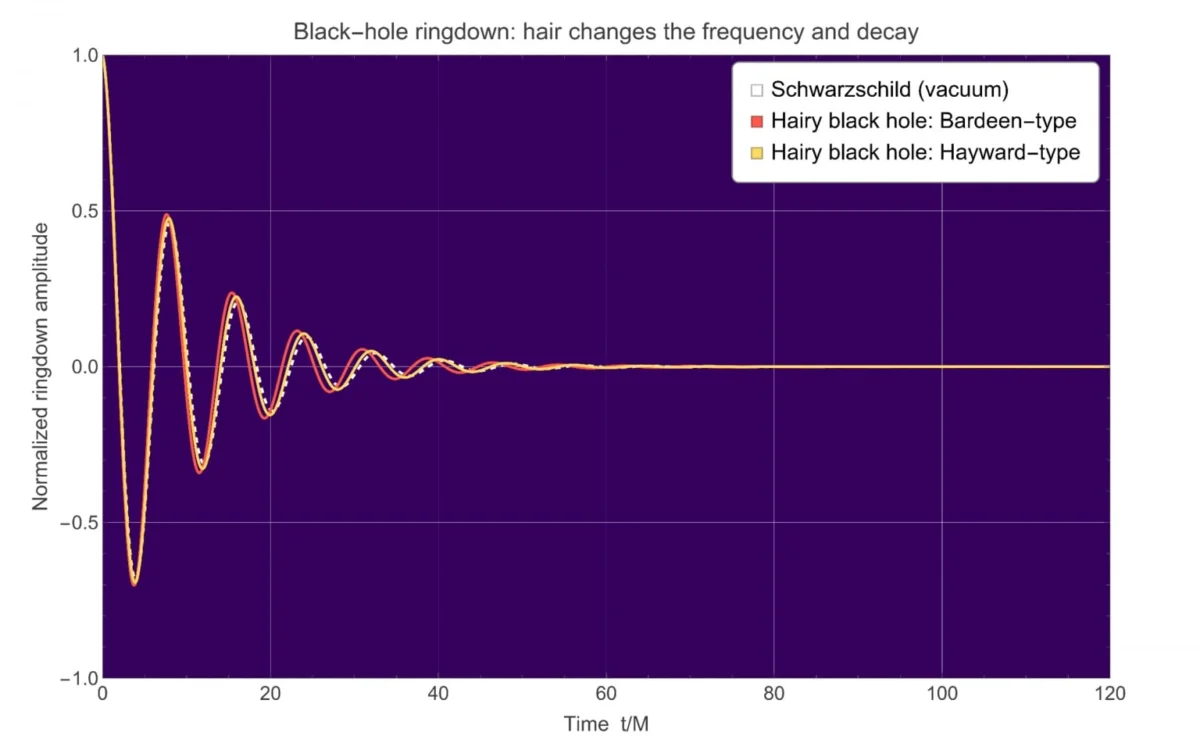
The theoretical framework governing the most enigmatic objects in the universe—black holes—is undergoing a profound period of scrutiny. For decades, the scientific community has operated under the "no-hair theorem," a postulate suggesting that black holes are the simplest macroscopic objects in existence, characterized solely by three observable properties: mass, spin (angular momentum), and electric charge. However, a landmark study recently published in the Journal of Cosmology and Astroparticle Physics suggests that the "simplicity" of these celestial bodies may soon be challenged. Led by Ariadna Uxue Palomino Ylla of Nagoya University, a team of researchers has demonstrated that if real-world black holes possess additional features, or "hair," these complexities will be etched into the gravitational waves emitted during the final moments of a black hole merger.
The Foundation of the No-Hair Theorem
The concept of "black hole hair" originated in the 1960s, largely popularized by the legendary physicist John Archibald Wheeler. Wheeler’s metaphor was a response to the mathematical complexity of general relativity. He argued that once matter collapses into a singularity, the specific details of that matter—its chemical composition, its previous shape, its entropy—are lost to the outside observer. In his view, the event horizon acts as a perfect filter. This led to the "hairy ball theorem" analogy from topology, which posits that one cannot comb the hair on a sphere flat without creating a cowlick. Wheeler contended that black holes, conversely, were perfectly "bald"—smooth, featureless, and defined only by the aforementioned trio of parameters.
Under classical General Relativity (GR), as formulated by Albert Einstein, this theorem holds firm for steady-state black holes. In this vacuum-solution model, any information that falls into a black hole is effectively sequestered from the rest of the universe, leading to the famous "Information Paradox" first highlighted by Stephen Hawking. If black holes are truly hairless, then all information about the objects that formed them is destroyed, a concept that contradicts the laws of quantum mechanics, which state that information must be conserved. This tension between GR and quantum theory has driven physicists to search for "hair" as a potential bridge between the two pillars of modern physics.
The Ringdown Phase: The Cosmic Signature
The new research focuses on a specific phase of a black hole merger known as the "ringdown." When two black holes orbit each other and eventually collide, the process is divided into three distinct stages: the inspiral, where they spiral toward each other; the merger, the violent moment of coalescence; and the ringdown.
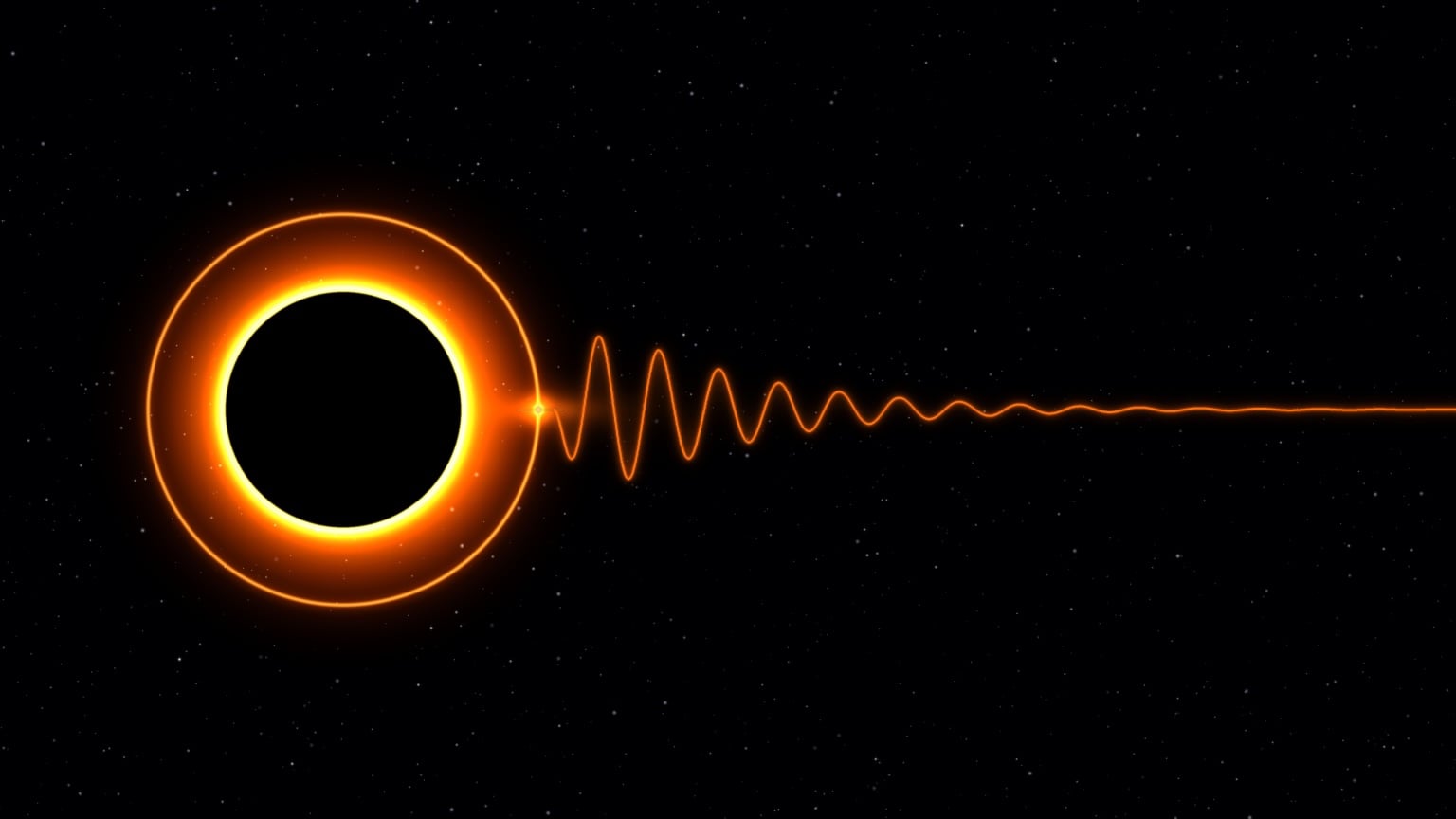
During the ringdown, the newly formed, larger black hole is initially misshapen. To reach a stable, spherical or spheroidal state, it vibrates, shedding its excess energy in the form of gravitational waves. This process is analogous to a bell being struck with a hammer. The bell rings at specific frequencies—its "quasinormal modes"—which are determined by the bell’s shape, material, and size. In the case of a black hole, the "tones" of this ringing are dictated by its physical structure.
According to the no-hair theorem, these quasinormal modes should be determined entirely by the mass and spin of the resulting black hole. However, Palomino Ylla and her colleagues argue that if alternative models of gravity are correct, or if quantum effects manifest at the event horizon, the ringdown will contain "overtones" or frequency shifts that deviate from the predictions of General Relativity.
Comparative Models: Hayward and Bardeen Black Holes
To test the limits of the no-hair theorem, the research team employed sophisticated mathematical simulations to compare standard Kerr black holes (the GR-compliant model) with two prominent alternative models: the Hayward black hole and the Bardeen black hole.
The Hayward Model
The Hayward black hole, proposed by Sean Hayward in 2006, is a "regular" black hole model. In standard GR, the center of a black hole is a singularity—a point of infinite density where the laws of physics break down. The Hayward model seeks to resolve this by assuming that at extreme densities, matter reaches a non-singular quantum state. This results in a "core" rather than a singularity. Because the Hayward model modifies the internal and horizon structure of the black hole, it does not strictly obey the no-hair theorem. The researchers found that Hayward black holes produce a ringdown with a distinct decay rate, reflecting the lack of a traditional singularity.
The Bardeen Model
The Bardeen black hole, named after James Bardeen, introduces the concept of non-linear electrodynamics. This model describes a black hole that possesses a sort of magnetic charge or internal electromagnetic structure. While it avoids a central singularity, it introduces a specific type of "hair" related to its electromagnetic field. The study demonstrated that Bardeen black holes exhibit unique quasinormal mode frequencies that differ significantly from both the Hayward and Kerr models.
Chronology of Black Hole Observation and Theory
The journey to this discovery has been a century in the making, marked by several pivotal milestones:
- 1915: Albert Einstein publishes the General Theory of Relativity, predicting the existence of massive objects that could warp spacetime.
- 1916: Karl Schwarzschild finds the first exact solution to Einstein’s equations, describing a non-rotating black hole.
- 1963: Roy Kerr discovers the solution for rotating black holes, which became the standard for astrophysical observations.
- 1960s-70s: John Wheeler, Stephen Hawking, and Brandon Carter formalize the no-hair theorem.
- 1974: Stephen Hawking proposes "Hawking Radiation," suggesting black holes aren’t completely black and hinting at thermodynamic properties.
- 2015: The Laser Interferometer Gravitational-Wave Observatory (LIGO) makes the first direct detection of gravitational waves from a black hole merger (GW150914), confirming the inspiral, merger, and ringdown phases.
- 2019: The Event Horizon Telescope (EHT) captures the first image of a black hole’s shadow in the galaxy M87.
- 2026: The publication of the Palomino Ylla study provides a roadmap for using ringdown spectroscopy to identify "hairy" black holes.
Implications for Quantum Gravity and Spacetime
The ability to distinguish between these models has profound implications for the future of physics. If future observations of ringdown waves show deviations from the Kerr model, it would provide the first empirical evidence that General Relativity is an incomplete description of gravity.
"The ringdown is essentially the DNA of the black hole," noted a source close to the research. "If we find even a slight variation in the decay rate or the frequency than what Einstein’s equations predict, we are no longer just looking at a black hole; we are looking at a gateway to a more fundamental theory of the universe."
One of the most significant questions the study addresses is the nature of the event horizon. In classical GR, the region near the horizon is a vacuum. However, some theories of quantum gravity suggest that the horizon might be a "firewall" or a region filled with quantum fluctuations. By analyzing the ringdown, scientists can probe whether these regions are truly empty or if they possess a "fuzziness" that contributes to the gravitational wave signature.
Future Observatories and the Path Ahead
While the current generation of gravitational wave detectors, such as LIGO in the United States, Virgo in Italy, and KAGRA in Japan, have revolutionized our understanding of the cosmos, they lack the sensitivity required to perform high-precision "black hole spectroscopy." The signal-to-noise ratio in the ringdown phase is currently too low to distinguish the subtle differences between a Hayward black hole and a standard Kerr black hole.
However, the next decade promises a technological leap. The Laser Interferometer Space Antenna (LISA), a space-based observatory led by the European Space Agency, is designed to detect lower-frequency gravitational waves with unprecedented precision. Similarly, ground-based projects like the Einstein Telescope and the Cosmic Explorer will offer the sensitivity needed to capture the "overtones" of the ringdown phase.
These future instruments will allow researchers to test the findings of the Palomino Ylla study against real-world data. If the Bardeen or Hayward models—or perhaps an entirely new model of "hairy" black holes—are validated, it would represent the most significant shift in our understanding of gravity since 1915.
Conclusion: Beyond the Three Parameters
The study "Ringdown waves from hairy black holes" marks a transition from theoretical speculation to observational strategy. For decades, the simplicity of black holes was a comfort to physicists, providing a clean, albeit paradoxical, solution to the collapse of massive stars. As we move deeper into the era of gravitational wave astronomy, that simplicity is being traded for a more complex and potentially more revealing reality.
The discovery that ringdown frequencies and decay rates are unique to specific "hair" models provides a clear target for the next generation of astrophysicists. Whether black holes are the featureless voids Wheeler imagined or complex quantum objects with "hair" remains to be seen. What is certain is that the answers are vibrating through the fabric of spacetime, waiting for our instruments to become sensitive enough to hear them. The "no-hair theorem" may have defined the 20th century’s view of the dark abyss, but the 21st century appears poised to uncover the texture of the singularity.