Clarissa Hana
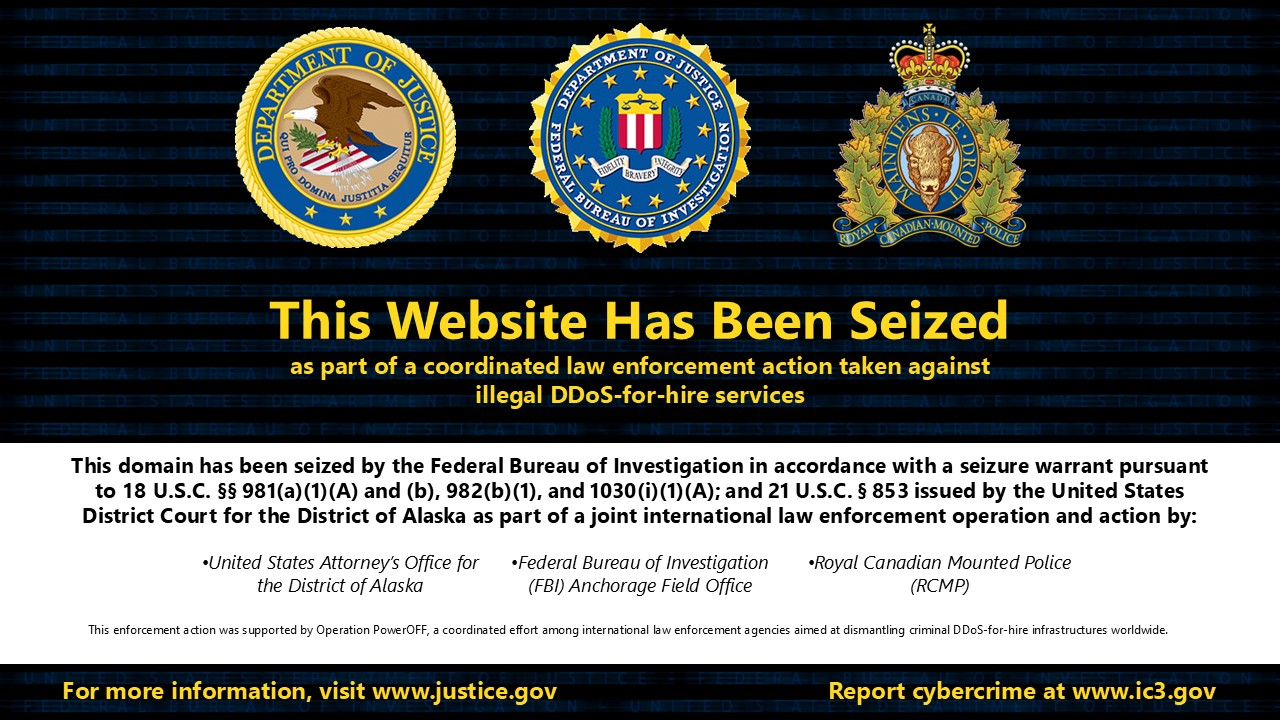
On Tuesday, the U.S. Federal Bureau of Investigation (FBI) executed a significant enforcement action, seizing the domains associated with NightmareStresser, a distributed denial-of-service (DDoS) platform that had been operating for an extended period. This move marks another critical step in a sustained international effort to dismantle the infrastructure of illicit DDoS-for-hire services, commonly referred to as "booters." These services provide a lucrative, albeit illegal, avenue for individuals and groups to launch disruptive attacks against online services and platforms by renting access to vast networks of compromised devices, often including routers and Internet of Things (IoT) gadgets.
The seized domains, nightmare-stresser[.]com and nightmarestresser[.]org, were once the public-facing portals for a service that boasted its prominent position in the cybercrime underground. Prior to their seizure, the platform’s own marketing materials described itself as the "#1 online IP booter" and "the only DDoS tool available 24/7," underscoring its ambition and perceived reliability within the illicit market. This self-proclaimed status was not without substance, as cybersecurity firms had previously documented the significant scale of NightmareStresser’s operations.
A Decade of Disruption: The Genesis and Scale of NightmareStresser
The roots of NightmareStresser trace back to at least 2014, making it one of the more enduring platforms in the DDoS-for-hire ecosystem. This longevity is indicative of the significant profits and the perceived low risk associated with such operations, at least until recent coordinated law enforcement interventions. In 2023, cybersecurity firm Searchlight Cyber reported that NightmareStresser had amassed a user base exceeding 566,000 registered accounts. The platform maintained a robust operational capacity, utilizing at least 52 dedicated servers capable of orchestrating DDoS attacks reaching up to 200 Gigabits per second (Gbps). Critically, these attacks were not limited to single vectors but could target multiple layers of network protocols, including the application layer (Layer 7) and transport layer (Layer 4) protocols like TCP and UDP, thereby increasing their effectiveness and difficulty to mitigate.
The FBI Cyber Division, in a statement released on Wednesday, confirmed the extensive impact of NightmareStresser’s activities. According to the agency, "Since 2022, the NightmareStresser Booter service was used to launch hundreds of thousands of actual or attempted DDoS attacks targeting victims worldwide." This figure highlights the sheer volume of malicious traffic generated by the platform, impacting a global array of targets.

Operation PowerOFF: A Coordinated International Assault on DDoS-for-Hire
The recent seizure of NightmareStresser’s domains is explicitly linked to "Operation PowerOFF," a comprehensive and ongoing international law enforcement initiative designed to systematically dismantle the global infrastructure of DDoS-for-hire services. A seizure banner now prominently displayed on the formerly active domains clearly states, "This enforcement action was supported by Operation PowerOFF, a coordinated effort among international law enforcement agencies aimed at dismantling criminal D DoS-for-hire infrastructures worldwide." This statement underscores the collaborative nature of these efforts, involving multiple jurisdictions and agencies working in concert to disrupt a pervasive cyber threat.
Operation PowerOFF is not a recent development. Its origins can be traced back to December 2018, when a coordinated series of actions led to the seizure of 15 websites that were offering DDoS-as-a-service. Since then, the operation has been a continuous force against the booters and stresser services that facilitate cyberattacks.
A Chronology of Enforcement Actions Under Operation PowerOFF
The history of Operation PowerOFF reveals a persistent and escalating campaign against DDoS-for-hire platforms:
- December 2018: The operation officially launched with the seizure of 15 websites involved in offering DDoS-as-a-service, signaling a new era of international cooperation against this specific cybercrime.
- Prior Takedowns: The ongoing nature of Operation PowerOFF has led to numerous successful disruptions. These include the takedown of the DigitalStress DDoS-for-hire service in the United Kingdom, demonstrating the extraterritorial reach of the operation. Additionally, the Dstat.cc DDoS review platform was seized, and two operators of stresser services were arrested in Poland, indicating a focus on both the service providers and the individuals behind them.
- Broader Domain Seizures: In separate enforcement waves, law enforcement agencies have seized a substantial number of domains. This includes the FBI seizing 13 additional domains and, in another significant action, 48 more domains that were hosting booter platforms. These large-scale seizures indicate the widespread nature of the problem and the extensive networks these criminal enterprises operated.
- December 2022: In a significant development, the U.S. Department of Justice (DOJ) previously took down the nightmarestresser[.]com domain and apprehended six individuals suspected of owning multiple DDoS-for-hire services. This earlier action against NightmareStresser suggests a history of law enforcement scrutiny and prior attempts to disrupt its operations.
- Recent Polish Operations: In the past year, Polish authorities also played a crucial role, detaining four suspects linked to six DDoS-for-hire platforms. These platforms had been responsible for thousands of attacks targeting a wide range of entities, including educational institutions, government services, businesses, and gaming platforms, since 2022.
- U.S. Seizures in Coordinated Crackdowns: Concurrently, the U.S. seized nine domains as part of these coordinated crackdowns on DDoS services, further illustrating the global, multi-jurisdictional nature of Operation PowerOFF.
The Mechanics and Impact of DDoS-for-Hire Services
DDoS-for-hire services, often referred to as "booters" or "stressers," democratize cyberattacks. For a fee, often paid anonymously through cryptocurrencies, individuals can rent the power of botnets. These botnets are not typically owned by the service operators but are instead composed of compromised devices such as unsecured routers, webcams, smart appliances, and other IoT devices that have been infected with malware. Attackers exploit vulnerabilities in these devices, turning them into unwilling participants in launching massive volumes of traffic towards a target.
The objective of a DDoS attack is to overwhelm a target server, service, or network with a flood of internet traffic, rendering it inaccessible to legitimate users. This can have severe consequences for businesses, causing significant financial losses due to service downtime, reputational damage, and the inability to conduct online transactions. For individuals, it can disrupt online gaming, communication, and access to essential online services. The motivations behind these attacks can vary widely, ranging from petty vandalism and disgruntled customers to sophisticated extortion schemes and state-sponsored cyber warfare.
Analysis and Implications: A Blow to the Illicit Market
The seizure of NightmareStresser’s domains represents a substantial blow to the organized criminal enterprises that profit from facilitating DDoS attacks. By targeting and dismantling these platforms, law enforcement agencies disrupt the supply chain of cyber weaponry. This not only removes a significant threat actor from the digital landscape but also serves as a deterrent to others who might consider engaging in similar illicit activities.
The sustained efforts under Operation PowerOFF demonstrate a strategic approach to tackling the complex and evolving threat of DDoS-for-hire services. By targeting the infrastructure, arresting operators, and disrupting financial flows, international law enforcement agencies are collectively working to make these operations more risky and less profitable.
However, the nature of cybercrime means that new platforms will likely emerge to fill the void left by seized services. The constant evolution of botnet technologies, coupled with the ease of setting up new online presences, presents an ongoing challenge. The success of Operation PowerOFF lies not just in individual takedowns but in its persistent, coordinated, and multi-faceted approach that aims to degrade the overall capacity of the DDoS-for-hire ecosystem.
The FBI’s action against NightmareStresser, a platform that had operated for years and boasted a massive user base, underscores the continued commitment of law enforcement to combating these pervasive cyber threats. The impact of such seizures extends beyond the immediate disruption, sending a clear message to the cybercriminal underground that their activities are under scrutiny and that coordinated international action will be taken to bring them to justice. The ongoing nature of Operation PowerOFF suggests that this fight is far from over, with future enforcement actions expected as agencies continue to track and dismantle these illicit online services. The focus on both the technical infrastructure and the individuals operating these platforms is crucial for long-term success in mitigating the threat of DDoS attacks.