admin
admin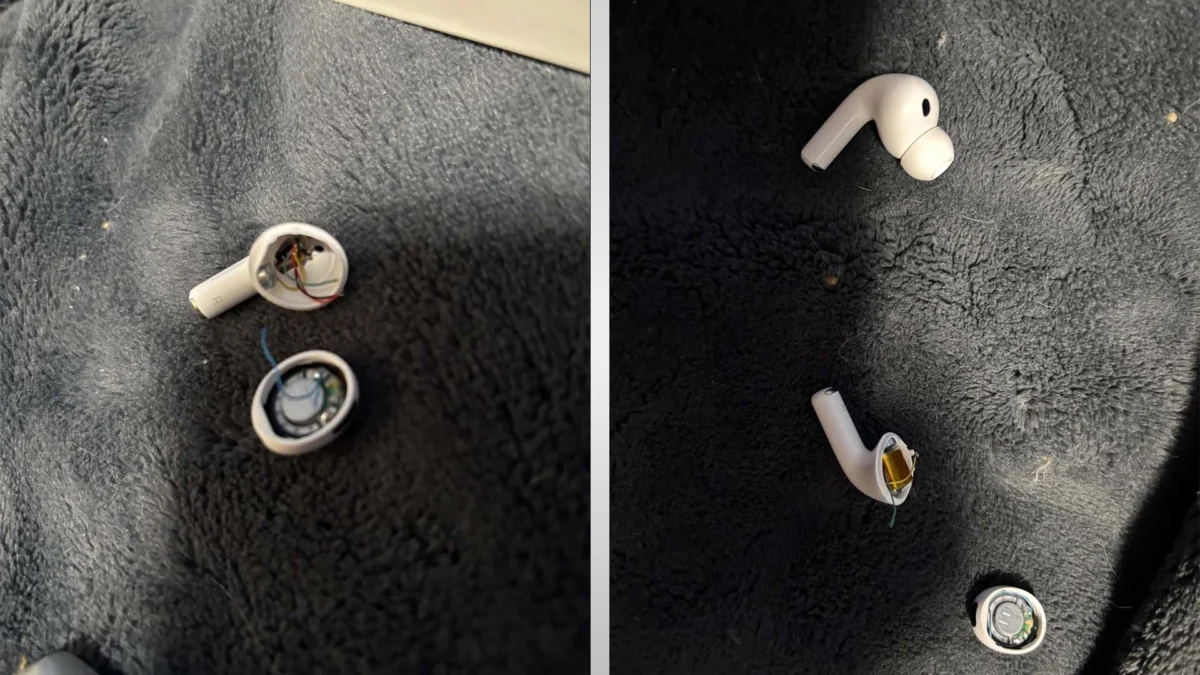
The global market for counterfeit electronics has reached a level of sophistication that challenges even the most discerning consumers, a reality recently highlighted by a troubling incident involving a purported pair of Apple AirPods Pro 3. In a case that has gained significant traction within the technology community, a consumer in Canada discovered that his high-end wireless earbuds were sophisticated replicas only after a routine maintenance task resulted in the physical failure of the device. The incident underscores a growing trend where counterfeiters are no longer merely mimicking the external aesthetics of premium gadgets but are now replicating minute details, including serial number fonts and packaging textures, to bypass initial scrutiny.
The discovery was brought to light by a Reddit user operating under the pseudonym "SleepyRememberer," who shared a detailed account and photographic evidence of the internal components of his broken device. The user had reportedly purchased the AirPods Pro 3 from a Walmart location in Canada, believing the product to be an authentic Apple unit. It was only when the user attempted to replace a silicone eartip—a standard procedure for users of the Pro lineup—that the earbud casing snapped under pressure, revealing a suite of internal hardware that bore no resemblance to Apple’s proprietary engineering.

The Anatomy of a High-End Fake: Internal Discrepancies
When the earbud housing fractured, it exposed the internal architecture of the device, providing a rare look at the "super-fake" industry’s cost-cutting measures. Technical analysts and community members who examined the provided images quickly identified several "smoking guns" that confirmed the product’s status as a counterfeit.
The most glaring discrepancy involved the power source. Authentic Apple AirPods Pro models, including the latest iterations, utilize custom-engineered, rounded lithium-ion coin cells designed to maximize the limited spatial volume within the earbud’s "head." These rounded batteries are a hallmark of Apple’s precision manufacturing, allowing for high energy density while maintaining a compact form factor. In contrast, the broken unit revealed a standard, square-shaped battery. These square cells are significantly cheaper to mass-produce and are often repurposed from other small electronics, but they lack the structural efficiency required for genuine AirPods.
Furthermore, the placement of these components was fundamentally incorrect. In genuine AirPods Pro 3 hardware, the battery and main logic board are densely packed into the upper hemisphere of the earbud. The counterfeit unit showed a disorganized internal layout with visible wiring that appeared fragile and unshielded. This lack of structural integrity explains why the device broke during a simple eartip replacement. While genuine AirPods Pro units are famously difficult to repair due to the heavy use of structural adhesives, they are designed to withstand the lateral force required to snap an eartip on and off. The counterfeit’s failure under such minimal stress points to inferior plastics and a lack of internal reinforcement.

The Walmart Marketplace and the "Return Fraud" Loophole
The fact that these counterfeit earbuds were acquired through Walmart Canada has raised serious questions regarding supply chain security and the vetting of third-party vendors. Major retailers like Walmart and Amazon have increasingly moved toward a "Marketplace" model, allowing third-party sellers to list products alongside the retailer’s own inventory. This system, while expansive, has frequently been exploited by bad actors who ship counterfeit goods under the guise of official listings.
However, another possibility involves a sophisticated "return fraud" scheme. In this scenario, a scammer purchases a genuine pair of AirPods Pro 3 from a physical retail store. They then carefully open the packaging, remove the authentic earbuds, and replace them with high-quality fakes purchased for a fraction of the price. The scammer then reseals the box—often using professional-grade shrink-wrap machines—and returns the product to the store for a full refund. If the retail associate performing the return does not conduct a thorough inspection or lacks the technical training to identify a resealed box, the counterfeit unit is placed back on the shelf and sold to the next unsuspecting customer.
This specific case in Canada suggests that the counterfeiters have mastered the art of "serial number cloning." By printing legitimate, active serial numbers onto the counterfeit hardware and packaging, they ensure that if a customer or a retail clerk checks the number on Apple’s official coverage website, it will show a valid warranty. This creates a false sense of security that is only shattered when the hardware fails or when the user attempts to update the firmware.

Technical Analysis: Why Fakes Are Becoming Harder to Detect
The evolution of counterfeit AirPods has moved through several distinct phases. Early replicas were easily identified by poor Bluetooth connectivity, "plastic-y" textures, and mismatched LEDs. Modern "super-fakes," however, often utilize "cloned" chips that trick an iPhone into displaying the official Apple pairing animation.
According to hardware security analysts, these devices often use modified Bluetooth controllers that broadcast the same identifiers as Apple’s H2 or H3 chips. When the user opens the case near an iOS device, the familiar "Connect" pop-up appears, complete with battery percentage indicators. Some high-end fakes even manage to replicate basic Transparency Mode and Active Noise Cancellation (ANC) features, albeit at a much lower quality than the genuine article.
The "SleepyRememberer" incident highlights that the physical build quality remains the final frontier for counterfeiters. To maintain high profit margins, they must use cheaper materials for the internal housing and batteries. This results in a product that looks identical on the outside but lacks the longevity and safety of the original. The use of non-certified lithium-ion batteries is particularly concerning, as these components lack the thermal management systems found in genuine Apple products, posing a potential fire risk to the user.

The Broader Impact on the Consumer Electronics Market
The prevalence of counterfeit goods has significant economic and environmental implications. For the consumer, it represents a total loss of investment, as counterfeit products carry no warranty and are ineligible for service at Apple Genius Bars. For the manufacturer, it leads to brand dilution and increased customer support costs as users seek help for products the company did not actually make.
From an environmental perspective, counterfeit electronics are a major contributor to e-waste. Because they are built with inferior components, their lifespan is often measured in weeks or months rather than years. Furthermore, these devices are rarely manufactured in compliance with environmental regulations such as RoHS (Restriction of Hazardous Substances), meaning they may contain lead, cadmium, or other toxic materials that are harmful when the device is eventually discarded.
How Consumers Can Protect Themselves
As the holiday shopping season approaches and the demand for premium audio gear like the AirPods Pro 3 increases, experts recommend several steps to verify the authenticity of a purchase:

- Source Verification: Whenever possible, purchase directly from the manufacturer or an authorized Apple Premium Reseller. If buying from a big-box retailer, ensure the item is "Sold and Shipped by" the retailer itself, rather than a third-party marketplace seller.
- Firmware Inspection: Counterfeit AirPods rarely support official firmware updates. Users can check the firmware version in the iOS Settings app. If the version number does not match the latest release from Apple and refuses to update when connected to power, the device is likely a fake.
- Physical Inspection of the Eartips: As seen in the Canadian incident, the mounting mechanism for eartips is a precision-engineered component. On genuine AirPods Pro, the tip should click into place with a distinct tactile feel. Any wobbling or excessive difficulty in attachment should be a red flag.
- Weight and Balance: Genuine AirPods are often slightly heavier than fakes due to the density of the internal magnets and the high-quality battery cells. A digital scale can often reveal a discrepancy of several grams between a fake and a real unit.
- The "Find My" Test: Authentic AirPods Pro 3 are integrated into Apple’s "Find My" network with precision finding capabilities. While some fakes can show up on the map, they rarely support the ultra-wideband (UWB) directional arrows used for close-range tracking.
Conclusion and Future Outlook
The case of the broken Canadian AirPods Pro 3 serves as a cautionary tale for the modern digital age. As scammers become more adept at mimicking the external markers of quality, the burden of verification is increasingly shifting to the consumer. While retailers like Walmart have a responsibility to police their inventory and return processes, the sheer volume of global trade makes total eradication of counterfeits nearly impossible.
For the Reddit user "SleepyRememberer," the path forward involves a likely dispute with Walmart’s customer service department. Given the evidence of the internal hardware, there is a strong case for a refund, though the complexity of proving the item was counterfeit at the time of sale remains a hurdle. As for Apple, the company continues to implement software-based checks in iOS to warn users when "unverified" AirPods are connected, but the ongoing arms race between tech giants and counterfeiters suggests that this will remain a persistent challenge for years to come.