Galang Taruna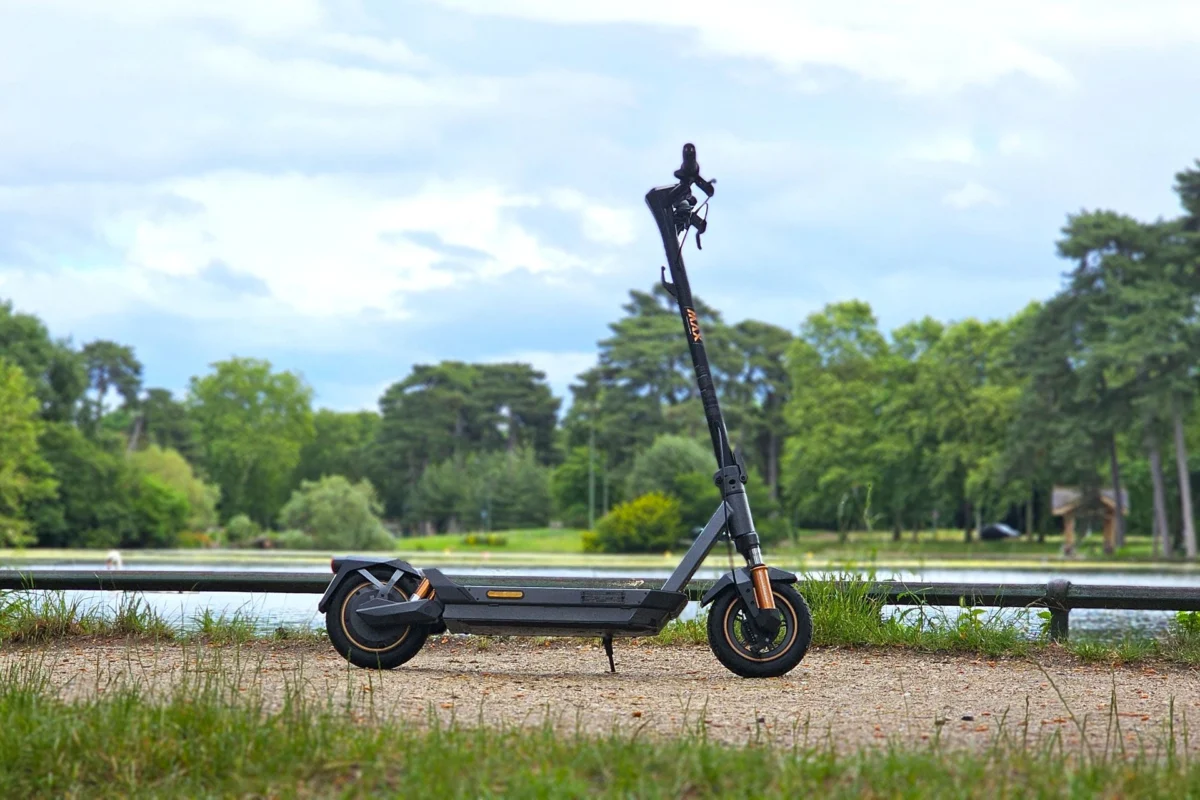
In 2026, Navee has significantly escalated its presence in the highly competitive electric scooter market, unveiling a rapid succession of new models designed to challenge established leaders like Xiaomi and Segway. This aggressive strategy is exemplified by the introduction of the GT5 Max in Spring 2026, a direct successor to the GT3 Max, which had only been released in 2025. The GT5 Max arrives with a stable price point of €599, excluding promotional offers, positioning it as a formidable contender in the mid-range segment. This review aims to meticulously assess whether its purported enhancements in autonomy, power, and braking truly deliver a superior riding experience, building upon the foundations laid by its predecessor.
Key Specifications at a Glance
The Navee GT5 Max presents a compelling technical profile, designed for efficiency and performance in urban and peri-urban environments.
| Model | Navee GT5 Max |
|---|---|
| Autonomy (announced) | 90 km |
| Recharge Time (announced) | 360 min (6 hours) |
| Max Speed | 25 km/h |
| Motor Power | 700 watts |
| Max Supported Weight | 130 kg |
| Product Sheet | Navee GT5 Max |
(Note: This test was conducted using a model provided by Navee.)
Evolutionary Design: Subtlety Meets Substance

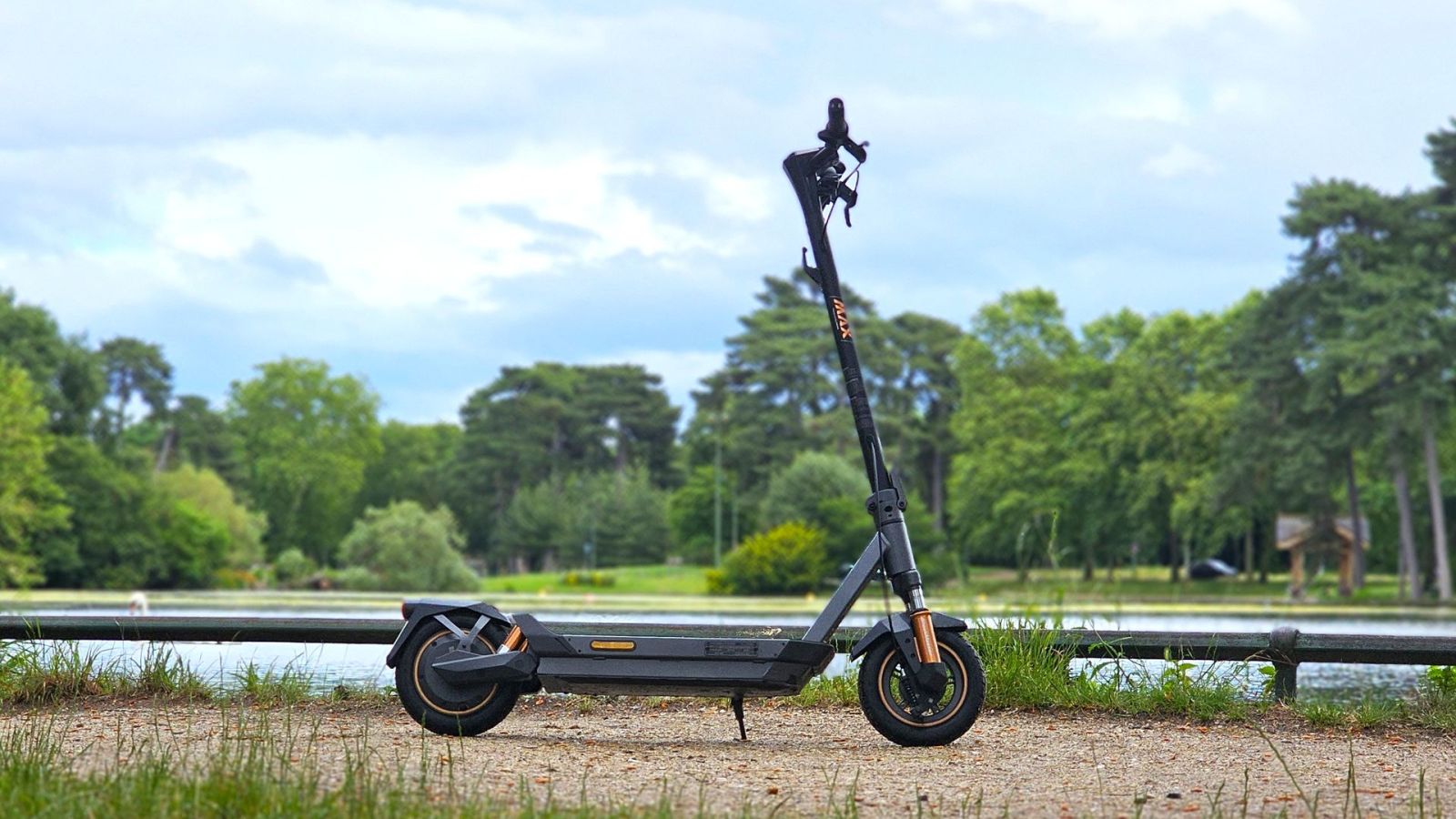
At first glance, the Navee GT5 Max bears a striking resemblance to its predecessor, the GT3 Max, to the point of potential confusion. However, a closer inspection reveals a multitude of subtle yet significant design refinements that underscore Navee’s commitment to continuous improvement. While the overall aesthetic remains largely consistent, projecting an image of robust build quality, the incremental changes contribute to an enhanced user experience.
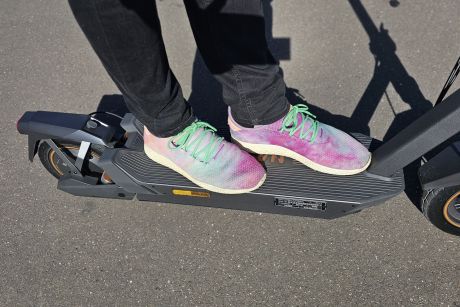
One notable alteration is the redesigned deck, which now offers a more expansive rear section. This modification provides riders with greater flexibility in foot placement, contributing to improved comfort and stability during longer rides. The chassis’s diagonal tube and the stem have also been specifically engineered to accommodate an additional internal cable, suggesting a more integrated and streamlined design for internal components. Furthermore, the swingarms appear more substantial, encasing a pair of more vertically oriented shock absorbers, indicating a focus on refining the suspension system.
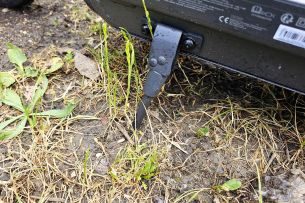
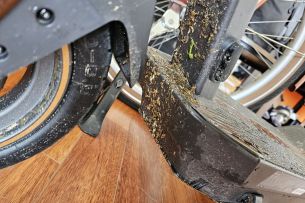
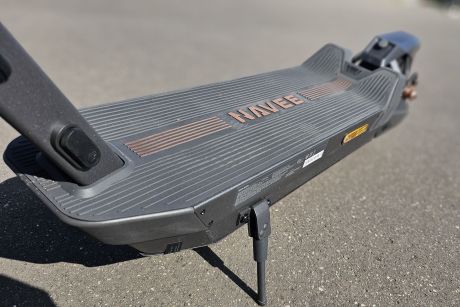
The most distinctive visual cue differentiating the GT5 Max from its forebear is the eye-catching bronze-colored fork. This aesthetic choice adds a touch of sophistication and modern flair to the scooter’s otherwise understated design. While the overall design language remains largely consensual, it continues to exude a sense of premium craftsmanship, reinforcing Navee’s reputation for quality. Practical additions, such as the integrated bag hook, are also appreciated, allowing riders to conveniently carry small loads (up to 5 kg) without compromising balance or control. However, a minor ergonomic flaw persists: the kickstand’s foot remains too small, prone to sinking into softer ground surfaces, which can be an inconvenience during parking.
Dimensions, Portability, and Ergonomics
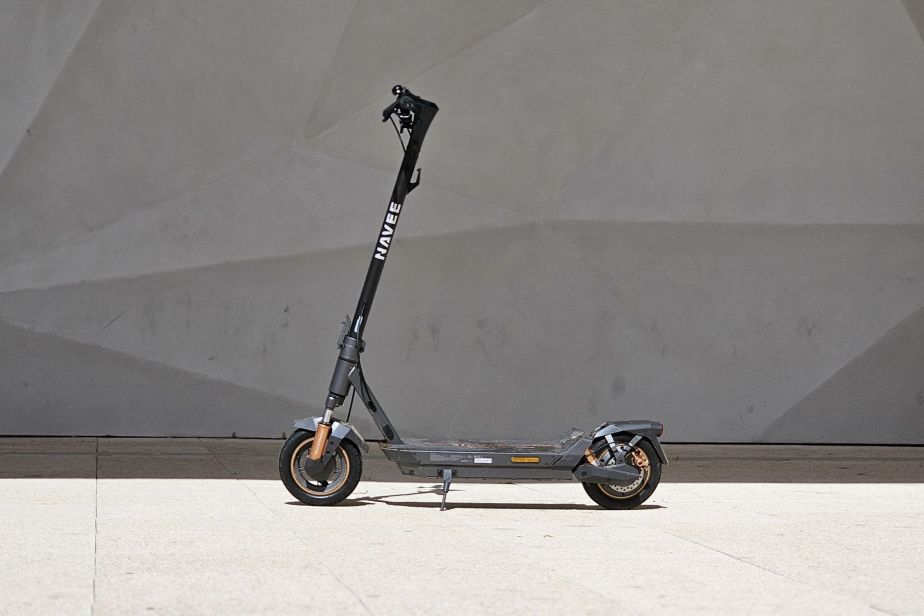
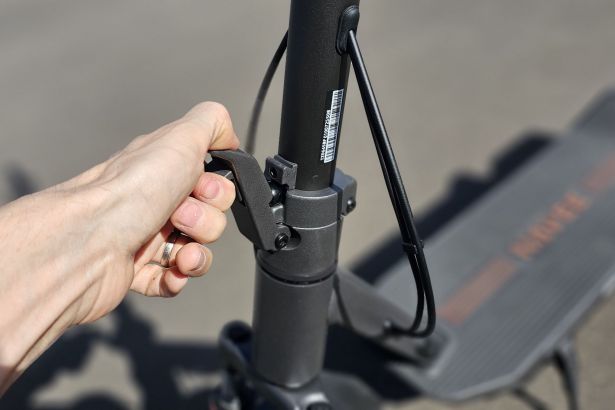
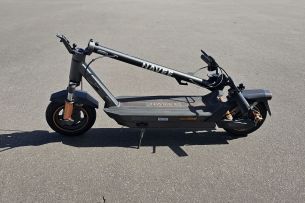
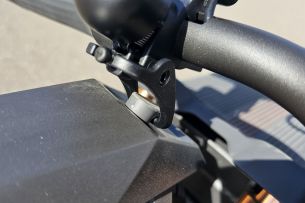
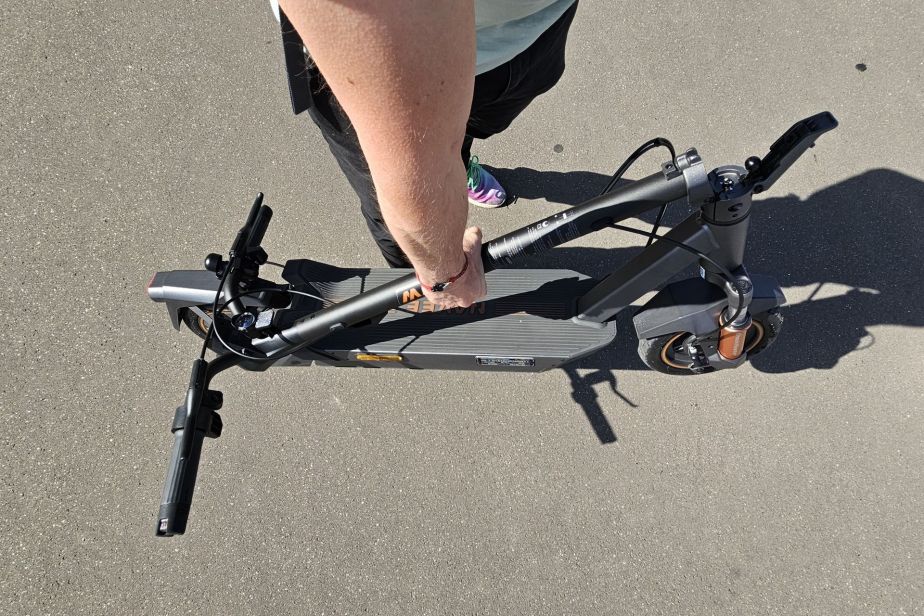
The physical dimensions of the GT5 Max have seen minimal changes, measuring approximately 1.20 meters in length, 60 centimeters in width, and 1.28 meters in height. The folding mechanism, which is identical to the GT3, is an asymmetrical design where the stem folds slightly to the left, with the bell doubling as a hook. While functional, this system can make the scooter somewhat cumbersome for transport, especially when considering its increased weight. Tipping the scales at 24.6 kg (up from 23.4 kg for the GT3), the GT5 Max firmly positions itself as a heavy scooter, making it less suitable for multimodal commuting where frequent lifting or carrying is required. This weight increment reflects the inclusion of more robust components and potentially a larger battery assembly, even if capacity remains the same.
The deck maintains its generous surface area—50 cm long and 19 cm wide of usable space—allowing riders ample room to find their preferred stance. Despite this, a persistent issue from the GT3 Max, the rapid degradation of the colored deck coating and logo, remains. This cosmetic wear-and-tear can detract from the scooter’s premium appearance over time. Another practical shortcoming is the front mudguard, which is insufficiently long to effectively protect the rider from splashes of water, gravel, or mud, particularly in inclement weather conditions.
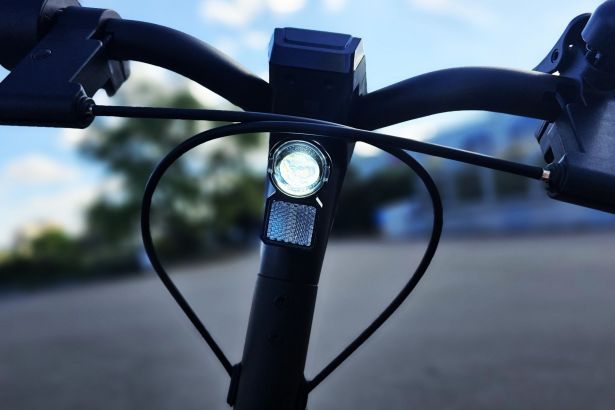
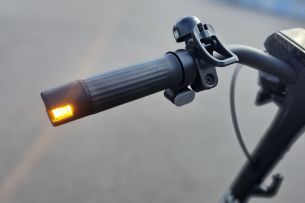
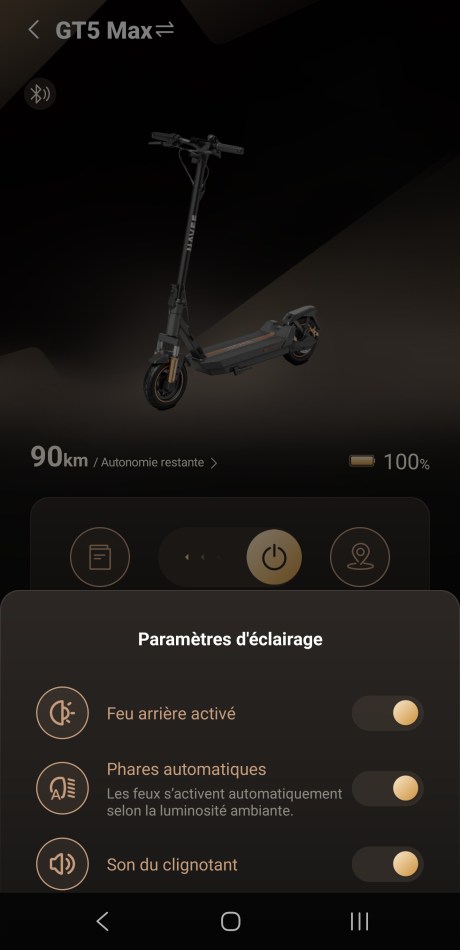
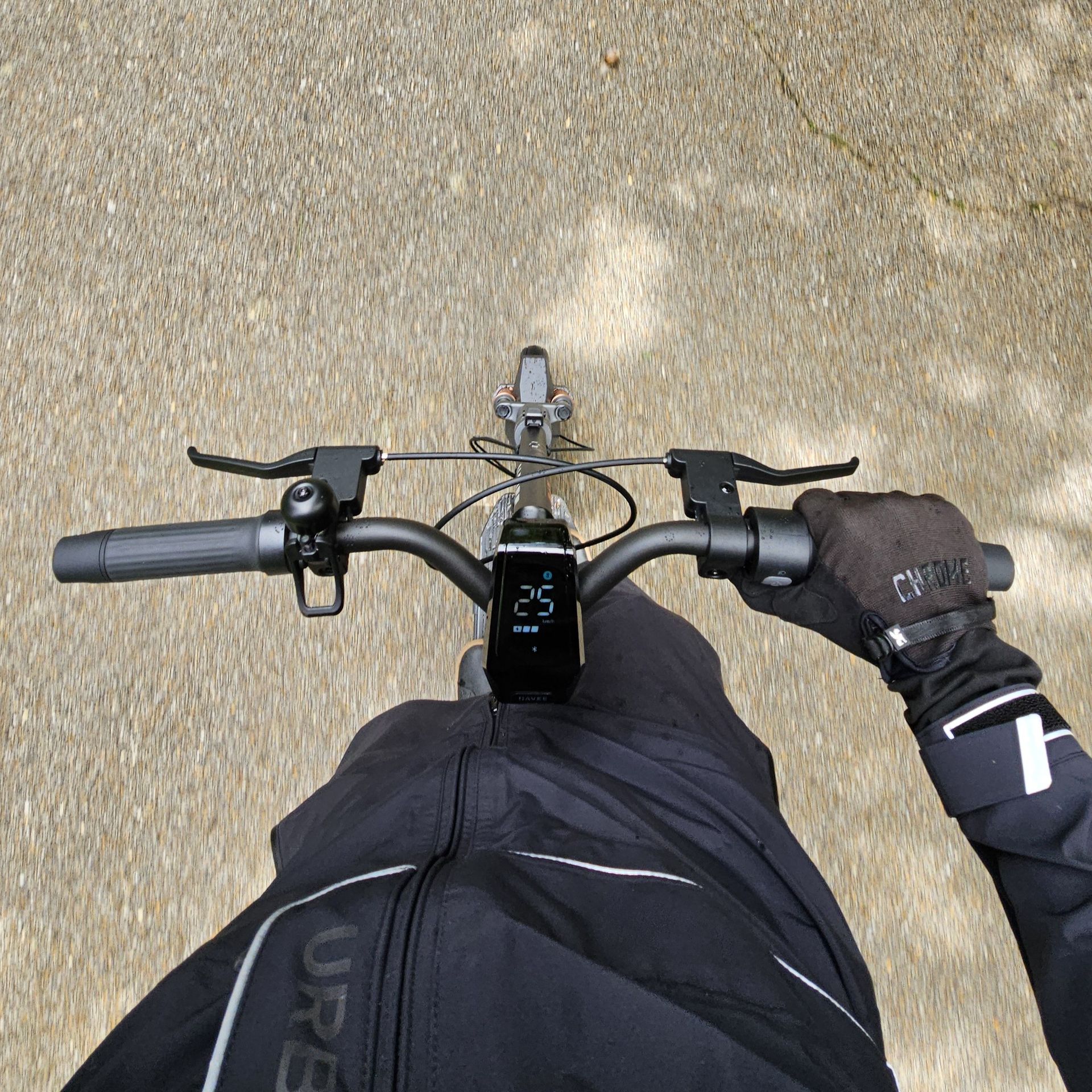
The handlebar design remains consistent, featuring a curved shape that promotes a forward-leaning riding posture. While this design can contribute to a more dynamic feel, the grips, now in black, still offer suboptimal adherence under the palms, potentially affecting comfort and control, especially during extended rides or in wet conditions. The turn signals, located at the handlebar extremities, can sometimes be obscured by larger hands or winter gloves, raising minor visibility concerns for other road users. Conversely, the controls positioned under the left thumb are ergonomically well-placed, facilitating easy access and operation. The lighting system features automatic activation upon startup, though manual control is also available. Despite a reduction in size, the front projector maintains good illumination power, but its narrow beam pattern limits effective visibility outside dedicated bike lanes, potentially posing a safety concern in less illuminated urban areas. The rear light, a standard fixture, includes a functional stop-light feature, enhancing rider safety.
Digital Interface and Connectivity: A Minimalist Approach
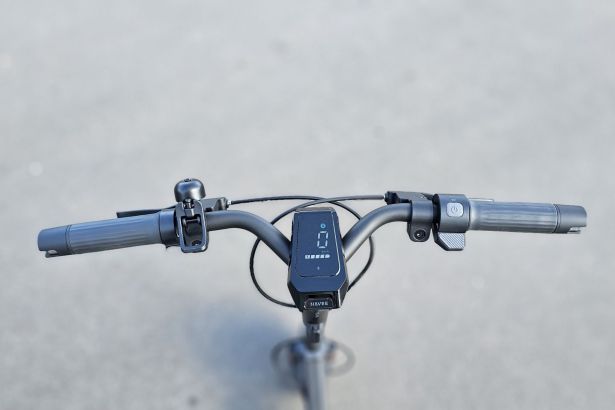
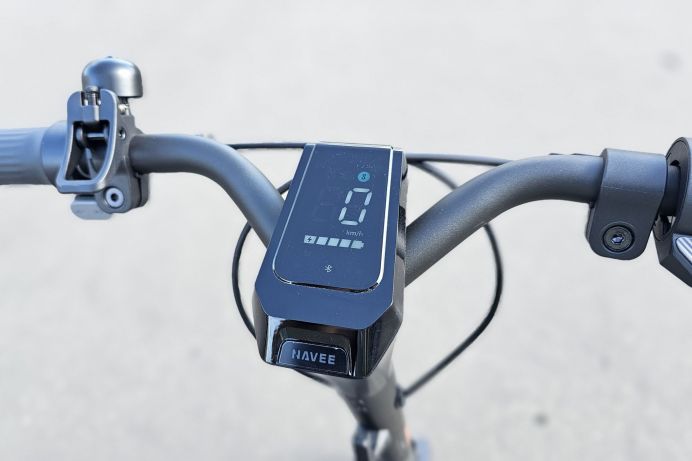
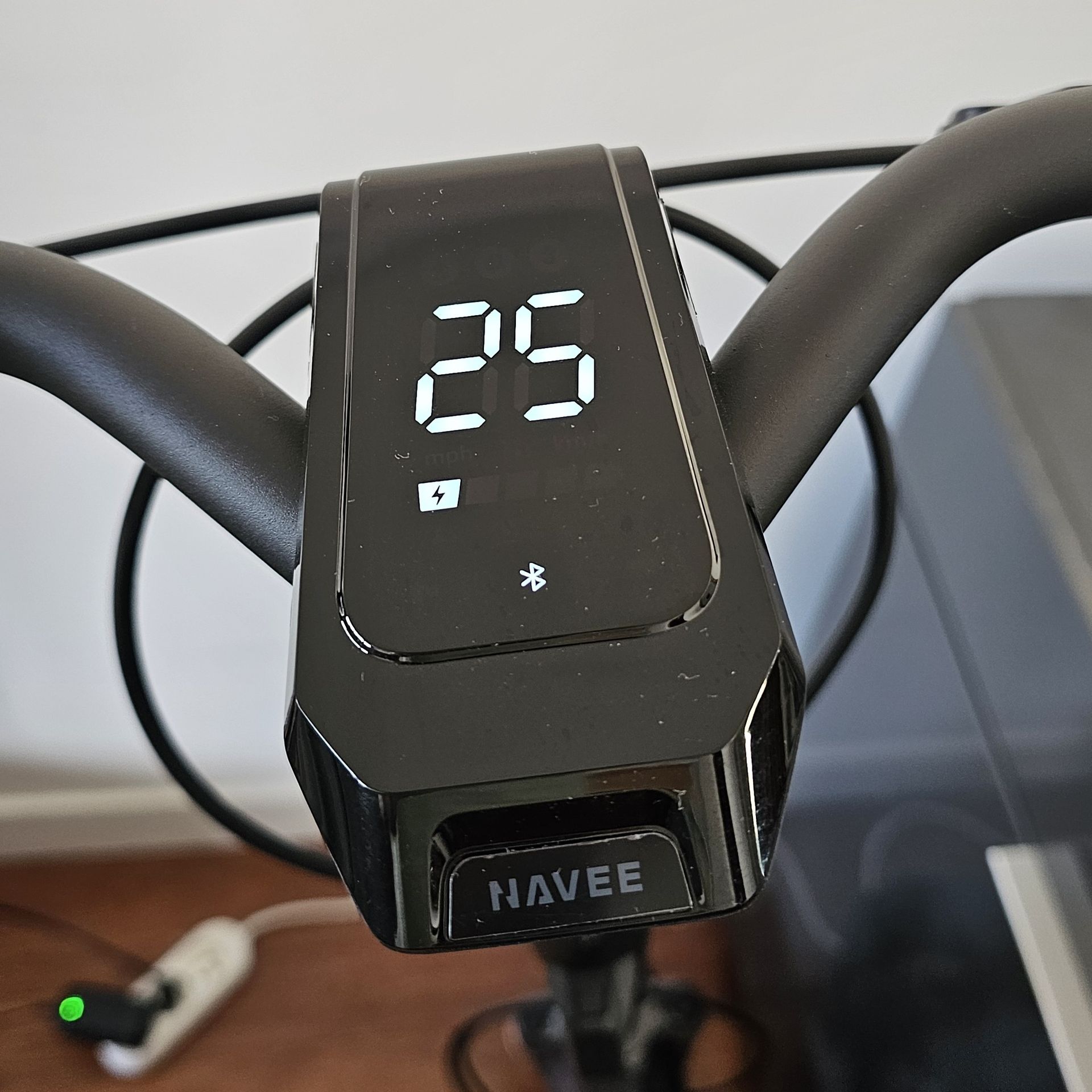
While the GT5 Max boasts several hardware upgrades, its electronic interface and accompanying software largely remain unchanged from the GT3 Max. At the center of the stem, a small, elegantly integrated screen provides a minimalist display. This design choice caters to riders who appreciate uncluttered aesthetics, but it falls short in terms of information density when compared to the more comprehensive displays now offered by competitors like Segway and Xiaomi.
The screen prominently displays the current speed in large, easily readable characters, complemented by a smaller battery gauge at the bottom and a few icons indicating riding modes and other statuses. While legible under various lighting conditions, the lack of more detailed metrics or customization options might be a drawback for tech-savvy riders accustomed to richer data feedback.
The Accompanying Application: Stagnation in a Dynamic Market
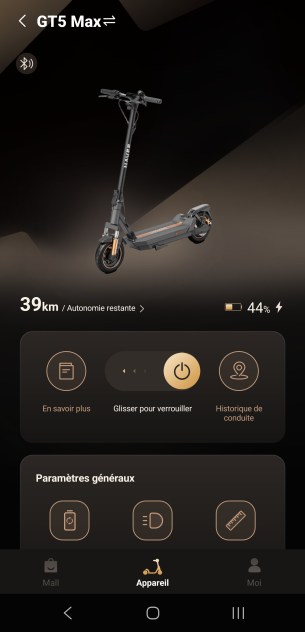
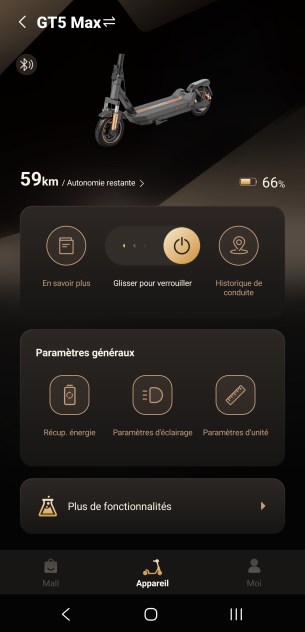
The smartphone application associated with the Navee GT5 Max has seen no significant updates since our review of the GT3 Max. It offers a standard suite of functionalities, including real-time battery percentage with an estimated range, total mileage, and a log of the last 10 trips. Users can also adjust the electronic brake force and access detailed battery data.
A notable feature is the motor locking function, which immobilizes the wheel for brief stops. However, its reliance on Bluetooth connectivity means the scooter must remain within close proximity to the user’s phone for this security measure to be effective. For longer parking durations, traditional physical anti-theft devices (not included) are necessary. The integration of an Apple Find My tracker is a valuable addition for locating the scooter, but its utility is restricted exclusively to owners of iOS devices, leaving Android users without this advanced tracking capability. This platform exclusivity highlights a missed opportunity for universal user benefit.
Driving Dynamics: A Leap in Power and Agility
The Navee GT5 Max demonstrates a significant stride in performance, largely attributed to its upgraded rear-mounted motor. This new iteration boasts a nominal power output of 700 W, with peak power soaring to 1,638 W. This is a substantial improvement over the GT3 Max’s 400 W nominal and 1,000 W peak, translating directly into a more dynamic and responsive riding experience. The accelerations are noticeably sharper and more immediate, providing a reassuring surge of power. Unlike some more aggressive models, such as the Segway ZT3 Pro, the GT5 Max manages to deliver this power with a degree of smoothness, preventing jarring movements for the rider. It also feels more responsive than the larger NT5 Max, which is set to arrive in September.
This refined power delivery strikes an optimal balance, allowing for precise control through the throttle. This nuanced control is particularly beneficial in urban traffic, enabling riders to confidently accelerate away from traffic lights and keep pace with other vehicles. For those seeking an extra boost, a "Turbo" mode can be activated via the application, replacing the standard "Eco" mode. This mode significantly enhances acceleration, proving invaluable for tackling steep inclines, though its heightened responsiveness might be overly aggressive for general urban commuting. The GT5 Max exhibits impressive hill-climbing capabilities, ascending gradients exceeding 10% without any noticeable loss of speed, a critical factor for riders in hilly areas. Navee officially claims a maximum climbing angle of 28%, an improvement over the GT3 Max’s 22%. While we were unable to test the scooter on such extreme inclines, this figure positions the GT5 Max among the most capable climbers in its price segment.
The motor operates with remarkable silence, contributing to a pleasant and unobtrusive riding experience. The GT5 Max also exhibits commendable agility, making it easy to maneuver through crowded urban environments and navigate tight turns with precision. However, this agility comes with a trade-off in stability. When compared to more substantial models equipped with wider 12-inch wheels (such as certain Xiaomi models or the upcoming NT5 Max), the GT5 Max, with its conventional 10-inch wheels, tends to transmit more vibrations and jolts on uneven road surfaces, including small potholes and bumps. This necessitates a firm, two-handed grip on the handlebars to maintain optimal control and comfort.
Suspension and Braking: Areas for Continued Refinement
The suspension system of the GT5 Max has undergone some evolution, though the front fork retains its effective shock absorption characteristics. At the rear, the twin shock absorbers have been re-angled in an attempt to further improve overall damping. In practice, however, the real-world difference in comfort is marginal. While the suspension generally performs well, there’s a perceived increase in vibrations transmitted to the rider on rougher surfaces, such as cobblestones or unpaved paths. This suggests that while the system is adequate, there’s still room for improvement in isolating riders from high-frequency road imperfections.
This slight degradation in comfort, despite the suspension adjustments, is likely attributable to the change in tire design. The GT5 Max features smoother tires, which contribute to its remarkable agility but at the cost of a minor reduction in overall ride plushness. While the Navee GT5 remains a very comfortable scooter, previous models like the S60 offered a slightly more cushioned ride, albeit with less agility.
Navee has also sought to elevate the braking performance of the GT5 Max by incorporating a mechanical rear disc brake, complementing the existing electronic brake and front drum brake. As is often the case with new disc brake systems, proper adjustment of the caliper upon unboxing is crucial to ensure optimal bite without unwanted friction. This triple-braking system does reduce the stopping distance by an estimated 20 to 40 cm, achieving a halt in approximately 5.80 meters from 25 km/h. However, this distance is still considered somewhat long for an emergency stop, and the rear wheel has a tendency to lock and slide under hard braking due to the disc’s powerful action, indicating a need for further calibration or potentially an anti-lock braking system in future iterations.
Power Management: Enhanced Range and Faster Recharging
A notable aspect of the Navee GT5 Max’s power management system is its battery, which maintains the same capacity as its predecessor, the GT3 Max, at 596.7 Wh (12.75 Ah). Despite the identical battery, Navee has managed to significantly increase the claimed autonomy: 90 km (up from 75 km) at a consistent speed of 15 km/h, and 65 km (up from 55 km) at 25 km/h in Sport mode. It is crucial to note that these figures represent theoretical maximums under ideal conditions (e.g., continuous speed, 75 kg rider weight).
Our real-world testing, conducted on a mixed urban/peri-urban route involving frequent stops, accelerations, and moderate inclines, with an 80 kg rider and ambient temperatures ranging from 20 to 30°C, occasionally with strong winds, yielded different results. Across three full charge cycles, with minimal variation, the average observed autonomy was 46.6 km. While this figure falls short of the manufacturer’s ambitious claims, it is objectively excellent, especially when considering the GT5 Max’s increased motor power. Furthermore, it represents a slight improvement of a few kilometers over the GT3 Max, underscoring the efficiency gains achieved by Navee’s engineering.
The motor’s efficiency is indeed remarkable, with an average energy consumption of approximately 12.8 Wh/km. This places the GT5 Max among the most efficient electric scooters in its class, rivaling competitors such as the Ninebot F3 Pro E. A consistent characteristic observed is a slight, manageable loss of performance as the battery approaches 0%, although this is less pronounced and less impactful on hill climbing than on the GT3 Max due to the GT5’s superior power. Importantly, the scooter retains a significant reserve, allowing for an additional 5+ kilometers of travel even when the display indicates 0% battery. This "buffer" is a thoughtful design choice that helps to prolong the overall lifespan of the battery by preventing deep discharges.
Finally, Faster Recharging
Addressing a common critique of its previous models, Navee has significantly upgraded the charging capabilities of the GT5 Max. While the battery capacity remains the same, the charger itself has been improved. It now delivers an intensity of 2.45 A (up from 1.3 A) and a power output of 133.8 W (compared to 69.7 W). This nearly doubles the charging power, leading to a substantial reduction in overall recharge time. The GT5 Max can now reach 25% charge in approximately 1 hour and 30 minutes, 50% in 3 hours, and 80% in 5 hours, with a full charge taking around 6 hours and 30 minutes.
This improvement demonstrates Navee’s responsiveness to consumer feedback, aiming to provide more acceptable charging durations. While some competitors are beginning to adopt even faster charging technologies (e.g., the Ninebot Max G3), the GT5 Max’s enhanced charging speed represents a significant step forward. The charging process is commendably linear, without unexpected fluctuations, and the charger itself is compact and easily transportable. A minor point to note is that the charger can become somewhat warm during operation, reaching temperatures above 55°C, though this is within acceptable safety parameters for most modern chargers.
Market Positioning and Value Proposition: Competitive Pricing Strategy
The Navee GT5 Max, launched in late Spring 2026, enters the market with an initial price of €599. This pricing strategy mirrors that of the GT3 Max in 2025, indicating Navee’s commitment to maintaining an accessible price point despite significant technological upgrades. However, the intensely competitive electric scooter landscape has already prompted Navee to offer regular discounts, a common practice to attract and retain customers in this dynamic sector.
The GT5 Max is positioned approximately €100 higher than its smaller sibling, the GT5 Pro. The GT5 Pro offers a slightly lower peak power output of 1,350 W, lacks the rear disc brake found on the Max version, and provides a few kilometers less autonomy. This tiered pricing allows Navee to cater to different budget and performance needs within its product lineup.
At its €599 price point, the GT5 Max directly challenges established segment leaders. The Xiaomi Electric Scooter 6 Max and the Ninebot F3 Pro E, both frequently cited by Navee as direct competitors, typically retail around €649. Navee strategically undercuts these rivals on price, while notably offering an additional feature—the mechanical rear disc brake—that is not always present on its competitors’ models at this price point. This aggressive value proposition makes the GT5 Max a compelling choice for consumers seeking a powerful and well-equipped scooter without a premium price tag.
The availability of the Navee GT5 Max is robust, with sales channels including Navee’s official website and selected major retailers such as Fnac-Darty and Amazon, ensuring broad market access. The scooter comes with a standard 2-year legal warranty, and after-sales support is facilitated through email or a repair request form on the Navee website. Navee’s vertically integrated manufacturing process, with its own production facility in China, ensures a consistent level of quality control across its product range.
Conclusion: A Strong Contender in the Mid-Range Segment

The Navee GT5 Max represents a significant evolution in Navee’s electric scooter lineup, marking a true progression in performance and refinement while upholding the brand’s reputation for solid build quality. The most striking improvement lies in its powerful new motor, which delivers a substantial boost in acceleration and hill-climbing capabilities without sacrificing efficiency. Our real-world tests confirm an impressive autonomy of over 46 km per charge, coupled with a much-appreciated faster charging time of 6 hours and 30 minutes for a full cycle.
The scooter also offers enhanced agility and improved, albeit still imperfect, suspension. While the GT5 Max provides a generally comfortable ride, persistent vibrations on very rough surfaces indicate an area for future refinement. The braking system, despite the addition of a mechanical rear disc, still allows for a relatively long stopping distance and a tendency for the rear wheel to lock, suggesting further calibration is needed to optimize safety and control.
From a user interface perspective, the minimalist display remains a point of divergence from competitors offering richer data. The smartphone application, while functional, has not evolved, and the exclusive nature of the Apple Find My tracker to iOS users is a limitation.
Nonetheless, the Navee GT5 Max stands out as an excellent choice in its segment. Its compelling combination of increased power, commendable efficiency, improved charging speed, and robust construction, all offered at a competitive price of €599, positions it strongly against rivals like the Ninebot F3 Pro E and the Xiaomi Electric Scooter 6 Max. Navee has clearly listened to feedback and delivered a product that pushes the boundaries of performance and value in the mid-range electric scooter market.

Our Verdict on the Navee GT5 Max
Design: 9/10
Navee once again delivers superb manufacturing quality, with a design that, while aesthetically similar to its predecessor, incorporates numerous component changes. The deck is generous, and the lighting is improved, though the scooter remains heavy, nearing 25 kg.

Embedded Technologies: 8/10
The electric scooter’s screen is somewhat minimalist, though legible in various conditions. The classic app offers motor lock, additional info, and some settings. The inclusion of an Apple Find My tracker is a bonus, though its exclusivity to iOS devices limits its utility for Android users.
Ride Quality: 8/10
The power-to-enjoyment ratio of the motor is excellent, as is the maneuverability, providing good agility. The double suspension is effective but still allows some vibrations to filter through, and the braking is perfectible. Overall, it offers a very good riding experience.
Autonomy: 9/10
Despite having an identical battery to the GT3 Max and a more powerful motor, the GT5 Max achieves over 46 km of real-world autonomy per charge. It also benefits from a faster charger, reducing the full recharge time to 6 hours and 30 minutes.
Overall Summary: The significant power increase of the Navee GT5 Max, combined with numerous new components, represents a substantial upgrade while maintaining the brand’s renowned build quality. The leap in performance is notable, featuring a more powerful and even more efficient motor that extends real-world autonomy beyond 45 km per charge. Agility and damping are also improved, though some vibrations persist on rough surfaces. Braking, despite the addition of a rear disc, sees only marginal improvement. Nevertheless, this Navee model is an excellent choice against competitors such as the Ninebot F3 Pro E or the Xiaomi Electric Scooter 6 Max (€649), offering a compelling blend of features and value.
Positive Points of the Navee GT5 Max:
- Significant increase in motor power and acceleration.
- Improved energy efficiency, leading to good real-world autonomy.
- Faster battery charging time.
- Solid and high-quality construction.
- Excellent agility and maneuverability.
- Competitive pricing compared to rivals.
- Integrated rear disc brake.
- Apple Find My tracker (for iOS users).
Negative Points of the Navee GT5 Max:
- Persistent vibrations on rough surfaces.
- Braking distance still long, with rear wheel lock-up tendency.
- Minimalist display lacks detailed information.
- Heavy weight limits multimodal transport options.
- Front mudguard offers insufficient splash protection.
- Apple Find My tracker is iOS-exclusive.
- Kickstand prone to sinking on soft ground.