Sisilia Frederika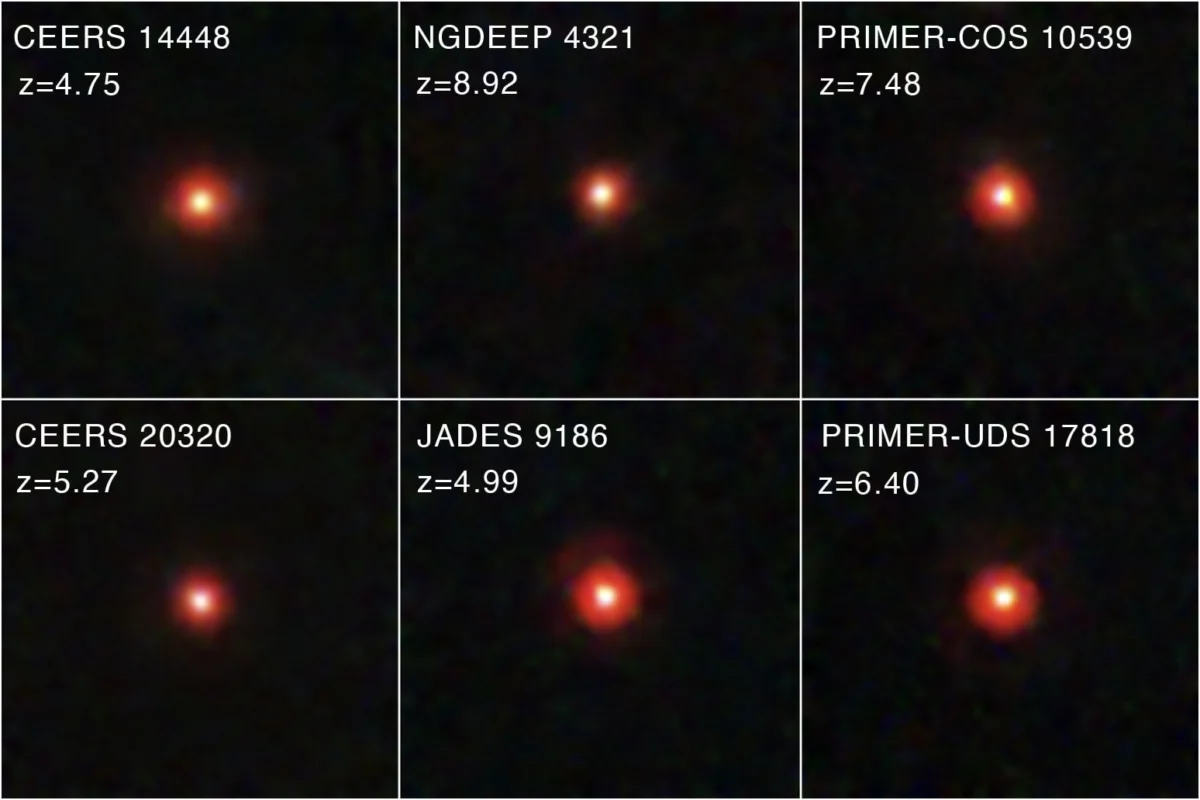
The launch and subsequent deployment of the James Webb Space Telescope (JWST) have fundamentally altered the landscape of modern cosmology, providing a window into the "Cosmic Dawn" that was previously obscured by distance and time. When the telescope directed its Near-Infrared Camera (NIRCam) and Mid-Infrared Instrument (MIRI) toward the most distant reaches of the observable universe, it returned data that left the global scientific community in a state of productive confusion. At high-redshift values (z), representing a period less than one billion years after the Big Bang, astronomers observed a startling abundance of galaxies hosting what appeared to be the "seeds" of supermassive black holes (SMBHs). These objects, often referred to as "Little Red Dots" due to their compact, highly redshifted appearance in JWST imagery, possess masses that defy traditional growth models.
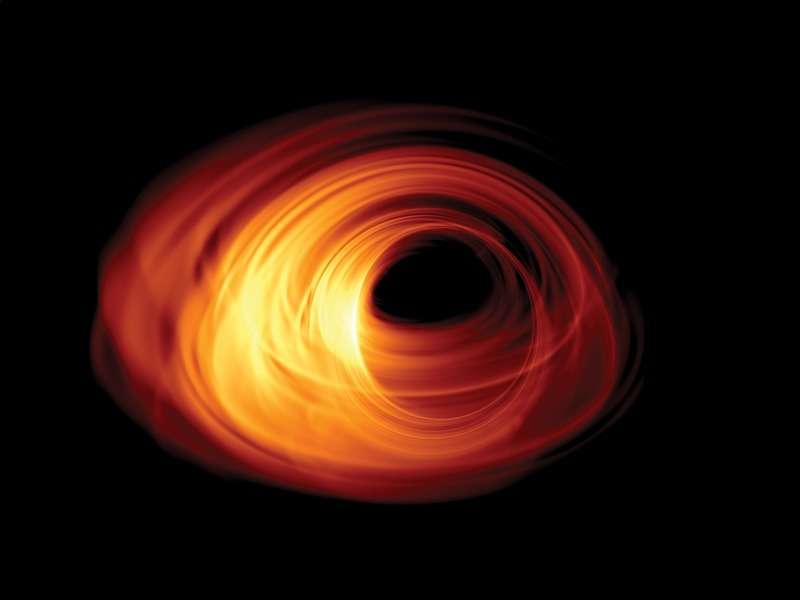
Under the classical paradigm of black hole evolution, the massive black holes found at the centers of galaxies like the Milky Way are thought to grow through a "bottom-up" process. In this scenario, the first generations of massive stars collapse at the end of their brief lives to form stellar-mass black holes. Over billions of years, these remnants merge and consume surrounding gas to eventually reach the millions or billions of solar masses characteristic of SMBHs. However, the JWST findings suggest that black holes with masses equivalent to millions of suns were already present when the universe was in its infancy. This chronological impossibility has forced a re-evaluation of how these cosmic monsters began, shifting the focus toward the Direct-Collapse Black Hole (DCBH) scenario.
The Direct-Collapse Hypothesis and the Early Universe
To address the mystery of these "impossible" black holes, an international team of researchers, led by Alessandro Trinca of the University of Edinburgh’s Institute for Astronomy and the Royal Observatory, has conducted a comprehensive study into the environments that fostered early black hole growth. Their research, published in the Monthly Notices of the Royal Astronomical Society (MNRAS), investigates how the interplay between Dark Matter (DM) and baryonic (visible) matter created the necessary conditions for "heavy seeds" to form.
The DCBH scenario proposes that instead of forming from a single dying star, massive clouds of pristine hydrogen and helium gas at the centers of early galaxies collapsed directly under their own gravity. This process bypasses the stellar stage entirely, resulting in a "seed" black hole that starts its life with 10,000 to 100,000 solar masses. For this to occur, however, specific environmental conditions must be met. The gas must remain hot enough to prevent fragmentation into smaller stars, a condition usually maintained by intense ultraviolet radiation from nearby galaxies which prevents the formation of molecular hydrogen, the primary cooling agent in the early universe.
Methodology: Simulating the Scaffolding of the Cosmos
Central to the research led by Trinca is the concept of Dark Matter merger trees. Within the prevailing Lambda Cold Dark Matter (ΛCDM) cosmological model, Dark Matter acts as the invisible gravitational scaffolding of the universe. It is theorized that DM halos—spherical regions of dark matter—formed first, providing the gravitational wells into which gas and dust later flowed to form galaxies. These halos grew through a hierarchical process, where smaller clumps merged to form increasingly massive structures.
The research team combined high-resolution N-body simulations of these DM merger trees with a sophisticated semi-analytic model of black hole formation and galaxy co-evolution. To simulate the complex history of halo mergers, the team utilized cosmological "zoom-in" software based on the GIZMO particle-based code. GIZMO is a multi-method computer code designed for simulating various astronomical systems, allowing researchers to track the movement and interaction of thousands of particles under the influence of gravity and hydrodynamics.
Following the DM simulations, the team modeled the baryonic component—the stars, gas, and dust—using the Cosmic Archaeology Tool (CAT). CAT is a semi-analytic framework specifically designed to interpret the properties of high-redshift sources observed by telescopes like JWST. By applying this tool, the researchers could test different black hole evolution scenarios against actual observational data, tracing the abundance and spatial distribution of halos capable of hosting DCBHs across cosmic time.
Chronology of the First Heavy Seeds
The findings of the study provide a specific timeline for the emergence of these massive seeds. According to the simulations, the conditions for direct collapse were first met as early as 13.64 billion years ago, a mere 500 million years after the Big Bang. This era represents a period of intense activity where the first structures were rapidly coalescing.
The window for DCBH formation was, however, relatively narrow. The research indicates that the process continued until approximately 13.5 to 13.4 billion years ago. The primary factor that brought this era to a close was "metal enrichment." In astronomical terms, "metals" refers to any element heavier than hydrogen and helium. These elements were forged in the cores of the very first stars, known as Population III stars. When these short-lived, massive stars exploded as supernovae, they seeded the Intergalactic Medium (IGM) with heavier elements.
The introduction of metals into the gas clouds changed the thermodynamics of the early universe. Metals are efficient at radiating heat, allowing gas clouds to cool and fragment into many smaller stars rather than collapsing into a single massive black hole. Once the IGM was sufficiently "polluted" by the remnants of the first stars, the unique conditions required for the Direct-Collapse Black Hole scenario effectively vanished.
The Role of Cosmic Overdensities
A critical component of Trinca’s research is the identification of "cosmic overdensities" as the preferred nurseries for SMBH seeds. Cosmic overdensities are regions of space where the concentration of matter—both dark and visible—is significantly higher than the cosmic average. These regions eventually evolve into massive galaxy clusters.
The simulations revealed that heavy seed formation preferentially occurs in these highly clustered environments. In these "crowded" areas, the frequency of Dark Matter halo mergers is much higher, and the gravitational pull is strong enough to aggregate the massive amounts of gas required for a direct collapse. Furthermore, the proximity of multiple forming galaxies in an overdense region provides the necessary background of ultraviolet radiation to suppress the cooling of gas, thereby facilitating the DCBH process.
This finding has significant implications for how astronomers search for early black holes. It suggests that the "Little Red Dots" and early quasars observed by JWST should not be isolated objects but should instead be surrounded by a "companion" population of smaller, developing galaxies and active galactic nuclei (AGN).
Supporting Data and Technical Analysis
The team’s results provide a theoretical benchmark that aligns with the "Little Red Dots" observed by JWST. These objects are characterized by their extreme compactness and high luminosity in the infrared spectrum, which suggests they are either extremely dense star clusters or, more likely, burgeoning supermassive black holes obscured by dust.
Data from the CAT model suggests that the spatial distribution of these DCBH descendants is highly correlated with the underlying dark matter distribution. By predicting the observational features of these populations at redshift z ~ 7 (roughly 12.9 billion years ago), the study provides a roadmap for future surveys. If future observations confirm a high degree of clustering around early quasars, it will serve as "smoking gun" evidence for the DCBH model and the role of cosmic overdensities.
The study also highlights the "duty cycle" of these early black holes—the fraction of time they are actively consuming matter and shining as quasars. The researchers found that in overdense regions, the supply of gas is so abundant that these seeds can maintain high growth rates for extended periods, allowing them to reach the billion-solar-mass threshold in the short time available before the universe reached its first billion years of age.
Institutional Collaboration and Global Impact
The scale of this research reflects the collaborative nature of modern astrophysics. Led by the University of Edinburgh, the project involved experts from a prestigious array of institutions, including the Como Lake Center for Astrophysics, the INAF (National Institute for Astrophysics) observatories in Rome and Bologna, the Institute of Science and Technology Austria (ISTA), the Institut d’Astrophysique in Paris, and the Sapienza School for Advanced Studies.
This international effort underscores the importance of the JWST mission and the global interest in resolving the "black hole seed" problem. The ability to link theoretical N-body simulations with real-time infrared observations is a milestone in the study of the early universe, providing a framework that other researchers can use to test varying cosmological theories.
Broader Implications for Cosmology
The validation of the DCBH scenario would do more than just explain the existence of early supermassive black holes; it would refine our understanding of the entire timeline of the universe. If black holes can form and grow so rapidly through direct collapse, it implies that the "co-evolution" of galaxies and their central black holes began much earlier and more violently than previously thought.
The relationship between the growth of a galaxy and its central black hole is one of the most fundamental topics in astronomy. The energy released by an active black hole (feedback) can stop star formation in its host galaxy, effectively regulating the galaxy’s size. If massive black holes were already present in the earliest galaxies, this feedback loop would have been an active force during the very first stages of galactic assembly, influencing the shape and structure of the universe as we see it today.
Furthermore, these findings set the stage for upcoming missions. The Vera C. Rubin Observatory and NASA’s Nancy Grace Roman Space Telescope will soon join JWST in surveying the deep universe. While JWST provides a "pencil-beam" view of the sky with incredible detail, the Roman Space Telescope will provide a "wide-angle" view, allowing astronomers to map the cosmic overdensities identified in Trinca’s simulations on a much larger scale.
The conclusion of the research team is clear: the early formation of massive black holes is not a random occurrence but a consequence of the universe’s large-scale structure. As the team stated in their paper, the identification of a large population of quasar-companion AGN candidates in future surveys would represent a strong indication that early massive black hole formation occurs in highly clustered environments. This study provides the concrete benchmarks necessary for those upcoming observational campaigns, ensuring that as our telescopes look further back in time, we have the theoretical tools to understand the monumental events they reveal.