Galang Taruna
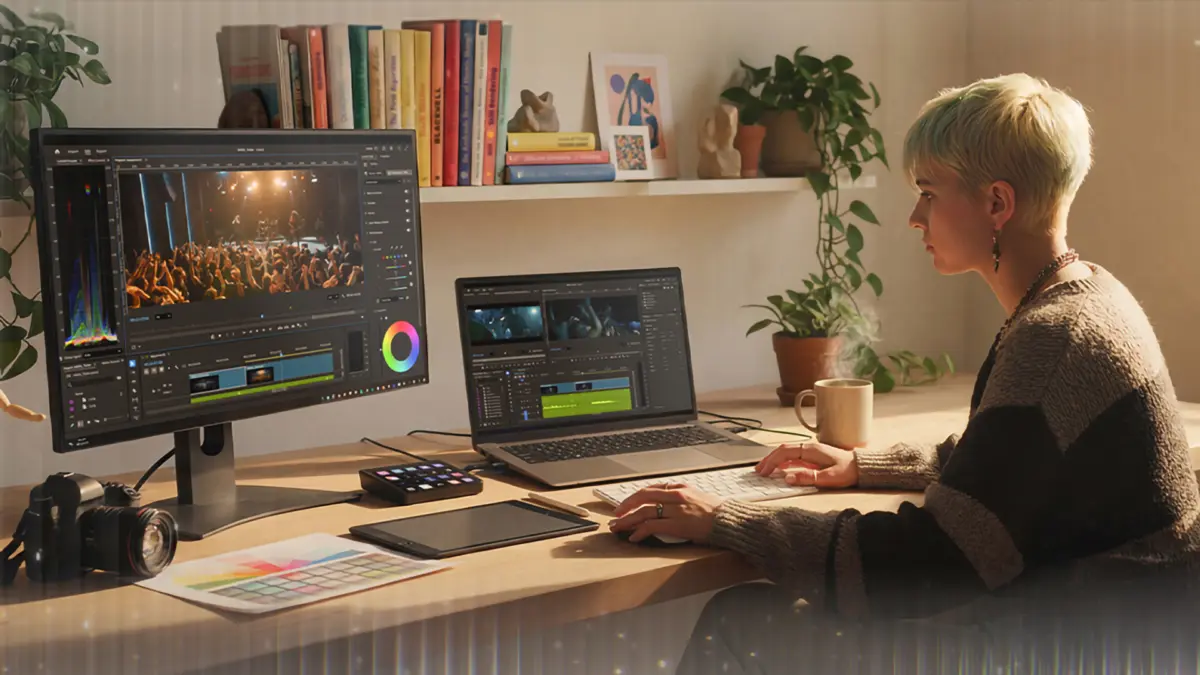
Choosing a personal computer adapted to the ambitious projects of creative professionals often necessitates looking beyond mere technical specifications. With its cutting-edge GeForce RTX 50 series and the comprehensive NVIDIA Studio ecosystem, NVIDIA offers compelling solutions designed to meet the evolving demands of creators across various disciplines. This strategic combination of advanced hardware and optimized software aims to streamline workflows, enhance productivity, and unlock new creative possibilities.
The Evolving Landscape of Creative Workflows
In today’s fast-paced digital world, creative tasks have become increasingly complex and resource-intensive. Imagine a video editor struggling with a multi-hour render in After Effects, or a 3D artist experiencing excruciating delays when previewing design changes. These scenarios, all too familiar to many professionals, highlight the critical impact of an inadequate hardware configuration. Modern creative endeavors, encompassing high-resolution video production, intricate 3D modeling, advanced graphic design, and the burgeoning field of generative artificial intelligence, demand powerful and precisely tuned systems. The sheer volume of data, the sophistication of contemporary software, and the expectation of rapid iteration cycles mean that a general-purpose PC often falls short.
The specific software used, the scale and ambition of projects, and the frequency of use are all crucial factors that dictate hardware requirements. Before committing to a PC purchase, therefore, it is imperative for creators to thoroughly assess their anticipated workload and the specific demands they will place on their machine. A mismatch can lead to significant bottlenecks, extended project timelines, and ultimately, a stifling of creative potential.
NVIDIA’s Dual-Pronged Approach: GeForce RTX 50 and NVIDIA Studio
NVIDIA, a long-standing leader in graphics processing technology, addresses these challenges through a two-pronged strategy: the introduction of its latest generation of GeForce RTX 50 GPUs and the continued refinement of its NVIDIA Studio ecosystem. This integrated approach is designed to provide a robust foundation for creative work, ensuring that both hardware and software are optimized to work in harmony.
The Power of GeForce RTX 50 GPUs
The GeForce RTX 50 series GPUs represent the pinnacle of NVIDIA’s graphics technology, engineered to deliver unprecedented performance for both gaming and professional applications. These GPUs are not merely about faster frame rates; they are built with architectural advancements that directly benefit creative workflows. Key to their capabilities are the dedicated RT Cores for accelerated ray tracing, crucial for realistic lighting and reflections in 3D rendering, and the Tensor Cores, specifically designed for AI acceleration.
- Architectural Innovations: The RTX 50 series leverages a new architecture that enhances parallel processing capabilities, a fundamental requirement for complex computations in video editing, 3D rendering, and AI. This translates to quicker processing of effects, faster previews, and significantly reduced render times.
- Enhanced VRAM Capacity: For tasks like generative AI and large-scale 3D scenes, video memory (VRAM) is as critical as raw processing power. The RTX 50 series is expected to offer increased VRAM capacities, allowing creators to load larger models, higher-resolution textures, and more complex scenes without encountering memory limitations that can cripple performance.
- Advanced Encoding and Decoding: In video production, the GPU plays a pivotal role at multiple stages, including file decoding, effect calculation, and export encoding. The GeForce RTX 50 GPUs feature advanced hardware encoders and decoders (NVENC/NVDEC) that support high-fidelity video formats. Notably, they handle hardware encoding and decoding of H.264 and HEVC videos in 4:2:2 chroma subsampling. This format is crucial for professional video work as it preserves significantly more color information, ensuring higher quality output. Software like DaVinci Resolve, CapCut, and Filmora leverage this acceleration for both encoding and decoding, while Premiere Pro benefits specifically from accelerated decoding, leading to smoother playback and faster timeline operations.
NVIDIA Studio: Beyond Raw Horsepower
Complementing the powerful hardware, the NVIDIA Studio platform serves as a vital software layer that optimizes and enhances the creative experience. It’s an ecosystem built on three pillars: application acceleration, dedicated Studio Drivers, and creator resources.
- Application Acceleration: NVIDIA Studio works in conjunction with leading creative applications to provide GPU-accelerated performance for a wide range of tasks. This means that features within popular software like Adobe Creative Suite, Blackmagic Design DaVinci Resolve, Blender, and Autodesk Maya are specifically optimized to utilize the power of NVIDIA GPUs, often delivering performance gains that are simply not achievable on CPU-only systems.
- Dedicated Studio Drivers: Unlike general-purpose gaming drivers, NVIDIA Studio Drivers are meticulously developed and rigorously tested against professional creative applications. This focus ensures maximum stability, reliability, and performance in critical workflows. For professionals, driver stability is paramount, as crashes and unexpected errors can lead to lost work and missed deadlines. Regular updates to Studio Drivers also bring performance improvements and support for new features in creative software, keeping creators at the cutting edge.
- Creator Resources: The NVIDIA Studio platform also provides a wealth of resources for creators, including tutorials, guides, and access to tools like NVIDIA Omniverse. Omniverse is a powerful platform for 3D design collaboration and simulation, allowing artists to connect various 3D applications, work together in real-time, and create complex scenes with advanced physics and rendering.
Revolutionizing Key Creative Disciplines
The synergy between GeForce RTX 50 GPUs and the NVIDIA Studio ecosystem translates into tangible benefits across diverse creative fields.
Accelerating Video Production
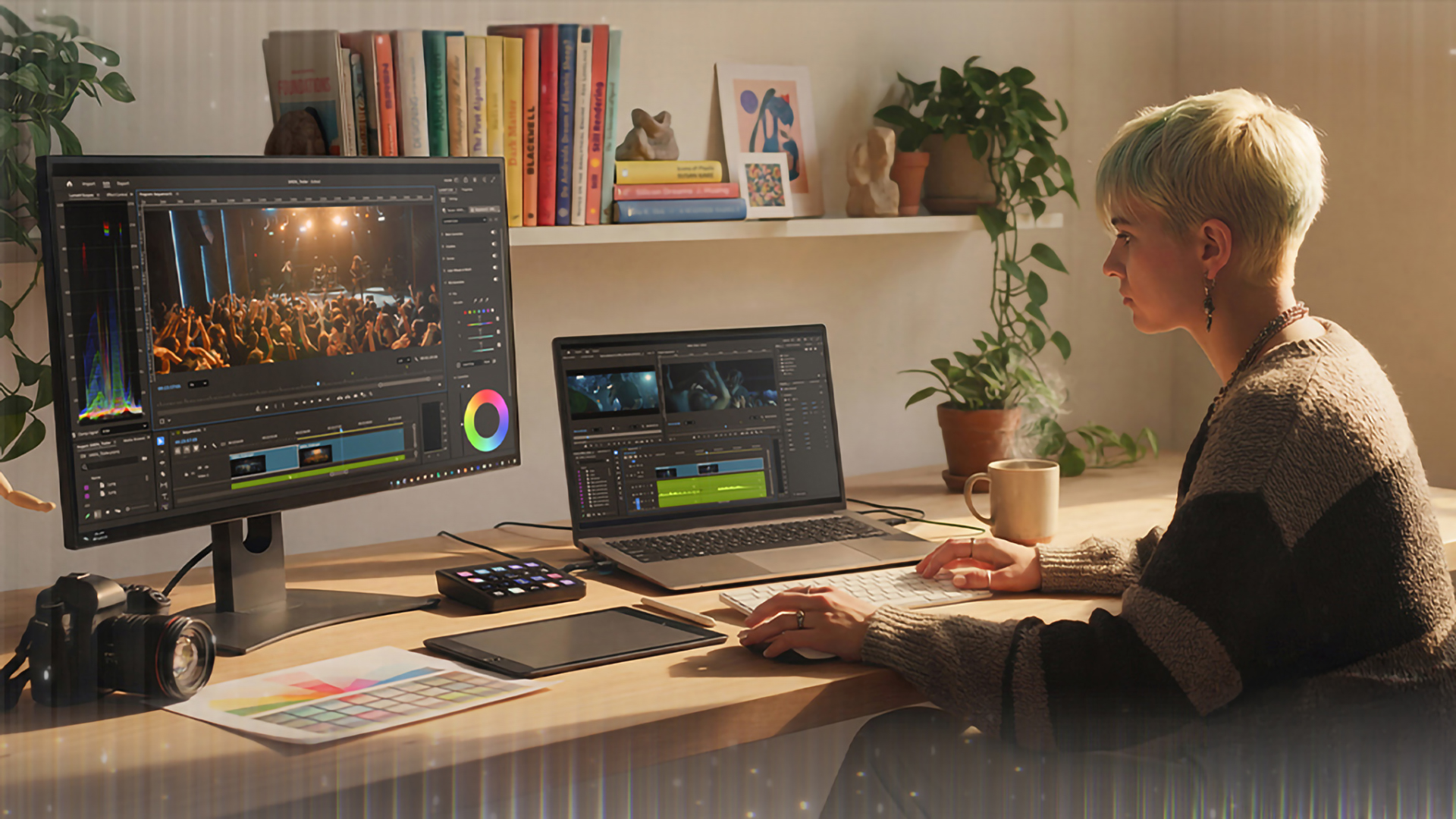
For video editors, the impact is transformative. Working with high-definition footage, especially 4K, 6K, or even 8K, often involves heavy processing. A well-suited graphics card allows for seamless editing of complex projects that might involve multiple camera angles, extensive color grading, and numerous visual effects. The hardware-accelerated H.264 and HEVC 4:2:2 support in the RTX 50 series means faster import, real-time preview of edits, and significantly reduced export times, freeing up hours that would otherwise be spent waiting for renders. This allows editors to iterate more quickly, experiment with different looks, and deliver projects on tighter deadlines.
Transforming 3D Design and Rendering
In 3D creation, the GPU’s raw computational power is the bedrock of accelerated rendering. Artists can quickly visualize changes made to a scene—adjustments to lighting, textures, or camera angles—without enduring lengthy render queues. This immediate feedback loop is invaluable for creative exploration, allowing designers to multiply their iterations, refine their vision, and achieve perfection more efficiently. Whether using Blender’s Cycles renderer, Autodesk’s Arnold, or Chaos Group’s V-Ray, RTX GPUs significantly cut down rendering times, often by orders of magnitude compared to CPU rendering. Furthermore, ray tracing capabilities enable photorealistic rendering in real-time viewports, blurring the lines between creation and final output.
Unlocking Generative AI Potential
The rise of generative AI tools has opened new frontiers for creativity, from image generation to intelligent content creation. For local generative AI applications, the GPU’s ability to perform parallel computations is crucial, as is the available video memory (VRAM) required to load large AI models and execute complex processing tasks. The Tensor Cores within the RTX 50 series are specifically designed to accelerate AI calculations, making them ideal for tools like ComfyUI, Stable Diffusion, and other machine learning frameworks used to generate images, enhance content, or perform intelligent upscaling. This acceleration democratizes access to powerful AI tools, allowing individual creators to leverage capabilities previously limited to large studios or specialized research facilities.
Crafting the Ideal Creative Workstation: A Component Guide
To truly harness the power of NVIDIA’s offerings, careful consideration must be given to the entire PC configuration. The goal is to build a balanced machine where no single component bottlenecks the others.
The GPU as the Creative Core
As established, the GPU is often the most critical component for creative professionals. Beyond raw processing power, the quantity of VRAM is paramount, especially for AI and 3D work. It must be sufficient to accommodate the complexity of your scenes, the resolution of your textures, and the size of your AI models. A powerful card with insufficient VRAM for your specific projects can quickly become a bottleneck, complicating your workflow and negating its raw computational strength. For instance, a complex 3D scene with high-resolution textures or a large language model for local AI inference might demand 16GB, 24GB, or even more VRAM to operate smoothly.
Balancing the Ecosystem: CPU, RAM, and Storage
While the GPU takes center stage, the rest of the configuration must be equally robust to support it.
- Processor (CPU): The CPU remains vital for tasks that are less or not at all GPU-accelerated, such as compiling code, running certain simulations, or managing the operating system and background processes. A powerful multi-core CPU ensures smooth multitasking and efficient handling of sequential computations.
- Random Access Memory (RAM): Adequate RAM capacity is essential for managing the volume of project files and running multiple applications concurrently. Video editing, 3D modeling, and graphic design software can consume significant amounts of RAM, especially when dealing with large files or complex layers. Generally, 32GB is considered a good starting point for serious creative work, with 64GB or even 128GB being beneficial for very demanding tasks.
- Solid State Drive (SSD): Fast storage is crucial for quick loading of software, project files, and cache data. NVMe SSDs, with their superior read/write speeds compared to traditional SATA SSDs or HDDs, are highly recommended for the primary drive and for active project storage. Ample space is necessary to prevent slowdowns and ensure a fluid workflow.
The Often-Overlooked: Power and Cooling
Finally, an appropriate power supply unit (PSU) and an effective cooling system are non-negotiable. High-performance GPUs and CPUs generate significant heat, and insufficient cooling can lead to thermal throttling, reducing performance and potentially shortening component lifespan. A robust PSU ensures stable power delivery to all components, especially under heavy load.
Cybertek: A Partner in Custom Creative Solutions
Recognizing the nuanced needs of creative professionals, the French assembler Cybertek offers specialized solutions. Founded in 1996, Cybertek celebrates its 30th anniversary this year, marking decades of expertise in custom PC assembly.
Three Decades of Expertise
Cybertek provides a comprehensive range of NVIDIA Studio PCs, meticulously assembled and rigorously tested by their expert teams in Bordeaux, France. These machines are ready for immediate use upon unboxing, saving creators the hassle of complex setup. Their deep understanding of hardware components and software interactions ensures that each pre-built system is optimized for creative performance.
Tailored for Talent: Pre-built and Custom NVIDIA Studio PCs
For creators whose needs extend beyond standard configurations, Cybertek offers unparalleled customization. Their online configurator allows users to select specific components, tailoring the PC to their exact requirements and budget. For more complex or unique projects, their knowledgeable advisors are available via phone or in-store to provide personalized guidance, helping clients design a machine perfectly suited to their creative ambitions. Every custom-configured PC undergoes stringent thermal testing and a meticulous optimization phase before shipment, guaranteeing stable and peak performance.
Beyond Performance: Aesthetic Personalization
Cybertek goes a step further in personalization, understanding that a creative tool can also be an extension of an artist’s identity. They offer services like custom watercooling installations, not only for superior thermal management but also for aesthetic appeal. Furthermore, creators can personalize the metallic or glass panels of their PC case with laser engraving, choosing any design or motif. For a truly unique touch, UV printing allows for full-color visuals to be applied directly onto the case, enabling artists to showcase their logo, a personal creation, or any desired artwork on their workstation. This level of customization transforms a powerful tool into a unique statement piece.
The Broader Implications for the Creative Industry
The combination of advanced hardware like NVIDIA’s GeForce RTX 50 series and the robust NVIDIA Studio ecosystem, made accessible and customizable by partners like Cybertek, carries significant implications for the creative industry. It democratizes access to high-performance computing, allowing independent artists and smaller studios to compete with larger entities. It fosters innovation by enabling creators to experiment more freely with cutting-edge tools, particularly in generative AI and real-time 3D. The enhanced productivity translates into more time for creative ideation and less time grappling with technical limitations, ultimately raising the overall quality and ambition of creative projects across the board.
In conclusion, the decision of choosing a PC for creative work is no longer solely about raw power but about a holistic ecosystem where hardware, software, and dedicated support converge. NVIDIA’s commitment to creators with its GeForce RTX 50 series and NVIDIA Studio, coupled with Cybertek’s expertise in delivering tailored, high-performance, and even aesthetically personalized machines, empowers professionals to push the boundaries of their craft, ensuring that their creative vision is never limited by their tools.