Galang Taruna
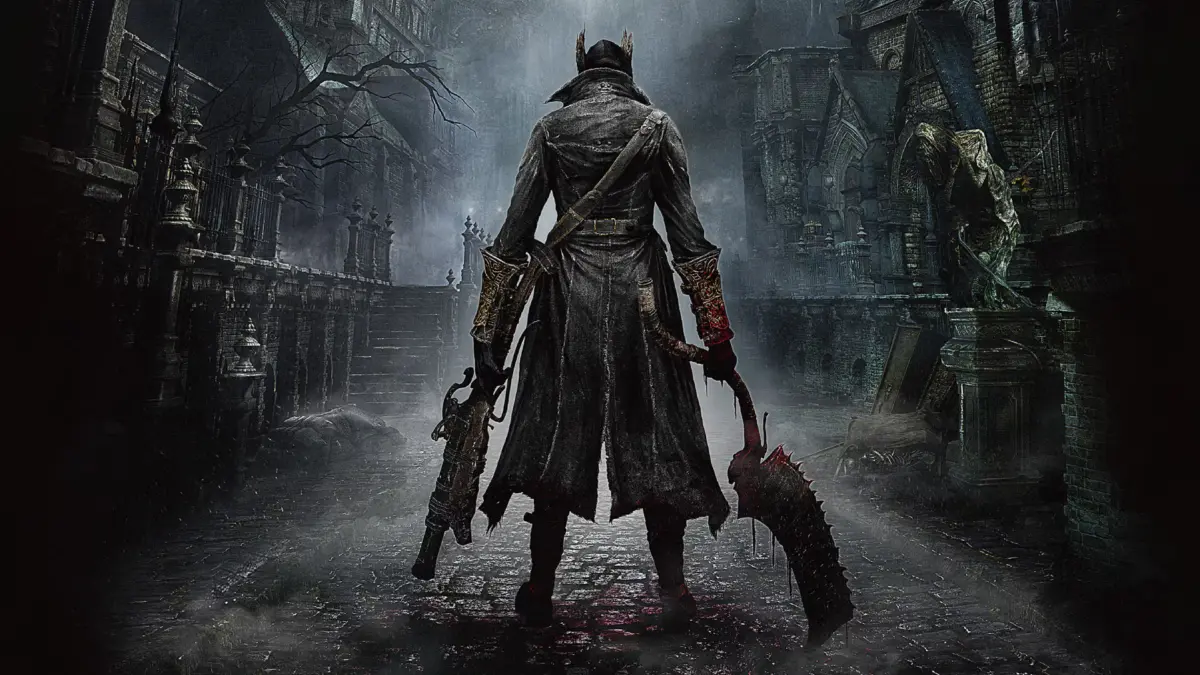
The long-cherished dream of experiencing From Software’s critically acclaimed Bloodborne on PC has taken a monumental leap forward, as the unofficial native port of the PlayStation 4 exclusive now boasts support for Nvidia’s Deep Learning Super Sampling (DLSS) technology. This integration marks a significant milestone, dramatically enhancing performance and visual fidelity, particularly on modern graphics cards like the RTX 4070, and setting new benchmarks for fan-driven preservation and optimization efforts within the gaming community.
The Enduring Mystique of Yharnam and Bloodborne’s Exclusivity Legacy
Released in March 2015, Bloodborne quickly established itself as a seminal title in From Software’s esteemed catalog, standing shoulder-to-shoulder with the Dark Souls series and the more recent Elden Ring. It immersed players in the gothic, Victorian-era city of Yharnam, a haunting landscape plagued by a mysterious endemic illness that transforms its inhabitants into grotesque beasts. Characterized by its unique blend of fast-paced, aggressive combat, intricate lore, and punishing difficulty, Bloodborne garnered universal critical acclaim, praised for its atmospheric design, innovative gameplay mechanics, and profound sense of challenge and reward. Its distinctive "regain" system, which encourages aggressive play by allowing players to recover lost health by striking enemies immediately after taking damage, set it apart from its predecessors and successors.
Despite its widespread adoration and persistent demand from a global fanbase, Bloodborne remained a staunch PlayStation 4 exclusive. This exclusivity, while cementing its status as a flagship title for Sony’s console, also fueled years of fervent pleas and speculative rumors for a PC port or a PlayStation 5 remaster. For nearly a decade, PC gamers, accustomed to the expanding library of From Software titles available on their platform, watched from the sidelines, yearning to delve into Yharnam’s horrors without the constraints of console hardware. This enduring exclusivity became a point of contention and fascination, especially as Sony Interactive Entertainment gradually began to embrace the PC market, bringing acclaimed first-party titles like Horizon Zero Dawn, God of War, Marvel’s Spider-Man, and most recently, Helldivers 2, to Windows in recent years. The absence of Bloodborne from this growing list only intensified the community’s desire and spurred unofficial initiatives.
The Community’s Unyielding Pursuit: From Emulation to Native Ports
In the absence of any official action from Sony or From Software, the passionate Bloodborne community took matters into its own hands. Initially, efforts revolved around PlayStation 4 emulation, allowing dedicated enthusiasts to run the game on powerful PCs, often achieving resolutions and frame rates beyond the original console’s capabilities. While impressive, emulation often comes with its own set of challenges, including demanding hardware requirements, potential compatibility issues, and varying degrees of stability, making it an imperfect solution for many.
A more ambitious undertaking emerged in the form of an unofficial native PC port, spearheaded by an independent developer known as Super Medo. Unlike emulation, which simulates the original console’s hardware, a native port involves re-implementing significant portions of the game’s code to run directly on a PC operating system (Windows 10 and 11, in this case). This approach promises greater optimization, stability, and the potential to leverage modern PC technologies more effectively. Super Medo’s project has been a testament to the dedication and technical prowess within the modding community, evolving continuously to enhance the experience for those who refuse to let Bloodborne‘s exclusivity dictate their gaming choices. The project, hosted on platforms like GitHub, invites community contributions and iterative improvements, reflecting the collaborative spirit that often defines fan-driven development.
Nvidia DLSS: A Deep Dive into AI-Powered Performance
The recent integration of Nvidia DLSS (Deep Learning Super Sampling) into Super Medo’s unofficial Bloodborne port represents a pivotal advancement. DLSS is Nvidia’s proprietary AI-rendering technology designed to boost frame rates and generate beautiful, sharp images for games. It operates on the principle of rendering frames at a lower resolution and then using AI-powered Tensor Cores (exclusive to Nvidia RTX GPUs) to intelligently upscale them to the display’s native resolution. This process effectively reduces the computational load on the graphics card while delivering image quality often comparable to, or even surpassing, native resolution rendering. The underlying deep learning model continuously refines its upscaling algorithms, leading to ongoing improvements with each new DLSS version.
There are several key components and modes within DLSS that contribute to its efficacy:
- DLSS Super Resolution: This is the core upscaling technology. It uses a deep learning neural network trained on millions of high-resolution images to reconstruct details and enhance edges, making lower-resolution inputs look like native 4K or 1440p. It offers various quality modes (Quality, Balanced, Performance, Ultra Performance), each striking a different balance between performance gain and image fidelity, allowing users to tailor the experience to their hardware and preferences. For instance, "Quality" mode renders at a higher internal resolution for better visual output, while "Performance" mode prioritizes frame rate by rendering at a lower internal resolution.
- DLSS Frame Generation: Introduced with the RTX 40 series GPUs, Frame Generation utilizes AI to create entirely new, interpolated frames between traditionally rendered frames. This significantly boosts perceived frame rates, leading to a smoother, more fluid gameplay experience, especially beneficial in graphically intensive titles or scenarios where the CPU might be a bottleneck. It works in conjunction with DLSS Super Resolution or independently with DLAA, further pushing the boundaries of visual fluidity.
- DLAA (Deep Learning Anti-Aliasing): While not directly a performance-boosting feature like DLSS Super Resolution, DLAA uses the same AI technology to apply superior anti-aliasing without any upscaling. This results in incredibly sharp and clean images by reducing jagged edges, but it is more resource-intensive as it renders at native resolution. It is ideal for systems that already achieve high frame rates but seek further visual refinement.
The implementation of DLSS, particularly Frame Generation, allows the unofficial Bloodborne port to tap into the raw power and AI capabilities of modern Nvidia RTX GPUs, pushing performance boundaries that were previously unimaginable for a game locked at 30 frames per second on its original hardware.
Unprecedented Frame Rates: Benchmarks on the RTX 4070
A recent demonstration by the YouTube channel MxBencmarkPC showcased the astonishing performance gains achieved by integrating DLSS into the unofficial Bloodborne port. The test system featured a robust configuration: an Intel i7-14700F processor, an Nvidia RTX 4070 graphics card, and 32GB of DDR4 RAM. The Nvidia GeForce RTX 4070, positioned as a high-performance mid-range GPU, is a popular choice for gamers targeting high refresh rates at 1440p and solid 4K performance with the aid of upscaling technologies. The demonstration meticulously explored 11 different combinations of screen resolutions (1080p, 1440p, 4K), in-game graphics settings, and the activation/deactivation of Nvidia’s DLSS and DLAA technologies.
The results were nothing short of impressive, particularly when contrasting them with the original PlayStation 4’s performance, which struggled to maintain a consistent 30 frames per second (FPS) at 1080p, often experiencing dips below that target in busy areas.
-
4K Resolution: When running the game in native 4K with DLAA enabled for superior image quality, the system managed approximately 40 FPS. This is a respectable figure for native 4K on an RTX 4070, especially for an unofficial port that might not be fully optimized. However, the true magic unfolded with DLSS activated. In DLSS Quality mode, frame rates soared past 100 FPS, often reaching 120 FPS. Shifting to DLSS Performance mode further pushed the boundaries, with the game consistently maintaining over 130 FPS. This represents a performance uplift of over 200% compared to native 4K with DLAA, showcasing the immense power of AI-powered upscaling and frame generation in transforming the visual and experiential fidelity.
-
1440p Resolution: While not explicitly detailed in the summary, given the performance scaling observed, it can be logically inferred that 1440p performance would fall between the 4K and 1080p benchmarks. With DLSS enabled, a system with an RTX 4070 would likely achieve exceptionally high frame rates, potentially well over 150-180 FPS. This would offer an ideal balance of visual fidelity and buttery-smooth gameplay for the vast majority of high-refresh-rate 1440p monitors, providing an incredibly responsive and immersive experience without compromises.
-
1080p Resolution: At 1080p, the performance figures became truly staggering. With DLSS activated, the unofficial port consistently surpassed 200 FPS, hitting peaks of 220 FPS. This is an astounding eight-fold increase compared to the original PlayStation 4’s maximum performance, fundamentally transforming the gameplay experience. The fluidity and responsiveness at these frame rates would eliminate any perceived input lag and allow for an incredibly precise and immersive encounter with Yharnam’s challenges, making every dodge, parry, and attack feel instantaneous.
These benchmarks underscore the transformative impact of DLSS. What was once a performance bottleneck for an already demanding game, even on powerful PC hardware via unofficial means, is now a showcase of ultra-high frame rates, proving that the unofficial port, when combined with cutting-edge technology, can offer an experience far superior to its console origins. The long-standing excuse of "lag" for failing against Bloodborne‘s notoriously difficult bosses has officially been rendered obsolete for PC players who choose this route.
Chronology of Demand and Development
The journey to this point has been a long and winding one, punctuated by both official silence and passionate community efforts:
- March 2015: Bloodborne is released exclusively on PlayStation 4, quickly becoming a critical darling and a system seller. PC gamers immediately voice their desire for a port.
- 2015-2020: Years of rumors, petitions, and speculative leaks regarding a PC port or remaster circulate, but no official announcement materializes from Sony or From Software. The game remains a PS4 exclusive, frustrating a significant portion of the global gaming community.
- Late 2010s – Early 2020s: PlayStation 4 emulation on PC slowly matures, with Bloodborne being a prime target. While playable, performance often requires high-end systems and is prone to inconsistencies, limiting accessibility.
- Early 2020s (Approximate): The independent developer Super Medo begins work on a true unofficial native PC port, aiming to bypass the limitations of emulation and directly adapt the game’s code for Windows. This project gains traction within the modding community, drawing attention for its ambitious scope.
- 2020 onwards: Sony begins its strategic pivot towards PC gaming, releasing several first-party exclusives on the platform, including Horizon Zero Dawn (2020), Days Gone (2021), God of War (2022), and Marvel’s Spider-Man (2022). This move further fuels hopes and expectations for Bloodborne to follow suit, yet the title remains conspicuously absent from official PC announcements.
- Recently (as demonstrated on October 20, [Year inferred from context, likely 2023 or 2024]): The unofficial native PC port by Super Medo successfully integrates Nvidia DLSS technology, including Frame Generation. The MxBencmarkPC YouTube channel releases a comprehensive performance demonstration, showcasing the dramatic performance uplift, igniting renewed excitement within the community.
Broader Implications: A Catalyst for Change?
This groundbreaking achievement by the *Bloodborne