Evan Lee Salim
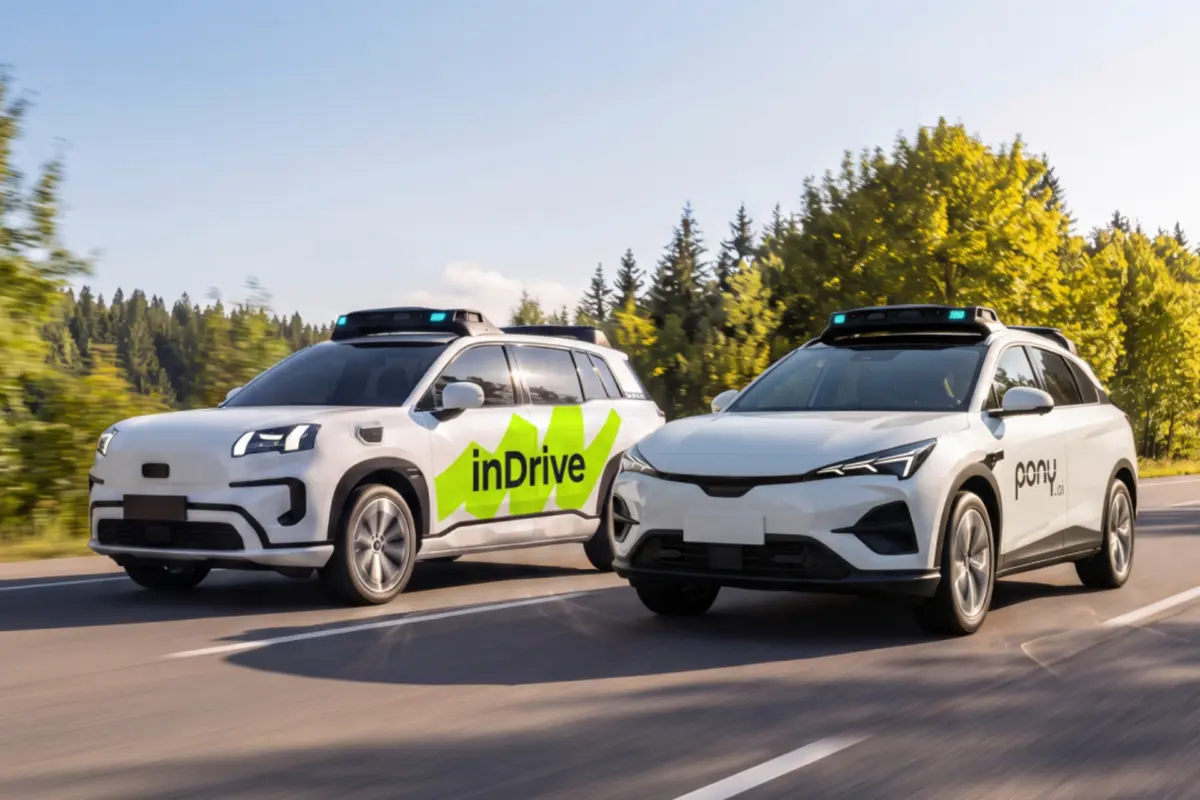
Ride-hailing innovator inDrive, recognized for its distinctive passenger-driver fare negotiation model, has formalized a strategic partnership with Chinese autonomous driving pioneer Pony.ai and artificial intelligence titan Nvidia. The ambitious collaboration aims to commence testing of robotaxis in Kazakhstan by the first half of 2027, marking a significant expansion of self-driving technology into new global territories beyond the established testing grounds of the United States and China.
The tripartite alliance was cemented with the signing of a memorandum of understanding (MoU) on Friday, signaling a collective intent to integrate Pony.ai’s advanced robotaxis onto inDrive’s widespread ride-hailing platform. This move underscores a burgeoning global interest in autonomous mobility solutions, particularly in rapidly developing economies. Initial trials are slated for Astana, Kazakhstan’s capital, and will initially feature a safety operator onboard, with the ultimate objective of achieving fully driverless operations.
Partnership Structure and Technological Foundation
Under the terms of the proposed plan, Pony.ai will be responsible for supplying its cutting-edge Gen-7 robotaxis. These vehicles represent the culmination of years of research and development in autonomous driving, featuring sophisticated sensor suites and advanced navigation capabilities. inDrive, leveraging its extensive operational network and consumer-facing application, will then offer and manage these robotaxi services within Kazakhstan, integrating them seamlessly into its existing platform.
Nvidia, a global leader in AI computing, will provide the crucial underlying artificial intelligence technology that powers these autonomous vehicles. This includes its comprehensive Hyperion platform, an end-to-end architecture designed for autonomous vehicle development and deployment, which encompasses a robust suite of sensors, computing hardware, and software tools. Furthermore, Nvidia’s Halos safety system will be integrated to ensure the highest standards of operational safety and reliability, a critical factor for public acceptance and regulatory approval in new markets.
inDrive’s Vision: Capital-Light Expansion and Affordability
This strategic pivot into autonomous ride-hailing aligns with inDrive’s core business philosophy of delivering affordable transportation solutions. The company, which has built its formidable presence in over 1,200 cities across 47 countries, seeks to replicate its success in offering competitive pricing within the nascent robotaxi market. This approach positions inDrive to challenge established players and emerging rivals who are also actively investing in autonomous technology.
Yuri Misnik, CTO of inDrive, articulated the company’s strategic methodology, stating, "Our approach is capital-light by design. We work with a range of partners in different markets, combining their expertise with ours to deliver a better customer experience." This emphasis on collaboration allows inDrive to mitigate the substantial capital expenditure typically associated with developing and deploying autonomous vehicle fleets, instead focusing on its strengths in market penetration, platform management, and customer acquisition. The company has also demonstrated a broader ambition, having expanded beyond its foundational ride-hailing services into areas such as delivery, intercity transportation, and financial services, indicating a holistic strategy to capture a wider share of consumer spending.
This isn’t inDrive’s sole foray into autonomous mobility. In December, the company inked a separate agreement with Saudi Arabia’s AI Driver, with plans to explore the deployment of autonomous vehicles powered by Chinese self-driving firm WeRide. This initiative targeted a pilot program in Riyadh in the first half of 2026, showcasing inDrive’s global appetite for integrating advanced transportation solutions. Misnik further hinted at future expansions, noting, "We are also looking at a number of other markets for future deployments. One of the main requisites for successful launch in our view is a favorable and collaborative regulatory environment to facilitate safe and sustainable testing on the roads."
Pony.ai’s Global Ambitions and Fleet Expansion
Pony.ai, a prominent player in the autonomous driving sector with significant operations in China and the United States, views the Kazakhstan partnership as a crucial step in its aggressive global expansion strategy. The company is rapidly scaling its operations, aiming to significantly increase its fleet size. As of the end of June, Pony.ai operated 1,975 robotaxis. Its ambitious target is to deploy more than 3,500 robotaxis across over 20 cities worldwide by the close of 2026, underscoring its commitment to becoming a global leader in autonomous mobility.
The collaboration with inDrive in Kazakhstan follows other high-profile international partnerships. Earlier this month, Uber, another global ride-hailing giant, announced its plans to test Pony.ai’s robotaxis in London. Uber has also initiated supervised autonomous rides in the British capital with Wayve, a UK-based self-driving technology startup backed by investors including Nvidia and Uber itself. These multiple engagements highlight Pony.ai’s growing influence and its strategic positioning with major ride-hailing platforms to accelerate its international deployment.
Nvidia’s AI Foundation for Cost-Effective Autonomy
Nvidia’s role extends beyond merely supplying hardware; it provides a comprehensive ecosystem designed to accelerate and economize the development and deployment of autonomous vehicles. Its Hyperion platform is a full-stack solution, offering a ready-made foundation of sensors, computing technology, and software, thereby alleviating the need for companies to design and integrate every component from scratch. This integrated approach significantly reduces the development time and cost for AV developers.
Ali Kani, Nvidia’s vice president of automotive, emphasized the financial benefits of their platform, particularly for markets where affordability is paramount. "Those savings are particularly relevant in emerging markets, where ride-hailing is already relatively affordable and autonomous services need to compete on cost," Kani told TechCrunch. Beyond Hyperion, Nvidia also offers its Alpamayo model and a suite of tools for generating synthetic data and rigorously testing autonomous driving systems across a myriad of complex and diverse driving scenarios. This capability is vital for training AI models to handle unpredictable real-world conditions safely and efficiently. The announcement of this partnership notably coincided with Nvidia CEO Jensen Huang’s inaugural visit to Kazakhstan, underscoring the strategic importance of the region to the company’s global automotive ambitions.
Kazakhstan: A Strategic Testing Ground with Unique Challenges
Kazakhstan’s emergence as a key location for autonomous vehicle testing is not coincidental. The Central Asian nation has proactively fostered an environment conducive to AV innovation. Last month, the Kazakh government officially announced its plans to launch autonomous taxi services in 2027, with initial trials earmarked for Astana and two other major cities. Crucially, the government has also established a regulatory framework, introducing specific rules that permit autonomous vehicles to be tested on designated public roads. This forward-thinking regulatory stance provides a stable and predictable environment for companies like inDrive, Pony.ai, and Nvidia.
Astana itself presents a unique and invaluable testing ground due to its formidable climate. With a population of approximately 1.7 million, the city endures months of severe winter weather, characterized by heavy snow and ice. These harsh conditions pose significant challenges for autonomous driving systems, which rely heavily on sensor perception and precise navigation. Successfully operating robotaxis in such extreme environments would provide critical data and insights, validating the robustness and reliability of the technology.
Arsen Tomsky, inDrive founder and CEO, highlighted this aspect: "Launching here will provide an important opportunity to evaluate autonomous driving technology in challenging winter conditions. Success in Astana could offer valuable insights for expanding autonomous mobility to other locations facing similar challenges." This strategic choice of location underscores the partners’ commitment to developing highly resilient and adaptable autonomous solutions capable of operating globally, irrespective of climatic adversities.
Broader Industry Implications and Competitive Dynamics
The collaboration in Kazakhstan represents a microcosm of a broader trend in the global ride-hailing and autonomous vehicle industries. As the development of self-driving technology matures, the focus is shifting from pure technological breakthroughs to commercial deployment and scaling. Ride-hailing companies are increasingly recognizing the long-term potential of robotaxis to reduce operational costs, enhance safety, and potentially offer more consistent service quality compared to human-driven vehicles.
The entry of a cost-focused player like inDrive into the robotaxi space, particularly in emerging markets, introduces a compelling dynamic. While initial deployments of robotaxis have often been premium services, inDrive’s model suggests a pathway to making autonomous mobility accessible and affordable, potentially disrupting traditional transportation paradigms. This could accelerate the adoption of self-driving technology in regions where cost-sensitivity is a major factor.
Furthermore, the involvement of a major AI provider like Nvidia, offering comprehensive platforms rather than just components, signals a strategic move to standardize and streamline AV development. By providing an integrated, validated stack, Nvidia is not only enabling faster deployment but also fostering a more interoperable ecosystem, which can benefit the entire industry.
The competitive landscape is intensifying, with multiple ride-hailing giants like Uber actively pursuing robotaxi partnerships in diverse markets. This suggests a multi-faceted race, where success will hinge not just on technological superiority but also on strategic alliances, regulatory navigation, and effective market penetration. The ability to adapt to varied local conditions, from regulatory frameworks to challenging climates, will be paramount for global leadership.
Future Outlook and Potential Challenges
While the partnership holds immense promise, the road to widespread robotaxi deployment is not without its challenges. Technological hurdles remain, particularly in achieving Level 5 full autonomy, where vehicles can operate in all conditions without human intervention. The robustness of sensors and AI algorithms in navigating severe weather, such as heavy snow, dense fog, or torrential rain, requires continuous refinement and extensive real-world validation.
Public acceptance and trust will also be critical. Building confidence in driverless vehicles among the general populace, especially in new markets, will require transparent communication, demonstrable safety records, and effective public education campaigns. Regulatory bodies worldwide are still grappling with establishing comprehensive frameworks for autonomous vehicles, and continuous collaboration between industry and government will be essential for fostering a safe and sustainable environment for deployment.
Economically, while robotaxis promise reduced operational costs in the long run, the initial capital investment in vehicle acquisition, infrastructure, and software development remains substantial. The business models for scaling these services profitably in diverse markets will need careful calibration. Socially, the potential impact on employment for traditional drivers is a significant consideration that will require proactive policy responses and workforce transition strategies.
Despite these complexities, the inDrive, Pony.ai, and Nvidia partnership in Kazakhstan represents a bold step forward. By combining their respective strengths in ride-hailing, autonomous driving technology, and AI computing, these companies are not only pushing the boundaries of mobility but also charting a course for the global expansion of robotaxi services into a new era of affordability and accessibility. Success in challenging environments like Astana could indeed provide a blueprint for a truly global autonomous future.