Evan Lee Salim

Concerns have intensified across industries regarding the escalating access that consumers are increasingly entrusting to personal artificial intelligence agents, prompting security services to accelerate their efforts to develop protective measures. In a significant move addressing these burgeoning anxieties, password management leader 1Password on Thursday introduced a groundbreaking new tool designed to enable AI agents to securely log into users’ personal accounts without ever directly accessing or storing the user’s sensitive credentials. This development arrives amidst growing alarm from financial institutions grappling with an uptick in automated, agentic activity within customer accounts, highlighting the critical need for robust security protocols in the rapidly evolving landscape of AI-driven automation.
The newly launched platform, christened "1Password for Agents," establishes a novel and secure communication conduit between the AI agent, the user, and the trusted password manager. This intricate system is engineered to facilitate seamless agent-led interactions while maintaining the highest levels of user control and data privacy. When an AI agent initiates an attempt to log into a user’s account on their behalf—perhaps to pay a bill, retrieve information, or manage subscriptions—a unique digital key is securely transmitted to 1Password. This key serves as an immutable digital identifier, confirming the agent’s legitimate digital identity within the established framework.
Following this initial verification, 1Password promptly dispatches an alert to the user, notifying them of the impending login attempt and requesting explicit authorization. This crucial step ensures that the user retains ultimate oversight, personally confirming each request before any access is granted. Upon receiving user affirmation, 1Password then intervenes, securely signing in the agent by automatically filling in the necessary credentials. Crucially, these credentials are never directly exposed to or stored by the AI agent itself. This innovative "trust layer" architecture allows the agent to successfully log in and execute its designated task, all while shielding the user’s sensitive login information from potential exposure or misuse.
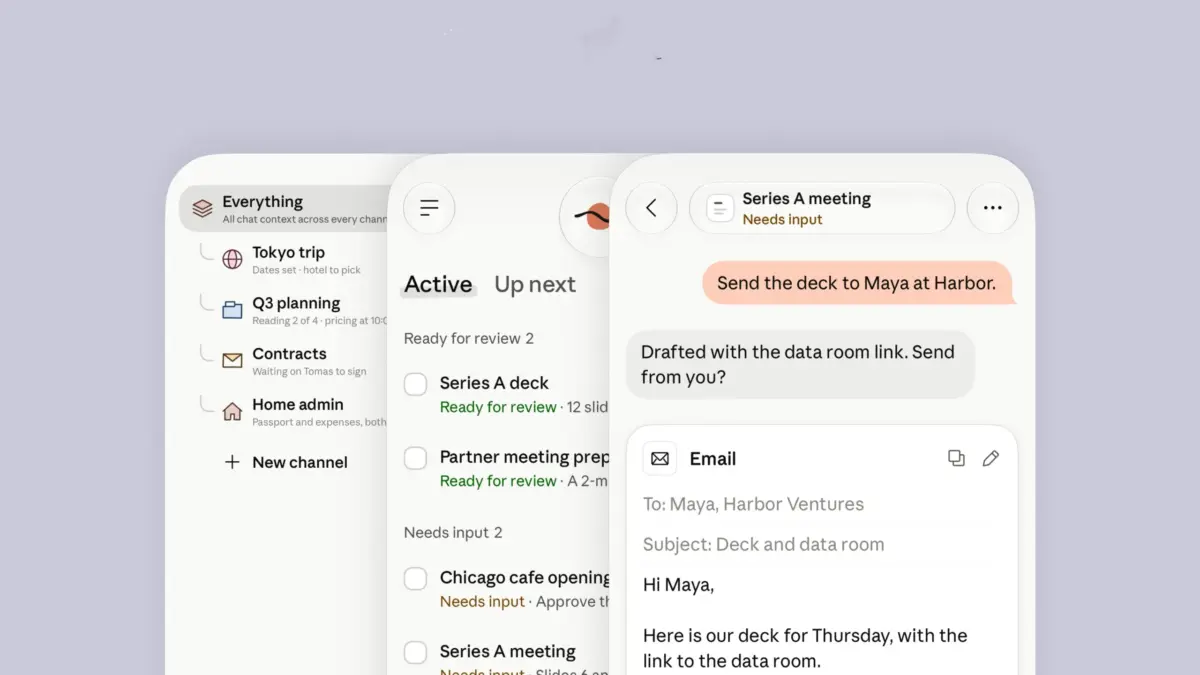
The versatility of 1Password for Agents is a key feature, designed to accommodate a broad spectrum of emerging AI assistants. Users will have the flexibility to integrate their agent of choice, whether it be Anthropic’s Claude Duet, OpenAI’s Dots or ChatGPT Work, Grok Bot, Meta’s Muse, or agents developed by innovative AI assistant startups such as Town. 1Password has also indicated that it is actively collaborating with other prominent technology companies to expand the service’s compatibility, anticipating a future where secure agent interaction becomes a ubiquitous norm across the digital ecosystem.
The Urgent Need for a Trust Layer: A Chronology of AI Agent Evolution and Rising Risks
The proliferation of AI agents capable of autonomous task execution has marked a significant shift in how users interact with the digital world. Initially, AI assistants primarily served as conversational interfaces or data retrieval tools. However, the rapid advancements in large language models and autonomous agent architectures have propelled these systems into roles requiring direct interaction with sensitive online services. Users, seeking unparalleled convenience and automation, have increasingly begun to grant these agents permissions to manage aspects of their digital lives, from scheduling appointments and managing emails to more sensitive financial transactions.
This evolution, while offering immense potential for productivity and accessibility, has simultaneously ignited a firestorm of security and privacy concerns. The traditional model of granting access to third-party applications often involved OAuth, where users authorize a service to access specific data without sharing their primary credentials. However, for many AI agent use cases, the immediate, direct access to login credentials has often been the easiest, if most perilous, path. As 1Password highlighted in a recent blog post announcing the new platform, "Handing over a password, secret, or credential is a common shortcut to an agent, but can leave people with sensitive information in places they can no longer control as a copy gets saved for the next time." This practice creates significant vulnerabilities, as a compromised agent or an agent with insufficient security protocols could expose a user’s entire digital footprint.
The timeline of these concerns can be traced back to the burgeoning interest in AI automation tools in the mid-2020s, with a noticeable acceleration in late 2025 and early 2026 as more sophisticated, autonomous agents became publicly available. Early warnings from cybersecurity experts focused on the potential for phishing attacks tailored to trick users into granting agent access, or the risks associated with agents storing credentials in insecure environments. The launch of 1Password for Agents in October 2026 is therefore not merely a product release but a timely response to a rapidly escalating cybersecurity challenge that has moved from theoretical discussions to tangible, real-world incidents.
Banking Sector on High Alert: The Unseen Threat of Agentic Activity
The urgency of 1Password’s solution is underscored by parallel developments in the financial sector. Indeed, the launch of 1Password for Agents coincides with an alarming report by Axios, which revealed that major U.S. banks have begun detecting a surge in "agentic activity" within customer accounts. This phenomenon has sent ripples of concern through the banking community, as financial institutions grapple with the profound implications of automated entities operating within their highly regulated and security-sensitive environments.
Bankers interviewed by Axios described the situation as "horrifying," highlighting the profound challenges posed by this new form of digital interaction. The core issue for these institutions is not necessarily a widespread incidence of "rogue agents" actively pilfering accounts. Rather, it is the inability to definitively discern whether observed agentic activity is genuinely tied to a user’s explicit request and authorization, or if it represents an unauthorized or malicious intrusion. This ambiguity creates a significant blind spot, making it exceedingly difficult for banks to differentiate between legitimate automated services acting on behalf of a customer (e.g., a personal finance manager pulling transaction data) and potentially fraudulent activity.
A spokesperson for Chase, one of the nation’s largest banks, further emphasized the institution’s stance, unequivocally stating to Axios that customers "should not give their usernames and passwords to anyone." This stark warning reflects the industry’s traditional and foundational security advice, which is now being challenged by the advent of AI agents that, by their very nature, often require some form of credentialed access to perform their functions effectively. The tension between user convenience and fundamental security principles has never been more pronounced.
The implications for banks are manifold and severe. Beyond the immediate risk of fraud and unauthorized transactions, there are significant compliance challenges. Financial regulations, such as Know Your Customer (KYC) and Anti-Money Laundering (AML) laws, are built on the premise of understanding who is performing a transaction. When an AI agent is the intermediary, the clear chain of accountability can become blurred. Furthermore, the inability to distinguish legitimate from illegitimate agent activity could lead to an increase in false positives for fraud detection systems, inconveniencing legitimate users, or, conversely, an increase in undetected actual fraud. This scenario could erode customer trust, trigger regulatory penalties, and expose institutions to significant financial losses.
Broader Impact and Implications: For Users, Businesses, and the AI Ecosystem
The introduction of 1Password for Agents represents a pivotal step in establishing a secure framework for the inevitable future of AI-assisted digital living. Its implications extend far beyond individual users and password managers, touching upon the very fabric of digital trust, industry standards, and regulatory landscapes.
For Users: The most immediate and tangible benefit for consumers is the ability to leverage the power of AI agents for enhanced convenience and automation without compromising their digital security. This "trust layer" provides a crucial psychological and practical assurance, allowing users to delegate tasks to their AI companions with confidence, knowing that their sensitive credentials remain protected within their trusted password manager. It mitigates the inherent risk of direct credential sharing, which has historically been a weak point in cybersecurity. This could accelerate the adoption of personal AI agents, making them a more integral and safer part of daily digital routines.
For Businesses and Service Providers: For the myriad online services, e-commerce platforms, and financial institutions that users interact with, 1Password for Agents offers a pathway to reducing fraud risk and maintaining customer trust. By enabling secure, agent-mediated interactions, these businesses can potentially welcome the benefits of AI automation—such as more efficient customer service, proactive user assistance, and streamlined transactions—without the associated security liabilities of direct credential exposure. It also paves the way for deeper, more secure integrations between AI services and existing digital platforms, fostering an ecosystem where automation is both powerful and safe. This could also alleviate some of the pressure on their fraud detection systems by clearly demarcating secure, authorized agent activity.
For the AI Industry: This development is a critical validation of the need for robust security infrastructure to support the growth of personal AI agents. By providing a standardized, secure method for credential access, 1Password is contributing to the maturation of the AI agent market. It offers a model that other security firms and AI developers can emulate or integrate with, potentially leading to the emergence of industry-wide "trust protocols" for AI. Such security advancements are essential for gaining widespread public acceptance and regulatory approval for advanced AI systems, moving them beyond niche applications into mainstream utility. It addresses one of the most significant barriers to AI agent adoption: trust and security.
Toward a New Standard of Digital Interaction
The current situation bears resemblance to the early days of web services, where applications often required users to share their main website credentials, leading to widespread security vulnerabilities. The subsequent development and widespread adoption of protocols like OAuth revolutionized online security, allowing users to grant granular permissions to third-party applications without ever exposing their primary login details. 1Password for Agents appears to be positioning itself as a similar foundational "trust layer" for the era of AI agents, providing an analogous secure delegation mechanism.
This innovation by 1Password is likely to be closely monitored by other players in the cybersecurity landscape, including competing password managers and identity management solutions. The competitive pressure to offer similar secure agent integration features will undoubtedly intensify, driving further innovation in this critical area. Moreover, regulatory bodies globally, increasingly focused on AI governance and data privacy, will likely view such solutions favorably as they seek to establish guidelines for the responsible deployment and interaction of AI agents.
As AI agents continue to evolve in sophistication and autonomy, their ability to perform complex tasks on behalf of users will only grow. Solutions like 1Password for Agents are not just about protecting passwords; they are about laying the groundwork for a future where intelligent automation can seamlessly enhance human capabilities without sacrificing the fundamental principles of security, privacy, and user control. The challenge now lies in widespread adoption and continued innovation to ensure that the rapid advancement of AI technology is matched by an equally robust evolution in digital security.