Sonny Valindra
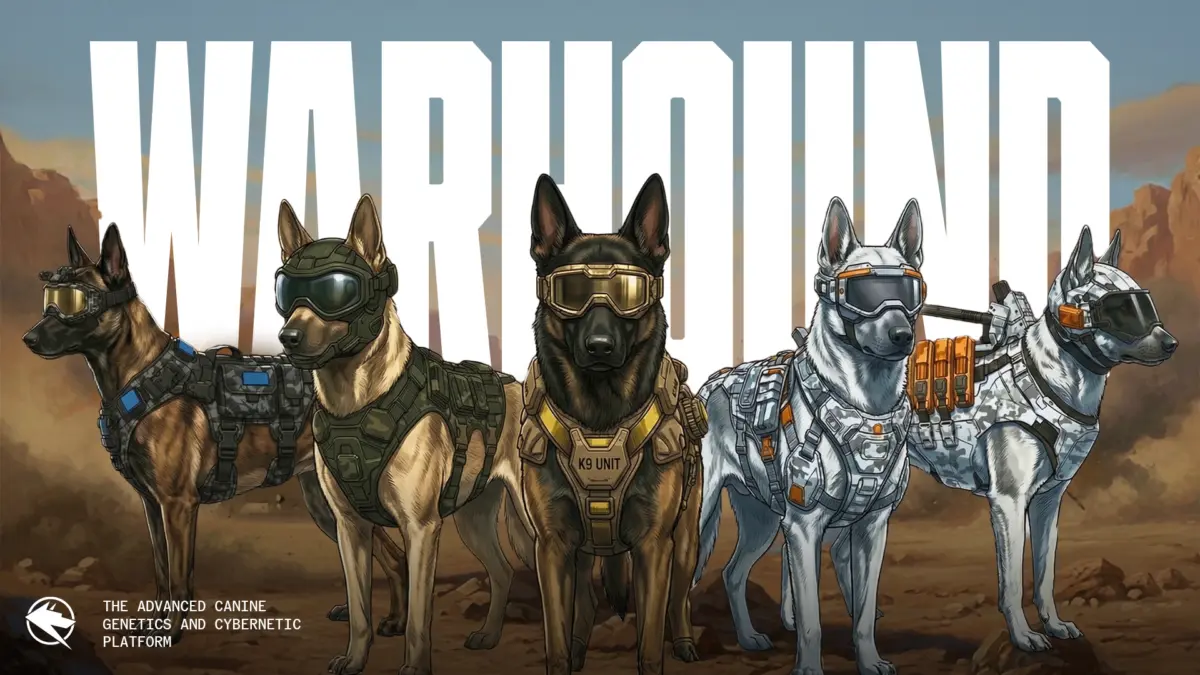
The world of advanced biotechnology and defense innovation has taken a significant leap forward with the unveiling of Warhound, a new company aiming to revolutionize the capabilities of working dogs for military, law enforcement, and emergency response teams. Founded on the ambitious vision of Colossal Biosciences CEO Ben Lamm and Anduril Industries founder Palmer Luckey, Warhound has secured a substantial $200 million in funding, valuing the stealth-stage company at an impressive $1.2 billion. This infusion of capital from prominent investors, including Sequoia, 8VC, and In-Q-Tel, a venture capital firm with ties to U.S. intelligence agencies, signals a strong belief in Warhound’s groundbreaking approach to canine enhancement.
Warhound’s core mission is to address critical limitations in the current supply and efficacy of working dogs. The company plans to leverage cutting-edge genetic engineering techniques to create dogs specifically designed for demanding operational environments. These bio-engineered canines are envisioned to perform tasks that are inherently dangerous for humans or beyond the current capabilities of robotic systems, such as advanced bomb detection, complex search and rescue operations, and other specialized tactical roles. The urgency for such advancements is underscored by a stark reality: over 80% of the U.S. military’s working dogs are currently sourced from Europe, with less than half meeting the stringent service requirements. This reliance on foreign supply chains, coupled with a dwindling availability of suitable candidates, presents a significant strategic vulnerability. Warhound aims to mitigate this by developing a domestic, technologically advanced solution.
The Genesis of a Genetically Enhanced Canine Force
The genesis of Warhound can be traced back to a conversation between Ben Lamm and Palmer Luckey approximately a year ago at a conference. Luckey, already a prominent figure in the defense technology sector through Anduril, expressed a desire for greater support and enhancement of military working dogs. This shared concern sparked a collaborative effort, with Lamm delving into the intricate world of canine breeding and performance. His research revealed persistent challenges in the conventional breeding of working dogs, including inherited predispositions to health issues such as poor eyesight, increased cancer risks, hip dysplasia, and muscle atrophy. These factors frequently lead to dogs failing to complete rigorous training programs, thus limiting the pool of effective operational canines.
Lamm’s vision extended beyond simply addressing existing issues; he aimed to proactively enhance canine attributes. "The idea is, if we make the dog safer, make it healthier, make it perform better, it’s going to perform better in the line of duty," Lamm stated in an interview. This ambitious goal involves not only improving inherent health and longevity but also augmenting specific performance traits. The company intends to engineer dogs with enhanced speed, agility, and, critically, more sophisticated olfactory sensors for tasks like bomb detection.
To achieve this, Warhound is employing advanced biotechnological processes. The company has collected cell lines from elite working dog breeds, specifically the Belgian Malinois and German Shepherd, known for their intelligence, drive, and physical capabilities. These living cells, grown in a laboratory, are stored in a biobank. The subsequent phase involves precise gene editing. Warhound’s scientific team will meticulously edit the dogs’ genetic makeup, incorporating beneficial genes that enhance desired performance characteristics and removing or modifying genes associated with vulnerabilities. This scientific undertaking aims to create "a new type of dog," engineered from its foundational biology for optimal operational effectiveness.
A Synergistic Partnership: Genetics and Technology
Warhound’s innovative approach is not solely reliant on genetic advancements. A crucial component of its strategy involves a deep integration with Anduril Industries, which will provide essential hardware and software solutions. This technological backbone is designed to augment the capabilities of the genetically enhanced dogs and their human handlers, enhancing situational awareness and operational coordination. Imagine, for example, the deployment of bulletproof vests equipped with advanced data sensors. These vests could transmit real-time information to handlers, providing critical insights into the dog’s environment, physiological state, and potential threats. This fusion of biological engineering and advanced technology represents a comprehensive approach to maximizing the potential of these specialized canine units.
Palmer Luckey, while a key partner in Warhound’s vision, holds no equity in the company. His involvement is characterized as a partnership, with Colossal Biosciences retaining equity and licensing its proprietary genetic engineering technology to Warhound. This structure highlights the distinct roles of each entity: Colossal providing the biological expertise and technology, and Anduril offering the complementary technological infrastructure.
Building on a Foundation of De-Extinction and AI
The genetic engineering prowess that Warhound brings to the table is rooted in Colossal Biosciences’ pioneering work in de-extinction and advanced bio-engineering. Colossal has garnered significant attention for its ambitious projects, including efforts to revive extinct species such as the dodo and the woolly mammoth. This extensive experience in manipulating and understanding complex animal genetics provides a robust foundation for Warhound’s mission. Furthermore, Colossal has been actively developing and integrating artificial intelligence (AI) platforms to accelerate its de-extinction efforts, utilizing AI for gene cloning, identification, and replication. This AI-driven approach to genetic science is likely to be a significant accelerant for Warhound’s development timeline.
Timeline and Deployment: From Lab to Field
The development timeline for Warhound’s genetically enhanced dogs is progressing rapidly. The company has indicated that the initial batch of dogs is currently undergoing cloning and incubation processes. Births are anticipated in early next year, with the potential for these highly specialized canines to begin service within two years. The cloning process will be facilitated by Viagen, a company wholly owned by Colossal Biosciences. Viagen’s established expertise in cloning, which has demonstrated high success rates and is currently employed in Colossal’s conservation programs for endangered species, provides a reliable pathway for Warhound’s production.
While Warhound has not yet finalized pricing structures, the company anticipates engaging with a range of high-priority clients. These include first responders, the Department of Defense, various military service branches, and police departments. The company has proactively engaged with numerous government entities, briefing them on its business model and technological capabilities, suggesting a strategic effort to streamline procurement processes and ensure regulatory alignment.
Addressing Ethical and Safety Considerations
The introduction of genetically engineered animals into sensitive operational roles naturally raises questions regarding safety and ethical oversight. Regarding civilian safety, Ben Lamm emphasized that Warhound’s dogs will undergo the same rigorous training protocols as traditional military working dogs and will be managed by their respective handlers and owning organizations. The focus remains on ensuring that these enhanced animals are deployed responsibly and under strict operational guidelines.
Warhound is also proactively engaging with established animal welfare organizations. The company is collaborating with the American Humane Society to develop and certify its training programs for these new breeds. Furthermore, Warhound aims to ensure that its genetically enhanced dogs, upon retirement from active service, will be eligible for programs like the American Humane Society’s Military Working Dog Reunification Program, which facilitates rehoming for retired military dogs, or other suitable welfare initiatives. This commitment to post-service care underscores a broader responsibility for the well-being of these specialized animals.
Strategic Implications and the Future of Working Animals
The emergence of Warhound represents a significant paradigm shift in how working animals are developed and deployed for critical missions. The company’s approach addresses a clear and present need within the defense and security sectors, offering a solution to supply chain vulnerabilities and performance limitations. By combining advanced genetic engineering with cutting-edge technology, Warhound is poised to create a new generation of canine operatives capable of performing at unprecedented levels.
The implications of this development are far-reaching. For military and law enforcement agencies, Warhound offers the potential for enhanced operational effectiveness, improved officer and soldier safety, and greater self-sufficiency in sourcing highly capable working animals. The ability to tailor genetic traits for specific mission requirements, from enhanced scent detection for explosives to improved endurance for long-duration patrols, opens up new strategic possibilities.
Furthermore, Warhound’s success could pave the way for similar advancements in other fields where specialized animal capabilities are crucial, such as search and rescue, disaster response, and even agricultural applications. The ethical considerations surrounding genetic modification of animals will undoubtedly remain a subject of ongoing discussion and scrutiny. However, Warhound’s stated commitment to rigorous training, welfare, and collaboration with established organizations suggests a thoughtful and responsible approach to this transformative technology.
As Warhound transitions from its stealth phase into public operation, its progress will be closely watched by the defense industry, the biotechnology sector, and animal welfare advocates alike. The company’s ability to deliver on its ambitious promises will shape the future of working animals and their critical roles in safeguarding communities and national security. The $200 million in funding and a $1.2 billion valuation are strong indicators of market confidence, but the ultimate measure of Warhound’s success will be the tangible impact of its genetically engineered canines in the field.