Sisilia Frederika
The traditional understanding of stellar evolution and the visual appearance of stars is undergoing a significant shift following a groundbreaking study led by researchers at the University of Warwick. For over a century, astronomers have categorized stars primarily as "perfect radiators" or blackbody objects, whose color is dictated almost exclusively by their surface temperature. However, new evidence published in the journal RAS Techniques and Instruments suggests that the dense atmospheres of white dwarfs can manipulate light in ways that produce unexpected colors, including pink, yellow, and green. This discovery challenges the long-held "blackbody" rule and provides a new lens through which scientists can examine the chemical composition and evolutionary history of stars throughout the Milky Way.
The Standard Model of Stellar Coloration
To understand the significance of this discovery, one must first consider the fundamental physics of stellar light. Stars are categorized into a variety of types, including supergiants, giants, main-sequence stars, red dwarfs, and the remnants known as white dwarfs and neutron stars. Traditionally, the color of these celestial bodies is a direct indicator of their surface temperature. This relationship is defined by Wien’s Displacement Law, which states that the wavelength of light emitted by an object is inversely proportional to its temperature.
In this standard model, cooler stars with surface temperatures around 3,000 to 4,000 Kelvin (K) appear red or orange. As a star’s temperature increases, its peak emission shifts toward shorter wavelengths. A star like our Sun, with a surface temperature of approximately 5,800 K, appears yellowish-white. At 6,000 K, a star is often described as a "pure" white blackbody because its radiation is spread evenly across the visible spectrum. Stars exceeding 10,000 K emit the majority of their light in the ultraviolet range, appearing pale blue to the human eye.
Because stars have been viewed as blackbodies—objects that absorb all incoming radiation and emit light based solely on thermal energy—astronomers believed the palette of the universe was limited to a specific gradient of red, orange, white, and blue. The University of Warwick study, however, demonstrates that the "atmosphere" of a star can act as a filter, fundamentally altering this spectrum.
Methodology: Sampling the Solar Neighborhood
The research team, led by Dr. Mark Hollands, a postdoctoral researcher at the University of Warwick, utilized advanced computer modeling to simulate the appearance of 151 white dwarfs located within 20 parsecs (approximately 65 light-years) of Earth. This specific distance was chosen because the "solar neighborhood" provides the most accurate data regarding the mass, temperature, and atmospheric composition of these stellar remnants.
White dwarfs were selected as the primary subjects of the study due to their unique physical properties. A white dwarf is the final evolutionary stage of stars like our Sun. After exhausting their nuclear fuel and shedding their outer layers, these stars collapse into an incredibly dense core, roughly the size of Earth but with the mass of a star. This extreme density results in high surface gravity, which in turn creates incredibly thin but dense atmospheres. It is within these high-pressure environments that chemical elements can exert a disproportionate influence on the star’s visual output.
The researchers sought to determine if the presence of "pollutants"—elements heavier than hydrogen and helium, such as carbon, calcium, sodium, and magnesium—could interfere with the blackbody radiation enough to shift the perceived color of the star.
Findings: The Emergence of Pink and Yellow Stars
The results of the simulation were striking. Of the 151 white dwarfs sampled, the researchers found that approximately 3.3 percent exhibited colors that deviated significantly from the standard blackbody spectrum. Specifically, five stars in the sample displayed unique hues: two appeared yellow, and three appeared pink.
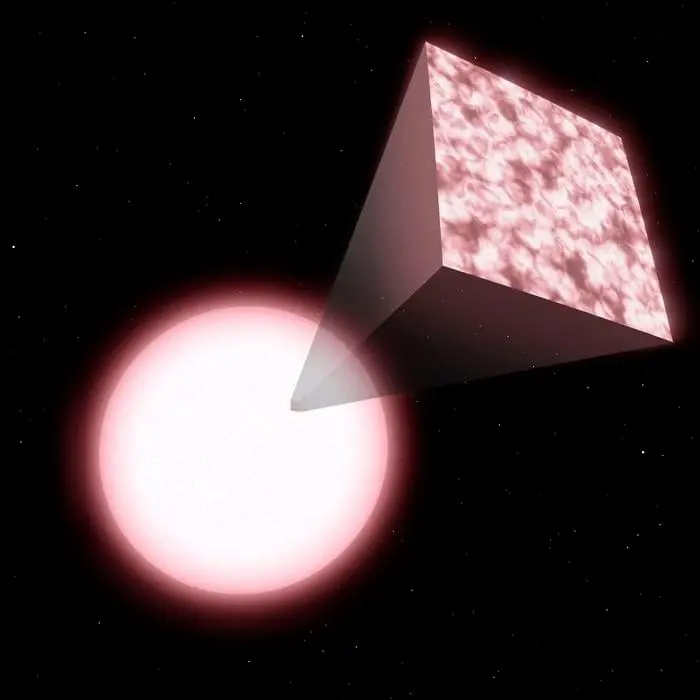
The emergence of a pink or purple hue is particularly notable. According to the study, this occurs in white dwarfs with atmospheres enriched with carbon. Carbon atoms absorb specific wavelengths of light, and when combined with the high-pressure environment of a white dwarf’s atmosphere, this absorption "carves out" portions of the spectrum. The remaining light that escapes the star and reaches an observer is shifted into the pink or magenta range.
Similarly, the yellow white dwarfs identified in the study do not owe their color to the same thermal processes as our Sun. While the Sun is yellow because of its specific 5,800 K temperature, these white dwarfs appear yellow due to atmospheric interference from elements like sodium or calcium, which can tint the light even if the star’s underlying temperature would suggest a different color.

Dr. Boris Gänsicke, a professor in the Department of Physics at the University of Warwick and co-author of the study, emphasized that while these "oddities" represent a minority, they are statistically significant. "One in thirty might not sound like a huge fraction, but across the entire population of white dwarfs in the universe, that is still a lot of oddly colored stars out there," Gänsicke noted. He clarified that while the "average" white dwarf remains white, the outliers provide critical data on atmospheric chemistry.
The Mystery of the Green White Dwarf
Perhaps the most exotic finding in the study involves the potential for green white dwarfs. In the traditional blackbody spectrum, green is an "impossible" color for a star. While many stars emit green light, they also emit so much red and blue light simultaneously that the human eye perceives the mixture as white.
However, the Warwick researchers found that white dwarfs "polluted" by the debris of their original planetary systems can appear green. When a white dwarf’s immense gravity shreds nearby asteroids or planets, the resulting metallic debris—including magnesium and calcium—is pulled into the stellar atmosphere. This process, often referred to as "stellar cannibalism," creates a unique spectral signature. The researchers found that certain concentrations of these elements can suppress the red and blue ends of the visible spectrum while allowing green wavelengths to dominate, resulting in a star that glows with an emerald or lime-colored tint.
Comparative Analysis: The Case of Brown Dwarfs
The study also drew parallels between white dwarfs and brown dwarfs, which are often called "failed stars." Brown dwarfs are substellar objects that lack the mass necessary to sustain hydrogen fusion in their cores. Because they are significantly cooler than main-sequence stars, they emit most of their radiation in the infrared spectrum.
Dr. Hollands pointed out that brown dwarfs are the only other class of celestial objects known to frequently "disobey" the blackbody rule. In these cooler objects, the presence of molecules like titanium oxide, along with potassium and sodium, can create a violet or even magenta appearance. By linking the behavior of white dwarfs to that of brown dwarfs, the research establishes a broader astrophysical principle: the denser and more chemically complex an atmosphere is, the less likely the object is to behave as a perfect blackbody.
Chronology and Evolution of Stellar Spectroscopy
The discovery is the latest milestone in a timeline of stellar classification that dates back to the 19th century:
- 1860s: Gustav Kirchhoff and Robert Bunsen establish that chemical elements produce unique spectral lines.
- 1910s: The Harvard College Observatory develops the OBAFGKM classification system, linking star color to temperature.
- 1940s-1950s: The "Blackbody Approximation" becomes the standard for calculating stellar luminosity and distance.
- 2000s: The Sloan Digital Sky Survey (SDSS) begins identifying "polluted" white dwarfs, suggesting their atmospheres are more complex than previously thought.
- 2024: The University of Warwick team publishes findings proving that these atmospheric pollutants can fundamentally change the visible color of a star to the human eye.
Implications for Galactic Archaeology and Exoplanetary Science
The implications of this research extend far beyond the aesthetic curiosity of "pink stars." Astronomers use the composition of white dwarfs to conduct "galactic archaeology." Because white dwarfs are the remnants of older stars, analyzing the elements in their atmospheres allows scientists to reconstruct the chemical history of the Milky Way.
Furthermore, the presence of "green" white dwarfs—those colored by planetary debris—offers a direct way to study the composition of exoplanets that have long since been destroyed. By observing the specific hue and spectral lines of a polluted white dwarf, researchers can determine if the planets that once orbited the star were rocky like Earth, iron-rich like Mercury, or water-heavy.
This study also serves as a cautionary tale for future deep-space surveys. As telescopes like the James Webb Space Telescope (JWST) and the upcoming Extremely Large Telescope (ELT) begin to categorize thousands of distant objects, astronomers must account for atmospheric interference. Relying solely on color to estimate a star’s temperature could lead to significant errors if the star’s atmosphere is "tinting" the results.
Conclusion: A More Colorful Cosmos
The revelation that white dwarfs can be pink, yellow, or green adds a new layer of complexity to our understanding of the universe. It suggests that the cosmos is far more vibrant than the stark red-to-blue gradient taught in introductory astronomy. As researchers continue to refine their computer models and gather more spectral data from local star systems, it is likely that even more "impossible" colors will be identified.
The work of Dr. Hollands and his team at the University of Warwick reminds the scientific community that even the most fundamental rules—such as the blackbody radiation of stars—are subject to the nuances of chemistry and environment. By looking past the "white" in white dwarfs, astronomers are uncovering the hidden stories of planetary destruction, atmospheric pressure, and the diverse chemical makeup of our galaxy. As the study concludes, the universe is not just a collection of radiators; it is a complex laboratory where the laws of physics and chemistry collaborate to produce a spectacular, multi-colored display.