Lina Irawan

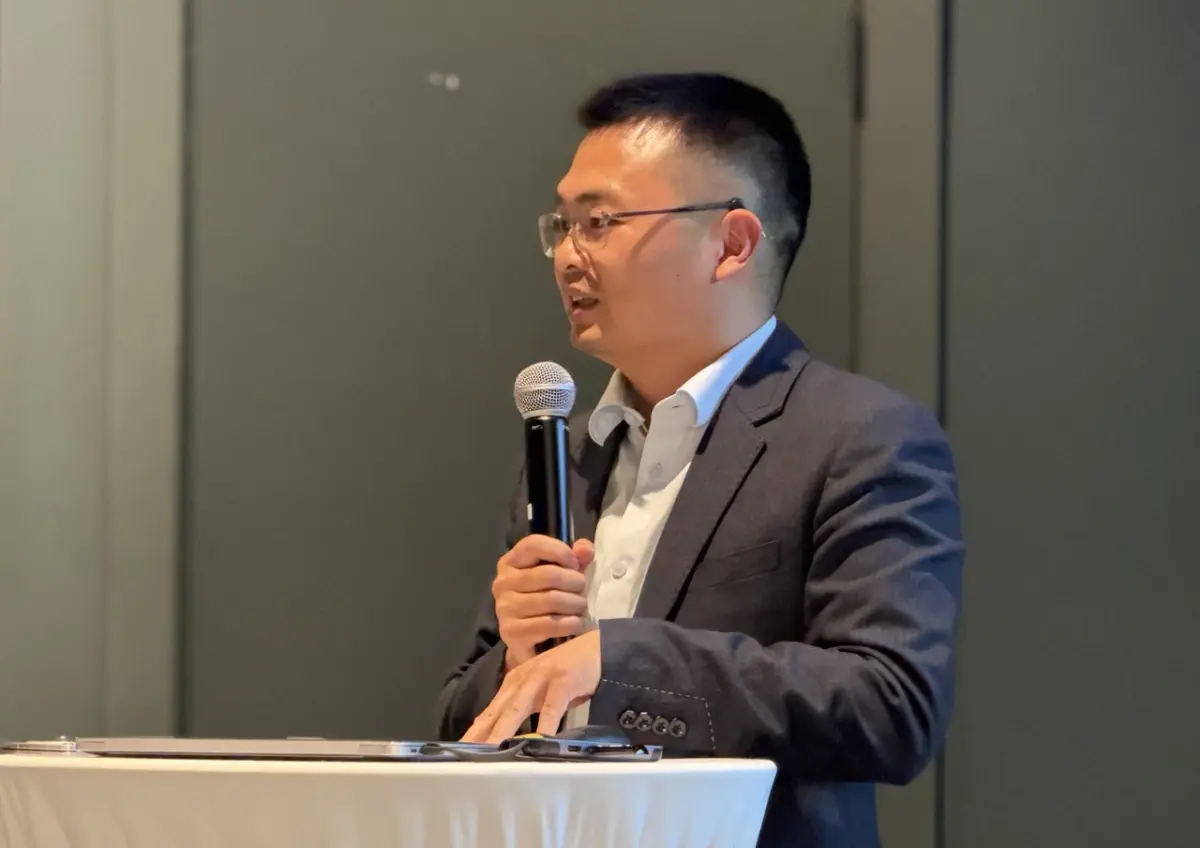
The landscape of modern software engineering leadership is currently navigating a period of profound transition, marked by a shift from the era of unbridled growth to one of disciplined efficiency and architectural rigor. At the LDX3 conference by LeadDev in New York, a premier gathering for engineering leaders and technical strategists, Nivia Henry, a prominent engineering executive with a tenure spanning leadership roles at both Netflix and Spotify, provided a detailed analysis of the prevailing industry trends. The discussion centered on three pivotal themes: the reality of the so-called "SaaS apocalypse," the shifting logic behind the "build-versus-buy" decision-making process in the age of artificial intelligence, and the indispensable role of architectural literacy in managing long-term infrastructure costs.
The Context of LDX3 and the Current Engineering Climate
The LDX3 conference serves as a critical forum for senior technical leaders to address the complexities of managing large-scale engineering organizations. In 2026, the primary focus has shifted away from the "growth at all costs" mentality that characterized the previous decade. Instead, the discourse now centers on operational excellence, fiscal responsibility, and the strategic integration of generative AI.
Nivia Henry’s background offers a unique vantage point for these discussions. With eight years at Spotify, a company that pioneered the "Spotify Model" of agile scaling, and two and a half years at Netflix, an organization renowned for its "freedom and responsibility" culture and its sophisticated cloud-native architecture, Henry has managed some of the world’s most complex data and engineering ecosystems. Her insights at LDX3 reflect a broader industry realization: that the technical debt and fragmented tooling of the past five years must now be rationalized to ensure long-term viability.
The Reality of the SaaS Apocalypse
The term "SaaS apocalypse" has gained traction as organizations grapple with "subscription sprawl"—the phenomenon where companies find themselves paying for hundreds of disparate software-as-a-service (SaaS) tools, many of which offer redundant features or remain underutilized. According to industry data from 2024 and 2025, the average enterprise utilized over 300 SaaS applications, leading to significant security vulnerabilities, data silos, and ballooning operational expenditures.
Henry’s analysis suggests that the "apocalypse" is less a total collapse of the SaaS market and more a fundamental market correction. Companies are moving toward "platform consolidation," favoring integrated suites over "best-of-breed" point solutions that require expensive custom integrations. This shift is driven by a need for better data governance and a reduction in the "integration tax"—the engineering hours spent ensuring that various SaaS tools can communicate with one another.
For engineering leaders, this means a more rigorous auditing process. The decision to renew a contract is no longer just about the tool’s utility but about its interoperability and its impact on the total cost of ownership (TCO). The industry is seeing a resurgence in internal developer platforms (IDPs) that centralize tooling, effectively creating a "private SaaS" environment within large organizations.
The Build-Versus-Buy Calculus in the AI Era
For decades, the "build-versus-buy" dilemma was a standard exercise in engineering management: buy for commodity features (like email or payroll) and build for competitive advantages (like core product features). However, the rapid advancement of Artificial Intelligence (AI) and Large Language Models (LLMs) has fundamentally altered this calculus.
In the contemporary environment, "buying" often involves subscribing to AI APIs from major providers like OpenAI, Anthropic, or Google. While this allows for rapid prototyping and deployment, it introduces concerns regarding data privacy, vendor lock-in, and unpredictable API costs. Conversely, "building" in 2026 often involves fine-tuning open-source models (such as Meta’s Llama series) or implementing Retrieval-Augmented Generation (RAG) architectures on internal infrastructure.
Henry emphasized that the decision now requires a deeper understanding of the "AI stack." Engineering leaders must evaluate whether their AI needs are a "wrapper" around existing logic or a core component of their value proposition. If the AI functionality provides a unique competitive edge, the argument for "building" or hosting internal models becomes significantly stronger. This approach allows for better control over latency, data security, and the ability to iterate without being beholden to a third-party provider’s update cycle.
Architectural Literacy and Infrastructure Cost Management
One of the most critical points raised during the LDX3 session was the link between system architecture and financial health. In the early days of cloud migration, the ease of spinning up instances led to a "set it and forget it" mentality. In the current economic climate, this lack of oversight has resulted in unsustainable cloud bills.
Henry’s experience at Netflix—a pioneer in cloud-native architecture—highlights the importance of "FinOps" (Financial Operations), where engineering and finance teams collaborate to optimize cloud spend. She argued that managing infrastructure costs is not merely a task for a finance department but a core competency for senior engineers.
To effectively manage costs, engineers must possess "architectural literacy"—the ability to understand how a change in a microservice’s design or a database’s indexing strategy cascades into the monthly AWS or GCP bill. For instance, the move from a centralized monolithic database to a distributed microservices architecture can increase network egress costs significantly. Without a deep understanding of these architectural trade-offs, organizations risk "scaling into bankruptcy."
Chronology of the Shift: 2020 to 2026
The transition to the current state of engineering leadership can be mapped through a specific timeline of industry shifts:
- 2020–2021: The Digital Surge. Following the global pandemic, companies accelerated digital transformation. SaaS adoption peaked as teams moved to remote work, and "growth at all costs" was fueled by low-interest rates.
- 2022–2023: The Efficiency Era. Rising interest rates and a cooling VC market forced tech companies to conduct layoffs and prioritize "profitability over growth." The first signs of SaaS consolidation appeared.
- 2024: The Generative AI Explosion. Organizations rushed to integrate AI, often leading to a new wave of experimental "AI SaaS" spend and unoptimized cloud usage.
- 2025: The Rationalization Phase. Companies began to realize the high cost of running AI at scale. The focus shifted to RAG, fine-tuning, and optimizing the "token cost" of applications.
- 2026: The Architectural Renaissance. Current trends, as discussed at LDX3, show a return to fundamental engineering principles. Leaders like Henry are advocating for leaner stacks, consolidated platforms, and a deep integration of cost-consciousness into the development lifecycle.
Supporting Data: The Economics of the Modern Tech Stack
Recent market analysis supports the observations made at LDX3. A 2025 report on cloud expenditures indicated that nearly 35% of cloud spending in large enterprises was wasted due to over-provisioning and idle resources. Furthermore, the "SaaS churn rate" for B2B companies reached an all-time high of 14% in early 2026, as CTOs aggressively cut redundant subscriptions.
In the AI sector, the cost of inference (running a model) has become a primary concern. While the cost per 1,000 tokens has decreased for public APIs, the sheer volume of usage has led many firms to see AI-related costs grow by 40-60% year-over-year. This data underscores Henry’s point regarding the complex calculus of build-versus-buy; for high-volume applications, the initial investment in building a custom, optimized model can pay for itself in less than 12 months compared to API costs.
Official Responses and Industry Sentiment
The sentiments shared by Nivia Henry resonate across the broader engineering community. Many CTOs have expressed similar concerns regarding the "fragmentation of the developer experience." In various post-conference statements, participants at LDX3 noted that the "developer productivity" metrics of the past—such as lines of code or deployment frequency—are being replaced by "value-per-engineer" and "infrastructure efficiency" metrics.
Industry analysts suggest that the "SaaS apocalypse" is actually a maturation of the industry. The "wild west" of decentralized software purchasing is being replaced by a more centralized, strategic approach to procurement, overseen by engineering leadership rather than individual department heads.
Broader Impact and Implications for the Future
The shift toward architectural literacy and consolidated SaaS stacks has profound implications for the global tech economy. For startups, the "barrier to entry" is changing; it is no longer enough to build a "wrapper" around an existing API. To survive in the 2026 market, new companies must demonstrate a unique architectural advantage or a significantly more efficient cost structure than incumbents.
For the engineering talent market, there is a growing demand for "T-shaped" leaders—those who possess deep technical expertise in system design but also understand the business and financial implications of their technical choices. The era of the "purely technical" architect is ending; the new standard is the "socio-technical" leader who can navigate both the codebase and the balance sheet.
As organizations continue to integrate AI, the lessons shared by Henry at LDX3 will likely become the blueprint for sustainable scaling. By prioritizing architectural clarity, rationalizing SaaS investments, and making data-driven build-versus-buy decisions, engineering leaders can navigate the complexities of the modern tech landscape without falling victim to the "apocalypse" of inefficiency. The focus remains clear: building resilient, cost-effective systems that provide genuine value in an increasingly automated world.