Vera Intan Clara
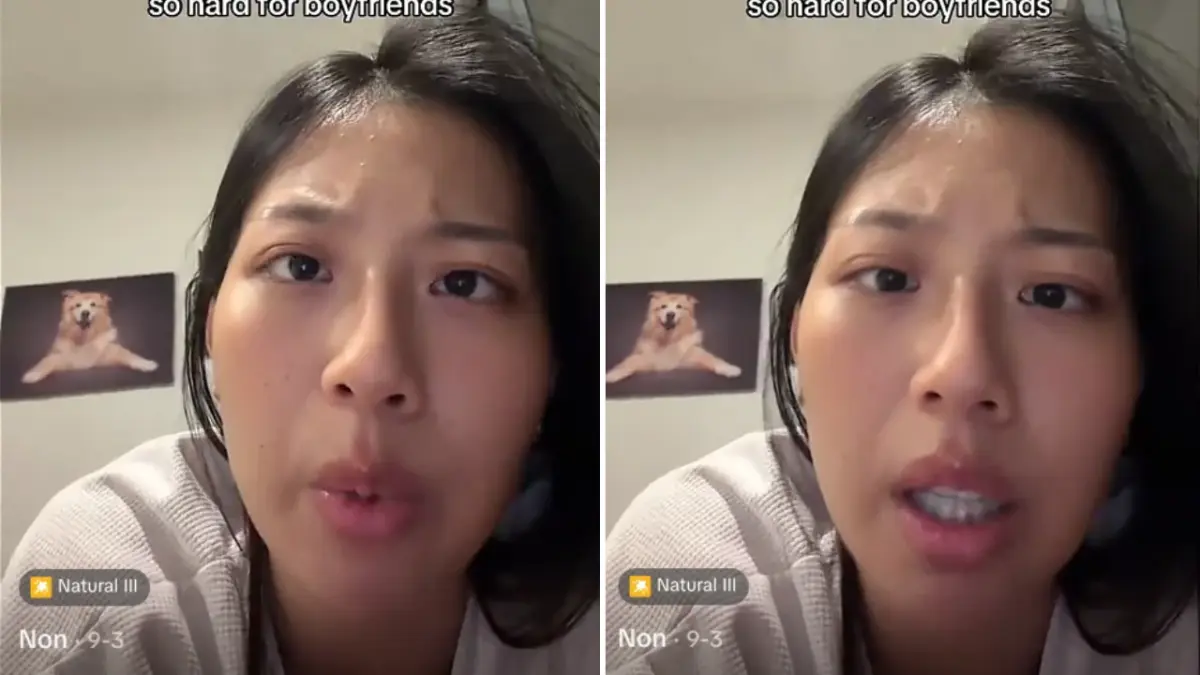
A recent video posted by TikTok content creator @justnon_sense, known to her audience as Non, has rapidly amassed significant online attention, reigniting discussions about communication, power dynamics, and gender roles within romantic relationships. The short-form video, which had garnered 1.1 million views and 435 comments as of publication, humorously but provocatively asserted that men must accept the premise that women are perpetually correct in relationships, irrespective of the actual facts of any disagreement. This assertion positioned women as the unequivocal victors in all relationship arguments, a concept that resonated widely across the platform, eliciting both amusement and critical commentary.
The Viral Phenomenon and Its Core Argument
The video, characterized by its creator as a lighthearted warning to boyfriends, posits an almost immutable law of relationships: in any dispute, from minor disagreements to significant arguments, the female partner invariably holds the ultimate right. Non articulated this perspective by stating, "I don’t understand why it’s so hard for boyfriends to realize that when your girlfriend is right, she’s right. And when she’s wrong, she’s still right. You’re wrong." This succinct and exaggerated declaration served as the video’s central thesis, immediately sparking a torrent of reactions from viewers who recognized the humor, while others questioned the underlying implications of such a dynamic.
One commenter humorously encapsulated the video’s premise, stating, "So we’ve eliminated the possibility of boyfriends being right before the argument even starts? Haha! This is a very efficient judicial system. . ." This remark highlights the satirical and often self-deprecating humor inherent in many online discussions surrounding gendered relationship tropes. The video’s format, typical of TikTok’s short, engaging, and often conversational style, allowed for rapid dissemination and diverse interpretations, positioning it as a significant cultural touchstone for contemporary relationship discourse.
Contextualizing the ‘Always Right’ Trope in Modern Relationships
The concept of one partner consistently being "right," particularly in a gendered context, is not new. It echoes a long-standing adage often expressed as "happy wife, happy life," a phrase implying that marital harmony is best achieved when the husband defers to his wife’s wishes or opinions. While often presented in jest or as pragmatic advice, these tropes reflect deeper societal assumptions about power, compromise, and emotional labor within partnerships.
In contemporary society, where social media platforms like TikTok have become informal public forums for discussing personal experiences, relationship advice, and social norms, such content finds fertile ground. TikTok’s algorithm often amplifies content that generates high engagement, meaning videos that are either highly relatable, highly controversial, or highly entertaining tend to go viral. Non’s video successfully tapped into all three categories, offering a humorous take on a relatable, albeit potentially problematic, aspect of relationship dynamics. The platform’s capacity for rapid feedback through comments and shares further fuels these discussions, transforming personal anecdotes into collective debates.
A Spectrum of Viewer Reactions: From Humor to Critique
The comments section of @justnon_sense’s video provided a rich tapestry of reactions, reflecting the multifaceted perspectives on the "always right" claim. A significant portion of viewers understood the video’s intent as humorous and aligned it with the "happy wife, happy life" philosophy, viewing it as a lighthearted, albeit exaggerated, strategy for maintaining peace in a relationship. These commenters often shared their own experiences or observations, affirming the pragmatic, if not always equitable, application of this unwritten rule.
However, not all reactions were celebratory. One commenter explicitly stated, "I know this is a joke but I’ve always hated this and the ‘happy wife, happy life’ stuff." This sentiment highlights a critical perspective that views such tropes as potentially undermining genuine partnership and mutual respect. Critics argue that while humor can be a valuable coping mechanism, it can also normalize behaviors that perpetuate unhealthy power imbalances or discourage authentic communication and accountability. The concept of one partner always being right, even humorously, can stifle true dialogue and prevent both individuals from growing and learning through conflict.
Another commenter offered a vivid personal anecdote that, while supporting the idea of a woman being demonstrably correct, also underscored the emotional cost of delayed acknowledgment. She recounted, "My former bf got scammed and I clocked that sh** ACROSS the ocean. Told him, we argued about it for THREE weeks, and then the fourth week he goes, ‘you were right babe.’ OF COURSE I WAS RIGHT!" This story, while validating the woman’s superior judgment in that specific instance, also implicitly illustrates the friction and frustration that can arise when one partner resists acknowledging the other’s perspective, even when evidence mounts. The eventual concession, while satisfying for the commenter, came only after a protracted period of disagreement.
Perhaps one of the most pointed critiques came from a commenter who simply wrote, "Anything but accountability." This concise statement cuts to the core of the potential ethical concerns raised by the "always right" trope. It suggests that such a dynamic can be a means to avoid personal responsibility, deflect criticism, and bypass the often-difficult but necessary process of self-reflection and apology in a relationship. In healthy relationships, accountability is crucial for building trust and resolving conflicts constructively.
Psychological and Sociological Implications of Relationship Tropes
From a psychological standpoint, effective conflict resolution in relationships typically relies on principles of empathy, active listening, and mutual respect. Dr. Emily R. Smith, a marital and family therapist (illustrative expert), emphasizes that "healthy partnerships thrive on both individuals feeling heard, valued, and capable of contributing to solutions. A dynamic where one person is perpetually ‘right,’ even in jest, can subtly erode trust and create resentment over time, hindering genuine emotional intimacy and problem-solving skills." Relationships built on the premise of one partner’s infallibility can lead to suppressed feelings, passive aggression, and a lack of authentic engagement, potentially causing long-term damage to the bond.
Sociologically, the persistence of tropes like "happy wife, happy life" and the "always right" woman reflects ingrained gender roles and expectations. Historically, women have often been assigned roles as emotional caretakers and navigators of social dynamics, sometimes leading to the perception that they possess a superior understanding of interpersonal matters. Conversely, men have often been socialized to be more pragmatic or less emotionally expressive, which can be misconstrued as being less attuned to relationship nuances. Dr. Alex Chen, a scholar of gender studies (illustrative expert), suggests that "while these TikTok videos are often intended as humor, they tap into and perpetuate deeply ingrained societal expectations about male and female roles within partnerships. Such content, even when satirical, can reinforce gender stereotypes that may impede progress towards more egalitarian and mutually respectful relationships."
The digital age, while offering new avenues for expression, also presents challenges in how relationship norms are discussed and potentially reinforced. The rapid sharing of content can create echo chambers where certain viewpoints are amplified, sometimes without sufficient critical examination. While humor can be a powerful tool for coping with the complexities of human relationships and for initiating conversations about sensitive topics, the line between harmless jest and the normalization of unhealthy dynamics can sometimes blur.
The Broader Impact: Navigating Humor and Reality
The viral success of @justnon_sense’s video underscores the ongoing societal fascination with, and debate over, modern relationship dynamics. It highlights how platforms like TikTok serve as informal barometers of cultural sentiment, reflecting both traditional views and evolving expectations. While the video was clearly presented with humor, the strong reactions, both positive and negative, indicate that the underlying themes touch upon genuine concerns about communication, equality, and emotional labor within partnerships.
The discussion generated by Non’s video prompts a broader reflection on the role of humor in addressing sensitive topics. When does humor serve as a healthy coping mechanism or a way to bond over shared experiences, and when does it risk perpetuating stereotypes or normalizing potentially unhealthy behaviors? For many, the video was simply a relatable joke, a nod to the playful power struggles inherent in many long-term relationships. For others, it represented a concerning simplification of complex relational dynamics, one that could inadvertently undermine the principles of mutual respect and accountability that are foundational to thriving partnerships.
Ultimately, the debate ignited by @justnon_sense’s TikTok video serves as a poignant reminder of the diverse and often contradictory ways individuals navigate the complexities of love, conflict, and compromise in their relationships. It underscores the ongoing societal dialogue about what constitutes a healthy and equitable partnership in an increasingly interconnected and opinionated world. While the Daily Dot was unable to independently verify the personal opinions shared by TikTok creator @justnon_sense, which are based on her perspective in the video, the public discourse her content has generated is undeniably real and continues to unfold across digital platforms.