Sisilia Frederika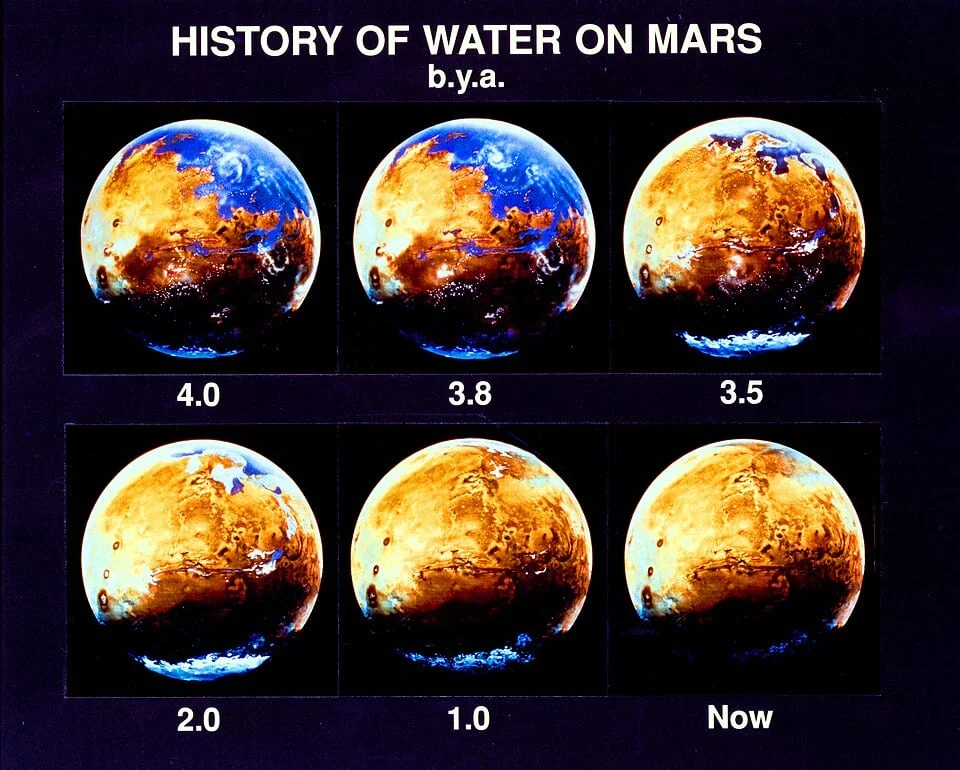
The pursuit of understanding the hydrological history of Mars has taken a significant leap forward, not through a new interplanetary mission, but through the meticulous re-examination of data collected more than twenty years ago. Recent findings led by Professor Paolo de Souza of Edith Cowan University in Australia have unveiled compelling evidence of liquid water’s historical presence within the Gusev Crater, a region once explored by NASA’s Spirit rover. By employing modern analytical techniques to aggregate years of mineralogical measurements, researchers have identified crystalline hematite and altered magnetite in Martian soil—minerals that serve as definitive fingerprints of past aqueous activity. This discovery suggests that the Red Planet was not only wetter than previously suspected but that the evidence for this environment was hidden in plain sight within the archives of the Jet Propulsion Laboratory (JPL) for two decades.
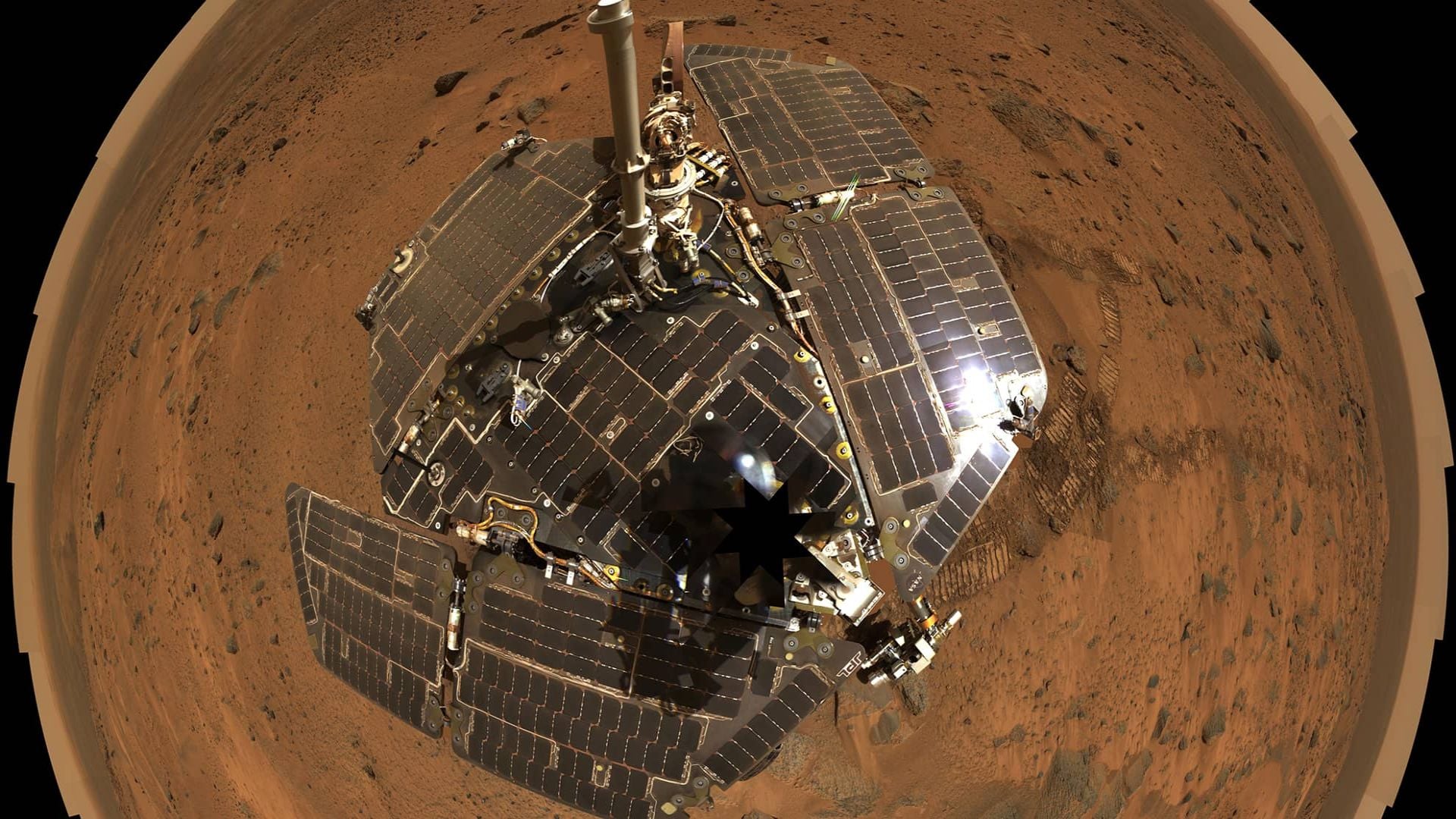
The data in question was generated by the Spirit rover, one half of NASA’s ambitious Mars Exploration Rover (MER) mission. Spirit landed in the Gusev Crater in January 2004, followed shortly by its twin, Opportunity, which touched down at Meridiani Planum. While Opportunity famously discovered "blueberries"—small, hematite-rich concretions that provided immediate proof of a watery past—Spirit’s findings at Gusev were initially more ambiguous. The crater, chosen for its appearance as an ancient lakebed, appeared to be dominated by volcanic basalt, leading many to believe that any evidence of water had been buried or erased by subsequent volcanic activity. However, the new analysis of the rover’s Mössbauer Spectrometer data reveals that the signs of water were present in the very dust and soil the rover traversed every day.
The Role of the Mössbauer Spectrometer in Martian Exploration
To understand the significance of this discovery, one must look at the specific technology that made it possible. The Spirit rover was equipped with a Mössbauer Spectrometer, a specialized instrument designed to identify the mineralogy of iron-bearing rocks and soils with high precision. Iron is a ubiquitous element on the Martian surface, giving the planet its characteristic reddish hue. The Mössbauer effect allows scientists to determine the oxidation state and magnetic properties of iron atoms within a crystal lattice, effectively allowing them to distinguish between different iron-bearing minerals such as magnetite, hematite, and goethite.
During its mission, Spirit performed hundreds of individual mineralogical analyses. At the time, individual readings from specific soil sites often failed to provide a statistically significant signal for water-altered minerals. The concentrations were simply too low, and the "noise" of the surrounding volcanic material too high, to allow for a definitive conclusion on a sample-by-sample basis. Professor de Souza, who was a member of the original MER science team, realized that while individual snapshots were blurry, a composite image might reveal the truth. By consolidating the data from 32 separate undisturbed soil sites within Gusev Crater, he was able to create the most detailed iron-mineral profile of Martian soil produced to date.
The Discovery of Hematite and Altered Magnetite
The crux of the new findings lies in the detection of crystalline hematite. Hematite is an iron oxide ($Fe_2O_3$) that, on Earth, typically forms in the presence of liquid water, often through the oxidation of other iron-bearing minerals. While it can also be produced through volcanic processes, the specific crystalline structure and its association with altered magnetite in the Gusev samples point strongly toward an aqueous origin.
Magnetite ($Fe_3O_4$), another iron oxide, is common in igneous rocks. When magnetite is exposed to water and oxygen over long periods, it undergoes chemical weathering, transforming into hematite. The presence of these "altered" minerals in the top layers of the Martian soil indicates that the surface materials were subjected to a prolonged period of chemical interaction with liquid water.
"One of the most important discoveries was finding crystalline hematite in ordinary Martian soil," Professor de Souza stated. "This mineral’s widespread presence suggests not only that water was present, but that significant areas of Mars may have once been covered by water." The fact that these minerals were found in "ordinary" soil—rather than just in rare, localized rock formations—suggests that the influence of water was a global or at least a regional phenomenon, rather than a series of isolated events.
A Chronology of Discovery and Data Re-evaluation
The timeline of this discovery highlights the evolving nature of planetary science. The Spirit rover’s primary mission was intended to last only 90 Martian days (sols), but the rover continued to operate for over six years, finally ceasing communications in 2010. During that time, it traveled over 7.7 kilometers and climbed the Columbia Hills, sending back thousands of data points.
- 2003: Spirit and Opportunity launch from Cape Canaveral.
- 2004: Spirit lands in Gusev Crater. Initial findings show basaltic soil, leading to the "Basalt Plains" hypothesis.
- 2004–2010: Spirit continues to analyze soil and rocks, detecting hints of silica and carbonates, but the broader soil composition remains poorly understood in the context of water.
- 2010: Spirit’s mission officially ends after it becomes stuck in soft sand and loses power during the Martian winter.
- 2020–2024: Professor de Souza begins a comprehensive re-analysis of the archived Mössbauer data, utilizing modern computational power to aggregate and "clean" the signal from the rover’s decade-old sensors.
This re-evaluation was a painstaking process. De Souza had to account for a multitude of variables that affected the original measurements, including the fluctuating temperatures of the Martian environment, the physical weathering of the soil by wind, and the chemical interference caused by global dust storms. By normalizing these factors, the subtle signature of hematite finally emerged from the background noise.
Implications for the Martian Paleoclimate
The presence of water-related minerals in the global dust layer has profound implications for our understanding of the Martian paleoclimate. The dust studied by Spirit in Gusev Crater is not localized; it is part of a global system moved by massive storms that can envelop the entire planet. If the dust across the planet contains traces of water-altered minerals, it suggests that the ancient Martian surface underwent significant weathering during a period when the atmosphere was thicker and the climate was warmer.
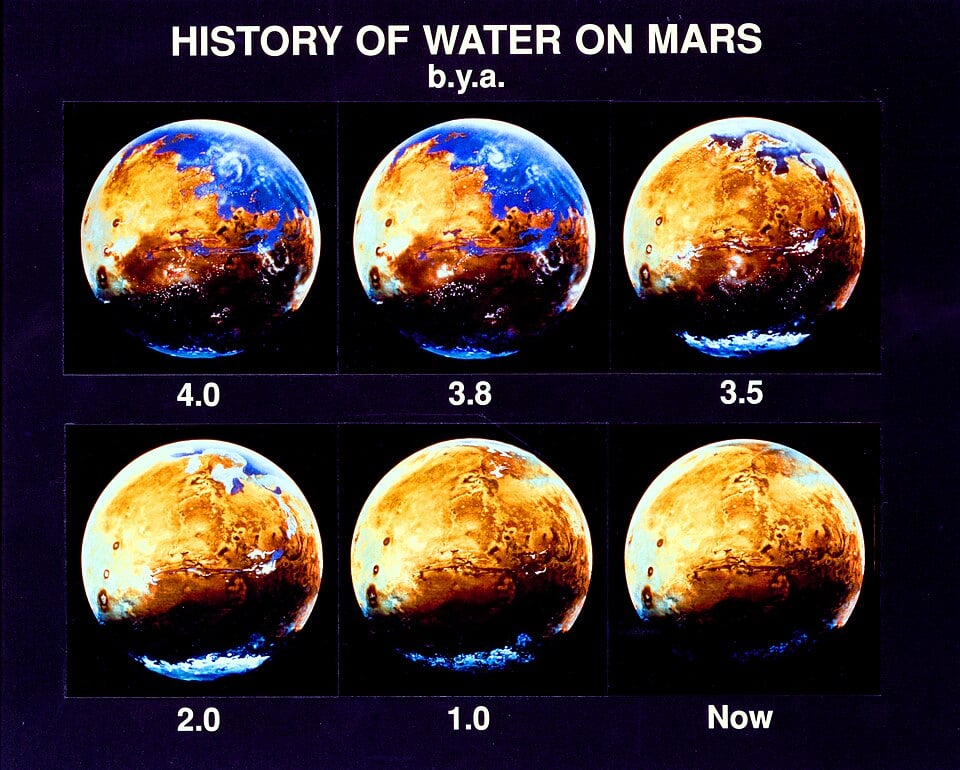
Planetary scientists generally divide Martian history into three main eras: the Noachian, the Hesperian, and the Amazonian. The Noachian period (4.1 to 3.7 billion years ago) is thought to have been the wettest. The findings by de Souza suggest that the transition from a wet Mars to the frozen desert we see today was complex. The existence of these minerals in the soil implies that liquid water was stable on the surface for enough time to fundamentally alter the mineralogy of the crust. This supports the "warm and wet" hypothesis, which posits that Mars once had a robust greenhouse effect capable of sustaining lakes or even oceans.
Future Research and Mission Requirements
The success of de Souza’s analysis has set the stage for a similar deep dive into the data provided by the Opportunity rover. While Opportunity’s mission was largely defined by its discovery of water-formed minerals, a consolidated analysis of its soil measurements could provide a "big picture" comparison between the two landing sites. By comparing the mineral profiles of Meridiani Planum and Gusev Crater, scientists can determine if the water chemistry was uniform across the planet or if different regions experienced different types of aqueous environments (such as acidic vs. neutral pH).
Furthermore, this discovery emphasizes the critical need for advanced mineralogical instruments on future missions. While current rovers like Curiosity and Perseverance carry sophisticated laboratories (such as the Sample Analysis at Mars or SAM instrument), the Mössbauer Spectrometer provided a unique type of iron-specific data that is not currently being collected in the same way. De Souza’s work suggests that future missions, including potential human-led expeditions, should prioritize long-term, high-sensitivity spectroscopic studies of the soil.
The discovery also reinforces the value of "Open Science" and the preservation of mission data. NASA’s Planetary Data System (PDS) allows researchers worldwide to access raw data from missions that ended years or even decades ago. As analytical techniques improve and our understanding of planetary geology matures, these archives become a gold mine for new discoveries.
In the broader context of astrobiology, every piece of evidence for liquid water is a piece of evidence for the potential of past life. While the Spirit rover did not find fossils or organic molecules, it has now, posthumously, confirmed that the environment it explored was chemically primed for the existence of water. The Martian soil, once thought to be a dry and sterile volcanic byproduct, is now revealed to be a complex record of a world that once mirrored our own. As researchers continue to sift through the digital ghosts of past missions, the portrait of ancient Mars becomes increasingly vivid—a planet defined not by its current desolation, but by its lost oceans and a history written in the rust of its own soil.