Sisilia Frederika
The traditional portrait of the cosmos is one painted in a specific, predictable palette of stellar hues, where the color of a star serves as a direct proxy for its surface temperature. From the searing blue of massive O-type stars to the cool, deep crimson of M-type red dwarfs, the relationship between heat and light has been a cornerstone of astrophysics for over a century. However, a groundbreaking study led by researchers at the University of Warwick has challenged this fundamental assumption, revealing that the final evolutionary stage of Sun-like stars—the white dwarf—can exhibit a surprising range of colors, including pink, yellow, and green. This discovery, recently published in the journal RAS Techniques and Instruments, suggests that the chemical composition of a star’s atmosphere can override the temperature-based rules of blackbody radiation, effectively "tinting" the star in ways previously thought impossible for "perfect radiators."
The Blackbody Paradigm and the Standard Stellar Palette
To understand the significance of the Warwick study, one must first consider the long-standing "blackbody" model of stellar physics. In thermodynamics, a blackbody is an idealized physical body that absorbs all incident electromagnetic radiation, regardless of frequency or angle of incidence. When such an object is heated, it emits thermal radiation in a continuous spectrum that depends solely on its temperature. Stars have long been considered the closest natural approximation to perfect blackbodies.
According to Wien’s Displacement Law, as the temperature of a star increases, the peak wavelength of its emitted light shifts toward the blue (shorter wavelength) end of the spectrum. Conversely, cooler stars emit more light at longer wavelengths, appearing red or orange. A blacksmith’s iron provides a terrestrial analogy: as the metal is heated, it glows dull red, then bright orange, and eventually a brilliant, blinding white. In the vacuum of space, this progression follows a strict sequence: red (approx. 3,000 K), orange (4,000 K), yellow (5,000–6,000 K), white (7,500–10,000 K), and blue (above 10,000 K).
Dr. Mark Hollands, a postdoctoral researcher at the University of Warwick and the study’s lead author, notes that for a true blackbody, the range of possible colors is strictly limited. By the time a star reaches 6,000 K—similar to our Sun—the radiation is spread so evenly across the visible spectrum that the human eye perceives it as white. As temperatures climb further, the peak of emission moves into the ultraviolet, leaving a pale blue glow in the visible range. Under this paradigm, colors like pink, green, or pure yellow in very old, cooling stars were considered non-existent.
Methodology: Modeling the Local Galactic Neighborhood
The research team, which included Dr. Boris Gänsicke, a professor in the Department of Physics at the University of Warwick, sought to determine if the extreme conditions found in white dwarf atmospheres could disrupt this blackbody predictability. Unlike main-sequence stars, which are fueled by nuclear fusion, white dwarfs are the dense, cooling embers of stars that have exhausted their fuel. They are roughly the size of Earth but contain the mass of the Sun, resulting in gravitational fields hundreds of thousands of times stronger than our planet’s.
This intense gravity creates a highly stratified and dense atmosphere. The researchers utilized a sophisticated suite of computer models to simulate the light profiles of 151 white dwarfs located within 20 parsecs (approximately 65 light-years) of Earth. This sample represents a significant cross-section of the solar neighborhood, providing a statistically relevant look at the "average" white dwarf population. The goal was to see how the presence of heavy elements—often referred to as "metals" in astronomy—might filter or alter the light escaping from the star’s surface.
Chemical Tinting: The Discovery of Pink and Yellow Stars
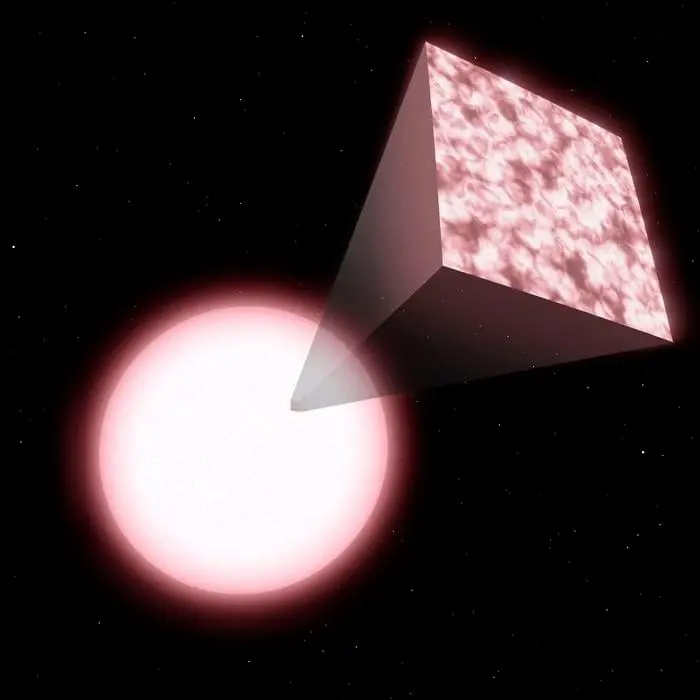
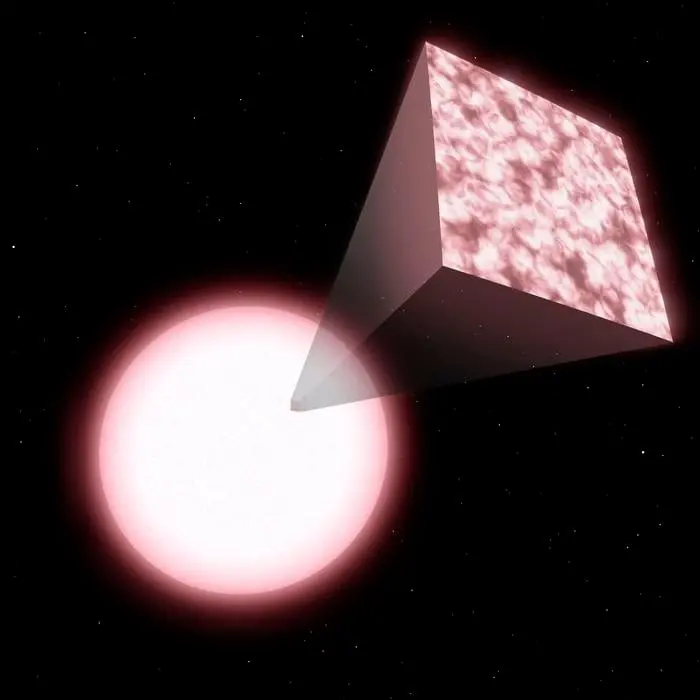
The results of the simulation were unexpected. While the majority of the sampled stars adhered to the white or pale blue appearance expected of their temperature class, approximately 3.3 percent of the sample—five stars in total—deviated significantly from the blackbody curve. Specifically, the models identified two white dwarfs that would appear distinctly yellow and three that would appear pink to the human eye.
The mechanism behind this color shift is atmospheric absorption. In a "pure" white dwarf, the atmosphere consists almost entirely of hydrogen or helium. However, many white dwarfs are "polluted" by heavier elements. The study found that when a white dwarf’s dense atmosphere contains high concentrations of carbon, the element absorbs specific wavelengths of light, leaving behind a spectrum that appears pink or purple.
Furthermore, the researchers discovered that cooler white dwarfs dominated by hydrogen and helium can take on a cyan or deep blue hue, distinct from the pale blue of hotter stars. Perhaps most intriguingly, white dwarfs that have recently "consumed" or accreted debris from their own defunct planetary systems—introducing elements like calcium, sodium, and magnesium—can exhibit a green tint. This occurs because the metallic atoms in the high-pressure environment of the white dwarf atmosphere create "absorption "holes" in the spectrum, shifting the resulting visual output into the green band.

Statistical Significance and the "Median" Star
While a 3.3 percent occurrence rate might seem negligible, Dr. Boris Gänsicke emphasizes the scale of this finding when applied to the wider galaxy. There are an estimated 10 billion white dwarfs in the Milky Way alone. If 3.3 percent of them exhibit these anomalous colors, it implies the existence of roughly 330 million pink, yellow, and green stars scattered across our galaxy.
"One in thirty might not sound like a huge fraction, but across the entire population of white dwarfs in the Universe, that is still a lot of oddly colored stars out there," Dr. Gänsicke explained. However, he also clarified that for the general population, the name "white dwarf" remains accurate. When taking the median across a representative population, the various absorption effects often cancel out or are too faint to notice, leaving the star with its characteristic brilliant white glow.
Parallels in the Substellar Realm: The Violet Brown Dwarfs
The Warwick study also drew comparisons to another class of celestial objects that defy the blackbody rule: brown dwarfs. Often called "failed stars," brown dwarfs are objects with masses between those of the heaviest gas giant planets and the lightest stars. They are too small to sustain the fusion of ordinary hydrogen but can fuse deuterium.
Because brown dwarfs are significantly cooler than white dwarfs, most of their energy is radiated in the infrared spectrum. However, like white dwarfs, they possess incredibly dense atmospheres. Dr. Hollands pointed out that in these cool, high-pressure environments, elements like sodium and potassium, along with molecules such as titanium oxide, can strip away large portions of the visible spectrum. Previous atmospheric studies have concluded that certain brown dwarfs would likely appear violet to an observer—a color entirely absent from the standard main-sequence stellar classification.
Implications for Galactic Archeology and Future Observations
The revelation that white dwarf colors are a product of both temperature and chemical "pollution" has profound implications for the field of galactic archeology. White dwarfs are essentially the "fossils" of the universe; by studying their composition, astronomers can reconstruct the history of the stars that preceded them and the planetary systems that once orbited them.
If a white dwarf appears green or pink, it is a visual red flag that the star has an unusual chemical history. A green-tinted star, for instance, serves as a beacon for "planetary cannibalism," indicating that the star’s gravity has shredded and swallowed asteroids or terrestrial planets. By identifying these color-coded signatures, future surveys—such as those conducted by the Gaia space observatory or the James Webb Space Telescope (JWST)—could more efficiently identify stars that warrant deeper spectroscopic analysis.
This research also highlights the limitations of human-centric observation. For decades, astronomers relied on broad-band filters to categorize stars. The Warwick study demonstrates that these filters can miss the subtle "tinting" caused by atmospheric chemistry. Moving forward, the development of more sensitive instruments like the RAS Techniques and Instruments described in the study will be essential for mapping the true diversity of the stellar population.
Conclusion: A New Lens on the Cosmos
The University of Warwick’s findings remind the scientific community that even the most established "rules" of physics—such as the blackbody radiation of stars—are subject to the complexities of local environments. The universe is not merely a collection of perfect radiators; it is a chemical laboratory where gravity, pressure, and elemental abundance can transform a simple cooling ember into a pink or green celestial anomaly.
As researchers continue to refine their models and look deeper into the local 20-parsec neighborhood, the list of "impossible" colors may grow. For now, the discovery of pink and yellow white dwarfs serves as a testament to the fact that there is always more to see in the night sky than meets the eye—provided one knows how to look. The study underscores a fundamental tenet of modern astronomy: the more we learn about the composition of the stars, the more colorful and complex the history of our universe becomes. Through the work of Dr. Hollands, Dr. Gänsicke, and their colleagues, the "white" dwarf has finally been revealed in its full, multifaceted spectrum.