admin
admin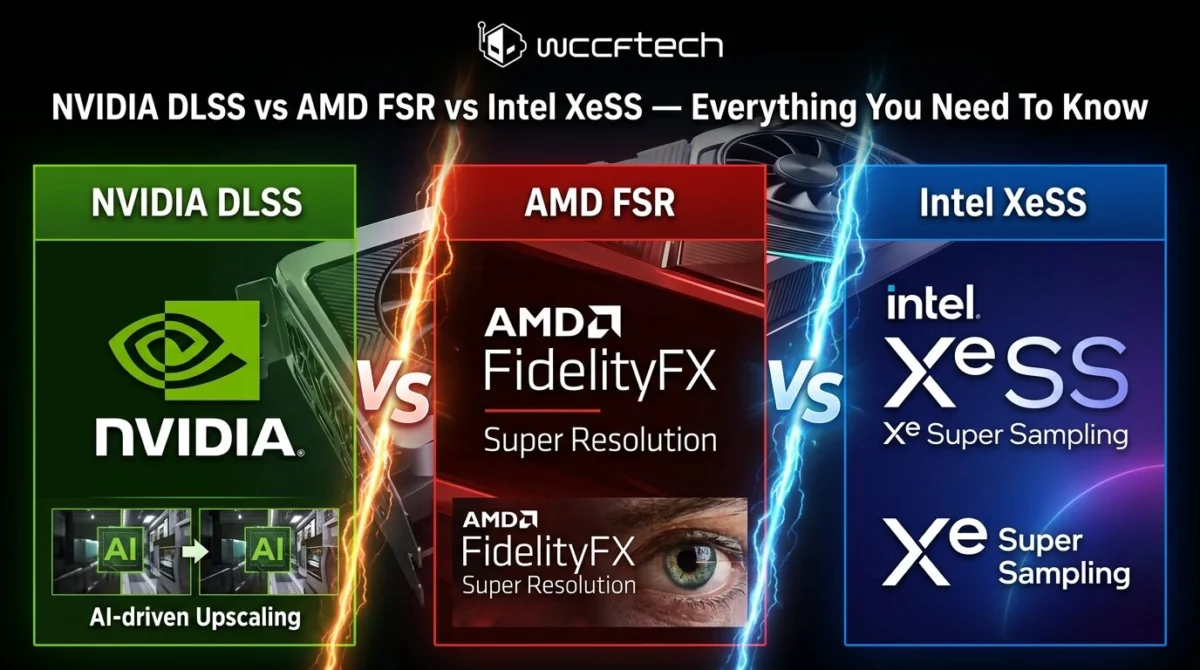
Over the last decade, the field of real-time graphics rendering has encountered a significant technical bottleneck, as the demand for hyper-realistic visual fidelity has outpaced the raw processing growth of semiconductor hardware. While the introduction of hardware-accelerated ray tracing and path tracing has allowed for unprecedented lighting, shadows, and reflections, these techniques place an immense burden on the Graphics Processing Unit (GPU). To circumvent this "performance wall," the industry’s three primary hardware vendors—NVIDIA, AMD, and Intel—have pivoted toward neural rendering and sophisticated image reconstruction suites. These technologies leverage machine learning (ML), temporal data accumulation, and artificial intelligence to upscale lower-resolution inputs into high-quality outputs, generate synthetic frames to enhance smoothness, and denoise complex light calculations in real-time.

The Technical Foundation of Image Reconstruction
To understand the trajectory of these technologies, one must first distinguish between the various methods used to manipulate image data. In the early stages of this evolution, spatial upscaling was the primary tool. This method involves rendering a game at a lower internal resolution, such as 1080p, and using algorithms like Lanczos resampling or nearest-neighbor interpolation to stretch the image to a 4K output. While computationally inexpensive and compatible with almost all hardware, spatial upscaling often results in "soft" images and shimmering artifacts because it lacks information from previous frames.
The industry quickly transitioned to temporal upscaling, which is the current standard for high-end gaming. Unlike spatial methods, temporal reconstruction accumulates data from multiple previous frames. By analyzing motion vectors, depth buffers, and camera jitter, the algorithm can "fill in" the missing pixels of a high-resolution target. This approach provides significantly higher detail and stability, though it introduces challenges such as ghosting—where moving objects leave a faint trail—and disocclusion artifacts.

The most recent frontier is Frame Generation and ML-based Denoising. Frame generation uses AI to analyze the motion between two traditionally rendered frames and insert an interpolated "synthetic" frame between them. This can effectively double or triple the perceived frame rate. ML-based denoising, specifically NVIDIA’s Ray Reconstruction, replaces manually tuned denoising filters with a neural network trained on vast datasets of path-traced images, allowing for cleaner and more accurate lighting effects without the performance cost of traditional sampling.
NVIDIA Deep Learning Super Resolution: The Pioneer of AI Rendering
NVIDIA initiated the neural rendering era in 2018 with the launch of Deep Learning Super Sampling (DLSS) alongside the Turing-based GeForce RTX 20 Series. This launch was significant not just for the software, but for the hardware; NVIDIA integrated dedicated "Tensor Cores" specifically designed to handle the matrix multiplications required for deep learning.

DLSS 1.0 was a specialized spatial upscaler that required NVIDIA to train a unique AI model for every supported game on its supercomputers. While revolutionary, the results were often blurry, and the high barrier to entry for developers slowed adoption. This changed in 2020 with DLSS 2.0, which introduced a generalized Convolutional Neural Network (CNN) and shifted the technology to a temporal reconstruction model. DLSS 2.0 became the industry benchmark, offering image quality that frequently rivaled or even surpassed native resolution rendering through superior anti-aliasing.
In 2022, the release of the Ada Lovelace (RTX 40 Series) architecture brought DLSS 3 and the introduction of Frame Generation. By utilizing a dedicated Optical Flow Accelerator, DLSS 3 could generate entirely new frames, bypassing CPU bottlenecks. This was followed by DLSS 3.5 in 2023, which introduced Ray Reconstruction, a feature that used AI to improve the visual quality of ray-traced effects across all RTX GPUs.

The current state-of-the-art is DLSS 4 and 4.5, released in tandem with the Blackwell-based RTX 50 Series. These versions represent a shift from CNNs to transformer-based neural models. DLSS 4 introduced Multi-Frame Generation (MFG), capable of generating up to three synthetic frames for every rendered one. DLSS 4.5 further refined this with "Dynamic Multi-Frame Generation," allowing for up to 6x frame generation on flagship hardware like the RTX 5090, enabling 240Hz gaming experiences on titles that would otherwise struggle to maintain 60 FPS.
AMD FidelityFX Super Resolution: The Open-Source Alternative
AMD entered the reconstruction market in 2021 with FidelityFX Super Resolution (FSR) 1.0. Unlike NVIDIA, AMD prioritized an open-source, cross-platform philosophy. FSR 1.0 was a spatial upscaler that did not require dedicated AI hardware, allowing it to run on AMD, NVIDIA, and Intel GPUs, as well as gaming consoles like the PlayStation 5 and Xbox Series X|S.

Recognizing the superiority of temporal methods, AMD released FSR 2 in 2022. This was a significant leap in quality, moving to a temporal upsampling pipeline similar to DLSS 2 but without the requirement for machine learning hardware. This "analytical" approach allowed AMD to maintain broad compatibility while closing the quality gap with NVIDIA.
FSR 3 arrived in 2023, introducing "Fluid Motion Frames," AMD’s version of frame generation. A key milestone was FSR 3.1, which decoupled the frame generation component from the upscaler, allowing users to pair AMD’s frame generation with NVIDIA’s DLSS or Intel’s XeSS upscaling. In 2025, AMD launched FSR 4, also known as "Project Redstone." This marked AMD’s first major shift into ML-powered upscaling and denoising, utilizing the AI accelerators found in RDNA 3 and RDNA 4 architectures to match the temporal stability of its competitors.

Intel Xe Super Sampling: The Hybrid Competitor
Intel joined the fray in 2022 with Xe Super Sampling (XeSS), launched alongside the Arc Alchemist GPUs. Intel’s strategy was a hybrid of its competitors’ approaches. XeSS features a dual-execution path: an XMX-accelerated mode for Intel Arc GPUs (providing high-quality AI reconstruction similar to DLSS) and a DP4a-based fallback mode that allows it to run on non-Intel hardware (similar to FSR).
XeSS 2, released in 2024, expanded the suite into a full rendering stack by adding XeSS Frame Generation (XeSS-FG) and Xe Low Latency (XeLL). Intel’s latest iteration, XeSS 3, introduced Multi-Frame Generation (XeSS-MFG), which, like NVIDIA’s latest offerings, can insert multiple interpolated frames to maximize smoothness on high-refresh-rate displays.

Comparative Analysis and Industry Implications
The divergence in these technologies has created a complex landscape for developers and consumers. A summary of the current ecosystem highlights the following key differences:
| Feature | NVIDIA DLSS | AMD FSR | Intel XeSS |
|---|---|---|---|
| Primary Model | Transformer-based ML | ML-based (FSR 4+) | ML-based |
| Hardware Requirement | Proprietary Tensor Cores | Open (ML optimized) | Hybrid (XMX / DP4a) |
| Max Frame Gen | Up to 6x (DLSS 4.5) | Analytical/ML (FSR 4) | Multi-Frame (XeSS 3) |
| Denoising | AI Ray Reconstruction | FSR Redstone Denoising | Traditional/Hybrid |
| Ecosystem | Closed (RTX only) | Open Source | Partially Open |
Industry analysts suggest that the move toward neural rendering is no longer optional. As game engines like Unreal Engine 5 push toward cinematic realism through Nanite and Lumen, the cost of rendering each pixel at native resolution has become prohibitive. Statements from NVIDIA executives have suggested that in the near future, "traditionally rendered" pixels may only account for 10% of the final image, with AI "imagining" the remaining 90%.

The broader implications of these technologies extend beyond PC gaming. The "AI-first" rendering approach is a cornerstone of the mid-generation console refreshes, such as the PlayStation 5 Pro and its PlayStation Spectral Super Resolution (PSSR). Furthermore, neural rendering is becoming vital for mobile gaming, where thermal and power constraints limit raw GPU performance.
Future Outlook
As we move toward 2026 and beyond, the focus is expected to shift from simple reconstruction to "Neural Scene Synthesis." This could involve AI generating entire textures, geometry, and lighting environments based on low-fidelity wireframes. While these advancements promise a new era of visual immersion, they also raise concerns regarding "visual latency"—the delay between user input and the appearance of generated frames—and the potential for AI "hallucinations" or artifacts that distract from the gameplay.

The competition between NVIDIA, AMD, and Intel has accelerated the pace of innovation, turning what was once a simple resolution boost into a sophisticated suite of AI tools. For the end-user, the result is clear: the ability to play the most demanding titles at high resolutions and fluid frame rates on hardware that, without the assistance of artificial intelligence, would simply be unable to keep up.