Sisilia Frederika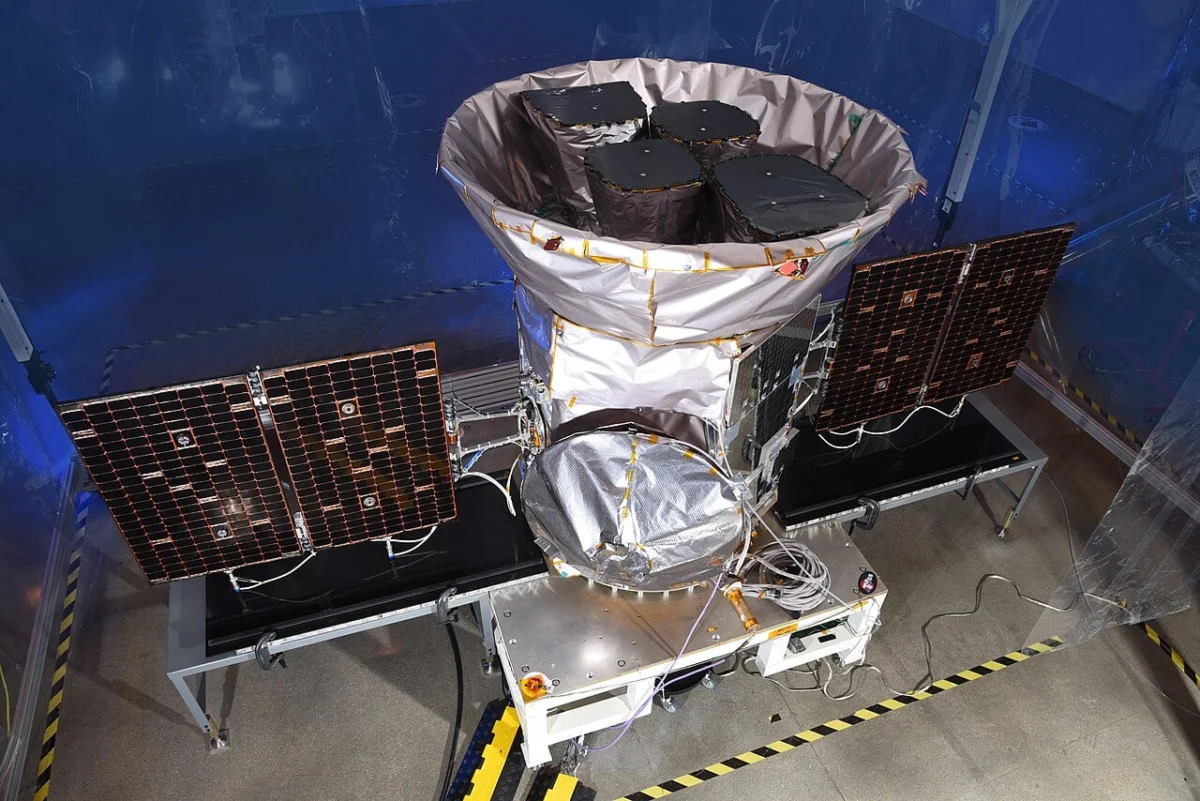
For the better part of the last decade, the field of exoplanetary science operated under a seemingly logical, yet ultimately parochial, assumption. Astronomers, having spent years observing stars similar to our own Sun, concluded that the planetary architectures found in our immediate cosmic neighborhood were likely representative of the entire Milky Way. In these systems, two distinct classes of planets dominate the landscape: "super-Earths," which are rocky worlds up to 1.75 times the radius of Earth, and "sub-Neptunes," larger planets between two and four Earth radii that possess thick, puffy envelopes of hydrogen and helium gas. Because these two types appeared in nearly equal abundance around G-type (Sun-like) stars, it was widely believed that the "sub-Neptune" was one of the most common planetary configurations in the universe.
However, a groundbreaking study from researchers at McMaster University has fundamentally challenged this narrative. By shifting their focus away from Sun-like stars and toward the most populous stellar inhabitants of our galaxy—M dwarfs, or red dwarfs—the research team has discovered a startling discrepancy. Around these smaller, cooler stars, the sub-Neptune class of planets effectively vanishes. This revelation not only reshapes our understanding of planetary demographics but also forces a re-evaluation of the physical processes that govern how worlds form and retain their atmospheres in the harsh environments surrounding the galaxy’s most common stars.
The Dominance of the Red Dwarf
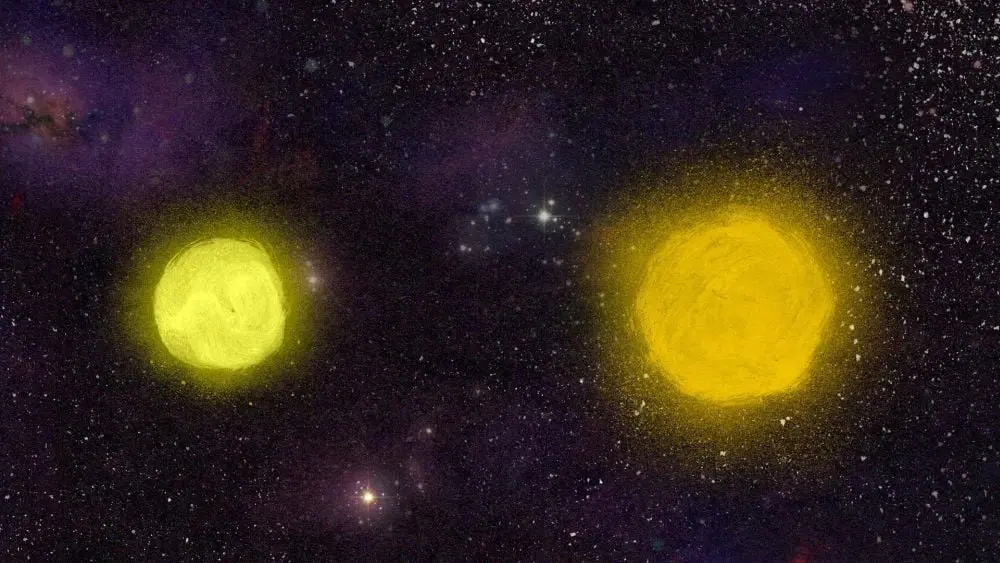
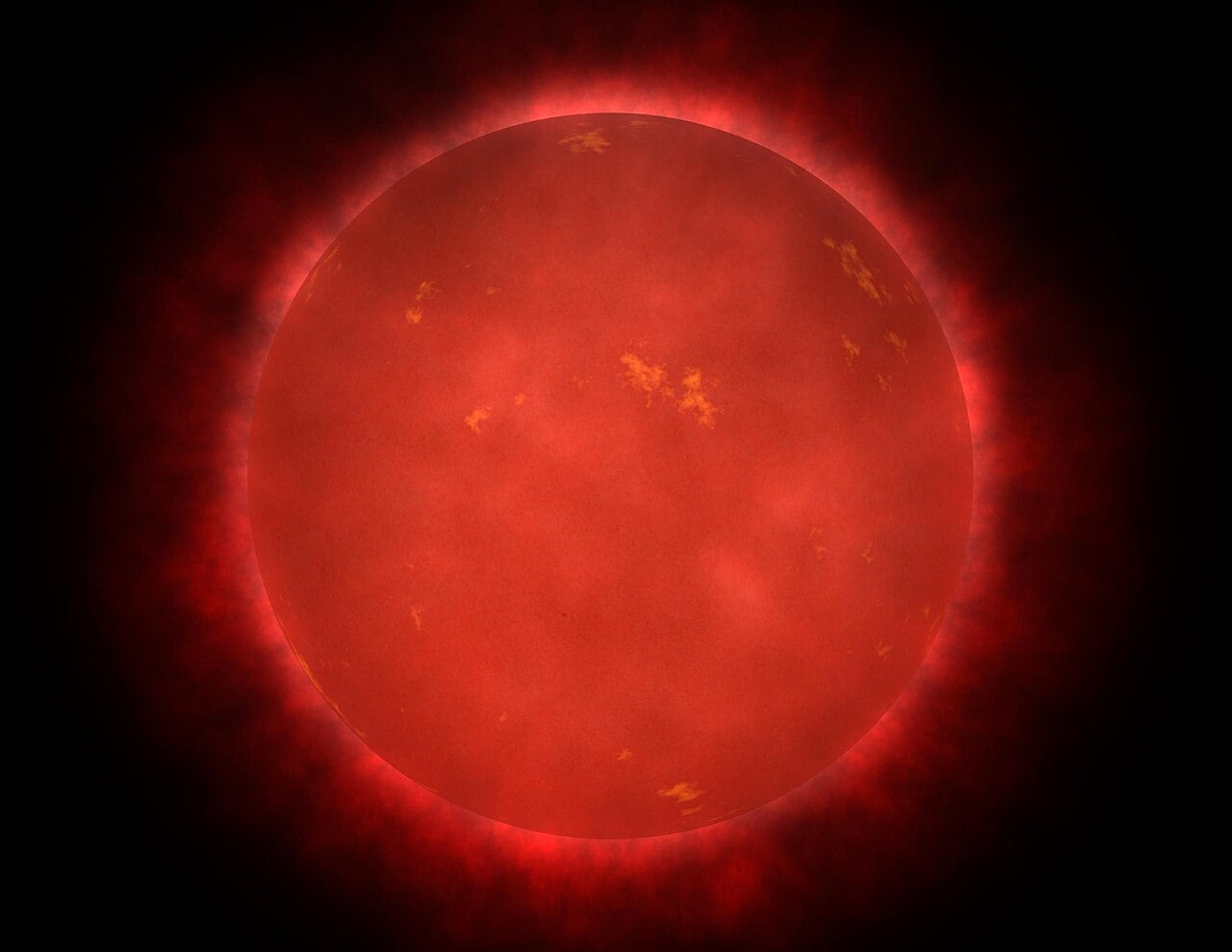
To understand the scale of this discovery, one must first recognize the sheer numerical dominance of M dwarf stars. While the Sun is the most familiar star to humanity, it belongs to a category that is actually in the minority. Roughly 75% of the stars in the Milky Way are M dwarfs. These stars are significantly smaller, dimmer, and cooler than the Sun, with masses ranging from as little as 8% to approximately 40% of the solar mass.
Historically, M dwarfs were notoriously difficult to study. Their low luminosity meant that even the closest red dwarfs were faint, making it challenging for early exoplanet-hunting missions like the Kepler Space Telescope to gather high-quality data on their planetary systems. Kepler, which revolutionized the field in the 2010s, primarily focused on a single, distant patch of the sky, favoring brighter, Sun-like stars. This created a "selection bias" in the planetary census, leading scientists to believe that the prevalence of sub-Neptunes was a universal constant.
The new research, led by PhD student Erik Gillis and his supervisor Ryan Cloutier, the Canada Research Chair in Exoplanetary Astronomy at McMaster University, utilized a different tool to bypass these historical limitations: NASA’s Transiting Exoplanet Survey Satellite (TESS).
The TESS Mission and a New Dataset
Launched in 2018, TESS was designed specifically to scan the entire sky, focusing on the brightest and nearest stars. Unlike Kepler’s deep-but-narrow gaze, TESS employs a wide-field approach, scanning a fresh segment of the sky every 28 days. Over the course of its primary and extended missions, it has built an unprecedented database of planetary transits around M dwarfs.
Gillis and Cloutier analyzed this data to perform a comprehensive census of planets orbiting mid-to-late M dwarfs—the smallest of the small. Their findings, recently published in The Astronomical Journal, indicate a "planetary desert" where sub-Neptunes should be. While super-Earths were found in abundance, the gas-rich sub-Neptunes were almost entirely absent around these low-mass stars.
"We found that around the smallest stars in our galaxy, the planetary population looks nothing like what we see around Sun-like stars," Gillis noted in the study’s discussion. "The assumption that sub-Neptunes are a staple of the galaxy is essentially a byproduct of looking at only one type of star. When we look at the most common stars, the sub-Neptunes are gone."
The Mystery of the Missing Atmospheres
The disappearance of sub-Neptunes around M dwarfs presents a significant astrophysical puzzle. In the study of exoplanets, the "Radius Valley" is a well-known phenomenon. It describes a gap in the size distribution of planets: there are many planets with radii around 1.3 times that of Earth (super-Earths) and many with radii around 2.4 times that of Earth (sub-Neptunes), but very few in between.
The prevailing theory for this gap is "photoevaporation." Young stars, particularly M dwarfs, are incredibly active. They emit intense X-ray and ultraviolet radiation and are prone to violent flares. This high-energy bombardment is capable of "cooking" a planet’s atmosphere. If a planet is born as a sub-Neptune with a thick but lightweight envelope of gas, the radiation from its host star can strip that gas away, leaving behind a bare, rocky core—a super-Earth.
While photoevaporation is a potent force, the McMaster team found that it does not fully explain the total absence of sub-Neptunes around mid-to-late M dwarfs. The data suggests that even if photoevaporation were highly efficient, some sub-Neptunes should still persist, especially those orbiting further out where the radiation is less intense. The fact that they are missing entirely suggests a more fundamental difference in how these systems form.
From Gas to Water: A New Formation Paradigm
The McMaster researchers propose that the answer lies in the initial composition of the planets during their birth in the protoplanetary disk. Around Sun-like stars, the disks are massive and rich in the gas necessary to build sub-Neptune envelopes. However, the disks around smaller M dwarfs are less massive and may have different chemical distributions.
Rather than being gas-shrouded worlds that lost their atmospheres, the planets around M dwarfs may be "water-rich" worlds from the start. In this scenario, the planets form with significant amounts of water ice rather than thick hydrogen-helium shells. These "ocean worlds" or "ice-rich" planets would have different densities and sizes than the gas-shrouded sub-Neptunes found around Sun-like stars.
This hypothesis suggests that the "default" planet-building recipe changes based on the mass of the host star. If the most common stars in the galaxy do not produce sub-Neptunes, then the sub-Neptune, once thought to be the "standard" planet of the Milky Way, may actually be a specialty of larger stars like our Sun.
Chronology of Discovery: A Thirty-Year Journey
The McMaster study represents a pivotal moment in a timeline that began only three decades ago:
- 1992: The first confirmed exoplanets are discovered orbiting a pulsar, a dead star, proving that planets exist outside our solar system.
- 1995: The discovery of 51 Pegasi b, the first exoplanet found orbiting a Sun-like star, introduces the "Hot Jupiter" class.
- 2009: The Kepler Space Telescope launches, identifying thousands of planets and establishing the prevalence of super-Earths and sub-Neptunes around G-type stars.
- 2017: The TRAPPIST-1 system is discovered, showing that M dwarfs can host multiple Earth-sized, potentially habitable planets.
- 2018: TESS launches, beginning the first all-sky survey focused on nearby, bright stars, including M dwarfs.
- 2024: The McMaster study utilizes TESS data to prove the absence of sub-Neptunes around the smallest M dwarfs, overturning a decade of astronomical assumptions.
Implications for Habitability and the Search for Life
The findings have profound implications for astrobiology and the search for extraterrestrial life. M dwarfs have long been the primary targets in the search for habitable worlds because their small size makes it easier to detect Earth-sized planets in their "Goldilocks zones"—the region where liquid water can exist.
However, if these stars are so energetically violent that they prevent the formation or retention of gaseous envelopes, the prospects for life are complicated. On one hand, a planet without a thick hydrogen envelope is more likely to be rocky and potentially habitable. On the other hand, the same radiation that strips away gas could also strip away the secondary atmospheres (like Earth’s nitrogen-oxygen mix) necessary for life as we know it.
Furthermore, if the McMaster team’s "water-rich" hypothesis holds true, many of the planets around M dwarfs might not be rocky "Earth-twins" at all, but rather deep ocean worlds with no solid surface. While water is essential for life, a planet that is 50% water by mass would have vastly different chemistry and climate cycles than Earth, potentially hindering the development of complex life.
Future Research and the Role of JWST
The McMaster study has set the stage for the next phase of exoplanetary exploration. While TESS can tell us the size and orbital period of a planet, it cannot tell us what its atmosphere is made of. For that, astronomers are turning to the James Webb Space Telescope (JWST).
By using a technique called transmission spectroscopy—analyzing the starlight that filters through a planet’s atmosphere as it passes in front of its star—JWST can detect the chemical signatures of water vapor, methane, carbon dioxide, and other molecules. Researchers now plan to use JWST to look at the "super-Earths" around M dwarfs to see if they are truly bare rocks, or if they are the water-rich worlds suggested by Gillis and Cloutier.
"If we want to understand the origins of planets and, by extension, the origins of life, we need a complete picture," Gillis concluded. "We can no longer assume that what we see in our backyard is what the rest of the galaxy looks like. By finally including the most common stars in our census, we are seeing the Milky Way as it truly is—a place far more diverse and complex than we ever imagined."
As the scientific community digests these findings, the McMaster study stands as a reminder of the dangers of scientific "Sun-centrism." The galaxy is dominated by small, dim stars, and it appears their planetary systems follow a set of rules entirely their own. Understanding those rules is the next great frontier in our quest to find our place among the stars.