Vera Intan Clara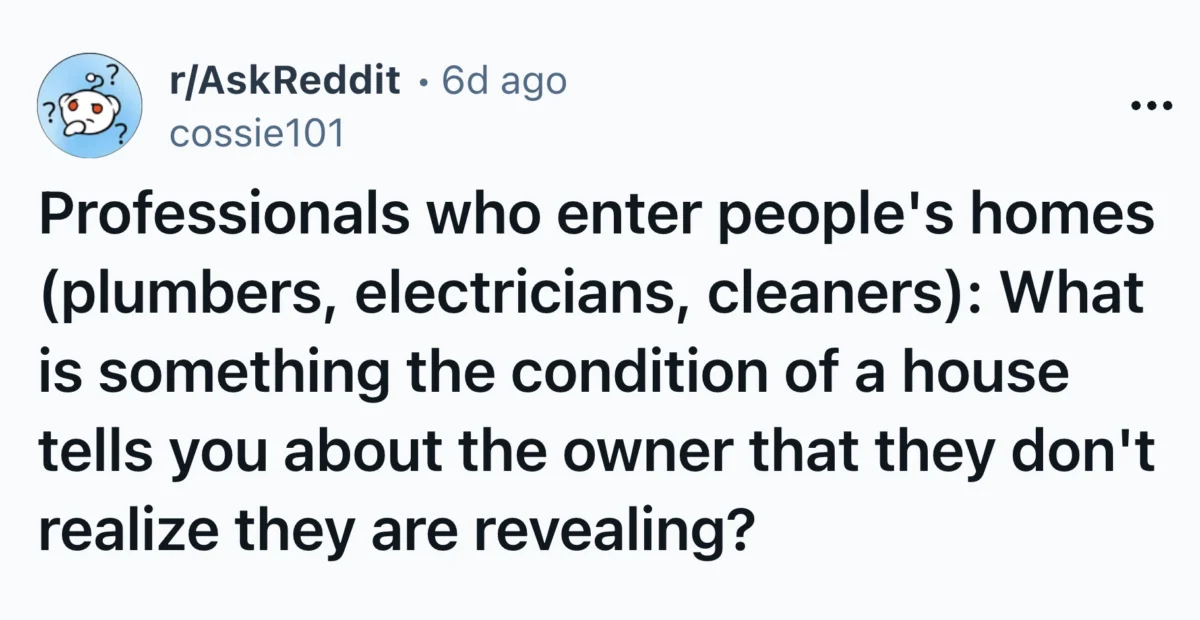
For a range of essential professions, entering a client’s private residence is an unavoidable aspect of the job. From the precision required by carpenters and electricians to the compassionate care of in-home nurses and the practical skills of plumbers, these service providers gain a unique, often unfiltered, glimpse into the lives of homeowners. This proximity to the intimate spaces of individuals often reveals profound insights into their lifestyles, habits, and even their psychological states, information that homeowners themselves may not realize they are implicitly disclosing. A recent query on Reddit by user u/cossie101 ignited a significant discussion among professionals, asking, "Professionals who enter people’s homes (plumbers, electricians, cleaners): What is something the condition of a house tells you about the owner that they don’t realize they are revealing?" The responses offered a fascinating, sometimes startling, collection of observations, ranging from concerning health and safety hazards to heartwarming indications of a nurturing environment, painting a vivid picture of the human condition through the lens of domestic spaces.
The Unspoken Language of Domestic Spaces
Homes are more than mere structures; they are extensions of their inhabitants, silent archives of daily routines, preferences, and priorities. Every object, every stain, every arrangement contributes to a narrative, often richer and more complex than any verbal account. Service professionals, by virtue of their access, become accidental anthropologists, interpreting these domestic cues. The Reddit thread highlighted this phenomenon, revealing how everything from the placement of a litter box to the prevalence of certain decor items can speak volumes.
Health, Hygiene, and Safety: Unveiling Critical Concerns
One of the most immediate and impactful revelations shared by Redditors concerned public health, hygiene, and safety. These observations often underscored serious issues that could have long-term consequences for residents.
- Pervasive Unsanitary Conditions: Several professionals recounted encounters with homes in extreme states of disarray. A former paramedic, u/xts2500, disturbingly noted the astonishing number of people living with dead animals in their homes and the bizarre frequency with which bathtubs were used as toilets. These conditions not only pose significant health risks, including bacterial infections and pest infestations, but also suggest severe neglect or underlying mental health challenges, such as hoarding or depression. The presence of urine-soaked carpets, as mentioned in the initial summary, further emphasizes a profound breakdown in basic living standards.
- Pest Infestations and Neglect: The experiences of pest controllers, such as those shared by the spouse of u/Admirable_Holiday653, painted a grim picture. Reports of babies covered in bed bug bites due to parental reluctance to perform necessary preparatory work for treatment, or homes teeming with rats, highlight a critical public health crisis often hidden behind closed doors. Such situations are not merely inconveniences but indicators of environments where health and well-being are severely compromised, often due to a complex interplay of poverty, lack of education, or mental health issues.
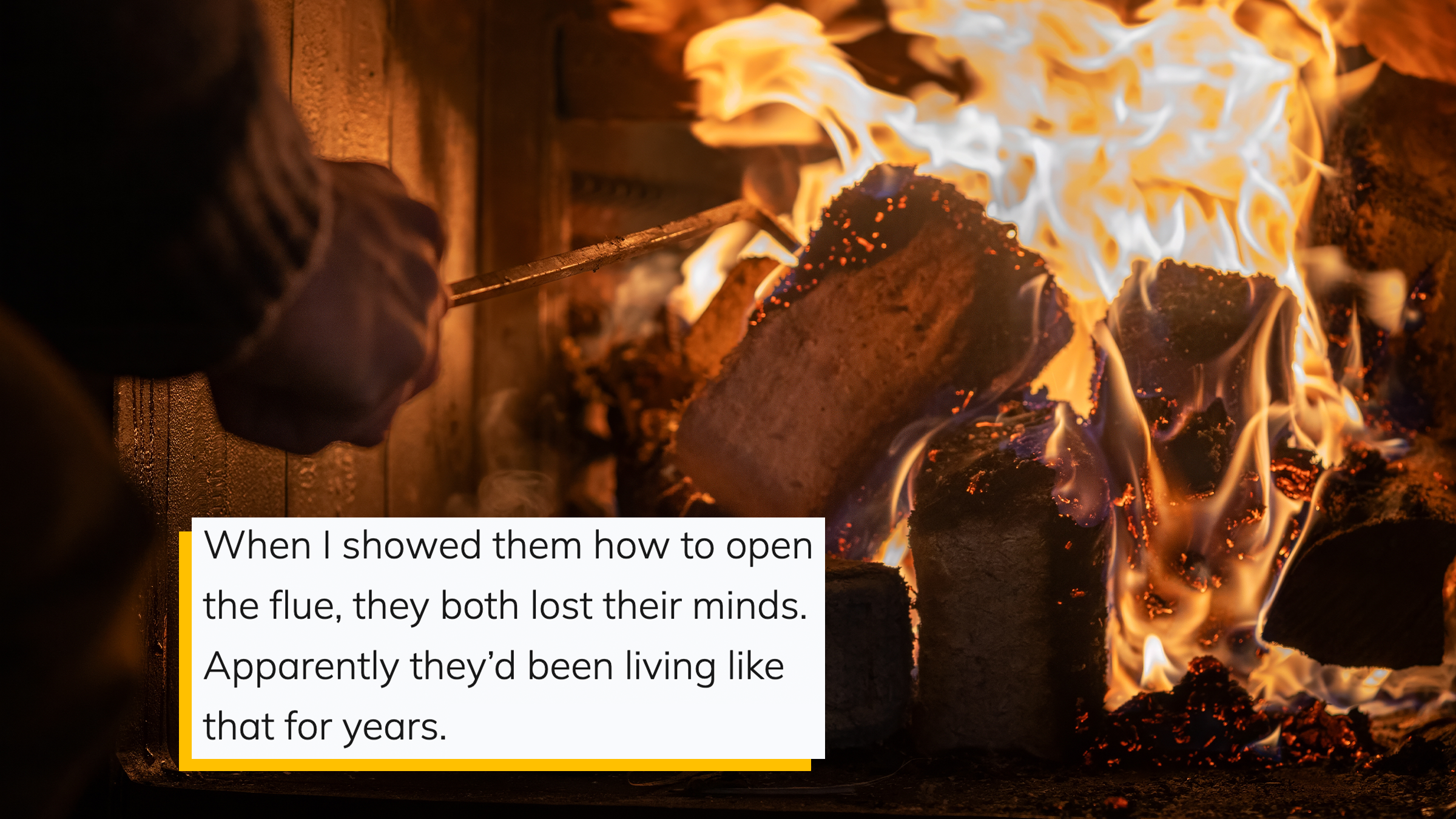
- Respiratory and Fire Hazards: The long-term effects of heavy smoking within a home were vividly described by u/swartz77, a former furniture and appliance delivery person. The "cartoonish outline" of a sofa stained by years of cigarette smoke on a once-white wall serves as a stark visual metaphor for the internal damage being done to occupants. Beyond aesthetic degradation, such environments significantly increase the risk of respiratory illnesses, including asthma and chronic obstructive pulmonary disease (COPD), for all residents, particularly children. Another critical safety concern was raised by u/Striking_Yard_295, who encountered a home where a fireplace was operated with the flue shut and smoke alarms disconnected, indicating a severe lack of awareness regarding basic fire safety protocols. The homeowner’s obliviousness, having lived in such conditions for years, points to a dangerous normalization of hazardous living.
Lifestyle and Personal Values: A Glimpse into Character
Beyond health and safety, the condition and decor of a home frequently reveal insights into the occupants’ personalities, intellectual pursuits, and social engagements.
- Indicators of Nurturing Environments: Social workers, as reported by u/citizenh1962, often find reassurance in seeing healthy pets or abundant books during welfare checks. These elements are often correlated with a loving household and intellectual curiosity, both deemed beneficial for children’s development. A home filled with books suggests a valuing of education and imagination, while well-cared-for pets indicate empathy and responsibility.
- Quirks and Personal Expression: Not all observations are dire. Some homes simply reflect unique personalities. u/Garybird1989, a mover, recalled a house where "everything was pink. Floor, walls, ceiling, furniture, their clothing, etc. Except their bedroom, that was lime green." Similarly, u/outdoorlaura, a visiting nurse, described a patient’s home "FILLED with clocks," meticulously maintained by an 80-year-old resident. These examples illustrate homes as canvases for personal expression, offering a delightful counterpoint to the more concerning revelations. They speak to the human desire for individuality and the creation of personal sanctuaries.
- The "Cold" Home vs. The "Lived-In" Home: A cleaner, u/Beautiful_Mind9015, articulated the distinction between a "cold" home and a "lived-in" one. Homes with less clutter, perfectly placed furniture, and minimal cooking spills often convey a sense of detachment or formality, sometimes suggesting limited interaction among family members. Conversely, houses with "messes in places, crayon drawings, projects, photos up a lot, and travel books or summer camp brochures" indicate a vibrant family life and active engagement. This observation highlights how the subtle disturbances of daily living can be powerful indicators of warmth, connection, and joy.
- Hidden Struggles and Substance Use: Some observations pointed to more clandestine activities. u/12RopesOf–m, a carpenter, described discovering drug residue on a wedding photo, which had been used to cut lines of drugs. This stark revelation underscores how even seemingly innocuous decor can conceal profound struggles, hinting at addiction or other complex personal challenges hidden beneath a veneer of normalcy. The "overflowing ashtray on the front porch" combined with specific lawn ornaments and political/religious signage, as noted by u/ProwlerInTheYard92, a professional in human remains removal, often foreshadows a challenging or "sh*t show" situation inside, possibly indicating a household with less regard for conventional order or with inhabitants experiencing significant life difficulties.
Socio-Economic Indicators and Welfare Concerns
The external and internal conditions of a home can also serve as powerful, albeit indirect, indicators of socio-economic status, community conditions, and even potential welfare issues.
- External Clues: The state of a property’s exterior often provides initial clues. u/Turhamkey noted that "the number of inoperable cars/lawnmowers in the front yard can be a signifier of how disorderly the inside is." While not always accurate, a cluttered or neglected exterior can sometimes mirror the internal environment, suggesting a lack of resources, time, or inclination for maintenance.
- Resilience Amidst Adversity: Counterintuitively, u/Dense-Layer-2078 shared experiences of stepping "over junkies to get to an apartment in ‘the projects’ only to have the door open and reveal a little oasis: an immaculate and cozy space." This anecdote profoundly illustrates human resilience and the desire for dignity, demonstrating that pristine living conditions can be maintained even in challenging external environments, often reflecting a strong internal drive for order and comfort.
- Child Welfare and Intervention: Perhaps the most distressing account came from u/jstanotherdaytrader, a former in-home flooring salesperson. Their encounter with an 8-year-old boy living alone amidst "trash and feces everywhere" with malnourished dogs, after his mother was hospitalized and father absent, led to an immediate welfare check by police. This harrowing story underscores the critical role service professionals can inadvertently play in identifying and reporting child neglect or abuse, serving as an unofficial but vital social safety net.
The Psychology of Perception and Empathy
The Reddit thread also delved into the psychological aspects of how people present their homes and how professionals perceive them.
- The Paradox of Cleanliness: u/CapableMaterial735 observed that "The ones with the cleanest homes always apologise about the ‘mess’, while those with the filthiest, smelliest, cluttered to the max homes never even hint at being embarrassed by their state of living." This paradox speaks to varying levels of self-awareness, social anxiety, and perhaps a defensive mechanism where those with truly dire conditions may be too overwhelmed or desensitized to feel embarrassment, while those with high standards are acutely aware of any minor imperfection.
- "Messy Inner Worlds": A Plumber’s Perspective: A plumber, u/The_guide_to_42, offered a deeply empathetic perspective: "If you just listen they tell you everything. You just look at a mess, and they will tell you exactly who what where when and how of it… 50% is lies because they can’t face themselves, but their posture give that away." This professional highlighted a collective grief and longing for authenticity, noting that many homeowners put up a "fakeness" for social media, fearing judgment. The observation that "cold as ice spotless homes" can house silently struggling couples, while others "try to drop all their worlds problems on you," illustrates the diverse ways people cope and project their internal states onto their living environments. The plumber’s insight emphasizes that physical clutter often mirrors emotional or psychological clutter, and that true understanding comes from observation and empathetic listening.
- The Challenge of Judgment and Empathy: u/Brilliant-Clothes637, a former cable technician, shared a crucial realization: "It told me that I do not know what someone is going through at the moment." Citing the difficulty of keeping a house clean with seven children, this comment underscores the importance of suspending judgment and recognizing the complex, often unseen, circumstances that shape a household’s condition. This sentiment resonates with the general call for empathy in the thread, acknowledging that a home’s state is often a symptom, not just a choice.
- Navigating Social Etiquette: The delicate balance between observation and intrusion was also touched upon. u/MadAdam88 recounted a helper asking a homeowner if they were "just moving in" when confronted with a decade’s worth of unpacked boxes. The ensuing embarrassment highlighted the need for professionals to be discreet and sensitive, understanding that a home’s condition, especially its disarray, can be a source of significant personal vulnerability.
Broader Implications and the Role of Service Professionals
The insights shared by these professionals collectively paint a picture of homes as intimate stages where the drama of human life unfolds. These everyday encounters reveal a spectrum of experiences, from inspiring resilience to profound distress.
- Early Detection and Intervention: For some professionals, particularly those in healthcare or social work, the observations made within a home can be crucial for early detection of neglect, abuse, or mental health crises. The anecdote of the 8-year-old boy highlights the potential for service providers to act as critical links in the social safety net, prompting interventions that can safeguard vulnerable individuals.
- Understanding Societal Trends: On a broader scale, these anecdotal insights can reflect larger societal trends, such as the increasing prevalence of mental health issues, the impact of economic disparities on living conditions, or the growing isolation experienced by some segments of the population. The "collective grief" and "longing for being allowed to put the fakeness down" noted by the plumber could be interpreted as a reflection of contemporary pressures for perfection and the struggle for authenticity in an increasingly digital and image-conscious world.
- Ethical Considerations: The unique access afforded to service professionals comes with significant ethical responsibilities. While observations can inform better service delivery or even prompt necessary welfare checks, they also necessitate respect for privacy, discretion, and a non-judgmental approach. The line between observation and intrusion is fine, and professionals must navigate it with sensitivity.
In conclusion, the Reddit thread served as a powerful reminder that every home tells a story, often one that its occupants are unaware they are sharing. From the overt signs of neglect to the subtle hints of personality and lifestyle, these domestic revelations offer service professionals a profound, often empathetic, understanding of the individuals they serve. It underscores the idea that a home is not just a place of shelter, but a complex tapestry woven from personal choices, societal influences, and the silent narratives of human existence.