
 Vera Intan Clara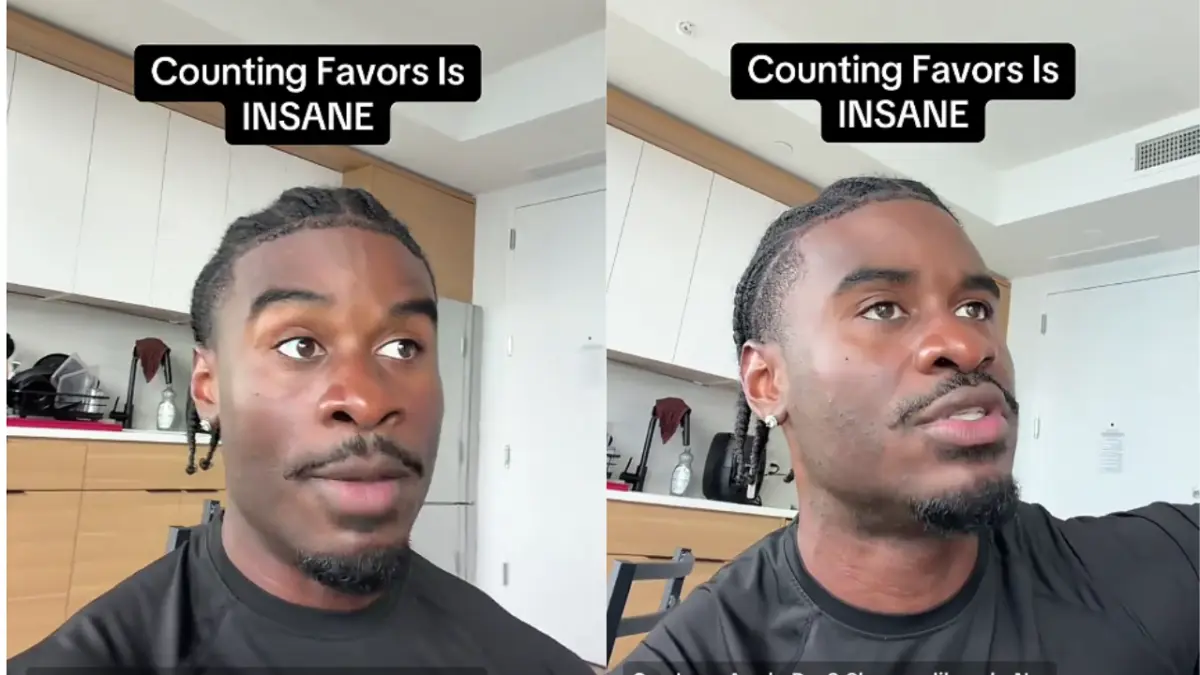
A recent video shared by TikTok creator @maxwellvision has ignited a widespread discussion across social media platforms regarding the intricate dynamics of friendship and financial expectations. The video, which has garnered significant traction with over 1.7 million views and nearly 1,200 comments, recounts an incident where a friend initially offered to cover a meal with "no strings attached," only to later demand repayment, leading to a profound disagreement about the nature of favors versus loans within a social circle. The unfolding narrative, presented solely from Maxwell’s perspective, highlights a common yet often unaddressed tension point in modern relationships, amplified by the pervasive use of digital payment platforms.
The core of the dispute revolves around a $65 dinner bill and a friend’s shifting stance on repayment. Maxwell’s account details a situation many can relate to: an unexpected financial oversight met with an immediate, seemingly generous offer from a friend, only for that generosity to be recontextualized into an obligation at a later date. This personal anecdote has resonated with a broad audience, prompting a collective examination of unspoken rules, mutual understanding, and the impact of monetary transactions on personal bonds.
The Incident: A Chronological Account of a Social Faux Pas
The sequence of events, as narrated by Maxwell, began approximately two weeks prior to the public confrontation. The setting was a celebratory birthday dinner for a mutual female friend, attended by a group of close acquaintances. The atmosphere was convivial, characteristic of friends gathering to mark a special occasion. As the evening drew to a close and the time came to settle the bills, a decision was made by the birthday girl’s best friend to split the costs, with each individual receiving a separate tab, excluding the birthday celebrant’s meal.
Maxwell, upon receiving his $65 bill, which he deemed accurate for his orders, encountered an unexpected predicament: his wallet was missing. A quick check confirmed his worst fears—it was not on his person. His immediate thought was that it might have been left in the ride-share vehicle or, more fortunately, at home. Utilizing the tracking capabilities of an AirTag, he confirmed his wallet’s safe location at his residence, alleviating the immediate panic of loss but leaving him without a means to pay.
Faced with this dilemma, Maxwell explored various options. He considered asking a friend to cover his meal but felt a natural reluctance to impose. His first practical attempt involved inquiring about Apple Pay, a widely accepted digital payment method. However, the waitress informed him that the restaurant’s Apple Pay machine was out of service, effectively closing that avenue.
It was at this juncture that Maxwell recalled the existence of peer-to-peer payment applications like Zelle and PayPal. He formulated a plan: he would ask a friend to cover his bill, with the immediate intention of sending the money back through one of these apps. He approached his friend, identified as Jack, proposing this arrangement.
The Offer and Its Interpretation
Maxwell’s explicit offer to Zelle the $65 immediately was met with an unexpected response from Jack. According to Maxwell, Jack unequivocally declined the immediate repayment, stating, "Zelle me the money? You good… You don’t gotta Zelle me nothing. How much is it? $65.00… Bro, you good." This statement, delivered in a casual and reassuring manner, was interpreted by Maxwell as a clear indication that Jack considered the payment a favor, not a loan. In Maxwell’s mind, this gesture aligned with the unwritten code of friendship: favors are exchanged without expectation of direct, immediate monetary reimbursement, often balanced by reciprocal gestures in the future. He mentally noted that he would "make things even" by covering Jack’s expenses at a subsequent outing or event. The evening concluded with this understanding, seemingly solidifying the bond between the friends.
The Digital Payment Landscape and Social Norms
The incident underscores a growing complexity in social interactions, particularly with the widespread adoption of digital payment platforms. Apps like Zelle, PayPal, Venmo, and Cash App have revolutionized how individuals exchange money, making it effortless to split bills, send funds, and repay debts. Industry reports consistently show a significant increase in peer-to-peer digital transactions, with millions of users relying on these services daily for various financial interactions, from splitting rent to casual dinner payments.
While these platforms offer unparalleled convenience, they also introduce new ambiguities into social etiquette. The line between a "favor" and a "loan" can become blurred when repayment is just a few taps away. Traditionally, a favor implied a gesture of goodwill without an explicit expectation of repayment, though an unspoken understanding of reciprocity often existed. A loan, conversely, carries a clear expectation of repayment within a defined or implied timeframe.
Maxwell’s initial instinct to use Zelle immediately reflects the modern habit of instantaneous financial settlement. Jack’s refusal of this immediate repayment, coupled with his verbal assurance, set a precedent that, in Maxwell’s view, transformed the transaction from a loan into a favor. This distinction is crucial, as it fundamentally alters the perceived obligation and the emotional weight attached to the exchange.
A Friend’s Contradiction: The Confrontation
The perceived understanding between Maxwell and Jack was shattered approximately two weeks after the birthday dinner. The two friends, along with others, were at a gym playing basketball. Following several games, a friend named Eric expressed thirst and desired a Gatorade from a vending machine, which, inconveniently, only accepted cash. Maxwell, possessing about $4 in cash, readily offered it to Eric.
It was at this moment that Jack interjected. Having witnessed Maxwell handing money to Eric, Jack confronted him with an abrupt and accusatory tone: "For real, bro? That’s crazy… That’s wild." Confused by Jack’s reaction, Maxwell inquired about the problem. Jack’s response was direct and pointed: "Bro, you don’t think it’s weird that you’re giving other people money when you owe me money? I paid for your dinner, you said you would pay me back."
Maxwell, taken aback, immediately reminded Jack of their prior conversation, emphasizing that he had explicitly offered to repay the $65 through Zelle on the night of the dinner, and Jack had insisted he didn’t need to. This direct contradiction of Jack’s previous statement highlighted a significant communication breakdown. Jack then explained that his earlier refusal of repayment was merely a polite gesture, a social nicety, and that he had fully expected Maxwell to reimburse him. He further added that if Maxwell genuinely couldn’t afford to pay him back, he would understand—a statement Maxwell interpreted as an insinuation about his financial capacity.
Feeling the weight of this accusation and the implication of financial irresponsibility, Maxwell immediately pulled out his phone and transferred the $65 to Jack via Zelle. From Maxwell’s perspective, Jack was clearly "counting favors," transforming a spontaneous act of friendship into a transactional debt. The prompt repayment was an effort to sever this lingering financial tie, which he felt was negatively impacting their friendship. The swift digital transfer brought an end to the immediate financial dispute but undeniably cast a shadow over their relationship.
Community Reactions: A Divided Digital Forum
The @maxwellvision TikTok video quickly became a focal point for a broader societal discussion on financial etiquette within friendships. The nearly 1,200 comments reveal a diverse range of opinions, with a significant majority siding with Maxwell’s interpretation of the events. Many commenters expressed frustration with Jack’s behavior, echoing Maxwell’s sentiment that a "favor" should not come with a hidden expectation of immediate repayment.
One prevalent sentiment among commenters was that if a friend offers to pay and explicitly states that repayment is unnecessary, that offer should be honored. As one user articulated, "Me and my buddies don’t pay each other back, we just take turns buying stuff for everyone." This highlights a common reciprocal dynamic in many friendships where mutual generosity, rather than meticulous accounting, forms the basis of financial interactions. For many, keeping a running tally of small debts undermines the very essence of platonic relationships.
Another significant point raised by the online community was the importance of clear communication. Several commenters argued that Jack should have been forthright about his expectations from the outset. "He should’ve been straight forward with his intentions. Also, if you don’t rock with him like that, you could’ve sent him the money right away to avoid this," one comment read. This perspective suggests that if Jack genuinely intended the $65 to be a loan, he should have accepted Maxwell’s immediate Zelle offer or clarified his expectation of repayment at the time of the initial transaction, rather than creating a false sense of generosity.
Some users shared similar personal experiences, recounting instances where seemingly benign gestures turned into points of contention due to unspoken expectations. These anecdotes underscore the universality of the dilemma and the challenges of navigating financial boundaries in friendships. The consensus among these shared experiences was that transparency is paramount to avoiding such misunderstandings and preserving relationships.
However, a smaller contingent of commenters offered alternative viewpoints, suggesting that perhaps Maxwell should have insisted on repayment regardless of Jack’s initial refusal, or that some people’s "no, you don’t have to" is merely a polite formality. While these opinions were less dominant, they highlight the subjective nature of social interactions and the varied interpretations of common phrases and gestures.
Broader Implications: Friendship, Finance, and Modern Etiquette
The @maxwellvision incident, while seemingly minor in its financial scope, carries significant implications for understanding modern social dynamics. It serves as a microcosm for larger questions surrounding trust, communication, and the evolving rules of engagement in an increasingly digital world.
Erosion of Trust: When a friend’s initial offer of generosity is later revealed to be a conditional loan, it can erode trust. The perception that a friend is "counting favors" can lead to feelings of manipulation or resentment, potentially damaging the fabric of the relationship. In Maxwell’s case, the immediate Zelle transfer was an attempt to mitigate this damage, but the underlying sentiment of betrayal likely persists.
The Nuance of Communication: The incident underscores the critical importance of clear and unambiguous communication, especially when money is involved. Social niceties, while well-intentioned, can lead to significant misunderstandings if they obscure true intentions. In an era where casual language and informal exchanges are common, explicit communication about financial expectations is more vital than ever.
Impact of Digital Payments: While digital payment apps offer convenience, they also remove some of the friction associated with traditional financial transactions. This ease can sometimes lead to a casual approach to lending and borrowing among friends, which, without clear boundaries, can backfire. The speed and simplicity of Zelle or Venmo make it easy to lend, but also highlight the starkness of a sudden demand for repayment after a "favor" has been seemingly extended.
Redefining Friendship in a Transactional World: The debate sparked by Maxwell’s video forces a re-evaluation of what friendship entails in a society increasingly driven by transactional interactions. Is friendship truly unconditional, or does it have an implicit financial ledger? For many, genuine friendship thrives on mutual support and generosity without strict accounting. When financial transactions become explicitly tracked, it can shift the dynamic from camaraderie to a more business-like arrangement.
Social Media as a Mirror: TikTok, as a platform, acts as a powerful mirror reflecting contemporary social dilemmas. Personal anecdotes, once confined to private conversations, now become public forums for collective introspection and debate. This amplification allows individuals to test their experiences against a wider audience, seeking validation, advice, or simply a shared understanding of complex social situations.
In conclusion, Maxwell’s experience with Jack is more than just a story about $65; it’s a commentary on the fragile balance between generosity and expectation, the evolving role of digital finance in personal relationships, and the timeless need for clear communication to preserve the integrity of friendships. While the Daily Dot was unable to independently verify the events described by @maxwellvision, which are based solely on his account of the interaction with his friend, the resonance of his story speaks volumes about a universal challenge in navigating the unspoken rules of friendship in the modern age.








