
 Vera Intan Clara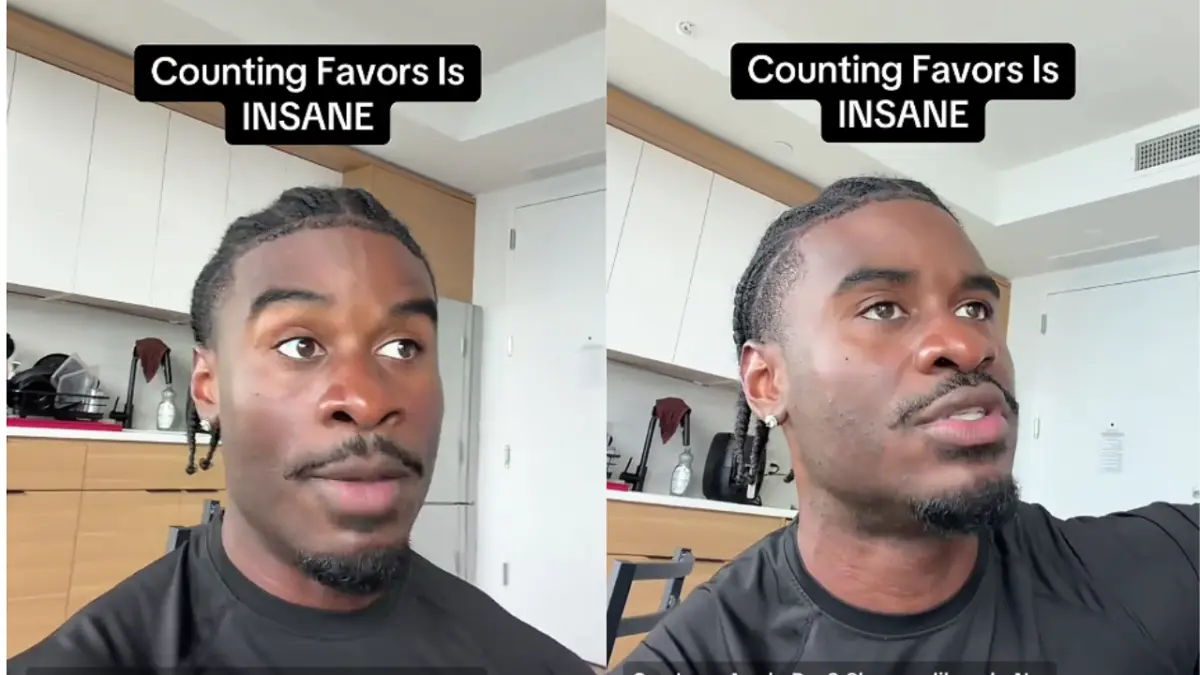
A recent video shared by TikTok creator @maxwellvision has ignited a widespread discussion across social media platforms, delving into the nuanced and often unspoken financial agreements that govern modern friendships. The video, which has garnered over 1.7 million views and nearly 1,200 comments, recounts an incident where a friend, after initially offering to cover a meal with an explicit declaration of "no strings attached," later confronted the creator, Maxwell, about the $65 debt. This narrative has resonated with a vast audience, prompting a collective examination of reciprocity, communication, and the delicate balance of monetary exchanges within social circles.
The Genesis of a Social Quandary: A Birthday Dinner Dilemma
The core of the incident unfolded during a birthday dinner celebrating one of Maxwell’s female friends. The gathering, a common social ritual, brought together a group of friends for an evening of camaraderie and celebration. The initial pleasantries, however, took an unexpected turn when the time came for settling the bill. The group opted for separate checks, a practice increasingly common in group dining to avoid complex calculations and potential disputes. Maxwell, upon receiving his $65 bill, discovered a critical oversight: his wallet was nowhere to be found.
After a moment of panic and retracing his steps mentally, Maxwell concluded his wallet was either left in the ride-share vehicle he had taken to the restaurant or, more fortunately, safely at home. A quick check of his phone confirmed the latter, as the AirTag attached to his wallet indicated its presence at his residence. While this brought a measure of relief regarding the wallet’s security, it left him in an immediate predicament: he had no physical cash or cards to settle his bill.
Reluctant to inconvenience his friends by asking them to cover his meal outright, Maxwell first explored alternative payment methods. He inquired with the waitress about the availability of Apple Pay, hoping to utilize his smartphone for the transaction. Unfortunately, the establishment’s Apple Pay machine was out of service, closing off that avenue. It was at this point that Maxwell considered leveraging digital payment applications like Zelle or PayPal. His plan was to ask a friend to cover his meal temporarily, with an immediate reimbursement via one of these apps.
The Offer and Its Interpretation: A Favor or a Loan?
Maxwell approached his friend, identified as Jack, explaining his situation and offering to Zelle him the $65 immediately. To Maxwell’s surprise, Jack explicitly declined the offer of immediate repayment. "Zelle me the money? You good… You don’t gotta Zelle me nothing. How much is it? $65.00… Bro, you good," Jack reportedly stated.
Maxwell interpreted Jack’s unequivocal refusal of repayment as a clear act of generosity, a favor extended without expectation of direct reimbursement. This interpretation aligned with a common, albeit unwritten, social contract among close friends: the idea of "taking turns" or reciprocal gestures. Maxwell mentally cataloged this as a favor, anticipating an opportunity to reciprocate in the future, perhaps by covering Jack’s meal or drinks at another outing. This unstated agreement, he believed, was a hallmark of genuine friendship. The evening concluded on what Maxwell perceived as a harmonious note, with the $65 transaction settled as a generous gesture rather than a pending debt.
The Unraveling: A Confrontation Two Weeks Later
The perceived goodwill, however, proved to be fleeting. Approximately two weeks after the birthday dinner, Maxwell joined other friends, including Jack, for a basketball game at the gym. After an intense session, one of their friends, Eric, expressed a desire for a Gatorade. The vending machine, however, only accepted cash. Maxwell, possessing about $4 in cash, readily offered it to Eric.
This seemingly innocuous act became the catalyst for a confrontation that laid bare the underlying tension regarding the $65 meal. Jack, witnessing Maxwell hand money to Eric, reacted with visible agitation. "For real, bro? That’s crazy… That’s wild," Jack reportedly remarked. Confused by Jack’s sudden change in demeanor, Maxwell inquired about the problem.
Jack’s response was direct and accusatory: "Bro, you don’t think it’s weird that you’re giving other people money when you owe me money? I paid for your dinner, you said you would pay me back."
Maxwell, taken aback, immediately reminded Jack of their earlier conversation, specifically highlighting Jack’s explicit refusal of immediate repayment and his insistence that Maxwell "didn’t need to" Zelle him the money. Jack, in turn, offered a different interpretation of his initial gesture, claiming he had only said he didn’t expect repayment "to be nice," but had privately expected Maxwell to reimburse him. He even added that if Maxwell "couldn’t pay him back," he would understand, a remark Maxwell perceived as an insinuation that he lacked the financial means.
Feeling cornered and wanting to immediately resolve the misunderstanding, Maxwell promptly pulled out his phone and Zelled Jack the $65. From Maxwell’s perspective, Jack was "counting the favor," a behavior he found antithetical to the spirit of friendship. He acted swiftly to prevent the financial discrepancy from casting a long shadow over their relationship.
The Broader Context: Unwritten Rules of Friendship and Financial Reciprocity
Maxwell’s video tapped into a universal social dilemma: the unwritten rules of financial exchange among friends. This incident highlights a common friction point in interpersonal relationships, particularly in an era where digital payment apps have made monetary transactions instantaneous and less formal. The "favor economy" among friends often operates on implicit agreements of reciprocity, where gestures of generosity are expected to be balanced over time, rather than through explicit, immediate repayment.
Sociological studies on social exchange theory suggest that individuals engage in relationships expecting certain rewards and reciprocity. In friendships, these "rewards" often include emotional support, companionship, and sometimes, financial favors. The expectation of reciprocity, however, can be either diffuse (a general sense of mutual obligation over time) or specific (an expectation of direct, immediate return). Maxwell clearly operated under the assumption of diffuse reciprocity, while Jack, despite his verbal cues, held an expectation of specific, albeit delayed, repayment.
The rise of platforms like Zelle, Venmo, and PayPal has fundamentally altered how individuals manage personal finances and interact with friends. These apps facilitate quick and easy money transfers, blurring the lines between what constitutes a casual favor, a gift, or a loan. While they offer convenience, they can also inadvertently complicate social dynamics by making every financial interaction explicitly trackable, potentially eroding the informal nature of favors. Before these apps, a friend covering a meal might have been a more ambiguous gesture, more readily accepted as a favor to be reciprocated later. Now, the option to repay instantly through an app adds another layer of expectation and potential miscommunication.
TikTok Community Reactions and Analysis of Implications
The viral nature of Maxwell’s video underscores the relatability of his experience. The comment section became a forum for thousands to share their own perspectives and similar anecdotes, revealing a widespread consensus that Jack’s actions constituted a breach of social etiquette. Many commenters echoed Maxwell’s sentiment that an explicit offer to cover a cost, coupled with a refusal of repayment, should be interpreted as a genuine favor, not a loan with a hidden expectation.
One commenter articulated a common approach among friends, stating, "Me and my buddies don’t pay each other back, we just take turns buying stuff for everyone." This sentiment reflects the ideal of diffuse reciprocity, where the overall balance of giving and receiving evens out over the long term, fostering a sense of mutual support without the burden of meticulously tracking every transaction.
Another user emphasized the importance of clear communication: "He should’ve been straight forward with his intentions. Also, if you don’t rock with him like that, you could’ve sent him the money right away to avoid this." This comment highlights the critical role of explicit communication in financial dealings, even among friends. Jack’s failure to clearly state his expectation for repayment, despite Maxwell’s offer to Zelle him immediately, created a significant misunderstanding. His later rationalization of "being nice" further complicated the situation, revealing a disconnect between his spoken words and his internal expectations.
The incident serves as a cautionary tale about the perils of implicit social contracts. In friendships, it’s often assumed that a shared understanding exists, but when it comes to money, such assumptions can lead to resentment and damaged relationships. Jack’s decision to "be nice" rather than honest about his financial expectations placed the burden of interpretation entirely on Maxwell, and when Maxwell interpreted it differently, the friendship suffered.
Broader Impact and Lessons Learned
The Maxwellvision incident transcends a mere $65 dispute; it illuminates the intricate psychological and social dynamics at play in contemporary friendships. It prompts individuals to consider:
- The Power of Explicit Communication: The most significant takeaway is the necessity of clear, unambiguous communication regarding financial transactions, even within the closest friendships. If a friend expects repayment, they should state it upfront, regardless of how uncomfortable it might feel.
- The Definition of a "Favor": The incident forces a re-evaluation of what constitutes a "favor" versus a "loan." A favor, by its very nature, implies a degree of generosity without immediate or explicit expectation of return. A loan, conversely, carries a clear expectation of repayment.
- Social Media as a Mirror: Platforms like TikTok, by providing a public forum for personal anecdotes, act as a powerful mirror reflecting widespread social dilemmas. The viral response to Maxwell’s video indicates that many people have experienced similar situations, finding validation and a sense of shared understanding.
- Maintaining Friendship Integrity: The core value of friendship often lies in mutual trust and support, not in meticulous accounting. When financial expectations become a source of contention, it can erode the very foundation of the relationship. Maxwell’s quick action to repay the $65, despite his frustration, indicates his desire to prioritize the friendship over the dispute, albeit with a potential re-evaluation of its dynamics.
While the Daily Dot noted its inability to independently verify the events described by @maxwellvision, the narrative’s immense resonance on TikTok confirms its cultural significance. It serves as a stark reminder that while money can facilitate convenience, it also possesses the power to strain the most cherished bonds, particularly when left unspoken and open to individual interpretation. The $65 meal ultimately cost more than its face value, sparking a crucial conversation about honesty, expectations, and the unwritten rules that govern our social lives.








