Vera Intan Clara
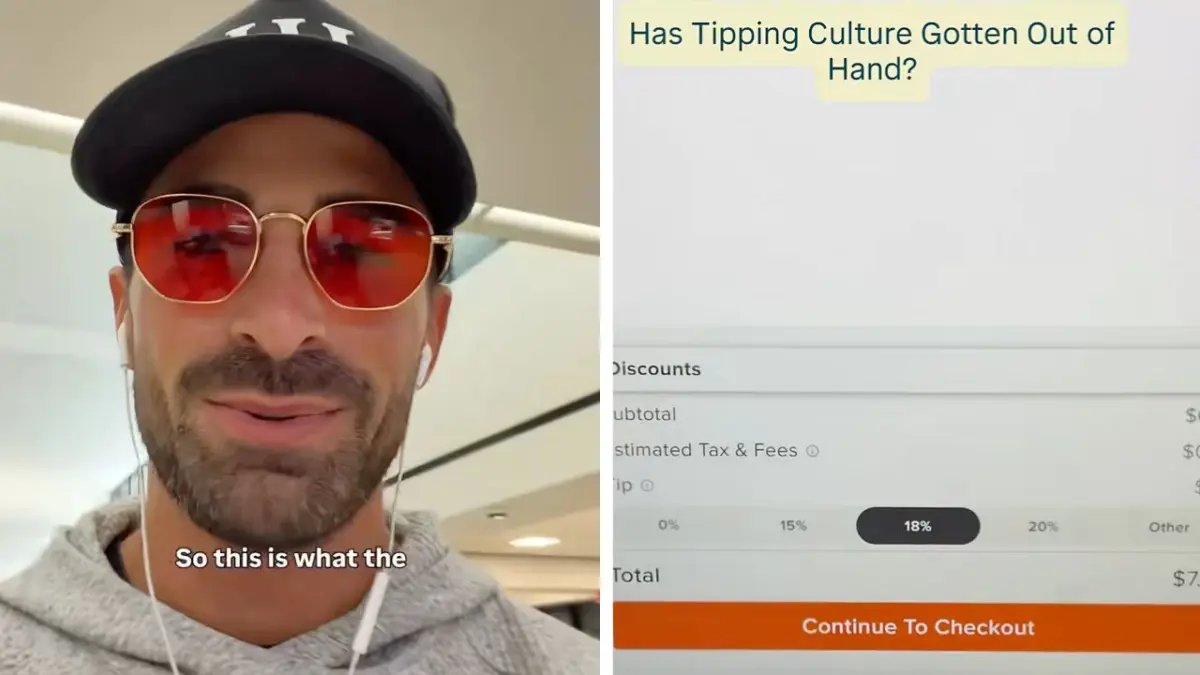
In an incident that quickly captivated a global audience, a TikTok creator, @drclaymoss, ignited a widespread discussion about the evolving landscape of tipping culture after encountering an automated tip request for a simple bottle of water purchased at an airport self-service kiosk. The video, shared on October 17th, rapidly garnered 208,800 views as of publication, becoming a prominent example of the growing phenomenon often termed "tip creep." This event underscores a broader societal conversation about the appropriate boundaries of gratuity in an increasingly automated retail environment, prompting questions about consumer expectations, business practices, and the psychological impact of pervasive tip requests.
The Viral Encounter: A Snapshot of Modern Consumer Frustration
The incident unfolded as @drclaymoss navigated an airport terminal, presumably en route to a flight. Prior to boarding, the creator sought a common travel staple: a bottle of water. His stop at a self-service retail point, designed for quick and efficient transactions, seemed unremarkable until he reached the payment stage. As captured in his viral video, the self-checkout kiosk, after the item was scanned, presented an unexpected prompt: an option to add an 18% tip to the transaction.
Moss’s immediate reaction, conveyed with a mix of amusement and disbelief, resonated deeply with viewers. "So this is what the world has come to nowadays," he remarked, panning his camera across the deserted self-service area. The absence of any visible staff members underscored the core of his query, which he vocalized with a smile: "Who is this automatic 18% tip that I have to click out of? Who am I tipping here? Is this what we have come to?" His decision to select the 0% tip option, a deliberate act captured on video, became a symbolic moment for many who feel increasingly fatigued by ubiquitous tip requests. The comments section of his video quickly filled with supportive reactions, with one user humorously suggesting that, for doing all the work at self-checkout, the creator should be receiving a 20% discount instead of being asked for a tip. This anecdote, while specific to @drclaymoss’s experience, mirrors a growing sentiment among consumers worldwide.
(It is important to note that The Daily Dot, and by extension this report, could not independently verify the specific details of the event, including the precise location, the name of the business, the exact price of the item, or @drclaymoss’s full identity and credentials. The details presented reflect @drclaymoss’s account as shared on TikTok, and the identities of commenters remain unconfirmed.)
A Brief History of Tipping and the Rise of "Tip Creep"
To fully appreciate the significance of @drclaymoss’s experience, it is essential to understand the historical context and recent evolution of tipping culture. Tipping, as a practice, has roots stretching back centuries, originating in medieval Europe as a token of appreciation for good service. In the United States, tipping gained widespread traction in the post-Civil War era, often tied to the service industry, particularly restaurants and hospitality. Historically, it served as a discretionary bonus, a way for patrons to reward exceptional service, and over time, became an expected component of income for many service workers, especially those earning a sub-minimum "tipped wage."
For decades, tipping remained largely confined to specific service sectors where direct human interaction and personal service were central to the transaction. Waitstaff, bartenders, hairdressers, and taxi drivers were among the primary recipients of gratuities. However, the landscape began to shift dramatically in the early 21st century, accelerated by technological advancements and socio-economic changes. The advent of digital payment systems, particularly after the widespread adoption of tablets and point-of-sale (POS) systems, revolutionized how tips were requested and processed. These systems made it effortless for businesses to integrate tip prompts into virtually any transaction, regardless of the level of direct human service involved.
The COVID-19 pandemic further intensified this trend. With widespread economic uncertainty, heightened awareness of essential workers, and a desire to support local businesses, consumers often felt compelled to tip more generously, even for services where tipping was previously uncommon. This period saw a significant expansion of "tip creep" – the phenomenon where tip requests appear in an increasing number of settings and for a broader range of goods and services, often in situations involving minimal or no direct human interaction. The @drclaymoss incident is a quintessential example of this phenomenon reaching a new frontier: the fully automated self-checkout.
The Proliferation of Self-Service Technology and Its Intersection with Tipping
The proliferation of self-service technology across various retail and service sectors has been a defining trend of the past decade. From grocery stores and pharmacies to fast-food restaurants and, increasingly, airport concessions, self-checkout kiosks offer businesses numerous benefits, including reduced labor costs, increased transaction speed, and greater operational efficiency. For consumers, they often promise convenience and autonomy, allowing them to complete purchases without waiting in lines.
According to a 2022 survey by the National Retail Federation, 67% of consumers reported using self-checkout, and 90% found it easy to use. The global self-checkout systems market size was valued at USD 4.15 billion in 2022 and is projected to reach USD 10.32 billion by 2032, according to reports by Grand View Research. This rapid expansion highlights a fundamental shift in how transactions are conducted.
The integration of tip prompts into these self-service systems, however, creates a new dynamic that challenges established norms of gratuity. When a consumer independently scans, bags, and pays for an item with no direct human assistance, the rationale for a tip becomes significantly less clear. This scenario pushes the boundaries of what consumers perceive as a "service" worthy of additional compensation, leading to confusion, frustration, and a sense of being subtly pressured.
Supporting Data and Consumer Sentiment
Recent data underscores the growing prevalence of tip requests and shifting consumer attitudes. A 2023 survey by Bankrate found that 66% of U.S. adults have a negative view of tipping, citing reasons such as requests for tips in unexpected places (30%) and a feeling of being pressured (21%). This represents a significant increase from previous years, indicating a growing "tip fatigue" among the public. The same survey revealed that 16% of Americans believe tipping culture has gotten "out of control."
Payment processing companies, such as Square and Toast, whose systems often power these digital kiosks, have made it easier for businesses to enable tip options by default. While these features are intended to provide flexibility for businesses that do employ service staff, their widespread and sometimes indiscriminate application has led to the current dilemma. For instance, a coffee shop with a single barista may use the same POS system as an entirely automated micro-market, yet both could present tip options by default.
Average tip percentages have also seen an upward trend. While a 15-20% tip was once standard for full-service dining, many digital prompts now suggest 18%, 20%, or even 25% as starting points, subtly anchoring consumer expectations higher. When these percentages are applied to a low-cost item like a bottle of water, even a small monetary tip can represent a disproportionately high percentage of the base price, further exacerbating consumer frustration.
Inferred Industry Perspectives and Rationales
While no specific statement from the airport vendor or kiosk provider involved in @drclaymoss’s video is available, industry practices offer insights into why such tip prompts appear:
- Default Settings of Payment Processors: Many modern POS systems and payment terminals come pre-configured with tip options as a standard feature. Businesses may enable these settings without fully considering the nuances of every transaction type, or they may lack the granular control to disable tips for specific items or self-service modes.
- Support for Indirect Staff: Some businesses might argue that even in a self-service environment, there are employees working behind the scenes. This could include staff responsible for stocking shelves, maintaining the kiosk, cleaning the area, or managing inventory. Tips, in this context, might be presented as a way to support these often-invisible workers, even if the direct service interaction is absent. However, transparency regarding how such tips are distributed is often lacking, leading to skepticism.
- Revenue Generation: For businesses facing rising operational costs, increased rent, and fluctuating labor expenses, every potential revenue stream is considered. Adding a tip option, even for automated transactions, represents an opportunity to slightly boost revenue, particularly if a significant percentage of customers opt to leave a gratuity.
- Testing Consumer Willingness: Businesses might use these prompts as a form of market research, testing the boundaries of consumer generosity and willingness to tip in novel situations.
- Standardization Across Operations: A multi-faceted business, such as an airport concessionaire that operates both full-service restaurants and self-service kiosks, might use a single, standardized payment system across all its operations. Disabling tip prompts for only certain parts of the business could be perceived as administratively complex or inconsistent.
Broader Economic and Societal Implications
The debate sparked by @drclaymoss’s video touches upon several critical economic and societal implications:
- Consumer Trust and Alienation: Persistent and seemingly unwarranted tip requests can erode consumer trust and foster resentment. Customers may feel exploited or pressured, potentially leading to a backlash against businesses perceived as overly aggressive in their pursuit of gratuities. This could, ironically, lead to a reduction in overall sales or customer loyalty.
- The Future of Service Labor: As automation expands, the role of human service workers shifts. If tips become detached from direct service, it raises questions about fair compensation for those who still provide essential human interaction. It also complicates the economic model for industries traditionally reliant on tips as a significant portion of worker income.
- Transparency and Regulation: The lack of transparency regarding how tips from self-checkout kiosks are collected and distributed is a major concern. Are these tips going directly to specific employees, pooled among a wider staff, or retained by the business? Consumer advocacy groups are increasingly calling for greater clarity and potentially even regulation to ensure that tips genuinely benefit workers and are not simply an additional revenue stream for corporations. Some states and cities have already begun to implement clearer guidelines for tip pooling and distribution.
- Psychological Impact: The constant presence of tip prompts can induce "tip fatigue," a psychological burden on consumers who feel a persistent pressure to give, even when they don’t perceive a clear justification. This can detract from the overall shopping experience and create a sense of discomfort during what should be a straightforward transaction.
- Redefining "Service": The self-checkout tip prompt forces a re-evaluation of what constitutes "service" in the modern economy. Is service inherently linked to human interaction, or can it extend to the convenience and efficiency provided by automated systems? This philosophical question has practical implications for how businesses structure their pricing and compensation models.
The Path Forward: Navigating a New Tipping Landscape
The viral video of @drclaymoss highlights a critical juncture in the evolution of consumer-business interactions. As technology continues to advance and automation becomes more pervasive, the traditional norms surrounding tipping are being challenged in unprecedented ways.
For businesses, the challenge lies in finding a balance between optimizing revenue, supporting staff, and maintaining positive customer relations. This may involve greater discernment in implementing tip prompts, perhaps disabling them for fully automated transactions, or providing clear explanations for their presence. Transparency about how tips are used would also be crucial in rebuilding consumer trust.
For consumers, the situation demands a degree of awareness and a willingness to make conscious choices. The ability to easily opt out of a tip, as @drclaymoss demonstrated, empowers individuals to define their own boundaries in this evolving landscape.
For policymakers, the increasing complexity of tipping culture may necessitate clearer guidelines and regulations, particularly concerning the distribution of tips in automated environments. Ensuring that tips genuinely benefit workers and are not merely disguised price increases will be a key consideration.
Ultimately, the incident at the airport self-checkout kiosk serves as a powerful microcosm of a much larger debate. It is a testament to how rapidly societal norms can be disrupted by technological change and a reminder that as our interactions with commerce become more automated, the human element—and the expectations surrounding it—remains a complex and highly scrutinized factor. The conversation sparked by @drclaymoss is far from over; it is an ongoing dialogue about fairness, value, and the future of gratuity in a rapidly changing world.