Garick Elordi
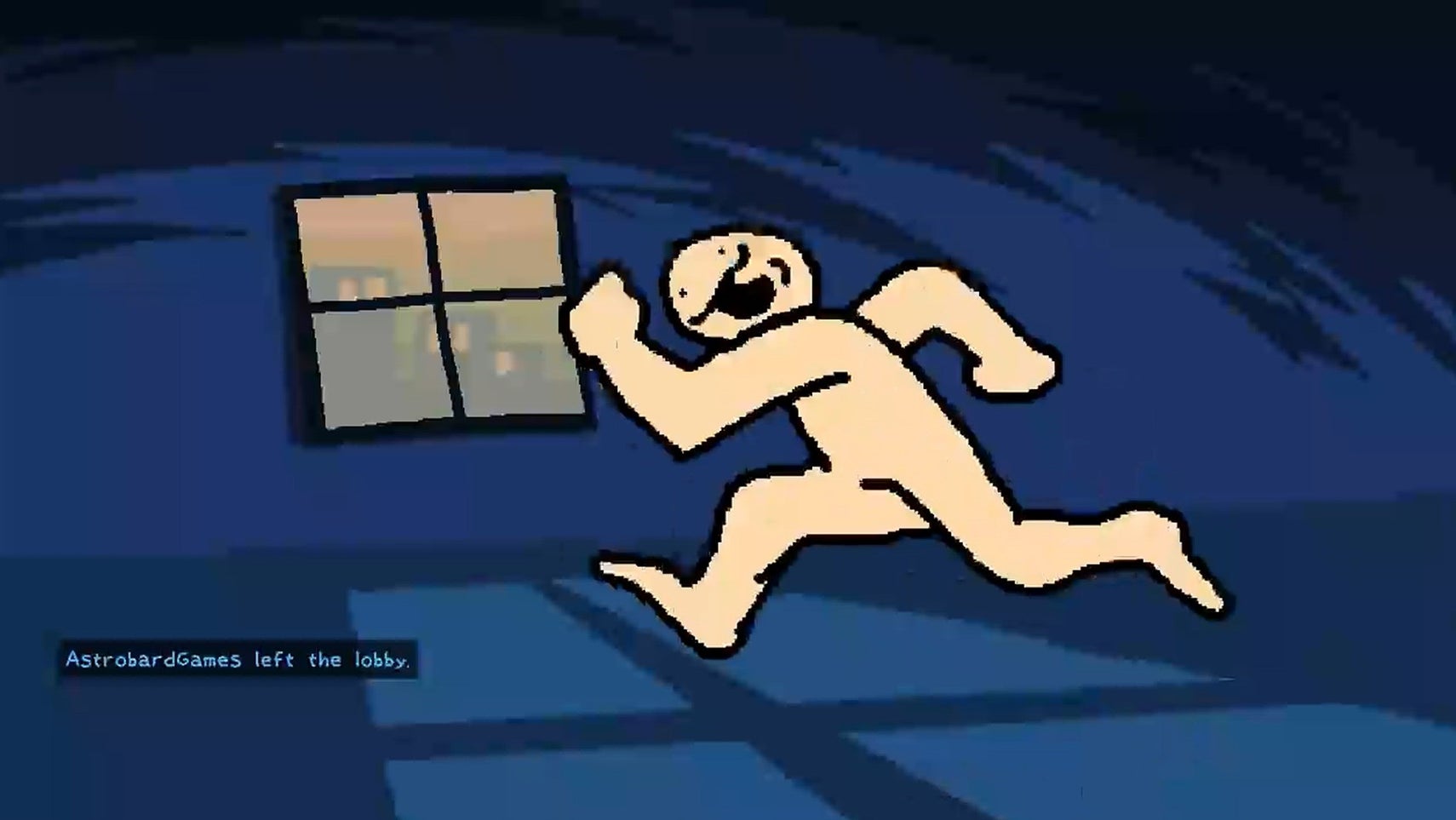
The landscape of competitive online gaming has long been marred by the phenomenon of "rage quitting," a practice where a losing player intentionally disconnects from a match to avoid the recording of a loss or to deny their opponent the satisfaction of a formal victory. While major AAA studios have traditionally employed punitive measures such as temporary bans, rank de-ranking, or "bad sport" matchmaking pools, indie developer Khao Mortadios of Astrobard Games has proposed a novel, comedic solution. Through a recently shared demonstration of the upcoming title Generic Fighter Maybe, Mortadios showcased a unique animation sequence triggered by a player’s sudden departure: rather than the game simply freezing or returning to a menu, the forfeiting character is seen wearing a wide, exaggerated smile before sprinting across the stage and leaping through a glass window.
This creative approach to a perennial industry problem highlights a growing trend among independent developers to use "shaming" or "humor-based" mechanics to mitigate the frustration of the remaining player. By transforming a moment of technical and competitive frustration into a scripted piece of physical comedy, Astrobard Games aims to shift the emotional tone of the encounter from one of irritation to one of amusement.
The Mechanics of the Disconnect Animation
The video shared by Khao Mortadios on social media platforms, including Bluesky, illustrates the specific timing of the "window leap" mechanic. In the demonstration, a player is seen executing a high-damage, high-skill combo that would inevitably lead to a round-ending knockout. Just as the final blow is set to land, the opponent triggers a disconnect. In most modern fighting games, this would result in a "Communication Error" pop-up or a frozen screen. In Generic Fighter Maybe, the flow of the match is interrupted by a bespoke animation.
The character belonging to the disconnecting player breaks their fighting stance, adopts a "goofy" facial expression, and runs toward the nearest boundary of the stage. The character then crashes through a window—complete with glass-shattering sound effects—followed by a prominent on-screen message stating, "Your opponent has left the game." This sequence ensures that the winning player is not only credited with the moral victory but is also provided with a visual "finisher" that acknowledges the opponent’s exit as a deliberate act of flight.
Historical Context: The Evolution of Rage Quit Penalties
Rage quitting has been a core issue in the Fighting Game Community (FGC) since the advent of online play. Developers have experimented with various methods to discourage the practice, with varying degrees of success.
- The Quitality (Mortal Kombat): NetherRealms Studios introduced the "Quitality" in Mortal Kombat X (2015). If a player quits mid-match, their character’s head spontaneously explodes, and the words "QUITALITY" appear on the screen. While cathartic, this method relies on the series’ signature gore.
- The Skull Icon (Street Fighter V): Capcom implemented a system where players who frequently disconnected were marked with a specific icon (a skull) on their profile. This allowed other players to avoid matchmaking with known "rage quitters."
- The "Chicken" Mark (Tekken): The Tekken series has historically used "disconnection rates" displayed during the matchmaking phase. If a player’s disconnection rate exceeds a certain percentage (often 10% or higher), their name appears in yellow or red text as a warning to potential opponents.
- In-Game Currency Penalties: Many modern titles, such as Dragon Ball FighterZ, have implemented bans from ranked play and the forfeiture of in-game currency for players who do not complete a specific percentage of their matches.
The approach taken by Generic Fighter Maybe differs by leaning into the absurdity of the situation. By making the character "run away," the game creates a narrative reason for the disconnect that mocks the cowardice of the act rather than just punishing it with a menu prompt.
Data and the Impact of Disconnections on Competitive Integrity
The impact of rage quitting extends beyond mere annoyance; it affects the mathematical integrity of competitive ladders. In most Elo-based or Glicko-2 ranking systems, a match must conclude for the algorithm to accurately redistribute points between the winner and the loser. When a player "pulls the plug" before the game writes the result to the server, it can lead to "point saving," where the loser maintains their rank despite a clear defeat.
Data from recent competitive betas suggests that rage quitting remains a significant barrier to entry for new players. In the Invincible Vs beta held earlier this month, community reports indicated a high frequency of disconnections even in "unranked" modes where wins and losses had no long-term consequences. This suggests that the behavior is driven more by immediate emotional frustration—often referred to as "tilt"—than by a calculated desire to preserve a win-loss record.
According to industry surveys on player behavior, approximately 15% to 20% of competitive gamers admit to rage quitting at least once a month. In high-stakes environments, such as "Promotion Matches" in games like Street Fighter 6 or Tekken 8, that percentage is estimated to spike as players feel more pressure to maintain their status.
Technical Challenges in Disconnect Detection
One of the primary hurdles for developers like Khao Mortadios is distinguishing between an intentional "rage quit" and a legitimate technical failure. Internet service provider (ISP) drops, server-side crashes, or power outages can all result in a sudden disconnect.
Modern fighting games utilize "Rollback Netcode," a system that predicts player inputs to reduce perceived latency. While rollback has revolutionized the feel of online play, it also makes the moment of disconnection more jarring. To implement a "window leap" animation, the game engine must be able to verify that the connection was severed on the client side (the player’s console or PC) rather than the server side. Developers typically look for a "graceful" close of the software or a sudden loss of packet transmission while the hardware remains powered on to identify a manual "plug pull."
Psychological Implications of Comedic Punishment
Psychologists specializing in gaming behavior suggest that comedic interventions may be more effective at de-escalating player toxicity than purely punitive ones. A "ban" creates a sense of grievance in the punished player, which may lead to further toxic behavior once the ban expires. Conversely, a comedic animation like the one in Generic Fighter Maybe serves two purposes:
- Defusion: For the player who stayed, the animation provides a "laugh-out-loud" moment that replaces the anger of being denied a finish.
- Social Signaling: For the player who quit, knowing that their character will perform a "cowardly" animation that their opponent will see acts as a social deterrent. It frames the quit as an embarrassing retreat rather than a defiant exit.
Broader Industry Reactions and Future Outlook
While Generic Fighter Maybe is an indie project, its innovative take on player management has garnered attention from the broader FGC. Observers note that as the genre moves toward more expressive and stylized presentations, these "personality-driven" mechanics are likely to become more common.
The response from the community has been largely positive. Social media users have praised the "window leap" for its charm and its ability to capture the "saltiness" of the fighting game experience. Some have suggested that different characters should have unique "rage quit" animations—such as a character hiding in a cardboard box or calling a taxi to pick them up from the stage.
As Generic Fighter Maybe continues its development under Astrobard Games, the focus remains on creating a robust fighting experience that does not take itself too seriously. In an era where competitive gaming can often feel clinical or overly stressful, Khao Mortadios is proving that a bit of levity might be the most effective weapon against the industry’s oldest problem.
The full release of Generic Fighter Maybe is expected to further refine these systems, potentially setting a new standard for how indie titles handle player retention and community conduct. For now, the "window leap" stands as a testament to the creativity of the indie scene in addressing the human element of digital competition.