Sisilia Frederika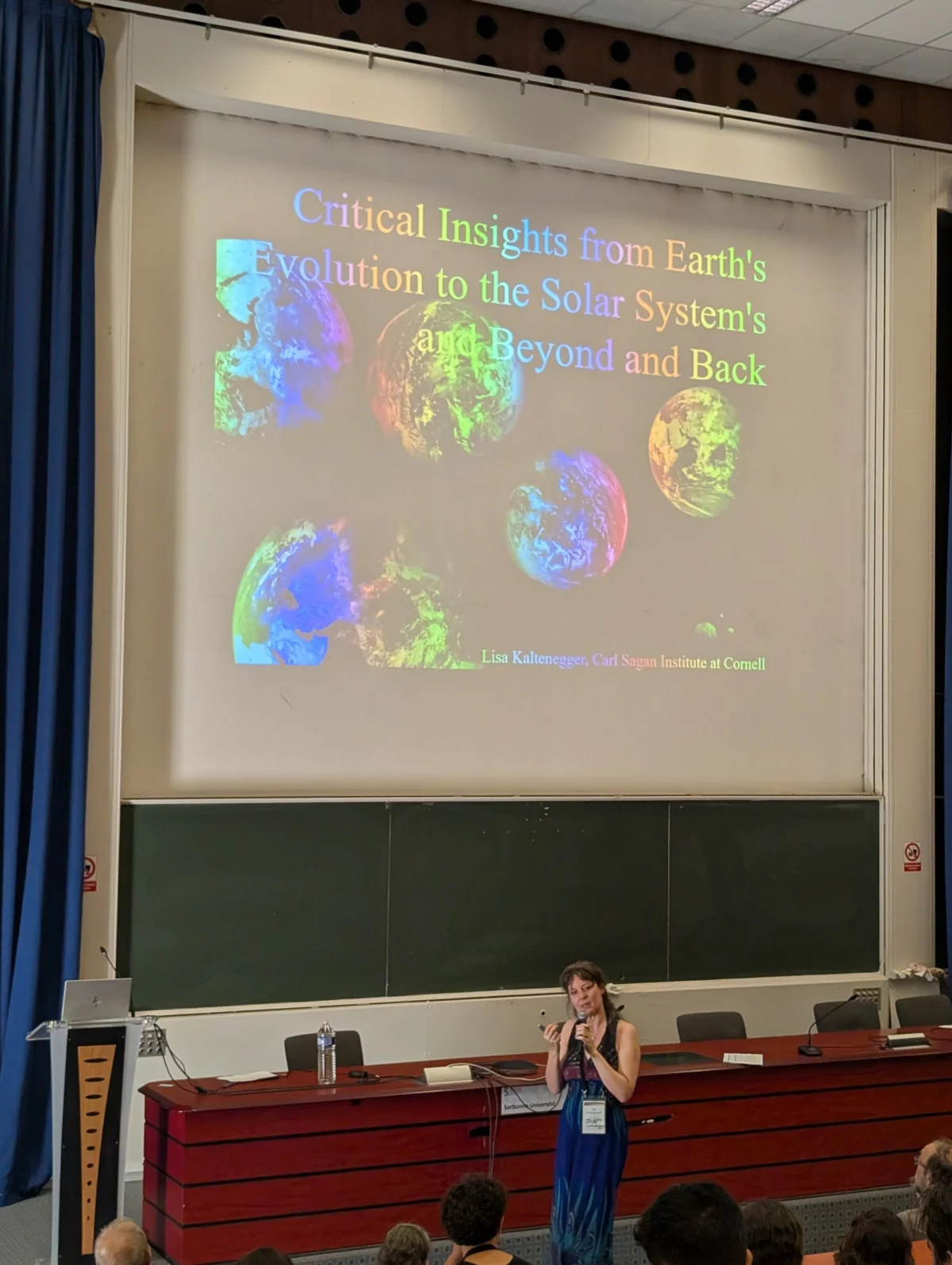
The field of astrobiology, long considered a fringe pursuit of theoretical science, has matured into a rigorous, interdisciplinary endeavor that demands the integration of disparate scientific silos. At the recent Origins 2026 conference held at the historic Sorbonne University in Paris, the global scientific community gathered to address the persistent lack of cross-communication between astronomers, biologists, chemists, stellar physicists, and geologists. Despite the shared goal of identifying life beyond Earth, the "yawning chasms" between these subgenres remain a significant hurdle to progress. Dr. Lisa Kaltenegger, Director of the Carl Sagan Institute at Cornell University and a leading voice in the search for habitable worlds, emerged as a central figure at the summit, emphasizing that the future of the field depends on a unified approach to planetary science.
During a week characterized by record-breaking temperatures in the French capital, Kaltenegger provided an exhaustive overview of the current state of exoplanetary research. Her presentation focused on the characterization of 45 rocky exoplanets that have been identified as residing within their respective stellar systems’ "habitable zones"—the orbital region where temperatures allow for the existence of liquid water on a planetary surface. However, as Kaltenegger noted, the presence of water is merely a prerequisite, not a guarantee, of life. The challenge now lies in moving beyond simple detection to the complex task of atmospheric and surface characterization.
The Red Dwarf Paradox: Opportunities and Obstacles in M-Dwarf Systems
The current census of the galaxy suggests that approximately 20 percent of all red M-dwarfs—the most ubiquitous stars in the universe—harbor rocky planets within their habitable zones. These stars, which range from ten to fifty percent of the mass of the Sun, have become the primary targets for exoplanet hunters. Because these stars are smaller and cooler than the Sun, rocky planets orbiting them are easier to detect via the transit method, where a planet’s passage in front of its star causes a measurable dip in light. Furthermore, the habitable zones of M-dwarfs are located much closer to the stellar surface, resulting in shorter orbital periods that allow for more frequent observations.
However, Kaltenegger cautioned against a narrow definition of habitability based solely on distance. While a planet may reside in the Goldilocks zone, its actual habitability is influenced by a myriad of factors, including stellar activity, atmospheric composition, and geological history. Conversely, she suggested that life could potentially exist outside traditional habitable zones, perhaps in sub-surface oceans or under exotic atmospheric conditions. This nuance underscores the need for a more sophisticated understanding of how rocky planets function as integrated systems.
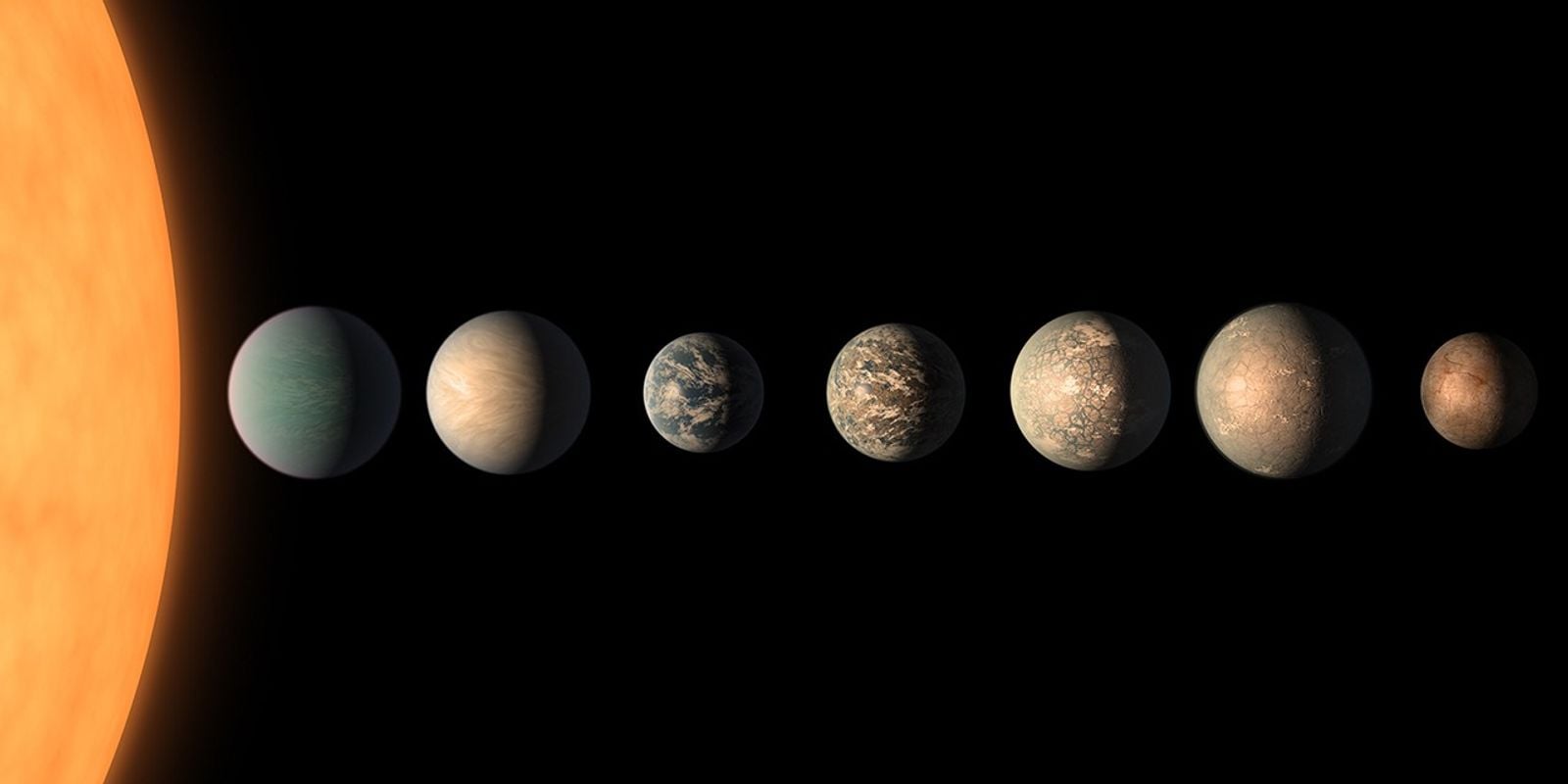
A primary focus for the extrasolar science community is the TRAPPIST-1 system, located roughly 40 light-years away in the constellation Aquarius. This system, centered around a cool red dwarf, contains seven Earth-sized planets, three of which are situated in the habitable zone. Because of its proximity and the favorable size ratio between the planets and the star, TRAPPIST-1 has been prioritized for observations using NASA’s James Webb Space Telescope (JWST).
Technological Constraints and the Roadmap to 2040
While the JWST represents a quantum leap in astronomical capability, it is not a dedicated exoplanet hunter. As a multi-purpose observatory, its mission time is split between studying the first galaxies, the evolution of black holes, and the lifecycle of stars. Consequently, the time allotted for characterizing exoplanetary atmospheres is limited and highly competitive. Current JWST observations focus on detecting atmospheric biosignatures, such as the simultaneous presence of oxygen and methane—a chemical disequilibrium that, on Earth, is a strong indicator of biological activity.
The limitations of current technology mean that direct imaging of the surfaces of these worlds remains out of reach. To move beyond atmospheric transit spectroscopy and toward "seeing" the colors of alien landscapes, the scientific community is looking toward the next decade. The European Southern Observatory’s (ESO) Extremely Large Telescope (ELT), currently under construction in Chile’s Atacama Desert, is expected to see "first light" in 2030. With a 39-meter primary mirror, the ELT will have the light-gathering power necessary to potentially image rocky exoplanets directly.
Looking further ahead, NASA is in the early stages of planning the Habitable Worlds Observatory (HWO), a flagship mission tentatively scheduled for the 2040s. The HWO will be specifically designed to search for life on planets orbiting Sun-like stars, bridging the gap between the study of M-dwarf systems and the search for a true "Earth 2.0."
The Evolution of Earth as a Proxy for Alien Worlds
One of the most profound insights shared by Kaltenegger at Origins 2026 is the idea that Earth itself has been "many different planets" throughout its 4.5-billion-year history. In its infancy, Earth had a much shorter day, fewer continents, a radically different atmospheric composition, and a surface dominated by different forms of biota. This historical perspective is crucial for astrobiologists, as it suggests that the biosignatures we seek today might not have been applicable to Earth three billion years ago.
"The further we go back in time, the harder it gets to tease out the most important effects that changed our planet," Kaltenegger explained. By finding and studying extrasolar rocky worlds at various stages of their evolution, scientists can fill the gaps in Earth’s own geological and biological history. This "comparative planetology" allows researchers to treat the galaxy as a laboratory, observing how rocky planets evolve under different stellar conditions and across different timescales.
This approach requires a deep understanding of geology and photochemistry. Kaltenegger warned that without a comprehensive model of a planet’s geological activity, scientists might misinterpret inorganic signals as biosignatures. For instance, oxygen can be produced through the photolysis of water vapor, and methane can be released through serpentinization in the crust. To achieve certainty, researchers must look for multiple lines of evidence that exclude non-biological origins.
The Color Catalog of Life: Expanding the Search Parameters
To prepare for the next generation of telescopes, Kaltenegger and her team at Cornell University have developed a "color catalog of life." This database contains the spectral signatures of approximately 300 different biological pigments found on Earth, ranging from the green of chlorophyll to the deep purples and yellows of sulfur bacteria.
The choice of pigment is often dictated by the light available from the host star. While Earth’s vegetation has evolved to thrive under the G-type yellow light of the Sun, life on a planet orbiting a red M-dwarf would likely look very different. Kaltenegger noted that while a common basil plant might perish under the red light of an M-dwarf, sulfur bacteria could thrive, potentially turning the surface of an alien world purple. By cataloging these variations, astronomers will be better equipped to interpret the reflected light from distant worlds when direct imaging becomes possible.
Planetary Stewardship and the Future of Humanity
The search for life among the stars is often criticized as a pursuit of curiosity with little practical application for life on Earth. However, Kaltenegger argues that understanding other worlds is essential for the long-term survival of our own species. By identifying "older" versions of Earth-like planets, scientists can gain a glimpse into our own planet’s possible futures.
For example, if observations reveal that many older rocky planets possess atmospheres thick with sulfur dioxide (SO2), it could provide vital data on atmospheric tipping points and the long-term effects of volcanic activity or industrial pollution. "To better understand how our planet works and how to actually safeguard it better," Kaltenegger said, is a primary motivator for the field. The study of exoplanetary atmospheres provides the context necessary to understand the fragility of Earth’s own biosphere.
Conclusion: The Quest for Certainty in a Vast Cosmos
The Origins 2026 conference served as a reminder that the search for life is a marathon, not a sprint. The vast distances of space ensure that our data will always be limited to the light we can capture—whether reflected, emitted, or transmitted. There is a high probability that life exists in forms we cannot yet interpret, or that its signatures are currently indistinguishable from geological processes.
As the scientific community prepares for the deployment of the ELT and the development of the HWO, the focus remains on breaking down the barriers between disciplines. The collaboration between the geologist studying the ancient rocks of the Jack Hills in Australia and the astronomer analyzing the light from TRAPPIST-1 is no longer a luxury; it is a necessity. Only through this integrated approach can humanity hope to answer the most fundamental question: Are we alone in the universe? For now, the 45 rocky planets identified in the habitable zone stand as the most promising candidates for an answer, serving as the next frontier in our species’ ongoing journey of discovery.