Sisilia Frederika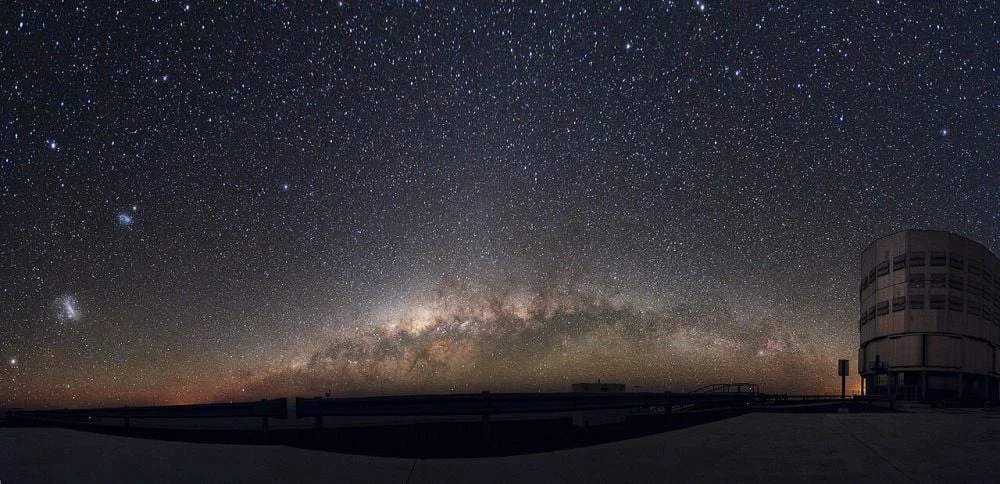
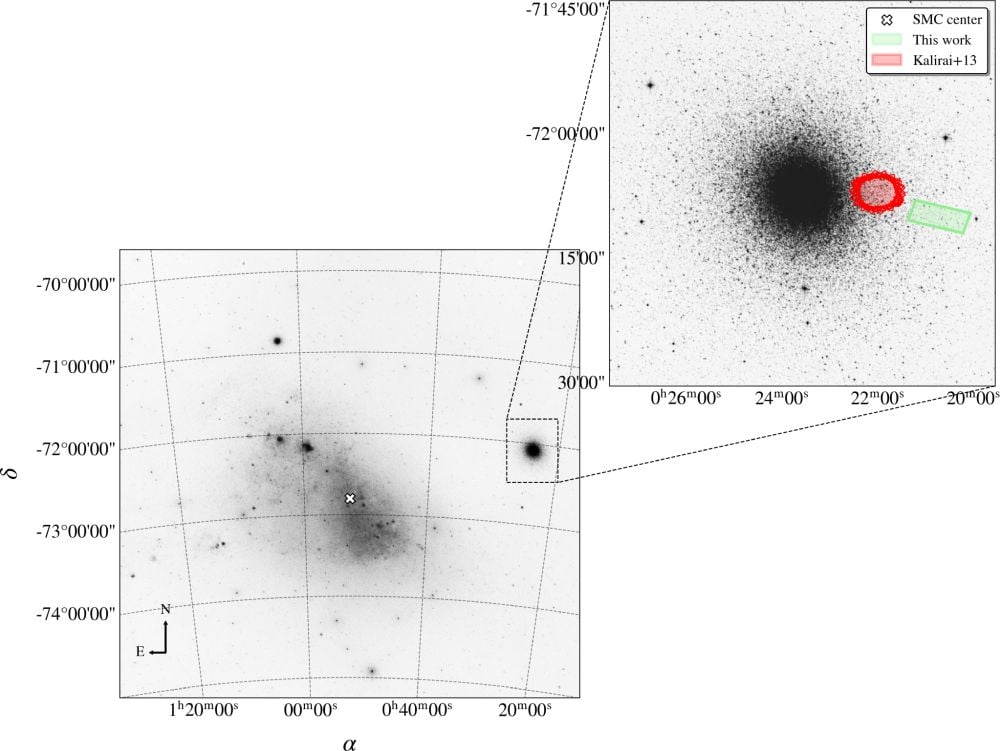
For decades, astronomers have sought to determine whether the IMF is a universal constant—meaning stars form in the same mass ratios regardless of their environment—or if it varies based on local conditions such as gas density, temperature, and metallicity. To resolve this fundamental question, researchers require high-precision observations of individual stars across a diverse range of masses, including the faint, low-mass stars that are often obscured or blurred in distant galaxies. The recent study led by Maria Legnardi, a PhD student at the University of Padua, utilizes the unprecedented sensitivity of the James Webb Space Telescope (JWST) to peer into the outskirts of the Small Magellanic Cloud (SMC), providing new insights into the binary star populations and the mass functions that define this neighboring dwarf galaxy.
The Significance of the Initial Mass Function in Galactic Evolution
The IMF is often described as the "DNA" of a stellar population. When a molecular cloud collapses to form stars, the resulting distribution determines how much of the galaxy’s gas is locked away in long-lived, low-mass M-dwarfs and how much is funneled into short-lived, massive O and B-type stars. This distribution is critical because a star’s initial mass is the single most important factor in determining its life cycle. High-mass stars live for only a few million years before exploding as supernovae, enriching the interstellar medium with heavy elements and triggering further star formation. In contrast, low-mass stars can survive for trillions of years, acting as "fossil" records of the galaxy’s early history.
Consequently, the IMF serves as the vital link between stellar-scale physics and the macro-evolution of galaxies. If the IMF is not universal, current models of galaxy formation, the calculation of star formation rates in the early universe, and our understanding of dark matter distributions—which rely on baryonic mass estimates—may require significant revision. However, measuring the IMF is notoriously difficult. It requires observing a representative sample of an entire stellar population, from the brightest giants to the dimmest main-sequence stars, while accurately accounting for the presence of binary systems.
The Small Magellanic Cloud: A Unique Astrophysical Laboratory
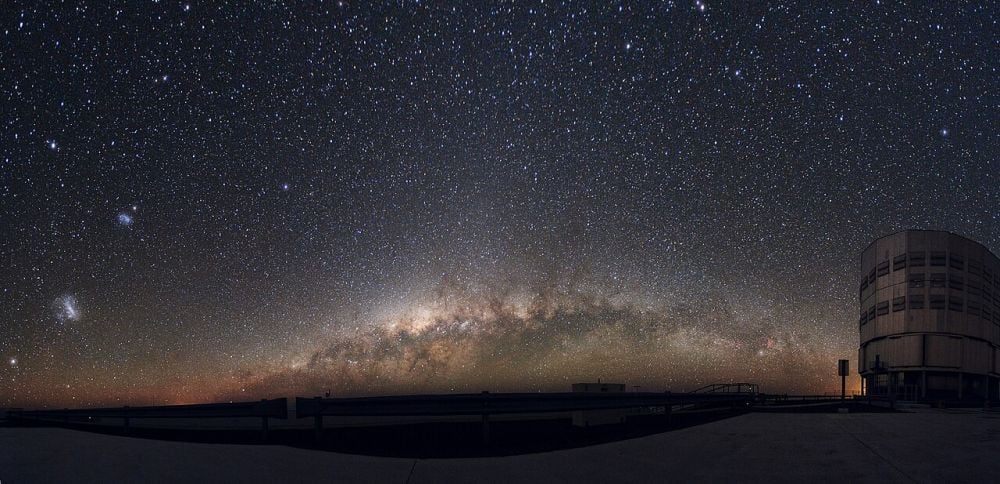
Located approximately 200,000 light-years from Earth, the Small Magellanic Cloud is one of the Milky Way’s closest galactic neighbors. Its proximity makes it an ideal target for resolved stellar population studies, but its physical characteristics make it scientifically indispensable. The SMC is a low-metallicity environment, possessing only about one-fifth the "metal" content (elements heavier than helium) of the Milky Way. This low metallicity offers a window into the conditions of the earlier universe, where galaxies had not yet been heavily enriched by successive generations of supernovae.
Furthermore, the SMC features diffuse star-forming regions. This allows astronomers to decouple the effects of stellar density from metallicity, two variables that are often entangled in more massive, crowded galaxies. By observing the outskirts of the SMC, where stellar crowding is even lower, Legnardi and her team could resolve individual stars with a clarity that was previously impossible. The low foreground extinction—meaning there is relatively little dust between Earth and the SMC to redden or dim the light—further enhances the quality of the data gathered by the JWST.
Overcoming the "Pollution" of Unresolved Binaries
One of the primary obstacles in determining an accurate IMF is the presence of binary star systems. Most stars do not form in isolation; they are born in pairs or multiple systems. When these stars are close together and located at vast distances, even the most powerful telescopes often see them as a single point of light. These "unresolved binaries" can significantly distort a Color-Magnitude Diagram (CMD), which is the primary tool astronomers use to analyze stellar populations.
In a CMD, a binary system appears brighter and often redder than a single star of the same primary mass. If not properly accounted for, these systems can lead to an overestimation of the number of high-mass stars or a misunderstanding of the stellar age distribution. To address this, the research team utilized the JWST’s deep photometry. While the JWST cannot physically resolve the tiny gap between two stars in a tight binary in the SMC, the statistical "pollution" they cause in the CMD provides a mathematical signature. By analyzing how stars deviate from the theoretical "single-star" main sequence line, the researchers can calculate the fraction of stars that must have companions.
Findings: Binary Fractions and Environmental Consistency
The study’s results indicate that approximately 14% of the stars in the SMC field have a binary companion with a mass at least 60% as large as the primary star. The researchers emphasize that this 14% figure represents a lower limit, as the methodology is less sensitive to very low-mass companions that do not significantly alter the primary star’s brightness or color.
The most striking aspect of this finding is its consistency with our own galaxy. Despite the SMC having five times less metallicity than the Milky Way and a significantly lower stellar density, the 14% binary fraction is statistically equivalent to what is observed in Milky Way "open clusters" of similar ages. It also aligns with the binary fractions found among field stars in the Milky Way’s solar neighborhood.
This suggests a surprising degree of resilience in the processes that govern binary star formation. The authors note that binary fractions tend to be higher in lower-density environments because there are fewer gravitational interactions between passing stars to disrupt or "strip" binary pairs. In the dense environments of globular clusters, stellar "flybys" frequently tear binaries apart. The fact that the SMC field mirrors the Milky Way’s lower-density regions supports the theory that local environmental density and dynamical history are more influential in determining binary fractions than the chemical composition (metallicity) of the parent gas cloud.
Challenging the Universality of the IMF
While the binary fraction showed surprising consistency, the broader analysis of the IMF in the SMC outskirts poses a direct challenge to the concept of a universal IMF. The research suggests that environmental conditions—specifically the interplay between metallicity, gas temperature, and density—influence how molecular clouds fragment into individual stars.
In low-metallicity environments like the SMC, the cooling of gas clouds is less efficient because there are fewer heavy elements to radiate heat away. This typically results in higher gas temperatures, which can lead to the formation of larger fragments and, theoretically, a higher proportion of massive stars. The JWST data allowed the team to probe the IMF down to low-mass regimes that were previously inaccessible, revealing variations that suggest the IMF is sensitive to its surroundings.
"Such variations challenge the universality of the IMF and have important consequences for the chemical evolution, feedback, and dynamical history of dwarf galaxies like the SMC," the researchers concluded. If the IMF varies, it means that two galaxies with the same amount of gas might produce vastly different numbers of supernovae and different amounts of heavy elements, simply because of their initial metal content or density.
Broader Implications and Future Research
The implications of this research extend far beyond the Small Magellanic Cloud. If the IMF is dependent on environment, astronomers must recalibrate how they interpret the light from the most distant galaxies in the universe. When we look at a galaxy 13 billion light-years away, we cannot see individual stars; we see the integrated light of billions of stars. To estimate that galaxy’s mass and star-formation rate, we must assume an IMF. If that assumption is wrong, our entire timeline of cosmic evolution could be slightly off-balance.
Furthermore, the study provides critical data for the study of exotic celestial objects. Binary stars are the progenitors of many of the universe’s most energetic phenomena, including Type Ia supernovae (used as "standard candles" to measure the expansion of the universe), X-ray binaries, and merging compact objects that produce detectable gravitational waves. Understanding the baseline binary fraction in different galactic environments is essential for predicting the rates at which these events occur.
The work of Legnardi and her colleagues represents a milestone in the "JWST era" of astronomy. By moving beyond the Milky Way and applying high-resolution infrared photometry to our neighbors, researchers are finally beginning to peel back the layers of the IMF mystery. Future observations targeting different regions of the SMC and the Large Magellanic Cloud (LMC) will likely provide a more granular view of how star formation changes across different galactic landscapes, further refining our models of the visible universe.