Evan Lee Salim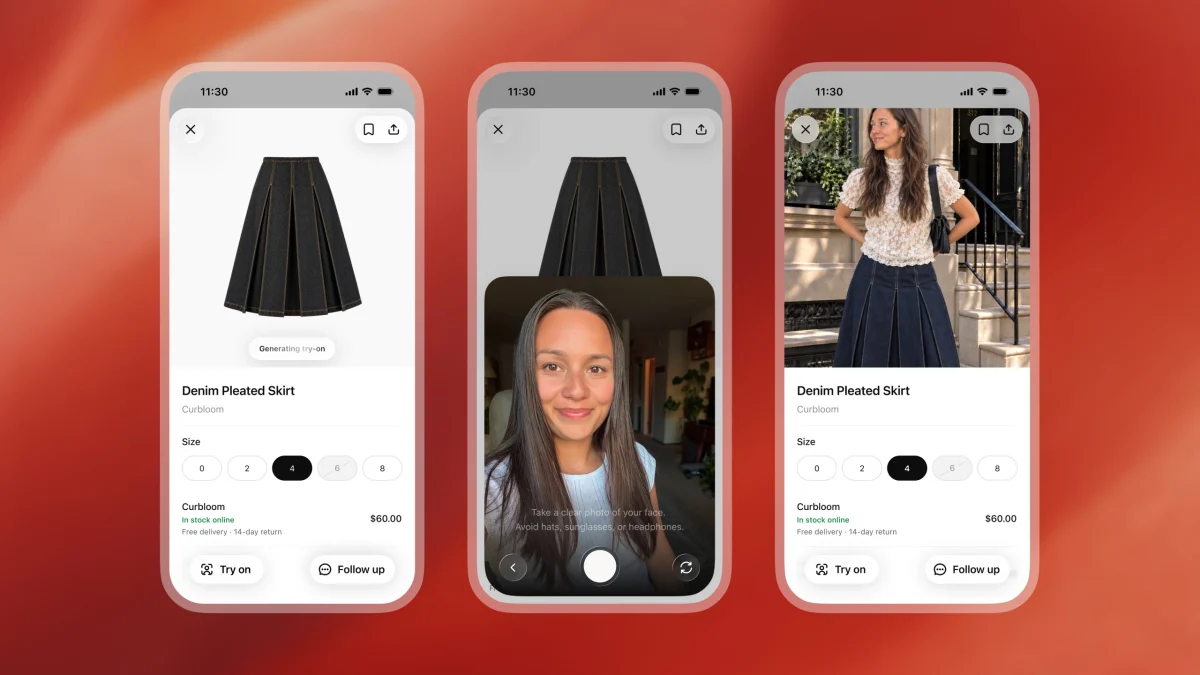
OpenAI, a leading force in artificial intelligence research and development, has globally rolled out two significant new shopping features for its conversational AI assistant, ChatGPT. Announced on Thursday, these enhancements include a groundbreaking virtual try-on capability for clothing and accessories, alongside a new favoriting function designed to help users save desired products for future reference. This strategic move signals OpenAI’s renewed commitment to exploring and solidifying ChatGPT’s utility within the burgeoning online retail sector, aiming to transform how consumers interact with e-commerce platforms.
Revolutionizing the Online Shopping Experience
The introduction of virtual try-on represents a substantial leap forward in personalized online shopping. This feature empowers ChatGPT users to upload a selfie or a full-body photograph directly into the interface. Subsequently, they can visualize how various articles of clothing or accessories might appear on them, bridging the critical gap between digital browsing and tangible experience. A dedicated "Try On" button will now be integrated into ChatGPT’s shopping results, offering a seamless pathway to this immersive experience. Furthermore, users can upload an image of a specific item, perhaps a web screenshot from another platform, and instruct ChatGPT to simulate its appearance on their uploaded photo. This functionality addresses a long-standing pain point in online fashion retail: the uncertainty of fit and appearance, which often leads to high return rates and diminished customer satisfaction. By offering a visual preview, OpenAI aims to boost consumer confidence and streamline purchasing decisions.
Complementing the virtual try-on, the new Favorites option provides a robust organizational tool for discerning shoppers. Users can now save products they discover through ChatGPT’s recommendations or searches directly into a personal Library within the application. These saved items will be conveniently stored alongside any virtual try-on images, creating a centralized hub for shopping inspiration and potential purchases. This feature caters to the common consumer habit of browsing and curating wish lists, allowing users to revisit items without the need for external bookmarking or manual tracking. From OpenAI’s perspective, this also offers valuable insights into user preferences and potential purchasing intent, which can further refine its recommendation algorithms.
Beyond these core features, ChatGPT is being positioned to assist users in a myriad of other shopping-related queries. For instance, a user could articulate a specific style aesthetic they wish to achieve and request ChatGPT to curate a selection of garments and accessories to complete the look. Similarly, uploading photographs of celebrity outfits could prompt the AI to identify and locate purchasable items worn by the stars, effectively turning fashion inspiration into actionable shopping opportunities. This expanded utility places ChatGPT in direct competition with established platforms like Pinterest and Google Images, which have long served as primary sources for visual fashion discovery that often converts into sales for online retailers.
The Technological Backbone: ChatGPT Images 2.5
Underpinning these advanced shopping capabilities is OpenAI’s newly launched ChatGPT Images 2.5 model. This iteration marks a significant advancement in generative AI, particularly in its ability to produce highly realistic and manipulable visual content. OpenAI asserts that Images 2.5 delivers more natural lighting, richer textures, and adheres to complex editing instructions with greater reliability than its predecessors. Crucially, the model also boasts reduced image generation latency, ensuring that virtual try-on simulations and product visualizations are rendered quickly and efficiently, maintaining a fluid user experience.
The improvements in Images 2.5 are pivotal for the success of features like virtual try-on. Realistic depiction of fabric drape, shadow interaction, and color accuracy are essential for users to trust the simulated experience. The model’s enhanced ability to follow editing instructions precisely means that when a user asks to "try on a blue dress," the AI can accurately superimpose that specific item onto their image without distortion or unnatural blending. This technological foundation is what elevates ChatGPT’s new offerings beyond simple image overlays, pushing towards a genuinely immersive and helpful shopping assistant.
Navigating the Evolving Landscape of AI in E-commerce
OpenAI’s foray into consumer shopping applications is not without its historical context and competitive pressures. The company previously ventured into this space with an "instant checkout" feature that ultimately did not perform as expected, prompting a strategic pivot. The challenges encountered then likely informed the current, more experiential approach, focusing on visualization and curation rather than direct transaction facilitation. This prior experience underscores the complexities of integrating AI seamlessly into the high-stakes world of e-commerce, where user trust, security, and a frictionless experience are paramount.
The broader industry landscape is also teeming with AI assistants exploring consumer use cases around shopping. Agentic AI startups, such as Instinct, have recently begun pushing proactive product recommendations to users. However, these efforts have sometimes met with resistance, with some users perceiving the recommendations as intrusive advertising rather than genuinely helpful suggestions. This highlights a delicate balance that AI developers must strike: offering personalized assistance without overstepping boundaries or eroding user trust. OpenAI’s current strategy, which emphasizes user-initiated actions like virtual try-on and saving favorites, appears to lean towards a more controlled and less intrusive form of assistance.

The global e-commerce market is a colossal and rapidly expanding sector, projected to reach trillions of dollars in value annually. Within this vast market, the segment for AI in retail is experiencing exponential growth, driven by the demand for personalization, automation, and enhanced customer experiences. Industry reports indicate that the AI in retail market is expected to grow at a compound annual growth rate (CAGR) exceeding 30% over the next decade, encompassing applications from intelligent chatbots and recommendation engines to supply chain optimization and virtual try-on technologies. Companies like OpenAI are vying for a significant share of this burgeoning market, seeking to integrate their AI models into the daily lives of online shoppers.
A Chronology of AI-Driven Shopping Innovations
The journey of AI in enhancing the shopping experience has been a progressive one. Early innovations in the late 1990s and early 2000s focused on rudimentary recommendation engines, analyzing purchase history to suggest related products. The mid-2000s saw the rise of more sophisticated algorithms and the introduction of chatbots, though often limited in their conversational abilities. The past decade witnessed an explosion in visual search capabilities, allowing users to upload images to find similar products, and the gradual integration of AI into customer service through advanced virtual assistants.
More recently, the advent of generative AI, exemplified by models like OpenAI’s GPT series, has opened entirely new avenues. In a significant competitive development, Google launched its own virtual try-on feature last year, demonstrating the industry-wide recognition of this technology’s potential. Google’s implementation focused on specific apparel categories and leveraged its vast search and image recognition capabilities. OpenAI’s entry with ChatGPT, powered by its advanced Images 2.5 model, intensifies this competition, pushing the boundaries of realism and user interaction. This chronological progression underscores a clear trend: AI is moving beyond mere information retrieval to become an active, creative, and highly personalized assistant in the consumer journey.
Broader Implications and Market Impact
The implications of OpenAI’s new shopping features extend far beyond mere convenience for individual users. For the retail industry, these advancements could herald a new era of digital engagement. Retailers stand to benefit from reduced product return rates, particularly in fashion, where fit and appearance are critical determinants of satisfaction. Enhanced customer engagement through interactive experiences like virtual try-on can also foster greater brand loyalty and drive conversion rates. Furthermore, the data gleaned from user interactions with these features – what they try on, what they favorite, what styles they search for – could provide invaluable insights for inventory management, product development, and marketing strategies.
However, the integration of such advanced AI features also presents challenges for retailers. Adapting to these new paradigms may require significant investment in high-quality 3D product imagery and robust backend systems to interface with AI assistants. Smaller businesses, in particular, might find it difficult to keep pace with the technological demands and costs associated with implementing these cutting-on-edge solutions.
From a competitive standpoint, OpenAI’s move intensifies the ongoing "AI assistant war" among tech giants. Companies like Google, Amazon, and Meta are all investing heavily in AI to capture user attention and become the primary interface for various daily activities, including shopping. By offering unique and compelling shopping functionalities, ChatGPT aims to differentiate itself and carve out a significant niche in the e-commerce ecosystem. The race is on to establish the most intuitive, helpful, and trusted AI assistant for consumers, potentially shifting market share and influencing platform preferences.
Ethical Considerations and Future Outlook
As with any powerful AI technology, the deployment of virtual try-on and personalized shopping features raises important ethical considerations. Data privacy, especially concerning user-uploaded photos, is paramount. OpenAI must ensure robust protocols for data handling, storage, and usage, clearly communicating its policies to maintain user trust. The potential for algorithmic bias, for instance, in how clothing appears on different body types or skin tones, also requires careful monitoring and mitigation to ensure fair and equitable representation. Moreover, the line between helpful recommendations and intrusive advertising will continue to be a point of contention, necessitating transparent practices and user control over their data and preferences.
Looking ahead, these features are likely just the beginning. The integration of augmented reality (AR) with virtual try-on could create even more immersive experiences, allowing users to see clothes on themselves in real-time environments. Hyper-personalization, driven by deeper AI understanding of individual styles and preferences, could lead to AI assistants anticipating needs before they are explicitly stated. Ultimately, the vision is for AI to facilitate a seamless omnichannel shopping experience, blurring the lines between online and offline retail. While challenges remain, OpenAI’s latest announcement signifies a bold step towards a future where AI assistants are not just conversational partners but indispensable guides in the complex world of consumer commerce, potentially redefining how we discover, evaluate, and purchase products online.