Evan Lee Salim
San Francisco, CA – October 31, 2026 – OpenAI, the leading artificial intelligence research and deployment company, is reportedly facing significant challenges in its latest pre-IPO funding round, prompting a notable downward revision of its financial targets and a more cautious outlook from major investors. Initial aspirations for a staggering $30 billion raise at valuations as high as $1.4 trillion have been tempered, with recent reports indicating a revised target of $20 billion and a first close considerably below that sum, suggesting a recalibration of market expectations for even the most prominent players in the burgeoning AI sector.
The news, initially broken by The Financial Times and subsequently corroborated with additional details by The Wall Street Journal, paints a picture of a funding environment that has become increasingly discerning. While OpenAI has successfully secured an initial tranche of approximately $11 billion, this figure falls short of its earlier, more ambitious projections. The Financial Times noted that a consortium of investors from the United Arab Emirates is poised to lead this round, with the possibility of a subsequent retail offering aimed at wealthy individuals to bridge the gap towards the $20 billion target. However, the Wall Street Journal’s follow-up indicated a "tepid" response from some large institutional investors, highlighting a shift in risk appetite within the tech investment landscape.
A Shifting Financial Landscape for AI Innovators
This development marks a pivotal moment for OpenAI, a company that has, until recently, navigated the venture capital world with remarkable ease, attracting billions from marquee investors like Microsoft. The reported difficulties are attributed, in part, to broader macroeconomic headwinds and a growing wariness among Wall Street investors regarding the escalating costs associated with AI infrastructure development. This caution has already manifested in a significant sell-off of tech stocks, signaling a broader market correction. Furthermore, reports concerning the impending initial public offering (IPO) of Anthropic, a direct competitor, suggest similar challenges, with credit agencies reportedly projecting a "high junk rating" – an indication of systemic concerns across the frontier AI industry regarding profitability and long-term sustainability.
The journey to this point has been a whirlwind for OpenAI. Founded in 2015 with a mission to ensure artificial general intelligence (AGI) benefits all of humanity, the organization transitioned from a non-profit to a "capped-profit" model in 2019 to attract the vast capital required for its ambitious research. This strategic pivot allowed it to secure a monumental $1 billion investment from Microsoft, followed by further multi-billion dollar commitments, notably a reported $10 billion infusion earlier this year. These investments, alongside successful smaller rounds, fueled the development of groundbreaking models such as GPT-3, DALL-E, and most famously, ChatGPT, which captivated global attention and ignited the current AI boom.
Chronology of Elevated Expectations and Market Realities
The trajectory of OpenAI’s current funding round can be traced through a series of increasingly optimistic, then cautiously adjusted, reports:
- Late 2025/Early 2026: Following the explosive success of ChatGPT and its integration into various applications, market analysts and investors began to speculate on OpenAI’s valuation, with early whispers suggesting it could approach or even exceed $1 trillion. This period was characterized by intense enthusiasm for generative AI capabilities and the potential for disruptive innovation across industries.
- September 29, 2026: TechCrunch reported that OpenAI was in advanced discussions to raise $30 billion, targeting an astounding $1.4 trillion valuation. This figure positioned OpenAI among the world’s most valuable private companies, reflecting immense investor confidence in its technological leadership and market penetration.
- October 22, 2026: Less than a month later, reports emerged suggesting a slight adjustment, with OpenAI still aiming for a $30 billion raise but at a slightly revised valuation of $1.25 trillion. While still extraordinarily high, this subtle shift hinted at a nascent tempering of expectations, perhaps due to initial investor feedback or a more pragmatic internal assessment.
- October 27, 2026 (Unconfirmed Market Chatter): Unofficial reports and investor discussions began to circulate regarding potential difficulties in securing the full $30 billion at the desired valuation, with some sources citing concerns about market saturation, long-term profitability, and the sheer scale of the capital being sought.
- October 30, 2026: The Financial Times formally reported a significant reduction in the funding target to $20 billion. The report also detailed that the first close of this round was anticipated to be even lower, pointing to a more challenging fundraising environment than previously anticipated.
- October 31, 2026: The Wall Street Journal provided further granular detail, confirming that approximately $11 billion had been secured thus far. Crucially, the WSJ highlighted that the fundraising efforts had been met with a "tepid" response from a segment of major investors, underpinning the revised targets. This marked a clear divergence from the initial, highly optimistic projections.
This chronological sequence underscores a rapid evolution in market sentiment, where the initial euphoria surrounding AI’s potential is now confronting the fiscal realities of its development and commercialization.
The Sobering Reality of AI Infrastructure Spending
The primary factor contributing to investor caution appears to be the astronomical costs associated with developing and deploying advanced AI models. Industry analysts estimate that training a state-of-the-art large language model (LLM) can cost hundreds of millions of dollars, with ongoing operational expenses for inference, data acquisition, and continuous research easily running into billions annually. This "AI infrastructure spending boom," as described by TechCrunch, encompasses:

- GPU Acquisition: The insatiable demand for high-performance graphics processing units (GPUs), particularly from NVIDIA, has driven prices sky-high and created supply chain bottlenecks. A single cluster for advanced AI training can require thousands of top-tier GPUs, each costing tens of thousands of dollars.
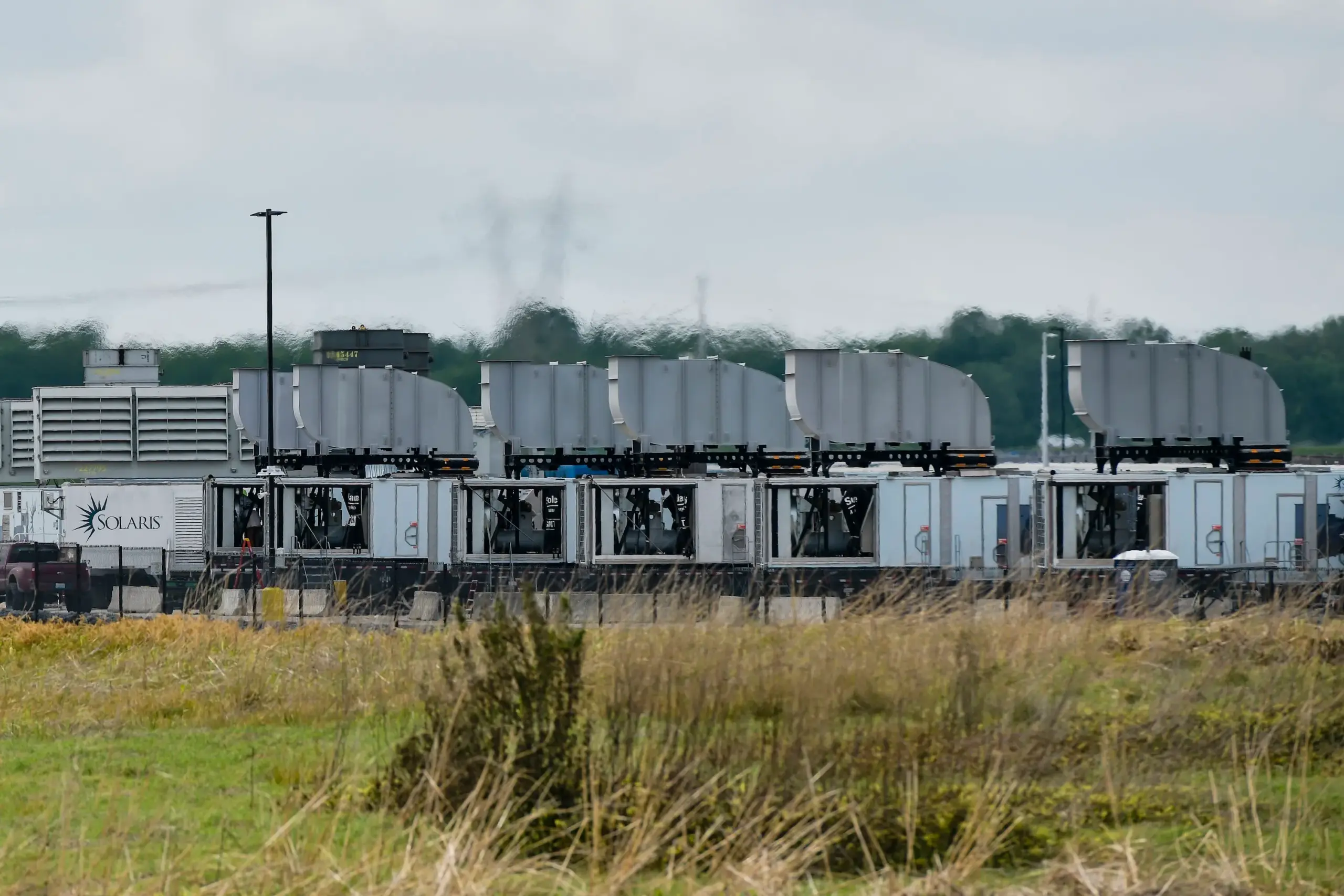
- Energy Consumption: Training and operating massive AI models are incredibly energy-intensive. Data centers housing these computational behemoths consume vast amounts of electricity, leading to significant operational costs and raising environmental concerns that investors are increasingly scrutinizing.
- Talent Acquisition: The global race for top AI researchers and engineers has led to unprecedented salary demands. Companies like OpenAI are competing fiercely for a limited pool of highly specialized talent, further inflating operating expenses.
- Data Sourcing and Annotation: High-quality, diverse datasets are the lifeblood of modern AI. Acquiring, cleaning, and annotating these datasets at scale represents a substantial and ongoing financial commitment.
Investors, having witnessed the exuberance and subsequent corrections in other tech sectors, are now applying a more rigorous lens to AI. While the transformative potential of AI is undeniable, questions regarding the timeline to profitability, the scalability of current business models, and the sustainability of competitive advantages are taking center stage. The "tepid" response from some large investors suggests a growing demand for clearer pathways to return on investment (ROI) beyond mere technological prowess.
Inferred Statements and Market Reactions
OpenAI has, predictably, remained tight-lipped regarding its ongoing private fundraising discussions. A representative, when contacted by TechCrunch, offered a standard "no comment," typical for companies in the midst of sensitive financial negotiations. However, market analysts and industry insiders have begun to weigh in:
Dr. Evelyn Reed, a senior analyst at Quantum Insights, remarked, "This adjustment in OpenAI’s funding target is less an indictment of their technology and more a reflection of a maturing market. Investors are no longer simply buying into the ‘hype’ of AI; they’re demanding concrete unit economics, defensible moats, and a clear vision for monetization that justifies multi-trillion dollar valuations. The scale of capital required for frontier AI is immense, and so too is the scrutiny on its deployment."
Another venture capitalist, speaking on background, observed, "The market is distinguishing between technological innovation and sustainable business models. While OpenAI is undoubtedly at the forefront of the former, the path to massive, consistent profitability, especially with open-source alternatives and intensified competition from tech giants, is still somewhat opaque. The ‘gold rush’ mentality is giving way to a more disciplined approach."
The involvement of UAE-based investors, as reported by The Financial Times, underscores a broader trend of sovereign wealth funds and strategic investors from the Middle East increasingly diversifying into advanced technology sectors. Their participation could provide a crucial injection of capital, driven perhaps by long-term strategic interests in national AI capabilities and economic diversification, rather than solely immediate financial returns. The proposed retail offering for wealthy individuals also suggests a strategy to broaden the investor base and tap into high-net-worth individuals eager to participate in the AI boom, even as institutional appetite wanes slightly.
Broader Implications for OpenAI and the AI Industry
The recalibration of OpenAI’s funding expectations carries significant implications, both for the company itself and the broader artificial intelligence industry:
- Impact on OpenAI’s IPO Plans: A less robust pre-IPO funding round could affect the timing, valuation, and structure of OpenAI’s eventual public offering. While an IPO remains a stated goal, the company may need to demonstrate a clearer path to profitability and a more stabilized growth trajectory to command the premium valuations it once envisioned on the public markets. This could delay an IPO or force a more conservative initial offering.
- R&D and Talent Acquisition: While $11 billion (and potentially $20 billion) is still a substantial sum, falling short of higher targets could necessitate a more disciplined approach to R&D spending. This might involve prioritizing certain research avenues, optimizing computational resource allocation, or even slowing the pace of certain ambitious projects. The fierce competition for top AI talent may also become even more intense if funding becomes tighter across the industry.
- Competitive Landscape: This development could embolden competitors. Companies like Google DeepMind, Meta AI, and Anthropic, backed by deep-pocketed tech giants or significant venture capital, might see an opportunity to narrow the gap if OpenAI’s financial firepower is constrained. The challenges faced by Anthropic in its own IPO further suggest that the entire frontier AI sector might be entering a period of financial re-evaluation, rather than just a single player.
- Market Sentiment and "AI Winter" Concerns: While it is premature to declare an "AI winter," these funding challenges could temper the overall market enthusiasm for AI startups. Investors may become more cautious about deploying capital into early-stage AI ventures, demanding stronger fundamentals and clearer monetization strategies from the outset. This could lead to a consolidation in the industry or a greater emphasis on practical, immediately commercializable AI applications over long-term, speculative research.
- Regulatory Scrutiny: Growing regulatory scrutiny around AI, encompassing ethical concerns, data privacy, bias, and potential misuse, also plays a role. Investors are increasingly factoring in regulatory risks, which could impose unforeseen costs or limitations on AI development and deployment. The uncertainty surrounding future AI regulation adds another layer of complexity to investment decisions.
In conclusion, while OpenAI remains a titan in the artificial intelligence landscape, its latest funding round signals a new era of fiscal sobriety for the industry. The days of uncritically pouring billions into AI ventures based solely on disruptive potential may be waning. Investors are now seeking tangible returns, sustainable business models, and a clearer understanding of the immense costs involved in pushing the boundaries of artificial intelligence. This recalibration is not necessarily a sign of AI’s failure, but rather an indication of its maturation, where market forces are beginning to demand greater accountability and clearer pathways to long-term financial viability. The coming months will reveal how OpenAI and its competitors adapt to this evolving investment climate and what it means for the future trajectory of AI innovation.