Galang Taruna
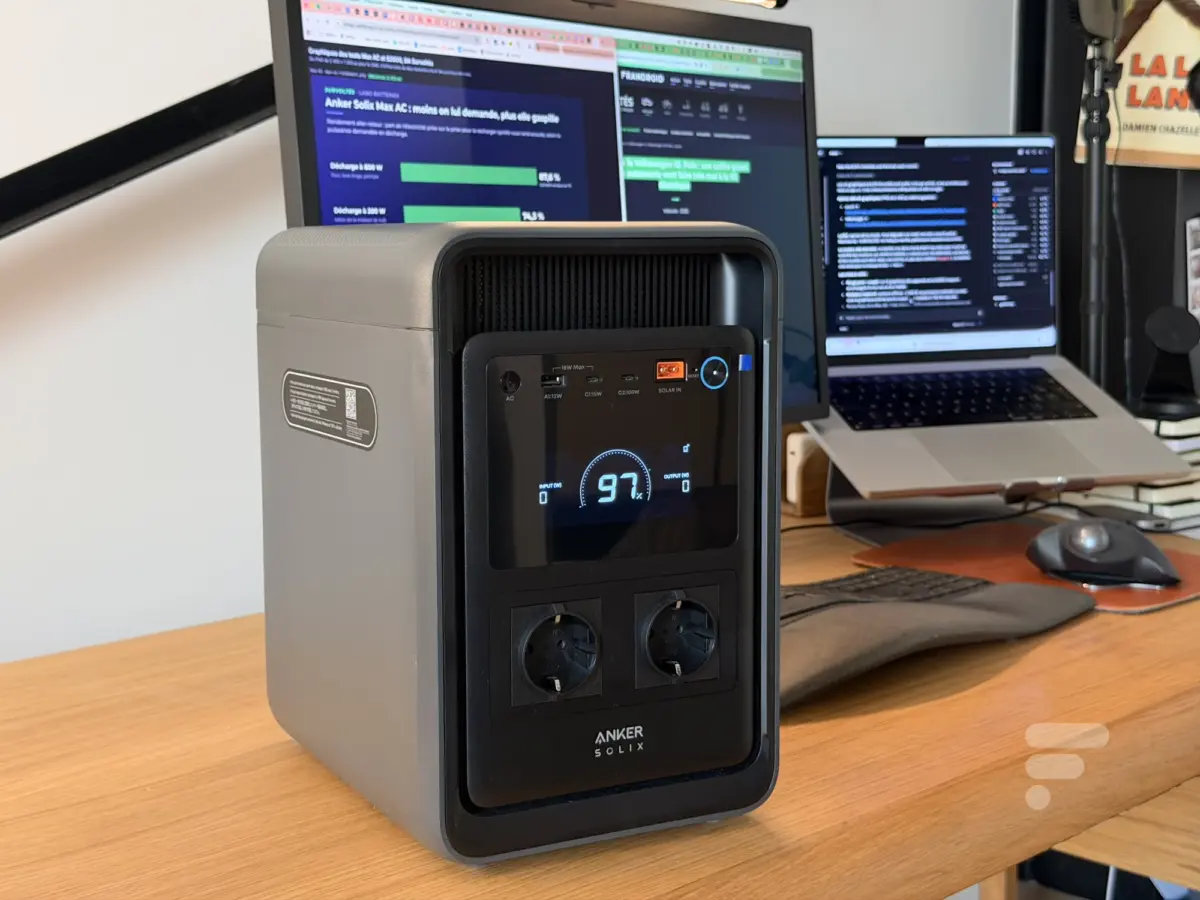
Anker has introduced the Solix S2000, a portable power station that packages a substantial 2 kWh battery capacity into a relatively compact 16 kg unit. Priced at €899.99, with promotional offers frequently reducing it to below €700, this device distinguishes itself with an integrated uninterruptible power supply (UPS) function, an uncommon feature in its category. Unlike many competitors, it exhibits remarkably low self-consumption when connected to the grid, a critical attribute for a device intended for continuous operation. After an intensive three-week evaluation, subjecting it to rigorous tests including powering a home network (router and NAS devices), ultra-fast charging cycles, and a series of high-drain appliances, the S2000 emerges as a well-engineered solution. However, its advertised "2,300 W max" output requires a nuanced interpretation to align with real-world performance expectations.
The Rise of Portable Power Stations: Context and Anker’s Position
Portable power stations, often referred to as nomadic solar batteries, have rapidly evolved into indispensable multi-tool solutions for energy management over the past few years. These devices, essentially large batteries equipped with various power outlets, offer versatile applications ranging from powering a refrigerator during camping trips to operating tools on remote job sites or maintaining internet connectivity during grid outages. Their growing popularity is driven by several factors, including increasing consumer interest in outdoor activities, the need for reliable backup power amidst unpredictable weather patterns and aging infrastructure, and a general trend towards greater energy independence.
Anker, a brand renowned for its mobile charging solutions, has strategically positioned itself within this burgeoning market with its Solix line. The Solix S2000 is a direct response to the demand for high-capacity, versatile power solutions. It fulfills the core requirements of a portable power station while adding a significant value proposition: its integrated UPS functionality. When plugged into a wall outlet, the S2000 intelligently passes grid power directly to connected devices. In the event of a power interruption, it seamlessly switches to battery power within a mere 10 milliseconds. This rapid transition is crucial, ensuring that sensitive electronics like computers or internet routers remain operational without interruption. Given that a UPS is designed for continuous connection, its quiescent power consumption becomes a critical factor. The S2000 excels in this regard, demonstrating one of the lowest self-consumption rates among comparable power stations, making it an efficient choice for always-on backup.
Design and Ergonomics: A Compact and Refined ‘Power Suitcase’
The Solix S2000 boasts a remarkably compact form factor for its substantial 2 kWh capacity. Measuring 32 cm in height, 28 cm in width, and 21 cm in depth, and weighing 16.2 kg, it strikes a commendable balance between power and portability. Integrated handles facilitate easy transport, allowing a single person to carry it without undue strain, whether stowing it in a car trunk for a weekend getaway or taking it on a camping adventure.
While the S2000 incorporates more plastic components than Anker’s Solarbank Max AC, a home battery solution tested concurrently, the overall build quality remains high. Its aesthetic design is also a notable feature; the unit is sufficiently attractive to be displayed in a home environment, such as an office or entryway, without clashing with interior decor.
Connectivity options are thoughtfully distributed across the front and rear panels. This arrangement allows for permanent connections, such as those for a router or NAS, to be discreetly managed at the back, while the front remains accessible for temporary or frequently used devices. The station features standard AC outlets, two USB-C ports (one capable of delivering 100 W, suitable for powering laptops), and a single USB-A port.
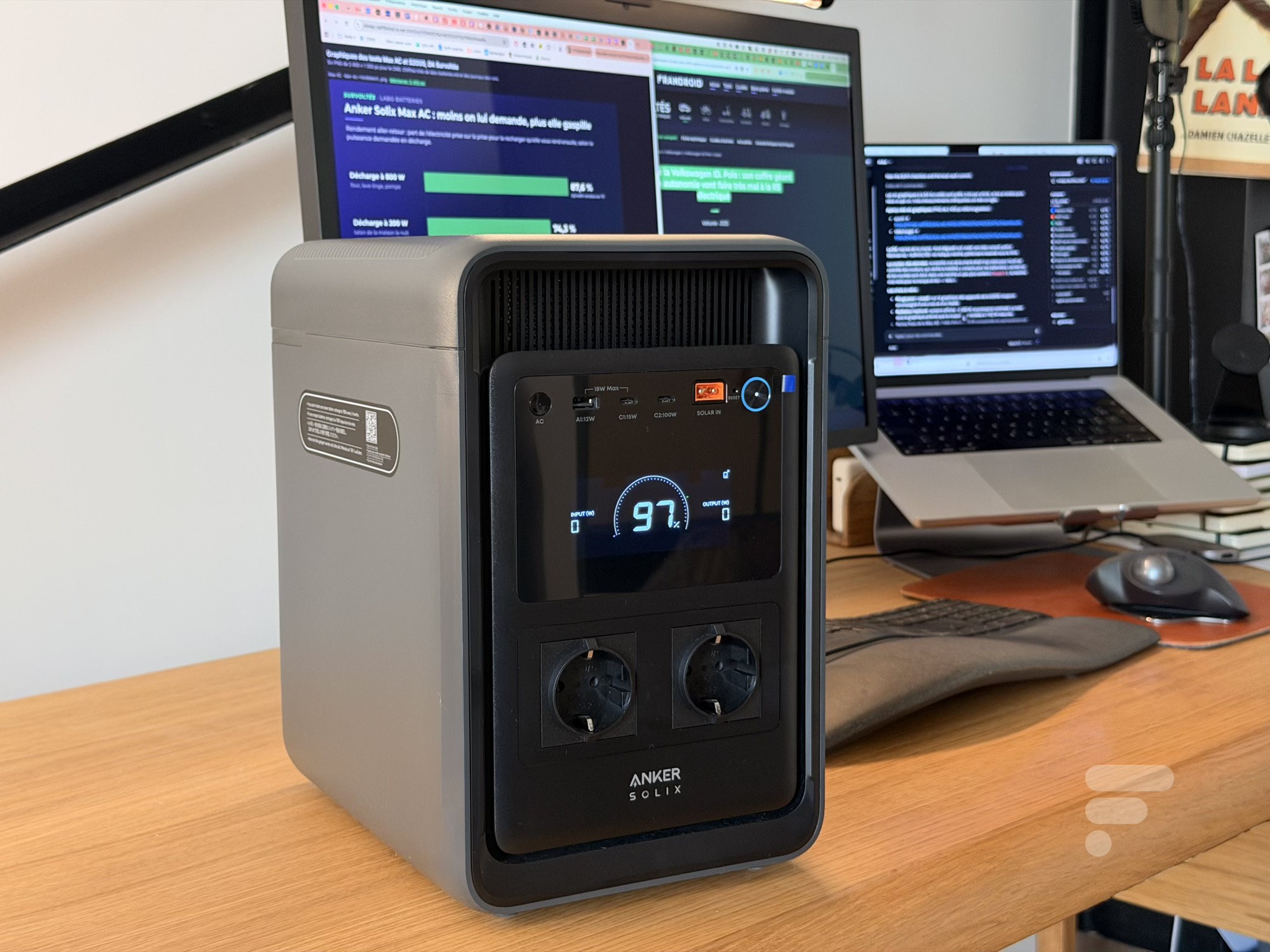
For renewable energy integration, an XT-60 input port supports solar panel charging, accommodating up to 400 W of input. Anker suggests a recharge time of three to four hours to go from 20% to 80% capacity under optimal sunlight conditions. The company also offers the S2000 as a kit bundled with a foldable 400 W solar panel. While the solar charging capability was not independently verified during this review, a 400 W input is adequate for replenishing the battery during extended camping trips or prolonged power outages. However, it is important to note that this capacity is typically insufficient to establish the S2000 as the primary energy hub for a comprehensive domestic solar installation.
Technical Specifications at a Glance
| Feature | Anker Solix S2000 |
|---|---|
| Capacity | 2,010 Wh |
| Battery Chemistry | LFP (Lithium Iron Phosphate) |
| Output Power | 1,500 W continuous, 2,300 W peak (Anker claims 3,000 W peak) |
| UPS Switchover Time | Less than 10 ms |
| Advertised Idle Draw | 10 W (output on), 2 W (standby) |
| AC Recharging Power | 1,150 W (default), 1,500 W (ultra-fast charge) |
| Advertised Lifespan | 10,000 cycles (with 60% capacity remaining) |
| Warranty | 5 years |
| Dimensions, Weight | 208 × 282 × 323 mm, 16.2 kg |
| Price | €899.99 (Amazon, launched at €699.99, promo at €649.99 on Oct 23, 2026) |
Note: Prices and availability were recorded on Amazon.fr on October 30, 2026.
Rigorous Testing and Performance Metrics
The evaluation of the Anker Solix S2000 involved a meticulous testing protocol designed to replicate real-world usage scenarios and provide precise, quantifiable data. This involved measuring electrical consumption and output at the wall socket using two connected smart plugs: one positioned between the wall and the power station to track charging input, and another between the power station and the connected appliance to monitor energy delivery.
The testing methodology drew inspiration from established protocols, such as those employed by the German magazine Heise. Each test cycle began with the S2000 fully charged to 100%. It was then discharged at a constant power output until it automatically shut down, followed by a complete recharge. To achieve a consistent discharge rate of approximately 1,100 W, the S2000 was utilized to charge an electric vehicle at 5 A. An external computer, integrated with Home Assistant, orchestrated the entire process and recorded all measurements, ensuring accuracy and consistency.
Usable Capacity: Delivering on Its Promise
During discharge at approximately 1,100 W, the S2000 delivered 1,866 Wh in the first cycle and 1,868 Wh in the second, demonstrating remarkable consistency. This represents approximately 93% of the advertised 2,010 Wh capacity. This slight discrepancy is standard practice for power stations, which typically reserve a small portion of their battery capacity to protect the cells and account for energy losses inherent in the inverter process (converting DC battery power to AC for outlets). At this power level, the S2000 maintained operation for approximately 1 hour and 40 minutes.
Round-Trip Efficiency: A Key Metric for Cost-Effectiveness

To fully recharge the S2000 after these discharges, the system drew 2,423 Wh and then 2,427 Wh from the wall outlet. This allowed for the calculation of the round-trip efficiency, which represents the percentage of electricity paid for during charging that is ultimately available for use. The S2000 achieved an efficiency of 77.0% across both cycles, with a third cycle yielding 75.9%. In practical terms, for every 100 kWh drawn from the grid, approximately 77 kWh are delivered back to connected devices. This figure is respectable for a portable power station, though not exceptional. For comparison, Anker’s Solarbank Max AC, tested concurrently, achieved 87.6% efficiency at 800 W.
Anker’s official specifications cite an 86% efficiency, measured with a 100 W load. It is important to clarify that Anker’s figure likely refers solely to discharge efficiency, whereas the review’s round-trip efficiency encompasses both charging and discharging, reflecting the true cost to the consumer.
Efficiency Under Light Loads: The UPS Advantage
As a device designed for UPS functionality, the S2000 is expected to spend most of its operational life powering low-draw devices. To simulate this, the S2000 powered a home internet router and two NAS devices, collectively drawing about 60 W, with the grid disconnected. The unit maintained power for 25 hours and 36 minutes, delivering 1,489 Wh. In this low-power scenario, the round-trip efficiency dropped to 68.4%. This reduction is typical; at lower power outputs, the power station’s internal consumption (for its inverter and control electronics) constitutes a larger proportion of the total energy drawn, thus lowering the overall efficiency. While noticeable, this effect was less pronounced on the S2000 compared to the Max AC.
A standout feature of the S2000 is its exceptionally low self-consumption when fully charged and connected to the grid. While acting as a pass-through UPS, powering the router and NAS, it registered a mere 3.3 W over 16.5 hours. This is an outstanding figure for a device designed for continuous operation and is a rare attribute in its class. In contrast, the Solarbank Max AC, also tested by Anker, consumed 15 to 20 W in a similar idle state.
Anker claims an idle consumption of 10 W with the output on and no devices connected, asserting it as the lowest among 2 kWh power stations. While this specific scenario was not isolated, the 25-hour-plus battery run-time under light load supports this claim. For context, the EcoFlow DELTA 3 Max reportedly consumes around 27 W under similar conditions, according to external measurements published in October.
The financial implication of this low idle consumption is minimal. Approximately 29 kWh annually, translating to less than €6 at a regulated tariff of €0.2001 per kWh (Base option, effective August 1, 2026). A full recharge, consuming around 2.4 kWh, costs roughly 50 cents, with about a dime of that attributed to conversion losses.
Charging Speed: Ultra-Fast and Efficient
By default, the S2000 recharges from a standard wall outlet at approximately 1,100 W, taking 2 hours and 12 minutes to go from 1% to 100%. Activating the ultra-fast charge mode via the companion application boosts the input power to 1,545 W at the wall, reducing a full recharge to just 1 hour and 45 minutes. Half of the battery capacity can be recovered in 46 minutes, and 80% in 1 hour and 14 minutes.

| Charging Mode | Power at Wall | 1% – 50% | 1% – 80% | 1% – 100% | Round-Trip Efficiency |
|---|---|---|---|---|---|
| Normal Charge | ~1,100 W | — | — | 2 h 12 min | 75.9 – 77.0% |
| Ultra-Fast Charge | 1,545 W (to 80%), then ~1,100 W | 46 min | 1 h 14 min | 1 h 45 min | 76.2% |
Measurements conducted by Frandroid, October 22 and 23, 2026.
Around the 80% mark, the S2000 automatically reverts to the default 1,100 W charging speed to protect the battery cells, a safety measure consistent with the warning displayed in the application. Critically, the ultra-fast charging mode incurs no penalty in terms of efficiency, maintaining a round-trip efficiency of 76.2%, well within the range of normal charging. A minor operational detail is that the ultra-fast charge option can only be activated while the station is already charging and is not available in "hourly tariff" mode.
High-Drain Appliances: Understanding Power Output Limitations
The S2000 is rated for 1,500 W continuous output and "2,300 W max," with Anker’s French website even claiming 3,000 W peak. To assess these claims, various high-power appliances were tested, with the station operating solely on battery power (grid disconnected).
| Appliance | Power Demanded | Result |
|---|---|---|
| Toaster | 1,102 W stable | Held for 2 min 16 sec |
| Dyson Hair Dryer (min speed) | 870 – 940 W | Held |
| Dyson Hair Dryer (max speed) | Peak 1,716 W, then ~1,350 W | Held |
| Hair Dryer & Toaster (combined) | ~2,450 W | Output cut within 7 seconds |
| Dyson Fan Heater (2,300 W) | Cut at 1,702 W (during ramp-up) | Output cut within 15 seconds |
Measurements conducted by Frandroid, October 22 and 23, 2026, at the station’s output.
A single appliance drawing less than 1,500 W operated without issue, even with brief power spikes up to 1,716 W, maintaining a stable voltage of 231 V. However, the "2,300 W max" rating does not imply the ability to continuously power a 2,300 W appliance, even for a few seconds. The Dyson fan heater tripped the output before reaching its full power, and combining two high-draw appliances yielded similar results. The 2,300 W peak capacity appears designed primarily to absorb brief startup surges from motors or heating elements. When an overload occurs, the application provides a clear message to reduce the load, and the output can be easily reset.
Regarding noise levels, the S2000 remained quiet when powering the toaster. The internal fan only activated three-quarters of the way through the test, operating discreetly at 1,000 W and quickly becoming masked by the noise of the hair dryer.
User Experience: A Sophisticated Application Interface
The S2000 is controlled via the same Anker application used for its domestic battery solutions, which is lauded as one of the best on the market. The interface is aesthetically pleasing, well-translated, and intuitively organized, with settings logically placed. Users can adjust charging power, set charge and discharge limits, configure automatic output shutdown when no devices are connected, and activate the ultra-fast charging mode.

The application offers multiple power management modes:
- UPS Mode: Prioritizes connected devices, as utilized in this review.
- Hourly Tariff Mode: Optimizes charging during off-peak, cheaper electricity hours.
- Self-Consumption Mode: Designed to maximize the use of solar panel generated power.
- Custom Mode: Allows users to define specific parameters.
Additional smart features include network outage alerts and a "Storm Guard" mode, which pre-charges the station in anticipation of forecasted severe weather events. Few portable power stations offer such an advanced level of control and intelligent management features.
Competitive Landscape and Value Proposition
At its standard price of €899.99, the Anker Solix S2000 stands as one of the most affordable 2 kWh power stations in the comparative market, closely followed by the Jackery Explorer 2000 v2 at €949. However, its pricing is highly dynamic; launched at €699.99, it even dropped to €649.99 during a promotional event on October 23, 2026. At these promotional price points, the S2000 becomes an unparalleled offering in terms of cost-effectiveness.
This price advantage, however, comes with a trade-off in power output. Most of its direct competitors, such as the Jackery Explorer 2000 v2 (2,200 W), DJI Power 2000 (3,000 W), EcoFlow DELTA 3 Max (2,400 W), and Bluetti AC200L (2,400 W), offer significantly higher continuous output capabilities. These higher wattage ratings enable them to power demanding appliances like space heaters, kettles, or ovens, whereas the S2000 is capped at 1,500 W. For users intending to power such high-draw heating elements or powerful tools, alternative models like the EcoFlow DELTA 3 (Classic version tested previously) would be more suitable.
| Station | Capacity | Continuous Output | Price |
|---|---|---|---|
| Anker Solix S2000 | 2,010 Wh | 1,500 W | €899.99 |
| Jackery Explorer 2000 v2 | 2,042 Wh | 2,200 W | €949 |
| DJI Power 2000 | 2,048 Wh | 3,000 W | €1,099 |
| EcoFlow DELTA 3 Max | 2,048 Wh | 2,400 W | €1,129 |
| Bluetti AC200L | 2,048 Wh | 2,400 W | €1,499 |
Prices recorded on October 30, 2026: Amazon.fr for S2000, brand stores for DJI and Bluetti, lowest price on idealo for Jackery and EcoFlow.
The solar charging capability also reflects these power differentials. While the S2000’s 400 W input matches the Jackery, the EcoFlow DELTA 3 Max accepts up to 500 W, and the Bluetti AC200L can handle an impressive 1,200 W. Notably, the DJI Power 2000 lacks an integrated solar input, requiring a separately purchased adapter.
For applications emphasizing UPS functionality, camping, or emergency backup, the S2000’s advantages lie in its manageable weight, sophisticated application, and critically, its exceptionally low idle power consumption – a significant benefit for any device intended for continuous connection.
Within Anker’s own product portfolio, the Solix C2000 Gen 2 presents an alternative. It offers 2,048 Wh capacity, 2,400 W continuous output, and 4,000 W peak power, but at a heavier 18.9 kg (nearly 3 kg more than the S2000) and a higher price point of €1,099. This indicates Anker’s strategy of offering different power stations tailored to specific user needs and budgets.

Conclusion: An Affordable Backup Solution for Moderate Power Needs
The Anker Solix S2000 stands out as a highly compelling portable power station. Its compact dimensions, ease of transport, attractive design, and generally quiet operation make it user-friendly. Performance tests confirmed that it delivers approximately 93% of its stated capacity and can be recharged in a swift 1 hour and 45 minutes in ultra-fast mode without compromising efficiency. Its standout feature, the near-negligible idle power consumption when continuously connected, positions it as an excellent and highly efficient uninterruptible power supply.
The accompanying Anker application, shared with the brand’s domestic battery systems, is a significant asset, offering intuitive control and advanced power management modes that are rarely found in portable stations. Priced at €899.99, it holds its own as the most affordable 2 kWh station in our comparative analysis, narrowly surpassing the Jackery Explorer 2000 v2. During promotional periods, dropping below €700, its value proposition becomes unmatched.
However, prospective buyers must be aware of its inherent limitations. Its round-trip efficiency, ranging from 76-77% (and 68% under light load), is average for the category. More importantly, its 1,500 W continuous power output, while sufficient for common appliances like a toaster or a hair dryer, is insufficient for power-hungry devices such as electric space heaters or for simultaneously running two major appliances, despite the "2,300 W max" rating primarily serving for brief startup surges.
For scenarios requiring reliable backup for essential home electronics like internet routers, NAS devices, or personal computers, or for providing power during camping trips or short-term grid outages to keep a refrigerator running, the Solix S2000 represents an excellent and cost-effective choice. For applications demanding higher continuous power, such as powering workshop tools or electric heating elements, users should consider more powerful, albeit more expensive, alternatives. The Anker Solix S2000 adeptly fills a crucial niche for affordable, efficient, and smart emergency power.