Vera Intan Clara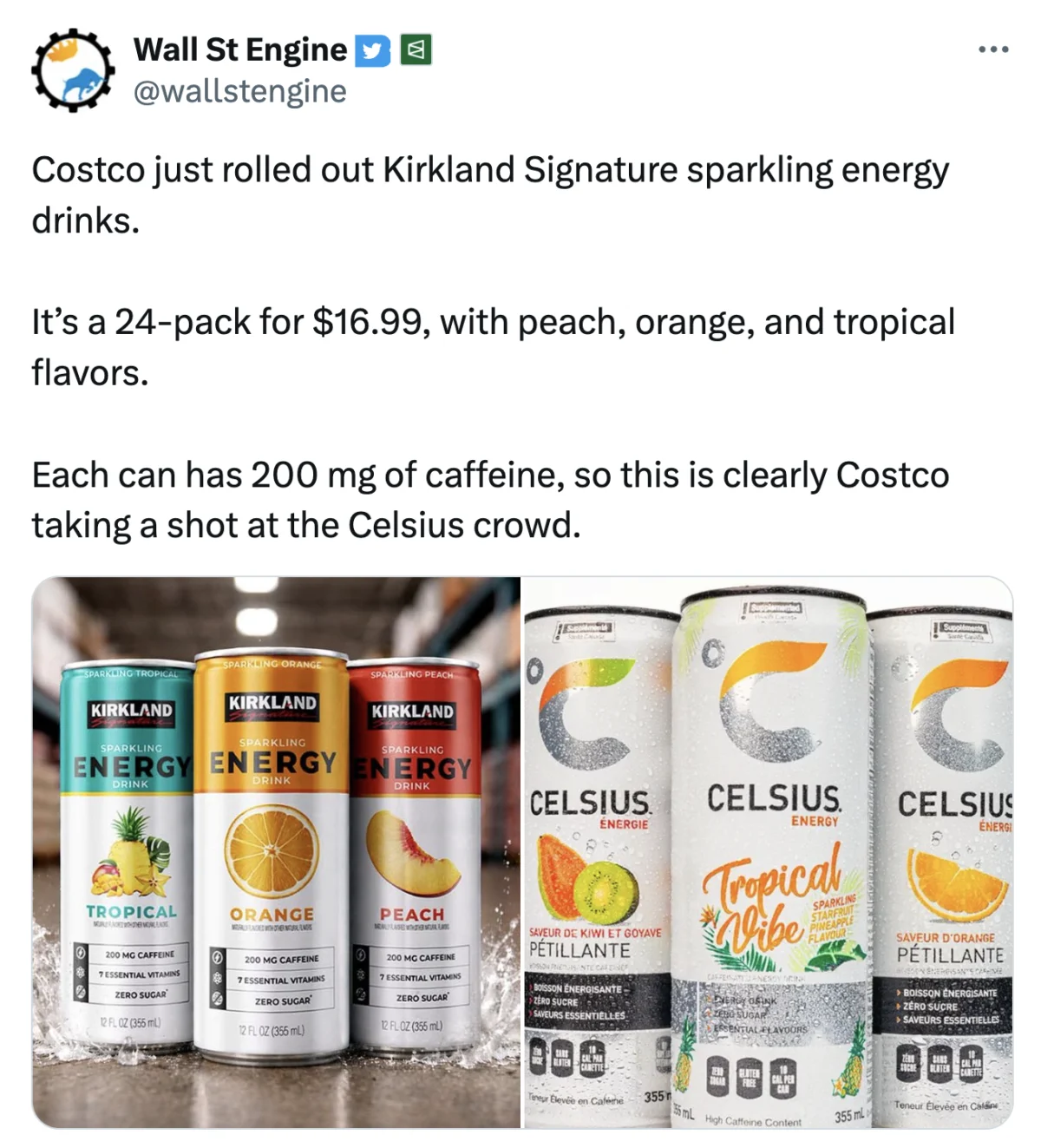
Costco Wholesale Corporation, the multinational membership-only warehouse club, has once again leveraged its formidable Kirkland Signature private label to enter a competitive consumer market, this time targeting the booming sparkling energy drink sector. The introduction of Kirkland Signature Sparkling Energy Drinks marks a significant strategic move, directly positioning Costco to challenge established players like Celsius, Ghost, and Alani Nu with a compelling value proposition that has immediately garnered widespread attention and analysis across financial and consumer circles.
The New Contender: Kirkland Signature’s Sparkling Energy Drink Debut
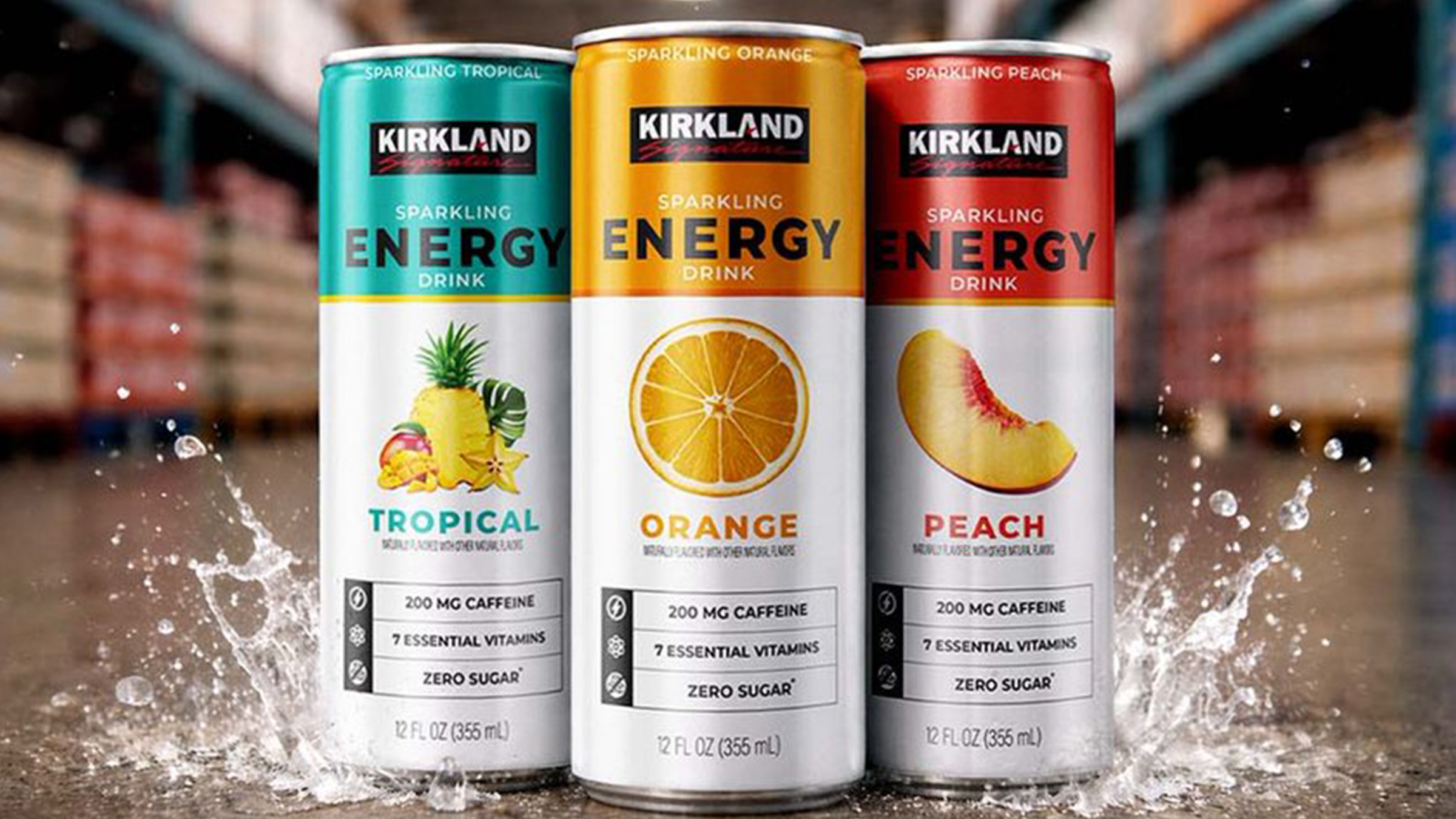
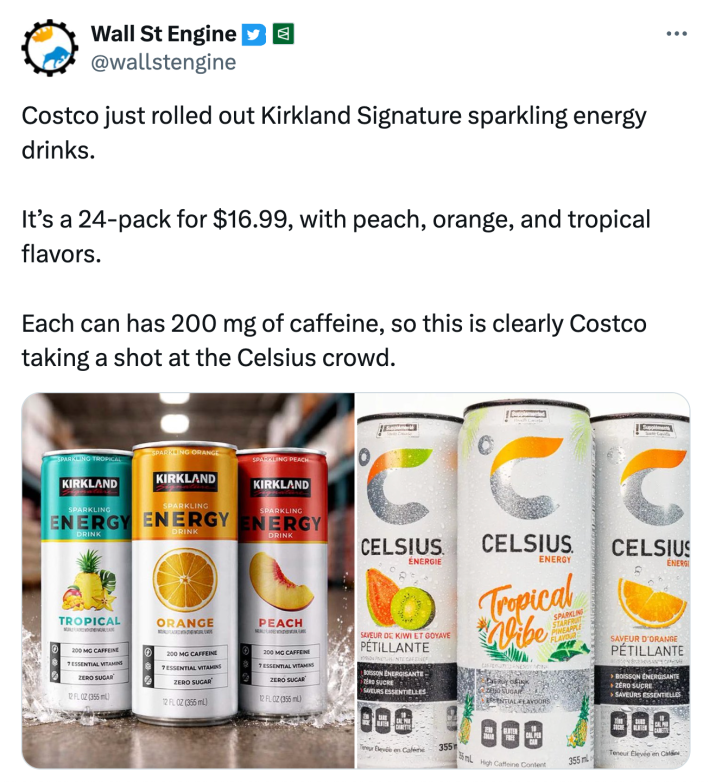
The new Kirkland Signature offering is presented as a 24-pack of sugar-free sparkling caffeinated beverages, retailing at an aggressive price point of $16.99. This translates to approximately $0.70 per can, a stark contrast to the average price of its primary competitor, Celsius, which often sells for around $1.58 per can in similar bulk packaging. The variety pack includes three distinct flavors: peach, orange, and tropical, designed to appeal to a broad consumer base already familiar with popular energy drink profiles.
Each 12-fluid-ounce can delivers a substantial 200 milligrams of caffeine. This caffeine content is strategically aligned with, and identical to, the levels found in leading brands such as Celsius, Ghost, and Alani Nu. For context, a standard 8-ounce cup of black coffee typically contains about 95 milligrams of caffeine, making the Kirkland Signature drink a potent stimulant, roughly equivalent to two cups of coffee. While Costco has previously offered energy shots under its private label, this new product represents its inaugural foray into the full-sized, ready-to-drink sparkling energy beverage category, signaling a more serious commitment to capturing a share of this rapidly expanding market.
The immediate reaction on social media platforms and among industry observers has largely centered on this aggressive pricing strategy. Consumers, particularly those who regularly purchase energy drinks, are keenly aware of the cost savings. Should the taste and overall efficacy of the Kirkland Signature drinks prove comparable to their more expensive counterparts, it is widely anticipated that budget-conscious buyers will readily opt for the more economical choice, potentially reshaping purchasing habits within the category.
Kirkland Signature’s Proven Playbook: The Power of Private Label
The launch of the Kirkland Signature energy drink is not an isolated event but rather a continuation of a highly successful and well-documented business strategy employed by Costco for decades. Kirkland Signature, established in 1992, has evolved from a generic store brand into a powerhouse label, generating an astounding $90 billion in revenue in 2025 alone. This figure surpasses the annual revenues of major corporations such as Boeing ($89 billion), FedEx ($88 billion), T-Mobile ($88 billion), Procter & Gamble ($84 billion), and Wells Fargo ($80 billion), underscoring the immense scale and market influence of Costco’s private brand.
Kirkland Signature’s success is built upon a deliberate and meticulous "dupe" strategy. Rather than inventing entirely new product categories, Costco identifies popular, high-performing brand-name merchandise—ranging from Lululemon-style activewear and premium snacks to alcoholic beverages and now, energy drinks—and develops its own version. These versions are designed to offer comparable quality and performance but at a significantly lower price point. Crucially, Kirkland Signature products are engineered to be distinct enough in branding, packaging, and formulation to avoid direct copyright or patent infringement lawsuits, a delicate balance they have mastered.
The operational philosophy underpinning Kirkland Signature’s dominance is characterized by low margins and high volume. As noted by analysts like Trung Phan on X (formerly Twitter), Costco typically caps Kirkland Signature’s profit margin at 15%, often even single-digit percentages for suppliers focused on volume. This disciplined approach ensures that the cost savings are genuinely passed on to the consumer, reinforcing the value proposition that is central to Costco’s membership model.
Furthermore, Costco is renowned for its rigorous product development process, which often spans years. The company invests heavily in research and development, frequently collaborating with leading manufacturers to produce private label items that not only match but sometimes even exceed the quality of their branded counterparts. A testament to this commitment was shared by a Costco CEO, who, when discussing a breakfast sandwich, highlighted how Costco negotiated for 40% more protein in the bacon compared to other products from the same manufacturer. This relentless pursuit of enhanced value and quality for its members is a cornerstone of the Kirkland Signature brand’s enduring appeal.
The Exploding Energy Drink Market: A Lucrative Battleground
Costco’s entry into the sparkling energy drink market comes at a time of robust growth and intense competition within the sector. The global energy drink market was valued at approximately $61.2 billion in 2020 and is projected to reach over $108 billion by 2031, growing at a compound annual growth rate (CAGR) of 6.2% during the forecast period. In the United States, the market is particularly vibrant, driven by busy lifestyles, increasing consumer awareness of functional beverages, and a growing demand for convenient sources of energy.
Key players like Red Bull and Monster Energy have historically dominated the market, but newer brands such as Celsius, Ghost, Alani Nu, and Bang have rapidly gained significant traction, especially among younger demographics and fitness enthusiasts. These newer brands often differentiate themselves through innovative flavors, sugar-free formulations, and the inclusion of functional ingredients like BCAAs, vitamins, and electrolytes, aligning with a broader consumer shift towards health and wellness. Celsius, in particular, has seen explosive growth, positioning itself as a "healthy energy" drink often associated with fitness and active lifestyles.
The demographic profile of energy drink consumers is diverse but leans heavily towards millennials and Gen Z, who seek beverages that offer both an energy boost and additional functional benefits. There’s also a growing preference for beverages with natural ingredients and transparent labeling. The market has observed a steady increase in demand for sugar-free and low-calorie options, which the new Kirkland Signature product directly addresses. This fertile ground, characterized by high consumer demand and an increasingly segmented market, presents an opportune moment for a powerful private label like Kirkland Signature to make its move.
Strategic Positioning and Competitive Impact
The introduction of Kirkland Signature Sparkling Energy Drinks represents a calculated strategic play by Costco, designed to capture market share through aggressive pricing and the inherent trust in its private label brand. The nearly 50% price difference per can compared to Celsius ($0.70 vs. $1.58) is a significant differentiator that cannot be overlooked by consumers. In an economic climate where inflation has made many everyday items more expensive, the prospect of reducing the cost of a regular purchase like an energy drink is highly appealing.
This move poses a direct threat to incumbent brands, particularly those in the premium or health-focused energy drink segment that command higher prices. Celsius, for instance, might face increased pressure to justify its pricing or risk losing a segment of its consumer base to the more affordable Kirkland option. While brand loyalty is strong in the energy drink market, the sheer volume and value offered by Costco could compel some consumers to experiment with the private label, especially if initial reviews of taste and quality are positive.
A significant aspect of the discussion surrounding the Kirkland Signature energy drink has been the widespread speculation that it is manufactured by Celsius or another major energy drink producer under a private label agreement. This "white-label" hypothesis is common with Kirkland Signature products. For example, many of its premium liquors are known to be distilled by major distilleries, and its batteries are reportedly manufactured by Duracell. The concept of private label manufacturing benefits both parties: the producer gains a large, consistent order volume and efficient use of its manufacturing lines, while Costco secures a high-quality product at a lower cost due to economies of scale and reduced marketing overhead.
While neither Costco nor Celsius has officially confirmed or denied such an arrangement, the visual similarities between the cans and the identical caffeine content have fueled these suspicions. Comments on social media, such as @kennedy_chet suggesting, "Celsius might be manufacturing it private label for them," and @austenff’s more emphatic assertion, "If you look at these two cans and cant figure out that they’re canned by the same f*cking people then you need serious help," highlight the strong belief among consumers and observers that a major player is behind the Kirkland product. If true, this arrangement would underscore the sophisticated supply chain strategies employed by Costco to deliver premium products at value prices.
Social Media Reactions and Brand Perception
The launch immediately ignited a firestorm of discussion across social media platforms, particularly X (formerly Twitter). The predominant sentiment revolved around the unparalleled value proposition. Many users expressed excitement about the potential cost savings on a daily staple, signaling a strong market appetite for a more affordable energy drink option.
Beyond the price and potential manufacturer, the aesthetic of the Kirkland Signature brand itself became a talking point. While some appreciated the utilitarian, no-frills design as consistent with Costco’s value-driven ethos, others found it lacking compared to the sleek, modern branding of competitors. One user, @cmcwain, humorously tweeted, "Kirkland Signature needs to update their logo. They come off like" accompanied by an image of a generic can of sweet peas, highlighting the perception of Kirkland’s often unadorned packaging. This debate underscores the broader challenge for private labels: balancing cost-effectiveness with brand appeal in a highly image-conscious market.
Despite some critiques of its visual branding, many observers also shared their admiration for Costco’s overarching marketing and business strategies. As @evantana noted, "I love this stuff. The level of clarity is inspiring. Generational businesses understand who they are, what they stand for and what their execution edge is." This sentiment reflects a recognition that Kirkland Signature’s success isn’t just about low prices, but about a deep understanding of its target demographic, a relentless focus on value, and an unwavering commitment to quality that transcends typical private label expectations.
Broader Implications and Future Outlook
Costco’s entry into the sparkling energy drink market with a robust Kirkland Signature offering has several significant implications for the broader consumer goods landscape and the competitive dynamics within the energy drink sector.
Firstly, it further solidifies the growing power and acceptance of private label brands. Once perceived as inferior alternatives, private labels like Kirkland Signature have elevated their status to formidable competitors, capable of challenging even the most entrenched national brands. This trend is likely to continue, encouraging other retailers to invest more heavily in their own private label offerings across various product categories.
Secondly, for Costco, this move is a strategic reinforcement of its core value proposition to its members. By offering a high-demand product like energy drinks at an unbeatable price, Costco enhances member loyalty, increases the average transaction size, and provides yet another compelling reason for consumers to maintain their membership. It demonstrates Costco’s commitment to delivering tangible savings on everyday essentials, including discretionary purchases like energy drinks.
Thirdly, the competitive pressure on existing energy drink brands will intensify. While established brands have strong marketing budgets and brand recognition, a significant price disparity on a comparable product cannot be ignored indefinitely. Competitors may be forced to re-evaluate their own pricing strategies, offer more aggressive promotions, or further innovate their product lines to differentiate themselves from the value leader. This could lead to a downward pressure on prices across the entire energy drink market, ultimately benefiting the consumer.
Finally, this development reflects an evolving consumer landscape where value consciousness is paramount, especially in a fluctuating economic environment. Consumers are increasingly savvier, willing to try private labels if the quality and price align. The success of the Kirkland Signature energy drink will serve as another case study in how retailers can disrupt established markets by leveraging their private label strength, disciplined cost structures, and deep understanding of consumer needs. The energy drink market is now officially on notice: the private label giant has arrived, and it means business.