Vera Intan Clara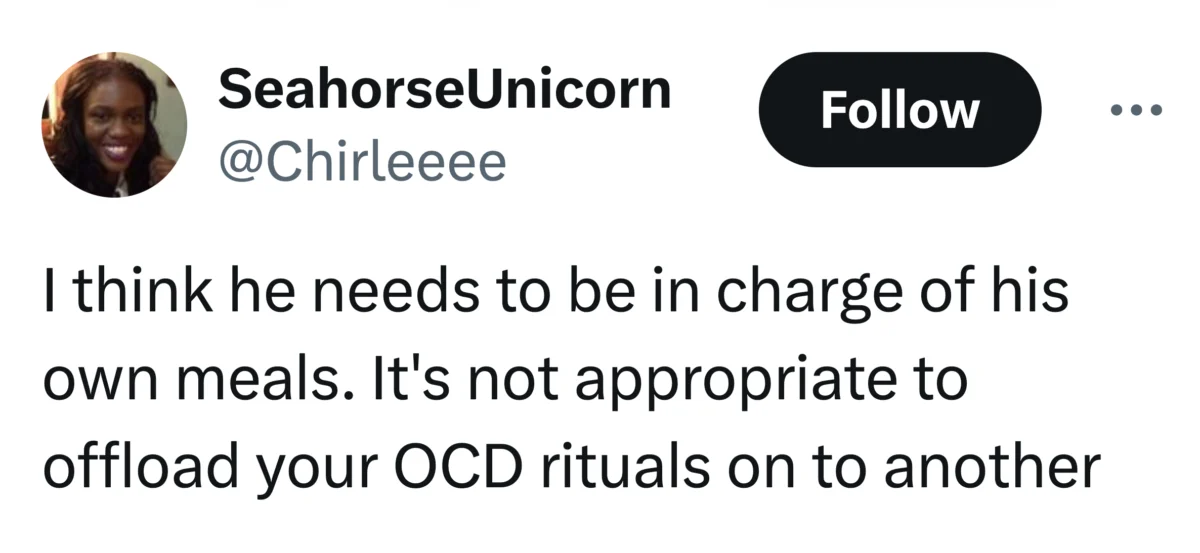
A recent viral post on the r/PickyEaters subreddit, shared by user u/NY2LA1984 before her account was deleted, has ignited a widespread discussion across social media platforms regarding the fine line between dietary preferences and controlling behavior within intimate relationships. The post detailed an extraordinary litany of strict, often illogical, and deeply burdensome food requirements imposed by her husband, culminating in the alarming revelation that he forbade her from consuming her own preferred meals due to his aversion to their smell. This personal grievance quickly transcended the digital confines of Reddit, sparking outrage and concern on X (formerly Twitter) and prompting a critical re-examination of what constitutes acceptable behavior in a partnership, particularly when it encroaches upon personal autonomy and well-being.
The Catalyst: A Redditor’s Cry for Help
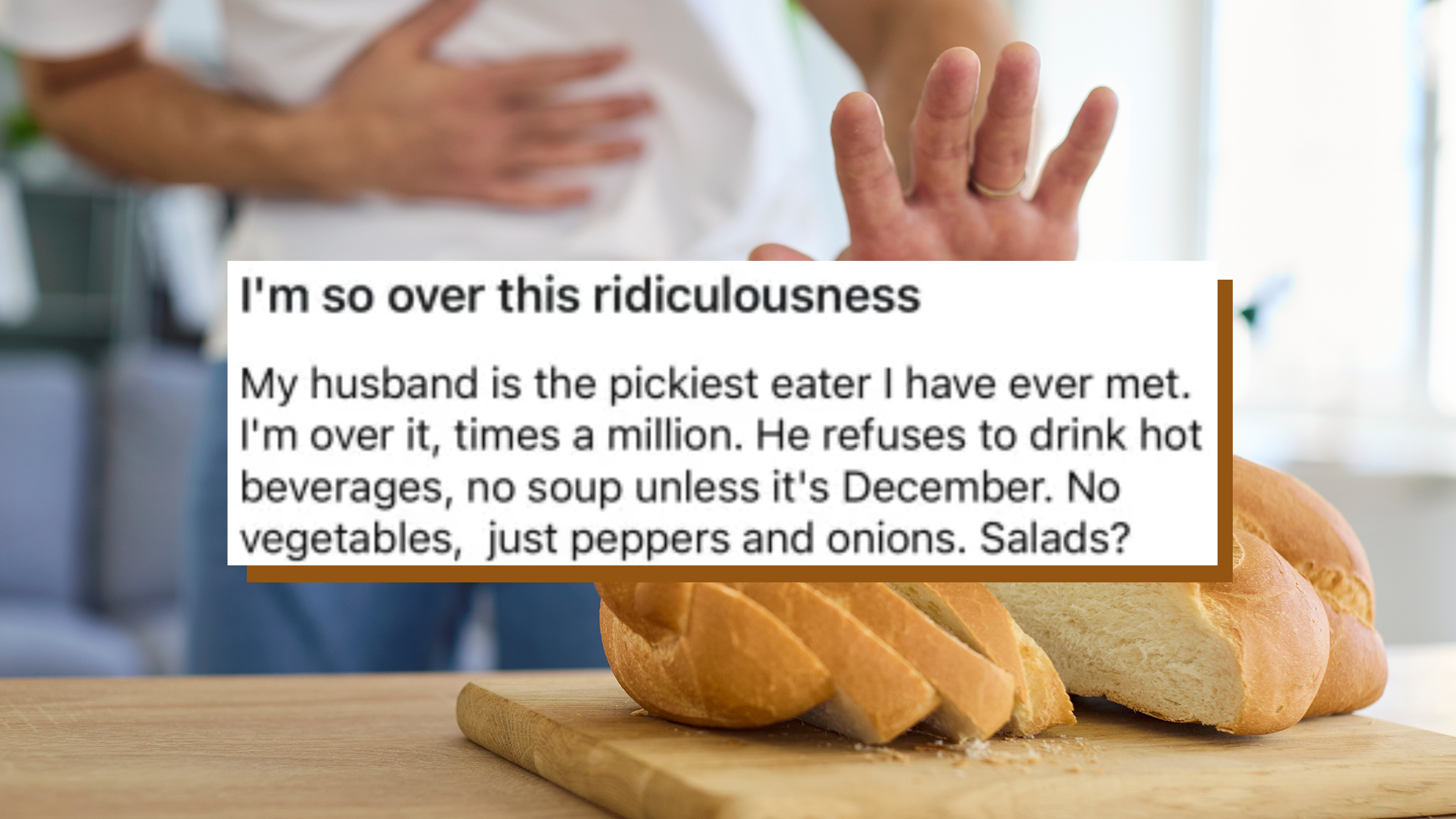
The original post, succinctly titled "I’m so over this ridiculousness," laid bare the profound frustration experienced by u/NY2LA1984. She described her husband as "the pickiest eater I have ever met," but the subsequent details painted a picture far more complex than mere selective eating. Her account enumerated a series of highly specific and often contradictory demands that dictated not only his diet but also the entire household’s culinary landscape. The timing of the post, appearing on the subreddit, allowed for rapid dissemination and a broad spectrum of reactions from a community familiar with the challenges of selective eating.
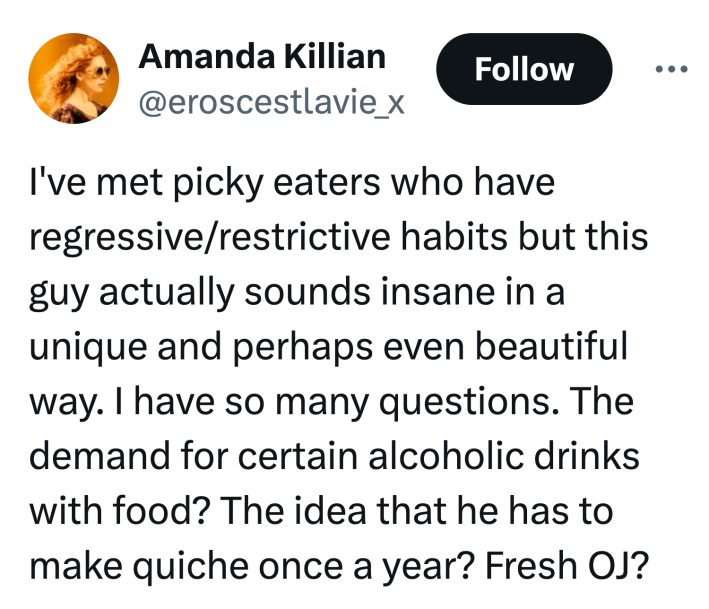
According to her detailed vent, her husband refused hot beverages outright, permitted soup only in December, and limited his vegetable intake to a narrow selection of "just peppers and onions." Salads were an exceedingly rare occurrence, consumed "maybe three times a year," and only if sourced from a single, specific store. The preparation of food was equally fraught with peculiar stipulations: he would attempt to make quiche once a year, despite a stated inability to "handle the texture of scrambled eggs," consistently failing to follow recipes and "ruining it EVERY F*CKING YEAR."
His culinary rigidity extended to international cuisine, with Italian pasta dishes deemed inedible without Chianti and Mexican food requiring margaritas. Even simple hydration was subject to his exacting standards; any juice consumed had to be orange juice, "fresh squeezed by me only." His eating patterns exhibited erratic fluctuations, with some days involving complete abstinence from food, while others saw him consuming only peanut butter and preserves, but with the bizarre caveat that it must be served "in a bowl not in a sandwich." This meticulous documentation of his habits provided the raw data that fueled the subsequent online debate.
These revelations alone painted a portrait of a partner whose dietary habits demanded an exceptional level of accommodation and emotional labor from his spouse. However, the most critical "red flag," as many online commentators quickly identified, was the husband’s explicit prohibition of u/NY2LA1984 eating anything he wasn’t also consuming. This restriction was justified by his inability to "stand the smell of something he’s not eating," an olfactory sensitivity that effectively dictated his wife’s entire meal plan. She cited a recent instance where she was permitted to eat only "two stalks of celery with peanut butter on them the night before," illustrating the severe curtailment of her food choices. This particular detail transformed the narrative from one of a demanding spouse into a more serious discussion about potential control and coercion within the relationship. The rapid spread of this anecdote underscored its resonance with a broad audience, many of whom recognized elements of unhealthy relationship dynamics.
Beyond Picky: A Spectrum of Eating Behaviors
To understand the broader context of this viral account, it is crucial to differentiate between typical picky eating and more complex or problematic eating behaviors. Picky eating, or selective eating, is common, especially in childhood, where up to 50% of children might exhibit some form of food selectivity. While most outgrow it, a significant minority, estimated to be between 4-20% of adults, continue to identify as picky eaters. These individuals often have a limited range of accepted foods, may dislike certain textures or smells, and might require food to be prepared in specific ways. However, their habits typically do not impose severe restrictions on others or dictate the entire household’s diet.
The husband’s behavior, as described, appears to extend beyond conventional picky eating, potentially touching upon characteristics of Avoidant/Restrictive Food Intake Disorder (ARFID). ARFID is a formal diagnosis in the Diagnostic and Statistical Manual of Mental Disorders, Fifth Edition (DSM-5), characterized by a persistent failure to meet appropriate nutritional and/or energy needs due to various factors, including:
- Apparent lack of interest in eating or food: Individuals may simply not be hungry or find eating a chore.
- Avoidance based on the sensory characteristics of food: This includes extreme sensitivity to taste, smell, texture, color, or temperature. The husband’s aversion to the smell of foods he wasn’t eating, and his specific requirements for textures (e.g., scrambled eggs vs. quiche), align with this criterion.
- Concern about aversive consequences of eating: This could involve fears of choking, vomiting, or experiencing gastrointestinal distress.
Unlike anorexia nervosa or bulimia nervosa, ARFID is not driven by body image concerns. Individuals with ARFID may experience significant weight loss, nutritional deficiencies, dependence on enteral feeding or oral nutritional supplements, or marked interference with psychosocial functioning. While the Reddit post does not provide enough clinical detail to definitively diagnose ARFID, the husband’s extreme sensory aversions (e.g., textures, smells, specific temperatures for beverages), inconsistent eating, and highly specific requirements bear some resemblance to the disorder’s presentation. Approximately 1-5% of the general population is estimated to experience ARFID, with higher rates observed in clinical populations seeking treatment for eating disorders. Understanding this distinction is vital, as a clinical condition might require professional intervention, but it does not diminish the impact of his behavior on his partner. If the husband indeed suffered from such a condition, open communication and joint management strategies, rather than unilateral impositions, would be the healthy approach.
The Alarming Dimension: Controlling Behavior and Relationship Dynamics

What truly elevated u/NY2LA1984’s post from a mere complaint about a difficult partner to a serious relationship red flag was the husband’s insistence that she conform to his dietary restrictions. The demand that she "not eat anything he wasn’t eating" due to his aversion to the smell of other foods moved the issue squarely into the territory of controlling behavior. This goes beyond personal preference; it represents a direct infringement on his partner’s autonomy and fundamental right to choose what she eats.
Controlling behavior in relationships is a form of emotional abuse, where one partner attempts to dominate the other through various means. This can manifest as isolation, financial control, constant criticism, or, as seen here, dictating personal choices like diet. The dynamics of such control often involve:
- Imposing Arbitrary Rules: Creating unilateral rules that restrict the other person’s freedom without mutual consent or reasonable justification. The husband’s requirements for specific alcoholic pairings or seasonal soup consumption exemplify this arbitrary nature.
- Creating Dependence: By limiting a partner’s ability to make independent choices, the controlling individual fosters a reliance that makes leaving the relationship more difficult.
- Emotional Labor: The disproportionate burden placed on one partner to manage the other’s complex needs, often at the expense of their own. In this case, u/NY2LA1984 was responsible for "heavy lifting on meal prep and going out to the store" to cater to his highly specific demands, in addition to being denied her own food choices. This constant vigilance and effort to avoid upsetting her husband would undoubtedly lead to significant emotional exhaustion and resentment, a common outcome for individuals subjected to such control.
- Erosion of Self-Esteem: Over time, being constantly dictated to and denied basic choices can erode a person’s sense of self-worth, independence, and even their personal identity.
Psychological studies on relationship dynamics frequently highlight that healthy partnerships are built on mutual respect, open communication, and shared decision-making. When one partner consistently imposes their will and restricts the other’s autonomy, it signals a fundamental imbalance of power that can be detrimental to the relationship’s health and the well-being of the controlled individual. Research indicates that controlling behaviors are present in a significant percentage of abusive relationships, affecting millions globally. The fact that the husband’s demands were so idiosyncratic and seemingly without logical basis (e.g., soup only in December, specific alcoholic pairings, peanut butter in a bowl but not a sandwich) further underscores the arbitrary nature of his control, transforming personal preference into a tool of dominance.
The Digital Echo Chamber: Public Reaction and Support
The post rapidly gained traction, with screenshots and summaries shared widely across Reddit and X, eliciting a strong and almost universal reaction of condemnation for the husband’s behavior. The consensus among online commentators was clear: while individual dietary preferences are understandable, imposing them coercively on a partner constitutes a significant boundary violation and potential abuse. The swiftness and volume of responses highlighted the immediate recognition of these red flags by a diverse online audience.
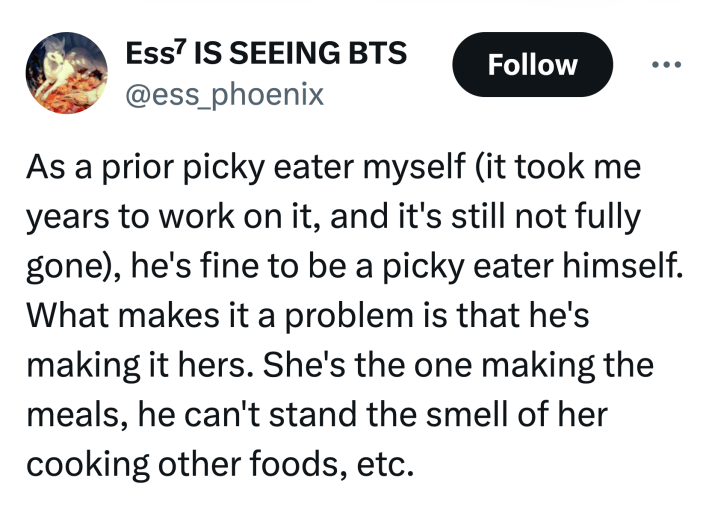
One X user, @ess_phoenix, articulated this sentiment concisely: "As a prior picky eater myself (it took me years to work on it, and it’s still not fully gone), he’s fine to be a picky eater himself. What makes it a problem is that he’s making it hers. She’s the one making the meals, he can’t stand the smell of her cooking other foods, etc." This comment encapsulates the core grievance: the transition from personal preference to enforced control, an act deemed unacceptable by the online community.

Reddit users offered direct and actionable advice. User u/Background_Big7363 urged the original poster to establish firm boundaries: "So, two rules you need to make: He is responsible for his food from here on out; and You get to eat whatever you want and he gets no say. If he refuses, then get yourself free. I mean, it sounds like this relationship is more stress than joy, anyhow." This advice reflects a common theme in online support forums for relationship issues: prioritizing one’s own well-being and autonomy, and recognizing when a relationship has become detrimental.
Other users highlighted the irrationality of the husband’s demands. @vrcraftauthor on X noted, "This is not picky eating. Foods I hate taste bad all year, they don’t magically taste better in December or once a year." This observation points to the ritualistic, almost obsessive nature of his eating habits, which some speculated might indicate an underlying condition beyond simple pickiness, such as Obsessive-Compulsive Disorder (OCD) or significant sensory processing issues. Another user, @Chirleeee, suggested, "I think he needs to be in charge of his own meals. It’s not appropriate to offload your OCD rituals on to another." These interpretations, while speculative, reflect attempts by the public to understand the underlying motivations for such extreme behavior, while simultaneously condemning its impact on the partner.
The online community’s swift and strong response demonstrates the collective understanding that personal quirks become problematic when they impinge upon another person’s freedom and create an environment of undue burden and control. The support offered to u/NY2LA1984 underscores the power of online communities to validate experiences and offer solidarity in situations where individuals might feel isolated or gaslighted, turning a personal grievance into a public discourse on relationship health.
Expert Perspectives (Generalized/Inferred)
While no specific experts were quoted in the original material, the widespread discussion invites reflection from professional standpoints. Relationship counselors would likely emphasize the critical role of mutual respect and autonomy in a healthy partnership. They might suggest that when one partner’s needs consistently override the other’s, particularly in fundamental areas like sustenance, it signals a breakdown in equitable partnership. Effective communication, boundary setting, and potentially couples therapy would be recommended to address such power imbalances. A core tenet of relationship health is the ability for both individuals to maintain their identity and personal freedoms while navigating shared life, and any deviation from this balance warrants professional attention.
From a psychological perspective, a therapist specializing in eating disorders or sensory issues might advise that if the husband’s behavior stems from an undiagnosed condition like ARFID or severe sensory processing disorder, professional assessment and intervention could be beneficial for him. However, they would simultaneously stress that a diagnosis, while offering an explanation, does not absolve an individual from the responsibility of managing their condition in a way that respects their partner’s well-being. The impact on the partner, regardless of the underlying cause, remains a critical concern, and support for the spouse dealing with such demands would be paramount. Mental health professionals often counsel individuals in such situations to prioritize their own safety and well-being, even if it means re-evaluating the relationship itself.
Implications for Relationships and Individual Well-being
The incident brought to light by u/NY2LA1984 carries significant implications for understanding and addressing complex dynamics within relationships. Firstly, it highlights how seemingly minor issues, such as dietary preferences, can escalate into significant sources of conflict and control when one partner wields disproportionate power. The "smell aversion" used to justify the restriction on his wife’s food choices is a stark example of how personal sensitivities can be weaponized to control another individual, illustrating a pervasive pattern that extends beyond food to other aspects of life.
Secondly, the emotional and psychological toll on the controlled partner cannot be overstated. Constantly walking on eggshells around a partner’s rigid demands, being denied basic choices, and bearing the brunt of emotional labor can lead to chronic stress, anxiety, depression, and a diminished sense of self. The impact on one’s own relationship with food can also be severe, potentially leading to disordered eating patterns or a pervasive sense of deprivation, as the partner’s nutritional needs and preferences are systematically ignored. Studies on emotional abuse consistently show its profound negative effects on victims’ mental health, often mirroring the damage caused by physical abuse.
Thirdly, this viral story serves as a valuable public awareness tool. It encourages individuals in similar situations to recognize the "red flags" and seek help. Many forms of abuse are subtle and insidious, often masked by excuses or framed as "just how they are." By sharing such experiences, social media platforms can help de-normalize controlling behaviors and foster a collective understanding of what healthy relationship boundaries entail, offering a platform for validation and support that might otherwise be unavailable. The advice given to u/NY2LA1984—to prioritize her own needs and consider the health of the relationship—is a testament to the community’s recognition of the severity of the situation.
Finally, the incident underscores the importance of proactive communication and boundary-setting from the outset of a relationship. While it’s easy to dismiss quirks early on, unchecked preferences can evolve into entrenched demands that undermine the very foundation of partnership. Addressing such issues requires courage, clarity, and sometimes, external support to ensure that both partners’ needs and autonomy are respected. The absence of a clear timeline for how long this dynamic had been in place suggests a gradual erosion of boundaries, a common pattern in controlling relationships.
Navigating Complexities: Seeking Solutions and Setting Boundaries
For individuals facing similar challenges, the situation presented by u/NY2LA1984 offers several pathways for consideration. The first step involves recognizing that such extreme and controlling behaviors are not normal or acceptable in a healthy relationship. Self-validation of one’s feelings of frustration and distress is crucial, as is the acknowledgment that one is not solely responsible for managing a partner’s unreasonable demands.
Subsequently, open and honest communication with the partner is necessary, ideally in a calm and non-confrontational manner. Clearly articulating the impact of their demands on one’s well-being and the relationship is essential. Setting firm boundaries, as suggested by many Reddit users, is a critical next step. This could involve clearly stating that each partner is responsible for their own meals, and that personal food choices will not be dictated by the other’s preferences. This establishes a baseline of individual autonomy.
If communication fails or if the controlling behavior persists, seeking professional help becomes paramount. Individual therapy can provide the affected partner with coping strategies, emotional support, and tools to assert their autonomy. Couples therapy, if the partner is willing, can offer a neutral space to address underlying issues, improve communication patterns, and re-establish healthy relationship dynamics. In cases where the partner’s behavior strongly suggests an undiagnosed condition like ARFID or OCD, encouraging them to seek individual medical or psychological evaluation could be beneficial, potentially leading to a more structured and manageable approach to their dietary needs. However, the onus of seeking help for a condition should not fall entirely on the affected partner.
Ultimately, the viral account of u/NY2LA1984 serves as a potent reminder that relationships thrive on mutual respect, understanding, and the preservation of individual autonomy. When one partner’s preferences become coercive demands, the relationship shifts from a partnership to a dynamic of control, necessitating serious reflection and potentially significant changes to restore balance and well-being. The online community’s resounding message to u/NY2LA1984 was a powerful call to action: prioritize self-respect and do not tolerate behavior that undermines one’s basic freedoms, offering a valuable lesson for countless others navigating complex personal relationships.