Vera Intan Clara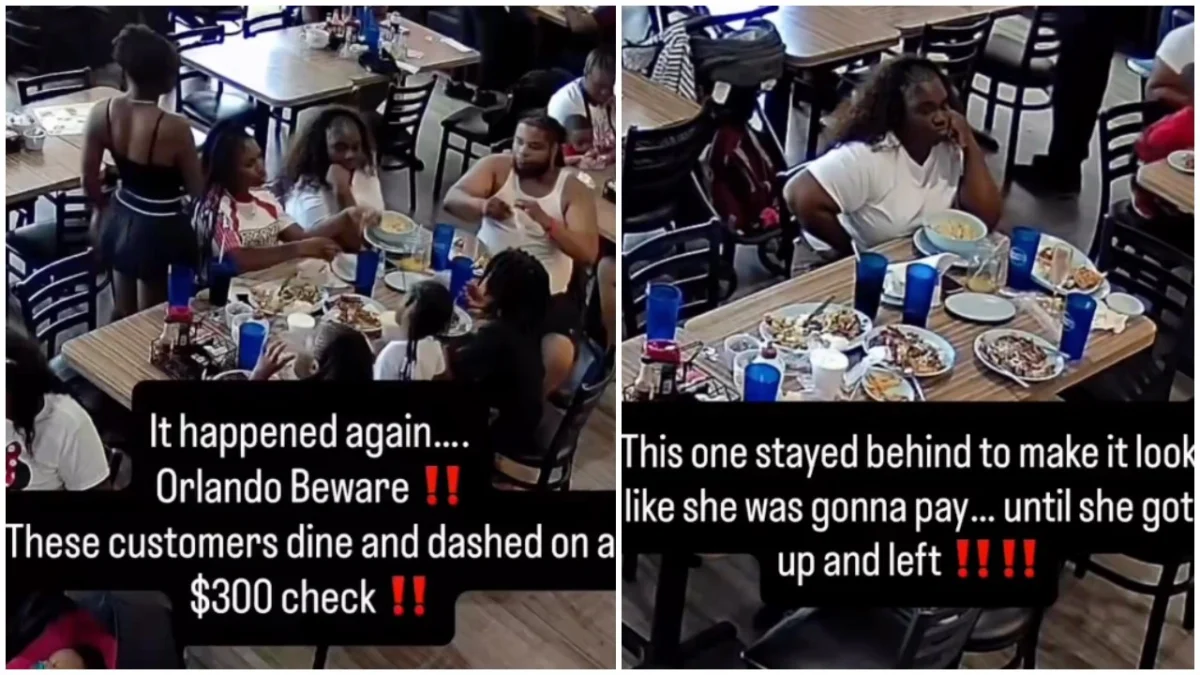
The digital realm has once again become the stage for a contentious public discussion, following a viral video purportedly showing a family of seven departing an Orlando eatery without settling their bill. The incident, brought to widespread attention by X user @CrystalHope1979, who captioned the clip, "Dine & Dash strikes AGAIN in Orlando!", has swiftly become a flashpoint for conversations surrounding consumer ethics, the financial vulnerabilities of the restaurant industry, and the power of social media in unverified public shaming.
Chronology of an Alleged Departure
The video, which has garnered significant attention and thousands of views, purports to capture the systematic departure of a family from "AT THE DINER," an establishment reportedly located in Orlando. According to @CrystalHope1979’s account, the family indulged in a "massive spread," accumulating a bill allegedly exceeding $300. While the exact total remains unconfirmed by independent sources, the footage itself offers a sequential narrative of the family’s exit.
The scene opens with a seemingly ordinary family meal: five children and two adults are seated, engaged in dining. A pivotal moment, as interpreted by numerous viewers and the X user, occurs when the adult male is observed handing what appears to be a set of car keys to one of the older children, likely a teenager. This teenager then proceeds to leave the restaurant. Moments later, the adult male rises from the table, and the remaining children follow his lead, exiting the premises behind him.
The camera then focuses on the adult female, who remains seated at the table. Her posture and actions are subject to interpretation; she appears to be waiting, perhaps for a server to present the check, process a payment, or return with a receipt. However, the video footage, as widely circulated, does not depict any restaurant staff approaching the table during this interval. After a brief period, the woman also stands and exits the restaurant, leaving the table entirely vacant. This orchestrated, staggered departure has been highlighted by the X user as a deliberate tactic, bolstering the claim of an intentional "dine and dash."
The Broader Problem: Dine-and-Dash in Context
The term "dine and dash" refers to the act of ordering and consuming food or services at a restaurant with the deliberate intent to leave without paying the bill. This act constitutes theft of services and is a significant drain on an already notoriously thin-margined industry. While the Orlando incident remains an allegation, it serves as a stark reminder of a persistent challenge faced by restaurant owners globally.
Industry reports consistently highlight that "dine and dash" incidents, alongside employee theft and supplier fraud, contribute substantially to operational losses. For independent restaurants and smaller establishments, a single incident involving a large bill, such as the alleged $300 in Orlando, can significantly impact daily revenue, staff wages, and even the viability of the business. The average profit margin for restaurants can range from 3% to 6%, meaning that a $300 loss might require a restaurant to generate thousands of dollars in additional sales to simply break even on that specific incident. This economic reality underscores the frustration and anger expressed by many in response to such alleged acts.
Moreover, the psychological toll on restaurant staff cannot be overlooked. Servers often bear the brunt of these incidents, sometimes being held personally responsible for unpaid tabs or facing disciplinary action. This creates an environment of distrust and added stress in a profession already known for its demanding nature.
Social Media’s Double-Edged Sword: Public Reaction and Accountability
The propagation of the Orlando video on X (formerly Twitter) exemplifies the dual role of social media in contemporary society. On one hand, it acts as a powerful platform for citizen journalism, enabling rapid dissemination of information and potentially holding individuals accountable for their actions. On the other hand, it raises critical questions about due process, the potential for misidentification, and the ethics of public shaming without independent verification.
The comments section beneath @CrystalHope1979’s post quickly became a forum for outrage and debate. One user articulated widespread frustration, stating simply, "burns me up." Another commenter noted the alleged incident’s proximity to "Epic Universe," potentially hinting at a broader trend in high-traffic tourist areas where anonymity might be perceived as greater.
Perhaps the most poignant reaction came from a user who pondered the moral implications for the children involved: "A family of about seven or eight people, and not one of them has any morals or an ounce of shame to say, no, this is wrong? What hope is there for all those children, then? What kind of people will they turn out to be? And the cycle will go on unbroken considering that they too will bring and raise amoral children in this world." This comment transcends the immediate financial loss, delving into the long-term societal consequences of such alleged behavior, particularly when adults are seen as modeling unethical conduct for minors.
Legal and Ethical Dimensions of Restaurant Theft
Legally, a "dine and dash" is considered theft of services. In Florida, depending on the value of the stolen services, it can range from a misdemeanor to a felony. For an amount over $300, it could potentially be classified as grand theft, which carries more severe penalties, including higher fines and potential jail time. However, prosecuting such cases often presents challenges for law enforcement. Without clear identification of the individuals, detailed witness accounts, or definitive surveillance footage that can withstand legal scrutiny, building a case can be difficult. Restaurants are often encouraged to file police reports, but resource limitations mean that these incidents might not always be prioritized unless they are part of a larger pattern or involve significant sums.
Ethically, the act is a clear violation of trust and fairness. Restaurants provide a service in good faith, expecting fair compensation. When that trust is breached, it erodes the foundation of commerce and community interaction. The public outcry following such incidents often stems from a shared understanding of this fundamental principle and a sense of solidarity with small businesses and hardworking individuals in the service industry.
Industry Responses and Prevention Strategies
The increasing prevalence of alleged "dine and dash" incidents, as claimed by the X user regarding Orlando, has prompted some in the restaurant industry to consider more stringent preventative measures. One user’s suggestion in response to the viral video encapsulates this growing sentiment: "soon restaurants will be putting a $50/person precharge on cc’s before serving and then make the difference up on the check, honestly, i would be fine with that, food industry has very low profit margins, a few of these could really hurt the business."
While pre-payment or upfront deposits are common in certain service sectors (e.g., fine dining for large parties, event bookings), implementing them for everyday dining can be a significant shift. Such measures could deter genuine customers, slow down service, and potentially alter the traditional dining experience. However, the economic pressures exerted by consistent theft may force some establishments to explore these options.
Other preventative strategies include:
- Enhanced Surveillance: Installing high-definition security cameras in dining areas and exits to clearly capture faces and license plates.
- Staff Training: Educating servers and hosts to recognize suspicious behavior, maintain consistent table presence, and process payments promptly.
- Table Management Systems: Utilizing technology to track tables, order status, and payment processing more efficiently.
- "Pay-at-the-Counter" Models: Shifting to a system where customers pay at a central register before or immediately after their meal, common in fast-casual but less so in full-service restaurants.
- Digital Payment Solutions: Encouraging customers to pay via apps or QR codes at the table, which can expedite the process and reduce opportunities for evasion.
The Unverified Nature of Claims and Journalistic Responsibility
It is crucial to reiterate that, as of this report, the allegations made in the viral post, including the family’s intent to defraud and the exact amount of the bill, have not been independently verified. The Daily Dot, like many news outlets covering such viral content, was unable to confirm these claims beyond the video footage and the statements provided by the X user.
Journalistic integrity demands that while reporting on widely discussed social media phenomena, the unverified nature of the claims is consistently highlighted. The video offers visual evidence of a family leaving a restaurant, but the underlying intent—whether it was a deliberate "dine and dash" or a misunderstanding—cannot be definitively ascertained from the footage alone. Without statements from the restaurant management, law enforcement, or the individuals allegedly involved, the narrative remains largely one-sided, based on interpretation and allegation.
This incident in Orlando, regardless of its ultimate veracity, serves as a powerful illustration of the challenges faced by businesses in preventing theft, the public’s swift reaction to perceived injustices, and the complex ethical landscape of social media in the digital age. It underscores the ongoing tension between public desire for immediate accountability and the fundamental principles of due process and verification. As restaurants continue to navigate economic pressures and evolving consumer behaviors, the discussion around preventing and addressing "dine and dash" incidents will undoubtedly intensify, potentially leading to significant shifts in how dining establishments operate in the future.