Clarissa Hana

In February 2026, a significant development in the fight against cybercrime unfolded as the operator of OnlyFake, a service facilitating the creation of over 10,000 fraudulent digital identity documents, pleaded guilty in the United States. This operation offered customers the ability to generate a wide array of counterfeit credentials, including passports, driver’s licenses, and Social Security cards, spanning numerous countries. The fabricated documents could be presented as either scanned images or photographic representations of physical IDs, providing a versatile toolkit for illicit activities. According to the U.S. Department of Justice, these forged documents were instrumental in enabling cybercriminals to obscure their identities, bypass crucial identity verification checks at financial institutions and cryptocurrency exchanges, and facilitate money laundering operations. This case serves as a stark reminder of the evolving landscape of digital fraud, where increasingly sophisticated tools are employed to circumvent security measures.
The ramifications of this illicit trade extend far beyond the mere creation of fake documents. Intelligence gathered from underground communities, meticulously monitored by Flare’s platform, reveals a burgeoning market for manipulated photographs and videos, services offering assistance with live identity verification bypasses, and even pre-verified accounts that actors claim have already successfully passed stringent identity checks. Each year, Flare compiles hundreds of thousands of search results pertaining to Know Your Client (KYC) services and the clandestine trade of verified accounts. An in-depth analysis of activity observed between March and September 2026 offers a granular view into how these illicit offerings are packaged, promoted, and exploited across the dark web and underground markets.
Understanding Know Your Client (KYC)
At its core, Know Your Client (KYC) is a regulatory process mandated for financial institutions. It is designed to establish a customer’s identity and assess the potential risks associated with providing services to them. The rigor of the KYC process is typically tiered, escalating based on the perceived risk profile of the applicant. This can involve validating submitted identity documents, comparing photographic evidence with live images captured during the verification process, confirming control over contact details, requesting documentation regarding the source of funds, and screening individuals against sanctions lists and lists of politically exposed persons (PEPs).
The commitment to KYC extends beyond the initial account opening. Ongoing transaction monitoring and supplementary verification procedures are implemented when account information changes or when unusual activity patterns are detected. The Financial Action Task Force (FATF), a global standard-setter in combating money laundering and terrorist financing, defines customer due diligence as a comprehensive approach that encompasses identifying the customer, understanding the purpose and intended nature of the business relationship, and maintaining ongoing monitoring of that relationship over time. This multi-faceted approach is intended to create a robust defense against financial crime.

The Evolving Tactics of KYC Identity Fraud
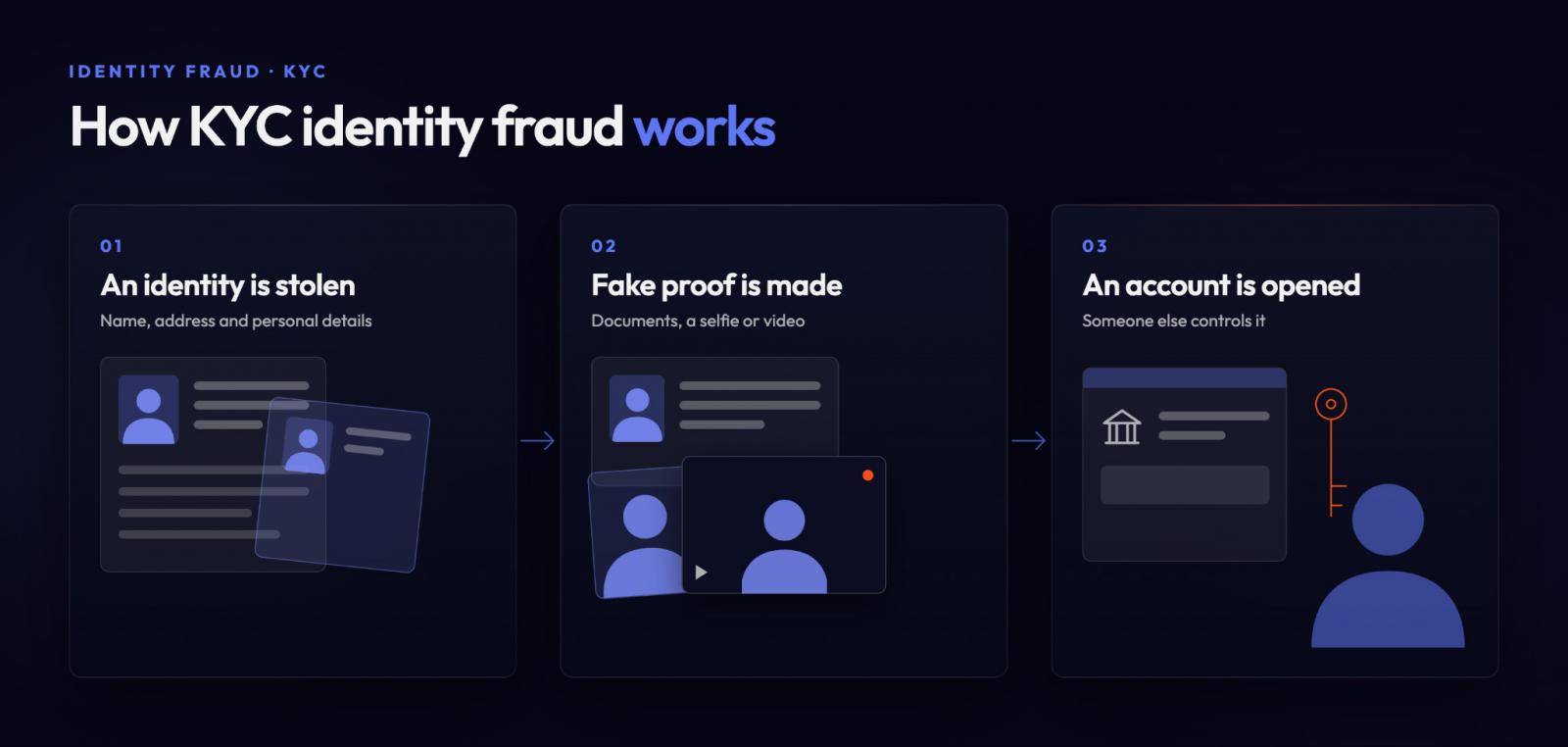
The case of OnlyFake and the broader trends observed by Flare highlight a disturbing evolution in how fraudsters are attempting to circumvent these critical KYC protocols. Sellers in underground communities are no longer solely peddling fabricated documents; they are now actively assembling comprehensive "identity packages" designed to defeat even advanced verification systems. These packages often include a combination of forged documents, expertly crafted deepfake videos, and even "human KYC" services where individuals are hired to impersonate applicants during live verification sessions.
Flare’s continuous monitoring of criminal forums has identified a growing trade in compromised identities, stolen credentials, and active login sessions. This proactive intelligence allows organizations to potentially invalidate access before it can be exploited for account takeover or broader fraudulent activities. The urgency of addressing these threats is underscored by the fact that a single compromised identity can be used to open multiple fraudulent accounts, leading to significant financial losses and reputational damage for institutions.
Building the Identity Package: A Deceptive Masterpiece
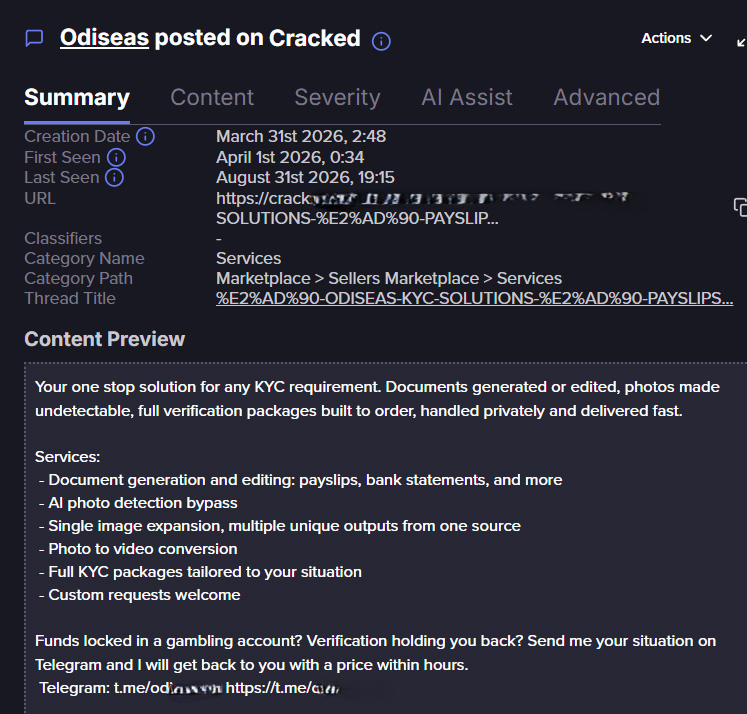
The sophistication of KYC identity fraud was vividly illustrated in March 2026 when Flare researchers observed a forum seller advertising a comprehensive service for generating or editing identity and financial documents. These documents were meticulously tailored to meet the specific requirements of individual verification requests, including fabricated bank statements and other financial records that platforms commonly use to verify an applicant’s address, income, or account ownership.
The availability of these complete KYC packages signifies a significant adaptation by illicit actors. They are no longer simply providing raw materials; they are offering end-to-end solutions that stitch together various forged documents to align with the stringent requirements of a particular platform or the demands of a specific customer. The critical element here is consistency. Names, photographs, addresses, and other personal details must remain cohesive across all submitted application materials. Any discrepancy, however minor, can trigger an alert, leading to rejection or, more concerningly, a deeper review that could still be circumvented with further deception. This meticulous preparation forms the foundation of the identity package, which is then deployed during the crucial facial or live verification stages.
Bypassing Live Identity Checks: The Rise of AI and Human Intervention
Many modern KYC systems incorporate a live identity verification component, typically involving a comparison between the photograph on an identity document and a live image or video feed of the applicant. These checks can be passive, analyzing short video recordings for signs of genuine human presence, or active, requiring the applicant to perform specific actions such as turning their head, speaking, blinking, or reading numbers displayed on screen.
To overcome these advanced safeguards, fraudsters are leveraging a potent combination of altered photographs and AI-generated videos. These manipulated visual assets are meticulously crafted to match the face presented on the forged identity document. Furthermore, some illicit tools claim the capability to alter an applicant’s appearance in real-time during a live session. This is achieved by intercepting the video feed from the physical camera and replacing it with fabricated footage, effectively allowing a false persona to follow instructions and respond to prompts in real-time.
Beyond technological solutions, Flare has also observed a concerning rise in advertisements for "human KYC" services. In these scenarios, real individuals are employed to impersonate applicants and complete the facial or video verification using the meticulously prepared identity materials. One particularly alarming recruitment post detailed a search for an individual skilled in using deepfake tools to alter the camera feed during a live check, ensuring the appearance of the person named on the fraudulent documents. This highlights a disturbing collaboration between sophisticated technology and human deception.
In another instance, Flare researchers identified a threat actor providing detailed guidance on how to bypass a live number-reading check. These checks require applicants to respond to dynamically presented content, meaning that pre-recorded bypasses are less effective. The offered solution involved intricate coordination and real-time adaptation, underscoring the evolving nature of these evasion tactics.
Post-Delivery Support: Extending the Fraudulent Lifecycle
The illicit trade in KYC services doesn’t necessarily end with the successful delivery of a verified account. Flare researchers have documented instances where sellers offer continued support and assistance with account recovery, even after the initial sale. The recruitment post previously mentioned, for example, included provisions for help should a platform request a subsequent identity check following the account handover.
This ongoing support is crucial for fraudsters. If a later verification step requires the same identity materials or the same individual who participated in the initial enrollment, the buyer often remains dependent on the original seller. This effectively extends the scope of the original KYC service beyond the initial transaction, perpetuating the illusion that the verified customer genuinely controls the account. This creates a persistent vulnerability for financial institutions, as the fraudulent account can remain active and operational for an extended period.
Detecting and Mitigating KYC Abuse: A Multifaceted Approach
Recognizing the escalating threat, regulatory bodies are issuing increasingly urgent warnings. The Financial Crimes Enforcement Network (FinCEN) has alerted financial institutions to the growing use of deepfakes and fraudulent identity documents by criminals seeking to bypass customer verification controls. FinCEN’s guidance emphasizes the importance of scrutinizing the entire application process. Subtle discrepancies between an applicant’s identity information, supporting records, facial images, and account activity can reveal that different elements were prepared by disparate individuals or tools, serving as a critical red flag.
The National Institute of Standards and Technology (NIST) provides further recommendations, advocating for the direct collection of identity documents and facial images during the verification session itself. This approach aims to mitigate the risk of pre-tampered materials being submitted. NIST also stresses the importance of detecting software designed to replace live camera footage with altered content.
Implementing unpredictable instructions during live verification, such as requesting unique physical movements or reading rapidly changing numbers, can significantly complicate the use of pre-recorded bypasses. Furthermore, gathering information about the device used for the verification session can help ascertain whether the connection originates from standard customer equipment or a more sophisticated, potentially compromised, source.
By combining these detection strategies, organizations can significantly enhance their ability to identify the sophisticated, multi-layered attacks that involve the coordinated use of false documents, deepfakes, and human operators, as advertised in underground KYC marketplaces. Flare provides organizations with enhanced visibility by continuously monitoring criminal forums for exposed identities, stolen credentials, active login sessions, and emerging threats specifically targeting their organizations. These alerts empower security teams to proactively identify compromised accounts, revoke exposed access, and investigate identity-related activities before they escalate into full-blown account takeovers or more extensive fraudulent schemes. The ongoing battle against digital identity fraud demands constant vigilance and the adoption of advanced security measures to stay ahead of evolving criminal tactics.