George Chandra Eka
The evolution of personal technology continues to redefine daily interactions, and among the most significant advancements is the integration of digital keys into smartphones. Apple, a pioneer in mobile innovation, has significantly contributed to this transformation with its CarKey feature, enabling iPhone and Apple Watch users to seamlessly unlock, lock, and even start compatible vehicles without the need for a physical key. This functionality, akin to the ubiquitous tap-to-pay convenience offered by Apple Pay, leverages sophisticated wireless technologies to enhance user experience and streamline vehicle access.
The initial rollout of Apple’s CarKey in 2020 marked a pivotal moment, offering a glimpse into a future where physical keys become increasingly obsolete. While its debut was limited to a select range of vehicles, predominantly BMW models, the intervening years have seen a meaningful expansion in compatibility. Today, a growing roster of prominent automotive brands supports Apple’s digital car key, making the feature accessible to a broader consumer base. This comprehensive analysis delves into the technical underpinnings, historical development, current compatibility, and broader implications of Apple’s CarKey, providing essential information for users contemplating this digital shift.
Historical Trajectory and Industry Standardization
The concept of a digital car key predates Apple’s official entry, with various automotive manufacturers experimenting with proprietary smartphone applications for remote vehicle control. However, these early solutions often suffered from fragmentation, limited interoperability, and inconsistent user experiences. Recognizing the need for a unified approach, the automotive and technology industries converged under the Car Connectivity Consortium (CCC). Established in 2011, the CCC is a cross-industry organization dedicated to developing global standards for smartphone-centric connectivity solutions, with the Digital Key specification being one of its flagship initiatives. This collaborative effort aimed to create a robust, secure, and globally interoperable framework for digital vehicle access.
The CCC Digital Key specification provides a standardized framework for vehicle manufacturers and device makers to enable secure digital car key functionality across different platforms. This standardization ensures interoperability, robust security protocols, and a consistent user experience. Apple joined the CCC as a board member, playing a crucial role in shaping the development of the Digital Key specifications, particularly versions 2.0 and 3.0, which introduced advanced features like Ultra-Wideband (UWB) technology. This collaborative effort was instrumental in laying the groundwork for a universally accepted and secure digital key ecosystem. The CCC’s work also involved defining different levels of functionality, from basic lock/unlock to advanced passive entry and vehicle starting.
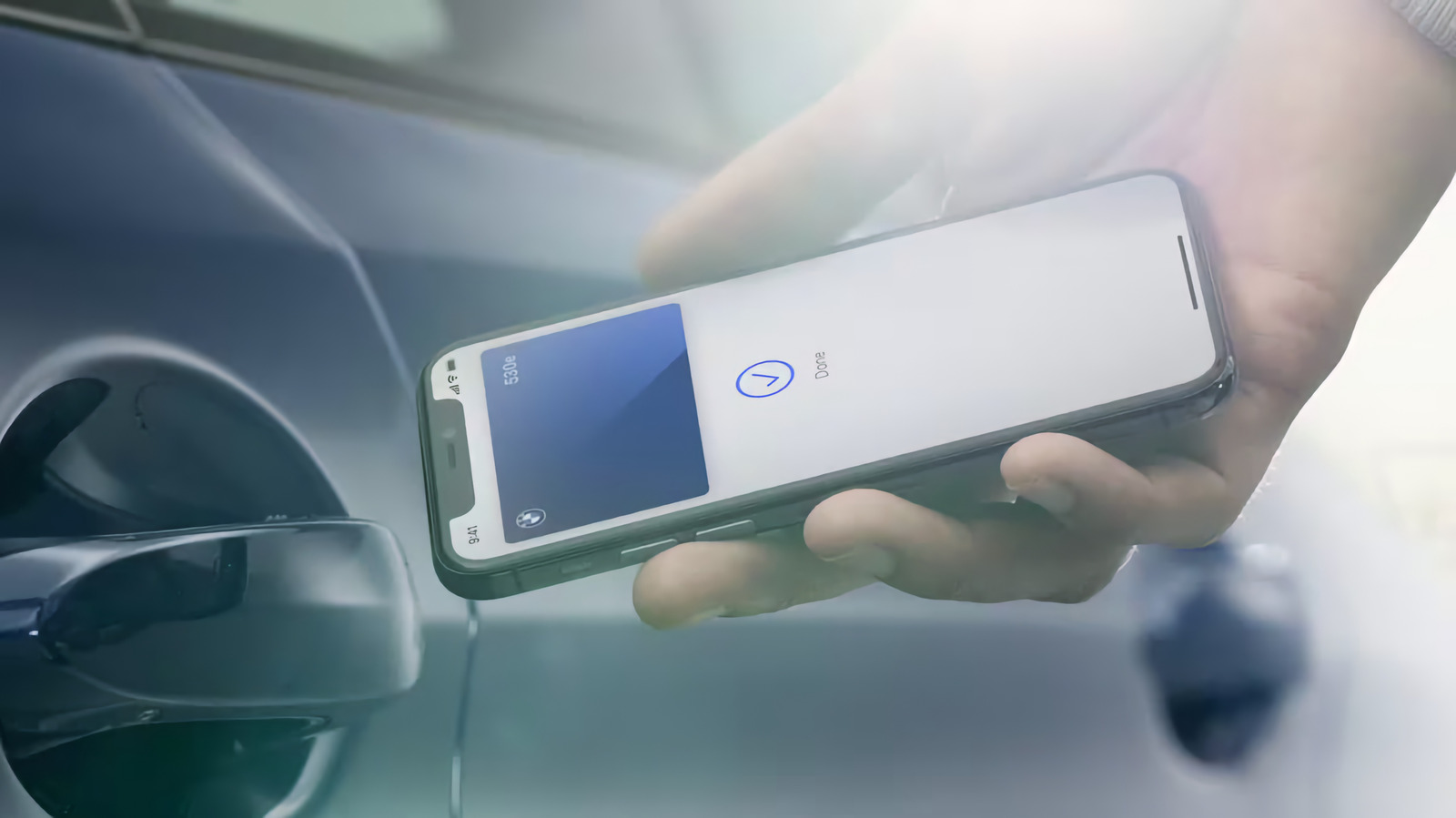
Apple formally introduced CarKey at its Worldwide Developers Conference (WWDC) in June 2020, positioning it as a core component of iOS 14. The announcement highlighted a partnership with BMW, making the BMW 5 Series the inaugural vehicle to support the feature. This initial implementation primarily relied on Near Field Communication (NFC) for proximity-based unlocking and starting. While groundbreaking, the reliance on NFC still required users to physically tap their iPhone against a designated area on the car, a method familiar to Apple Pay users. This launch was a significant statement of intent from Apple, signaling its commitment to extending the Wallet app’s utility beyond payments and public transport.
A significant evolution occurred with the subsequent introduction of Ultra-Wideband (UWB) technology. Leveraging Apple’s U1 chip, first introduced in the iPhone 11 series and later in the Apple Watch Series 6, CarKey gained the ability for passive entry. This advancement meant that users with compatible iPhones and vehicles equipped with UWB could unlock and start their cars without even removing their device from their pocket or bag. This transition from tap-to-unlock to true passive entry marked a critical milestone in enhancing the convenience and seamlessness of the digital car key experience, bringing it closer to the seamless interaction users expect from modern technology. The continuous refinement of the CCC Digital Key standard, with Apple as a key contributor, ensures that CarKey remains at the forefront of secure and user-friendly vehicle access solutions, adapting to new security challenges and technological opportunities.
Technical Architecture: How Digital Keys Operate
Apple’s CarKey functionality is built upon a sophisticated interplay of several wireless technologies, each serving a specific purpose in ensuring convenience, security, and reliability. The primary technologies involved are Near Field Communication (NFC), Bluetooth Low Energy (BLE), and Ultra-Wideband (UWB). This layered approach maximizes both the flexibility and the security of the digital key system.
Near Field Communication (NFC): This short-range wireless technology is fundamental to the initial setup process and provides the most secure method for proximity-based interactions. Similar to how Apple Pay functions, NFC requires the iPhone to be held in close proximity (typically within a few centimeters) to a designated reader in the vehicle. This direct physical interaction is crucial for the initial pairing of the digital key with the car, establishing a secure cryptographic link between the device and the vehicle’s onboard systems. NFC also serves as a reliable backup method for unlocking and starting the vehicle, particularly in scenarios where other wireless signals might be compromised or when the iPhone’s battery is critically low (via a power reserve mode, which allows the Secure Element to operate for a limited time after the main battery dies). The inherent security of NFC lies in its extremely limited range, making it highly resistant to unauthorized interception or "relay attacks."
Bluetooth Low Energy (BLE): BLE extends the functionality of CarKey beyond immediate physical proximity. It enables remote locking and unlocking of the vehicle from a greater distance, typically within several meters, depending on environmental factors and obstacles. BLE also facilitates communication between the iPhone and the vehicle’s infotainment system, supporting certain remote functions and data exchange, such as checking fuel levels or tire pressure through a manufacturer’s app. Its low power consumption makes it ideal for maintaining a persistent connection without significantly draining the iPhone’s battery, a crucial factor for a feature that needs to be constantly available. While offering more range than NFC, BLE’s security protocols are robust, leveraging advanced encryption to protect communication between the device and the car’s systems.
Ultra-Wideband (UWB) with the U1 Chip: This represents the pinnacle of CarKey’s technological integration, providing unparalleled precision and security for passive entry and keyless starting. Apple’s U1 chip, embedded in newer iPhone models (iPhone 11 and later) and Apple Watch Series 6 and later, utilizes UWB technology to accurately determine the spatial location and distance of the device relative to the vehicle. Unlike Bluetooth, which relies on signal strength that can be susceptible to interference and less accurate ranging, UWB uses short, high-bandwidth radio pulses to measure the "time of flight" of signals, offering centimeter-level accuracy. This precision is critical for distinguishing whether a key is inside or outside the vehicle, or even on which side of the car it is located.
This precision enables genuine passive entry: as a user approaches their UWB-enabled vehicle with their iPhone in their pocket or bag, the car can detect their presence, authenticate the digital key, and unlock the doors automatically. Similarly, starting the car only requires the iPhone to be present within the cabin, eliminating the need to place it on a specific pad. Crucially, UWB’s accurate ranging capabilities significantly mitigate the risk of sophisticated relay attacks, where criminals amplify signals from a key fob to trick a car into thinking the key is nearby. The secure element within the iPhone, which stores the cryptographically secured digital key, further bolsters security, ensuring that the key data is isolated and protected from malware or unauthorized access. This multi-layered technical approach underscores Apple’s commitment to both convenience and robust security in its digital car key solution, setting a high standard for future digital access systems.
Device and Vehicle Compatibility
The adoption of Apple’s CarKey feature is contingent upon both the user’s Apple device and their vehicle supporting the necessary technologies and software integrations. This dual requirement dictates the current reach of the technology.
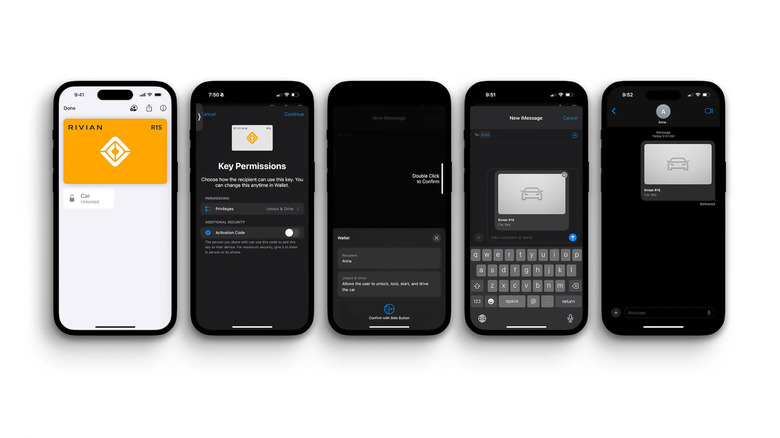
iPhone and Apple Watch Requirements:
To utilize CarKey, users must possess an iPhone running at least iOS 13 and equipped with an NFC chip. This effectively means an iPhone XS or later, or a second-generation iPhone SE or newer. These devices support the fundamental tap-to-unlock functionality. For the advanced capabilities of passive entry and enhanced security via Ultra-Wideband (UWB), an iPhone featuring the U1 chip is required, which includes the iPhone 11 series and all subsequent models. This includes the iPhone 12, 13, 14, and 15 lineups. Similarly, Apple Watch Series 5 or later can support the NFC-based CarKey functionality, while Apple Watch Series 6 and newer models incorporate the U1 chip for UWB-enabled features, mirroring the iPhone’s capabilities. This broad compatibility across recent Apple hardware ensures a significant portion of the Apple user base can potentially leverage CarKey, assuming their vehicle also supports it.
Automotive Manufacturer Support:
When CarKey initially launched, its compatibility was extremely limited, with the BMW 5 Series (2020 model year) being the sole vehicle to offer the feature. However, the ecosystem has expanded considerably since then, reflecting growing industry acceptance of the CCC Digital Key standard. While Apple itself does not maintain a real-time, comprehensive list of every compatible car model (often directing users to contact their car manufacturer for the most up-to-date information), its CarPlay availability page serves as a useful guide, indicating which models also offer digital key support.
Current major car manufacturers and specific models known to support Apple CarKey include:
- BMW: The initial partner, with support extending across various models beyond the 5 Series, including select models from the 1, 2, 3, 4, 6, 8, X, Z4, and M series produced from July 2020 onwards